Understanding vowel sounds Worksheets for Ages 4-9
4 filtered results
-
From - To
Introducing our "Understanding Vowel Sounds Worksheets for Ages 4-9"! Designed to make learning fun and interactive, these worksheets help young students recognize, differentiate, and pronounce vowel sounds correctly. Perfect for preschool to early elementary, each worksheet is crafted to strengthen reading and phonics skills through engaging activities, including coloring, matching, and tracing. By focusing on both short and long vowel sounds, we aim to build a strong phonemic foundation, empowering children to become confident readers. Ideal for teachers and parents, these resources facilitate effective learning at home or in the classroom. Explore today and watch your child’s reading skills soar!
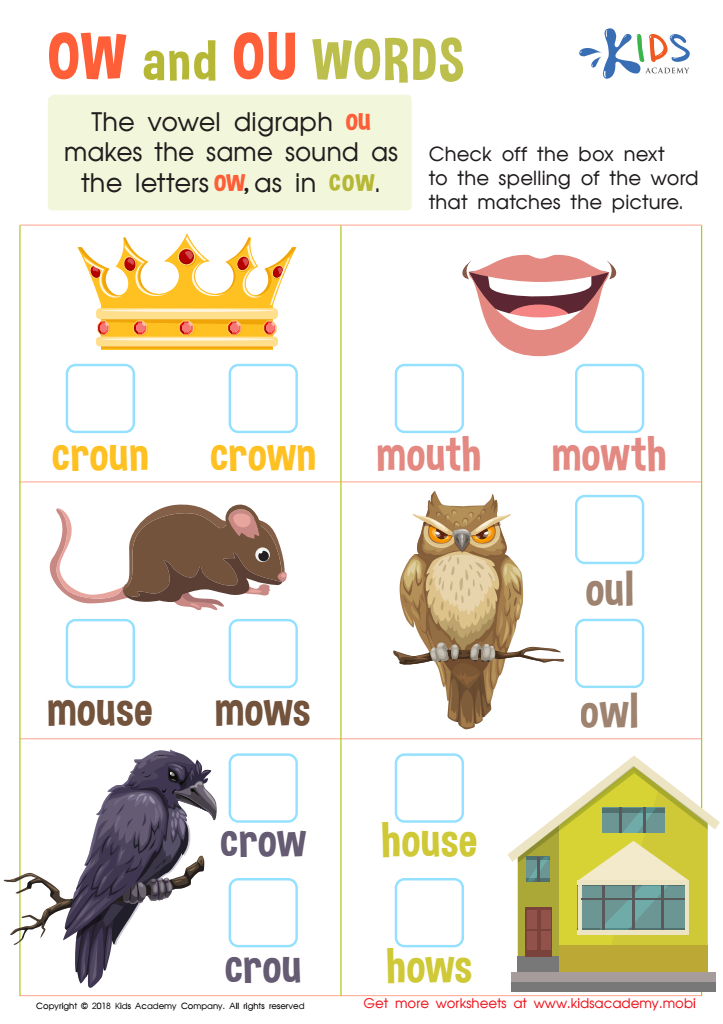
Reading: OW and OU Words Worksheet
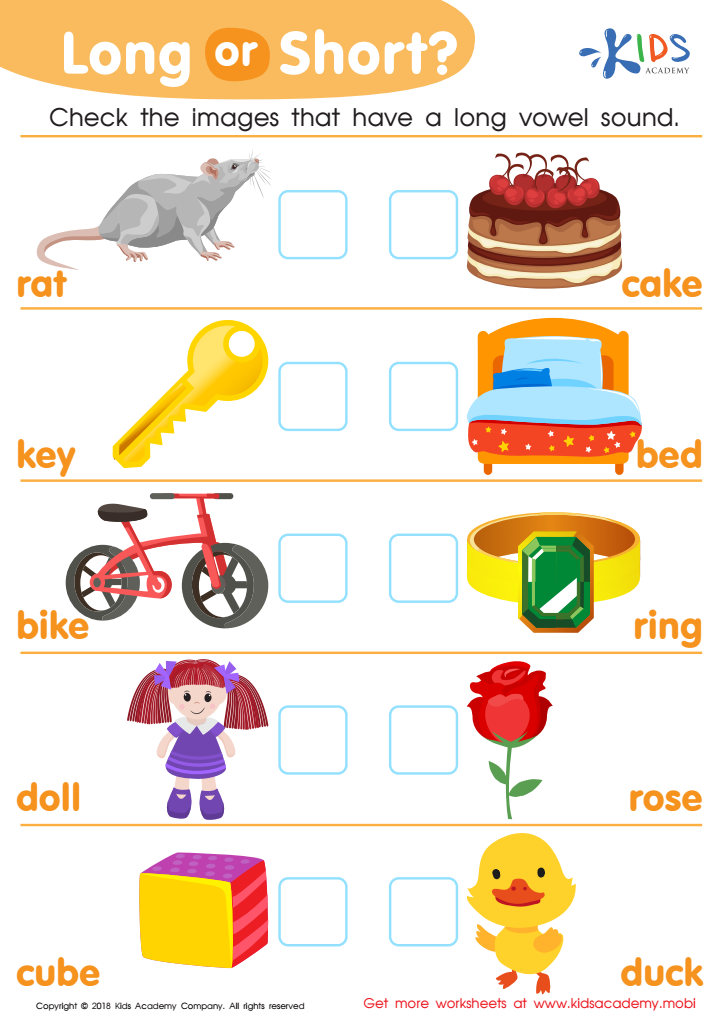
Long or Short Reading Worksheet
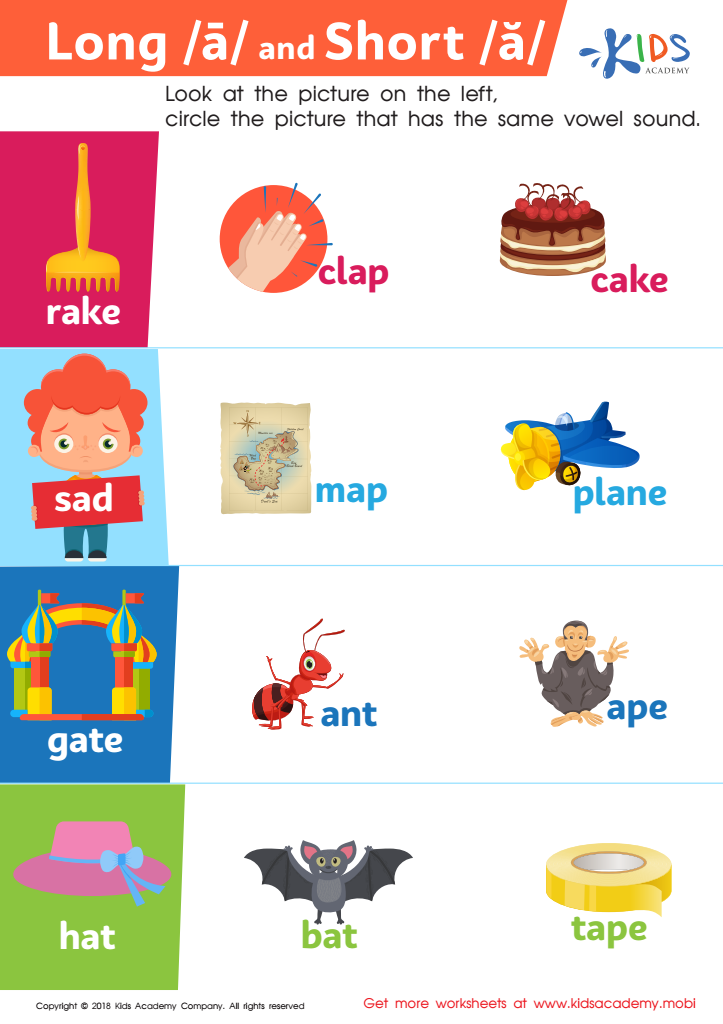
Reading: Long a and Short a Worksheet
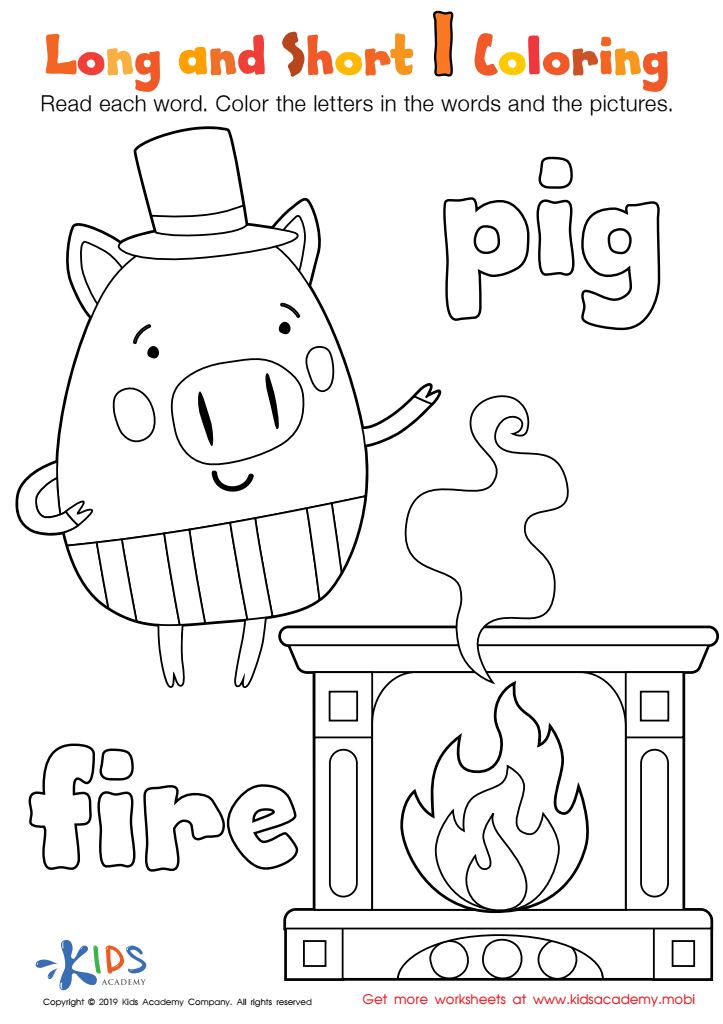
Long and Short I Worksheet
 Assign to My Students







Understanding vowel sounds is vital for children aged 4-9 because it forms the foundation for their reading and writing skills. Vowels are the building blocks of words, appearing in almost every word in the English language. When children properly grasp these sounds, they can decode and pronounce words more effectively, boosting their reading fluency and comprehension. This understanding enables them to blend and segment words more smoothly, paving the way for confident reading.
For parents, engaging with their children's literacy is crucial. Early proficiency in vowel sounds can significantly bolster a child's self-esteem and love for learning. For teachers, tailored instruction to reinforce vowel sound recognition can address various learning styles, making literacy more accessible. Additionally, proficiency in vowel sounds helps children distinguish between similar-sounding words, improving their spelling accuracy and expanding their vocabulary.
Learning vowel sounds also enhances phonemic awareness, a key predictor of future reading success. By investing time in teaching vowel sounds, parents and teachers set children on a path toward academic success, nurturing not just their literacy skills but also their overall cognitive development and critical thinking abilities. This foundational understanding can have long-term benefits, supporting more complex language and literacy tasks as they progress in their education.








