Uppercase identification Worksheets for Ages 4-9
5 filtered results
-
From - To
Explore our engaging Uppercase Identification Worksheets designed for children ages 4-9! These worksheets help young learners recognize and differentiate uppercase letters, enhancing their foundational literacy skills. Featuring a variety of fun activities, including matching games, tracing exercises, and letter scavenger hunts, kids will enjoy practicing letter identification in an interactive way. Perfect for teachers, parents, and homeschoolers, our worksheets cater to diverse learning styles, ensuring every child can succeed. Download and print these resources for endless hours of educational fun! Foster a love for reading and writing in your child with our stimulating uppercase identification activities today!
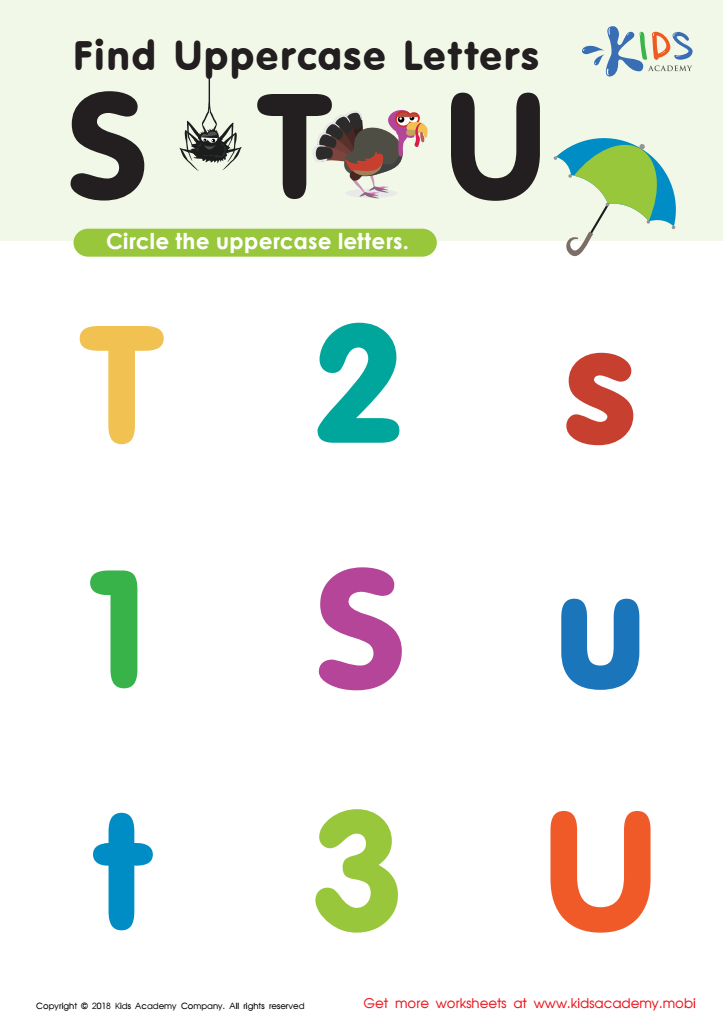
Find Uppercase Letters Worksheet
 Assign to My Students
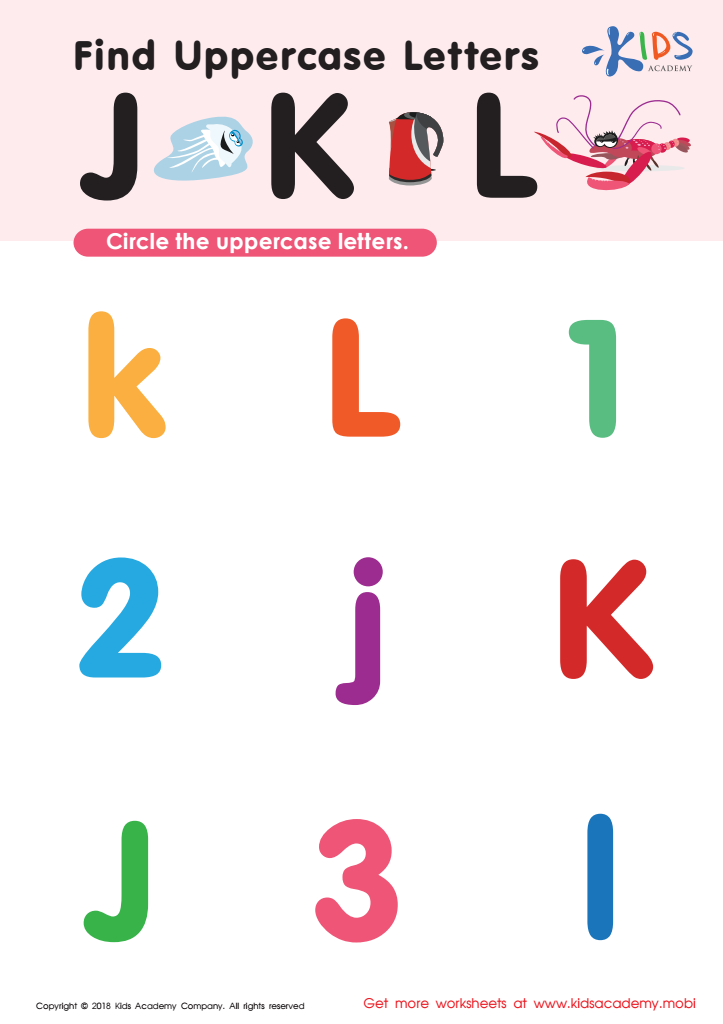
Find Uppercase Letters J, K, and L Worksheet

Find Uppercase Letters A, B, and C Worksheet
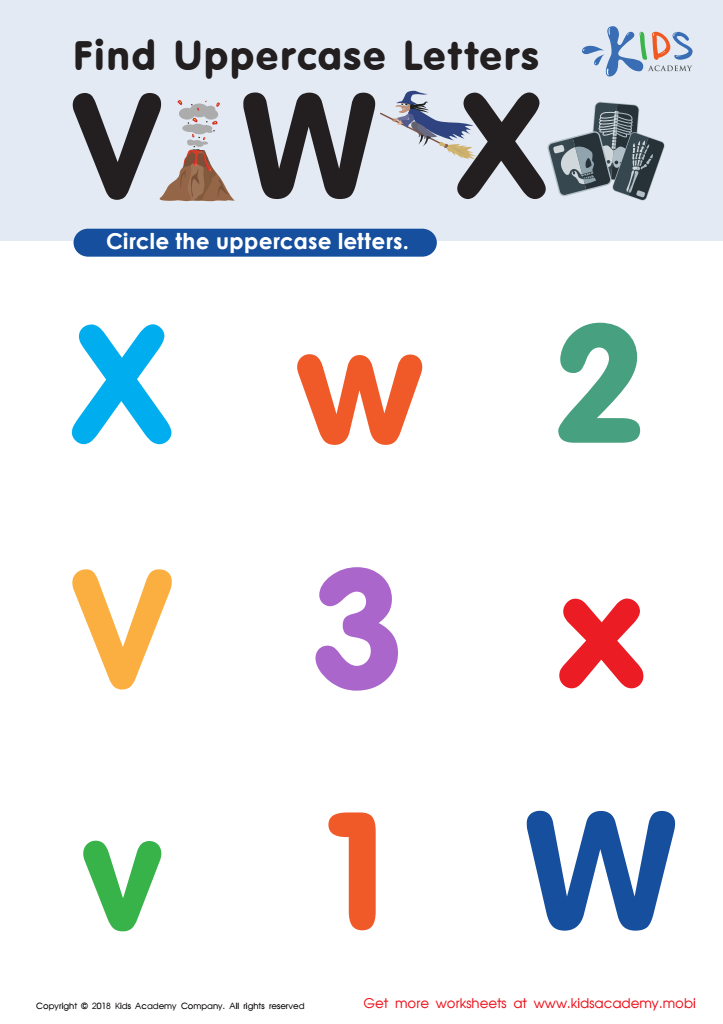
Find Uppercase Letters V, W, X Worksheet
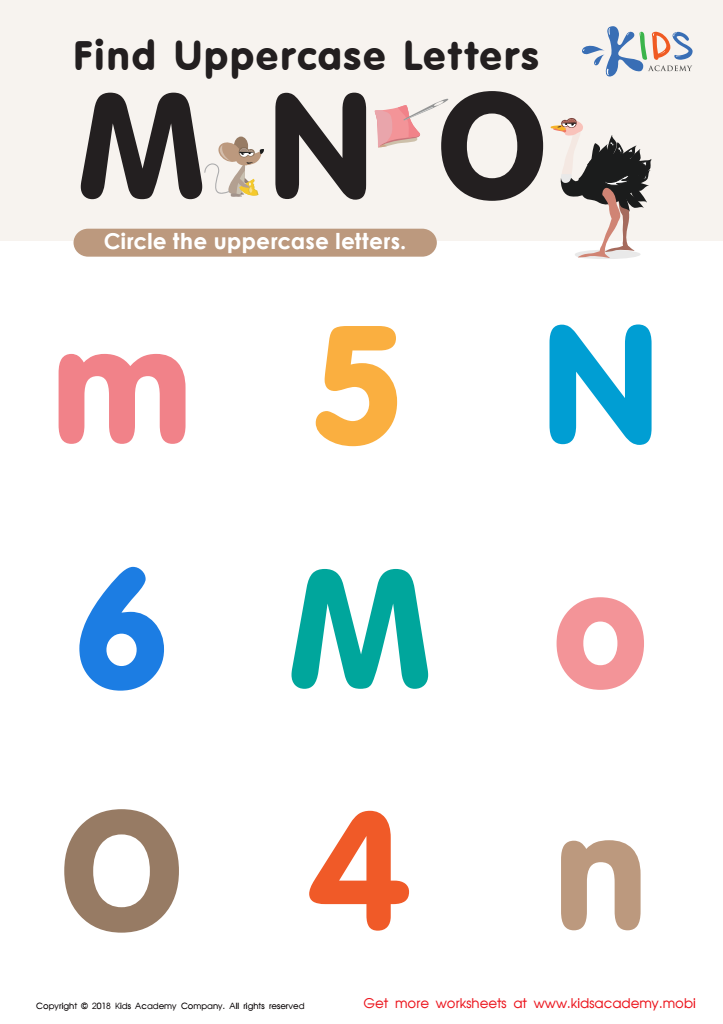
Find Uppercase Letters M, N, and O Worksheet








Uppercase letter identification is crucial for children aged 4-9 as it forms the foundation of their literacy development. During these formative years, children are developing key pre-writing and reading skills that will greatly influence their future academic success. Recognizing uppercase letters helps children understand the structure of written language, which is essential for later reading fluency and comprehension.
For parents and teachers, fostering uppercase letter recognition assists in creating engaging learning experiences that build confidence and enthusiasm for reading. Children who can easily recognize letters are more likely to explore books and engage in literacy activities, thus enhancing vocabulary and language skills. Moreover, this skill supports children's ability to write their names and comprehend basic text, helping them navigate both academic and social environments.
Additionally, uppercase letters are often used in significant classroom materials, such as labels, signs, and banners, making it vital for children to recognize these letters in their surroundings. Promoting uppercase letter identification not only aids in acknowledging the world around them but also lays a strong groundwork for the transition to lowercase letters and the complexities of language. In summary, emphasizing uppercase letter recognition equips children with essential literacy skills crucial for their overall educational journey.








