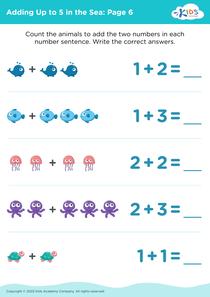
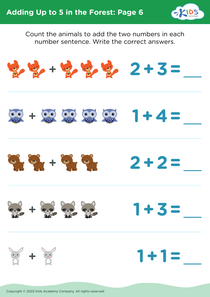
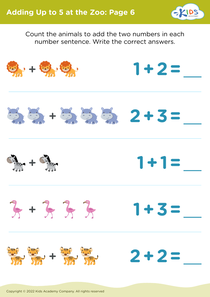
Counting practice Adding on the Farm Worksheets for Ages 4-9 - Page 3
54 filtered results
-
From - To
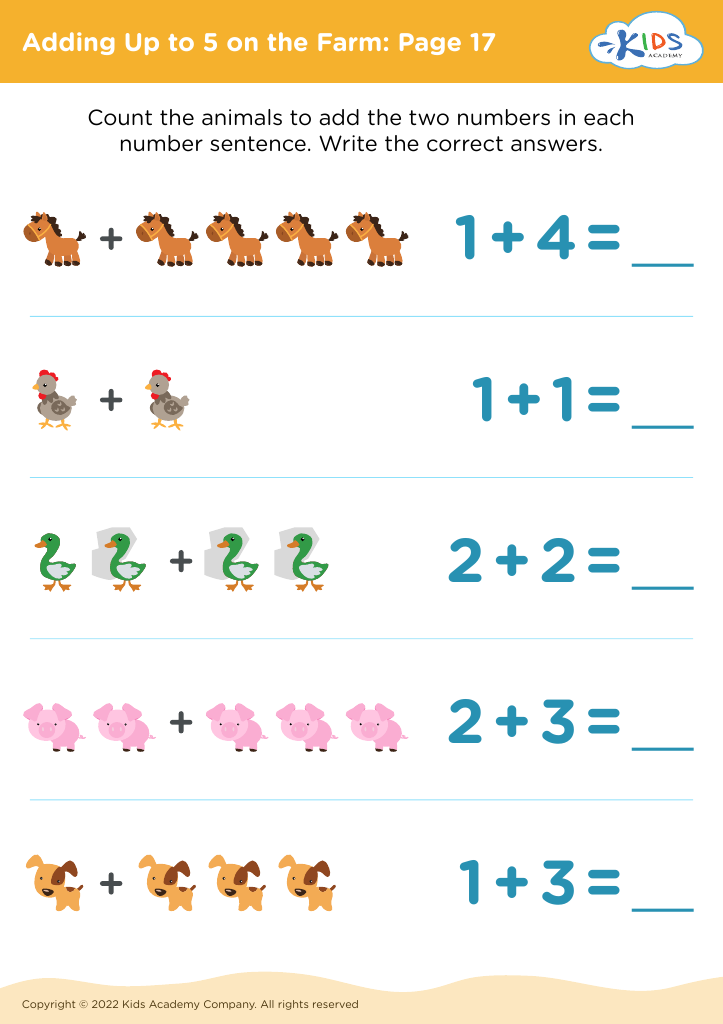
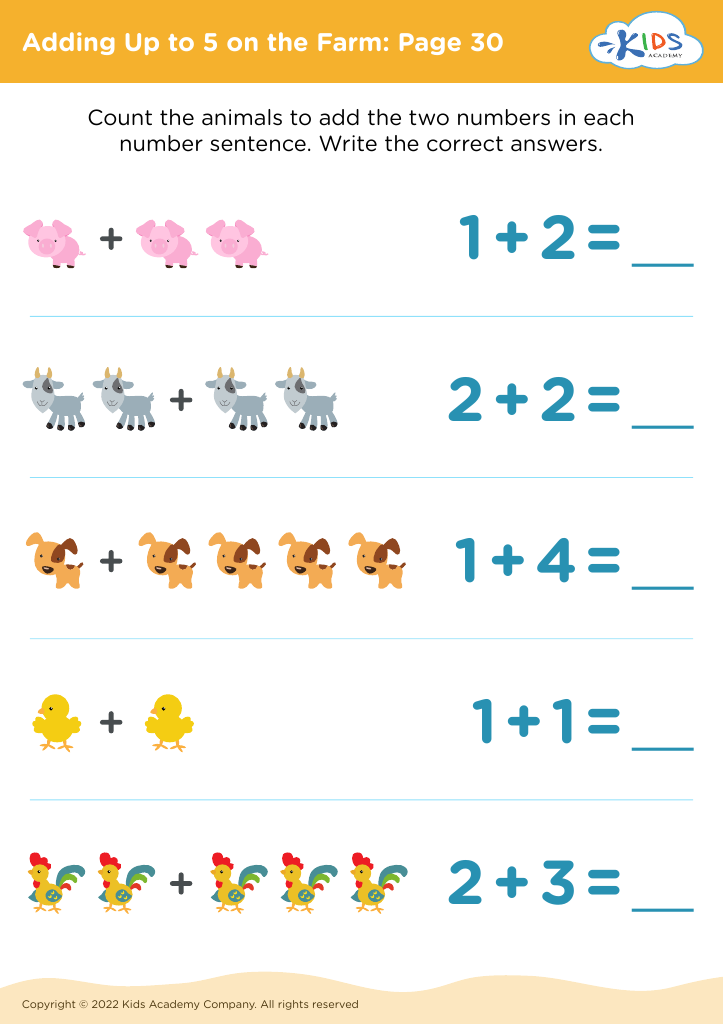
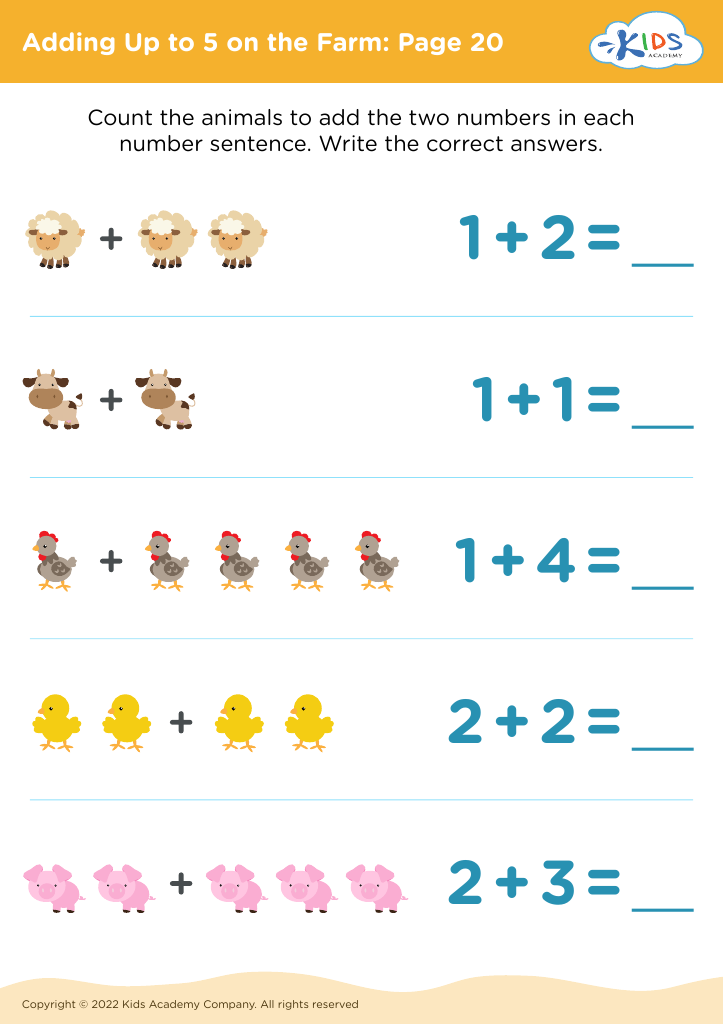
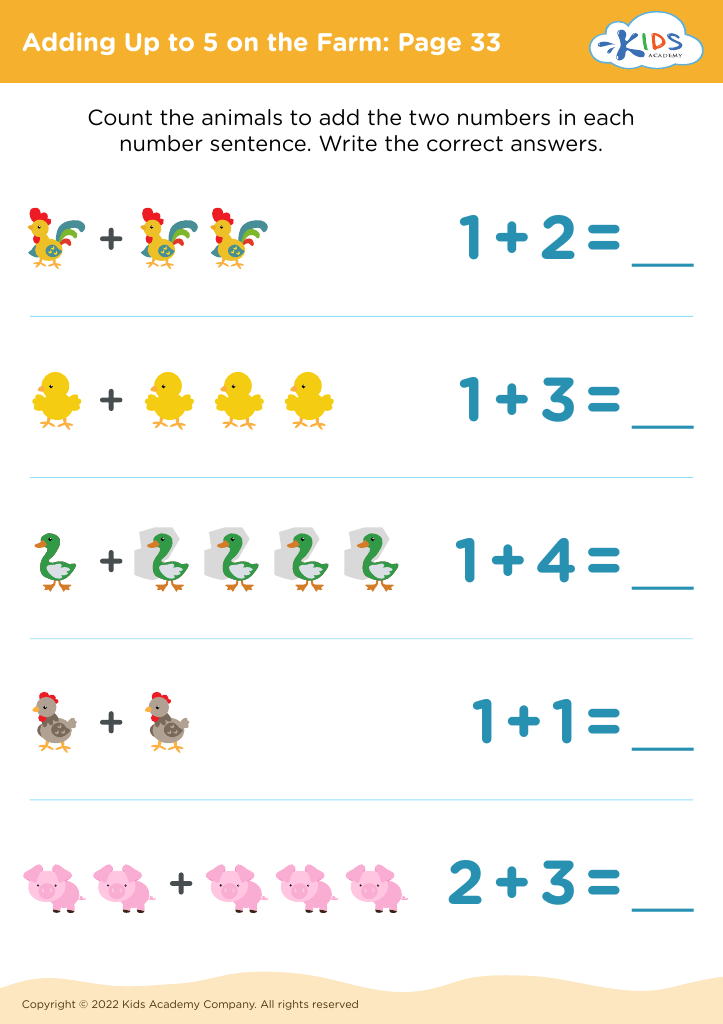
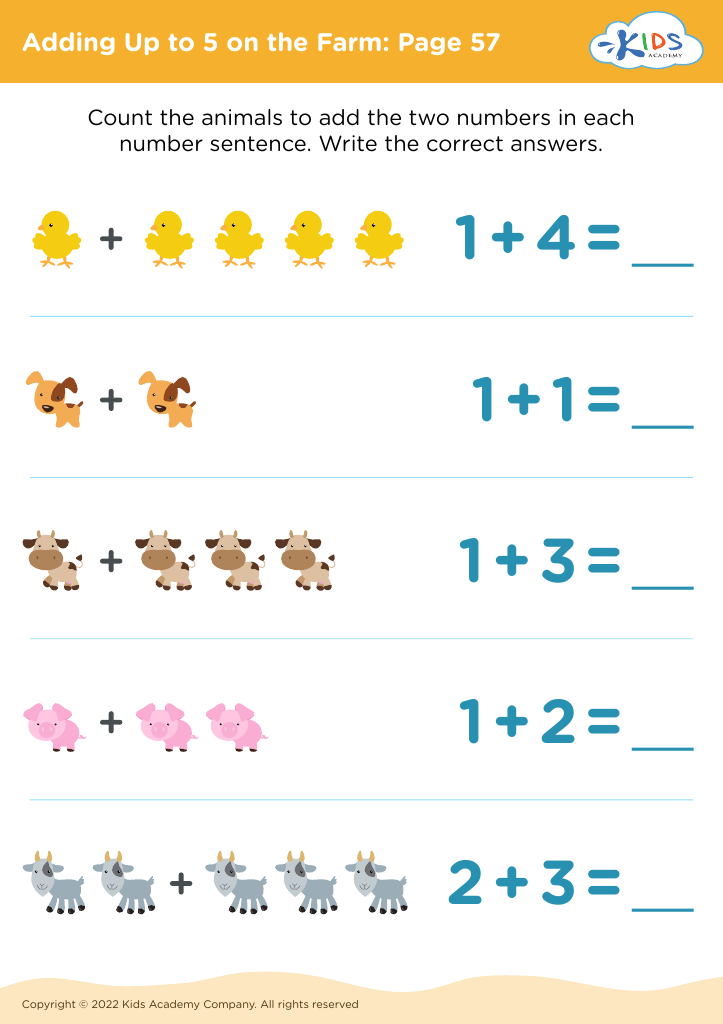
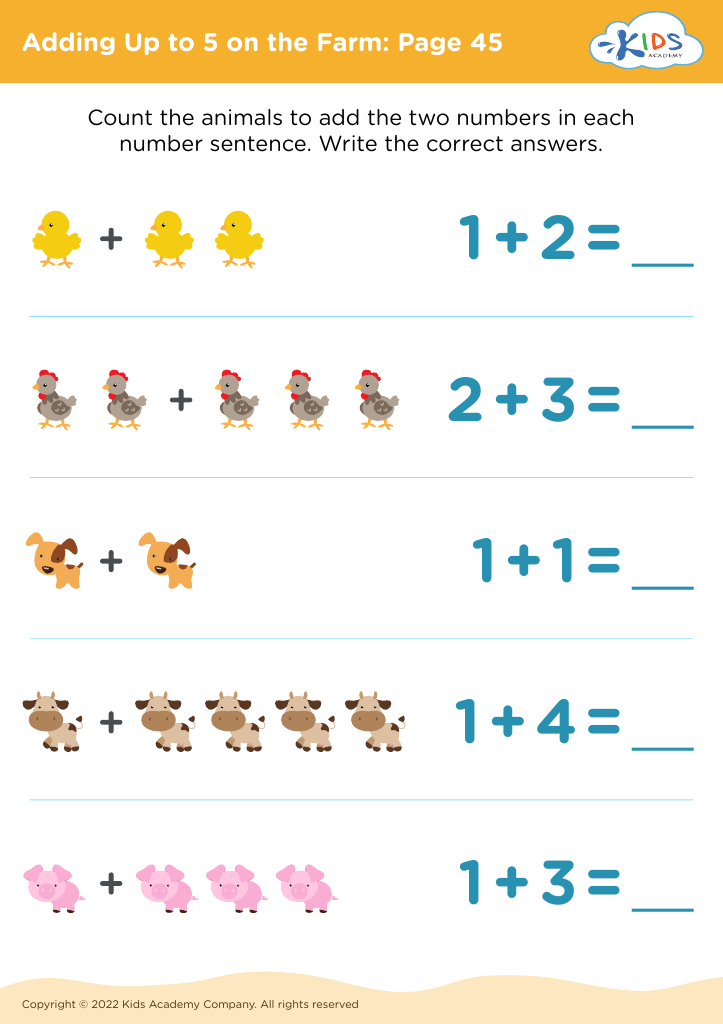



Counting practice, such as the "Adding on the Farm" activity, is essential for young learners aged 4-9 as it lays a strong foundation for numerical understanding. Engaging preschoolers and early elementary students with farm-themed counting fosters not only mathematical skills but also enhances their cognitive development. This activity can make learning fun and relatable, especially for children who connect with animals and farm life.
By practicing counting and addition in a playful and thematic context, children develop critical thinking and problem-solving skills. These early experiences in math help to build confidence, which can lead to a more positive attitude toward learning as they grow. Additionally, involving parents and teachers in these activities strengthens the home-school connection, allowing caregivers to take an active role in reinforcing math concepts.
Furthermore, such interactive exercises promote social skills when children work collaboratively. Parents and teachers should care about these practices because they not only contribute to numerical proficiency but also encourage creativity, communication, and collaboration in young learners. Investing time in counting practice prepares children for a bright academic future and lays the groundwork for lifelong learning in mathematics and other subjects.