Addition Practice Adding Up to 5 Worksheets for Ages 4-9 - Page 2
50 filtered results
-
From - To



%20(1).jpg)


.jpg)

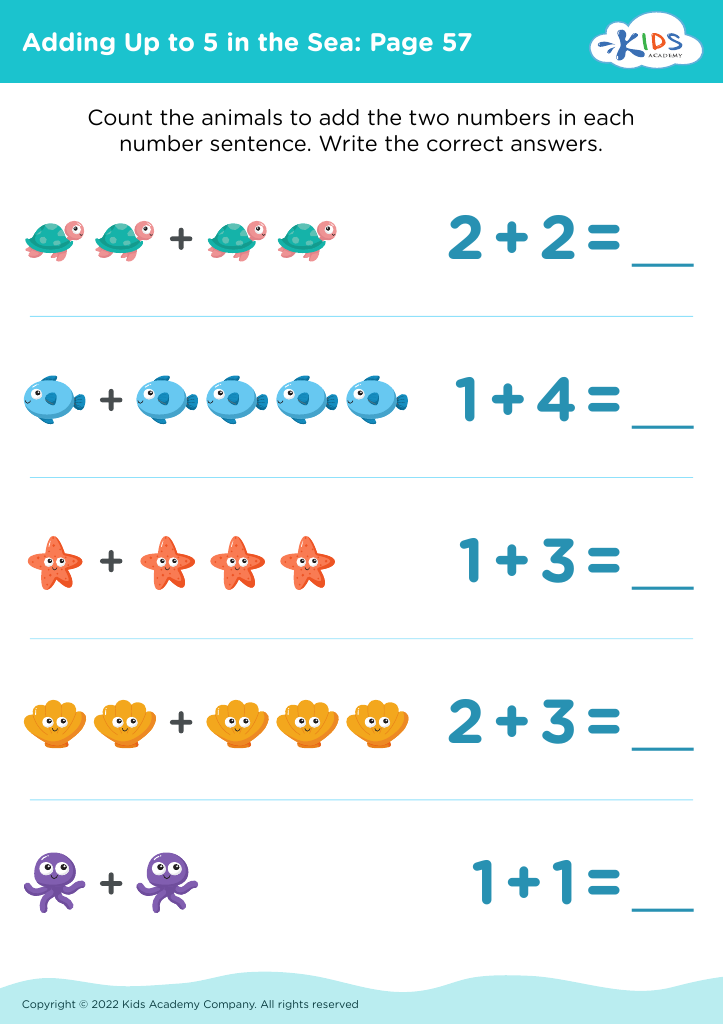
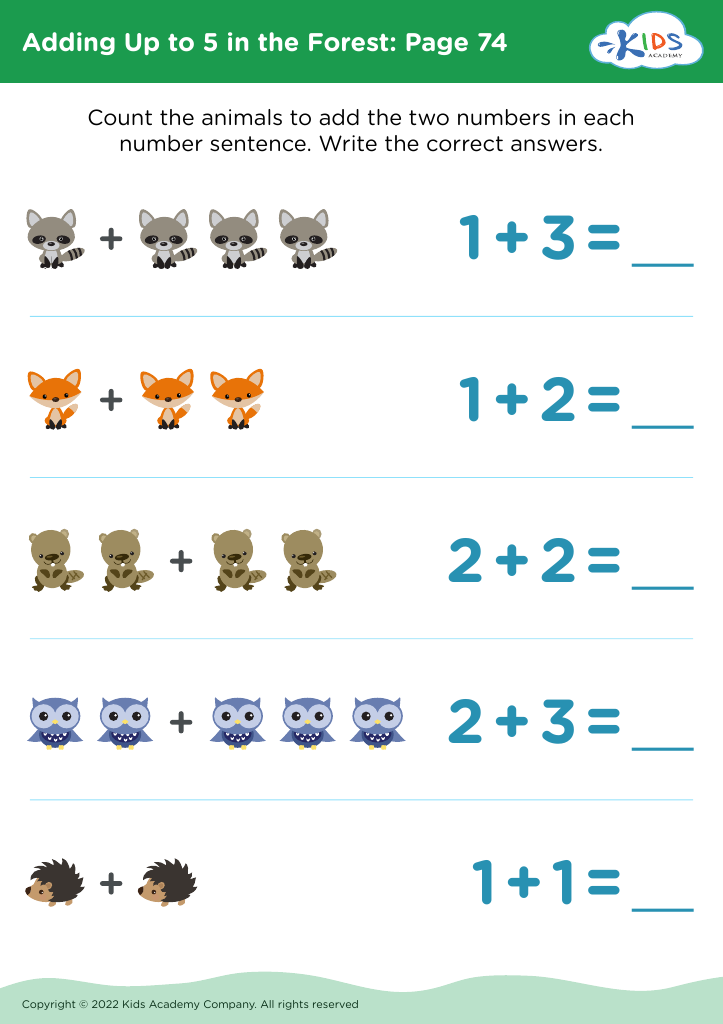
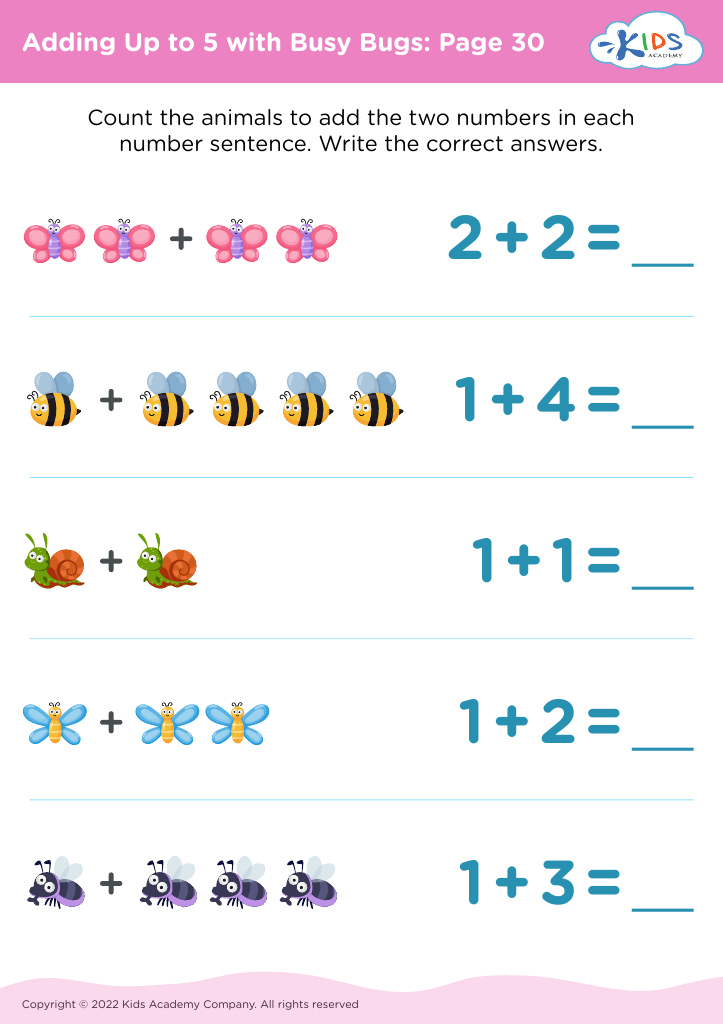
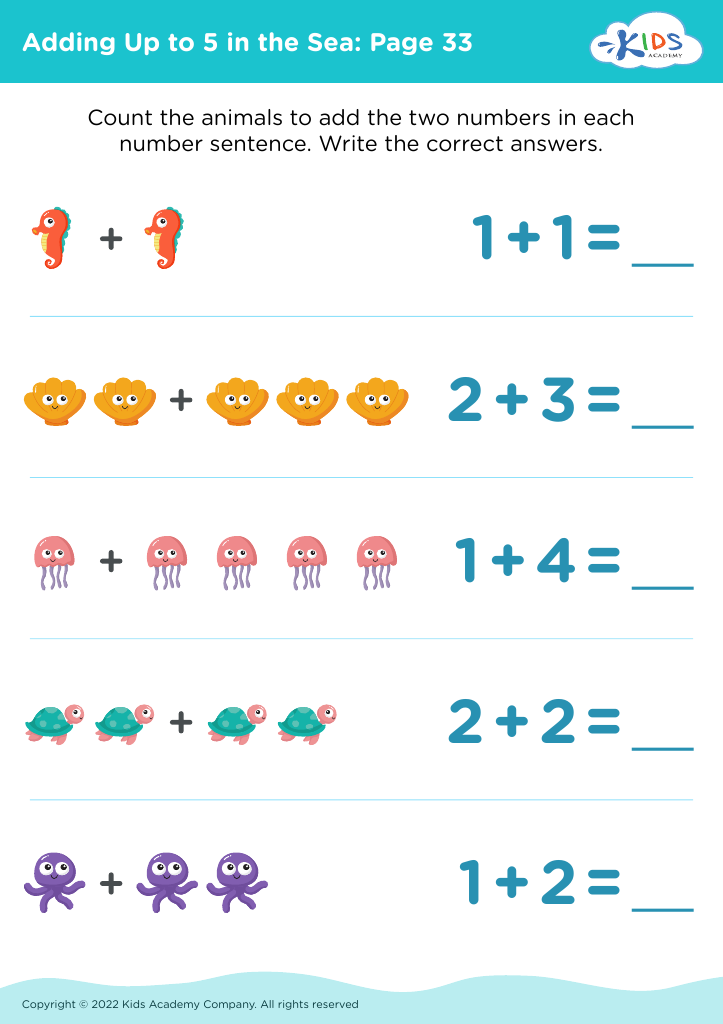
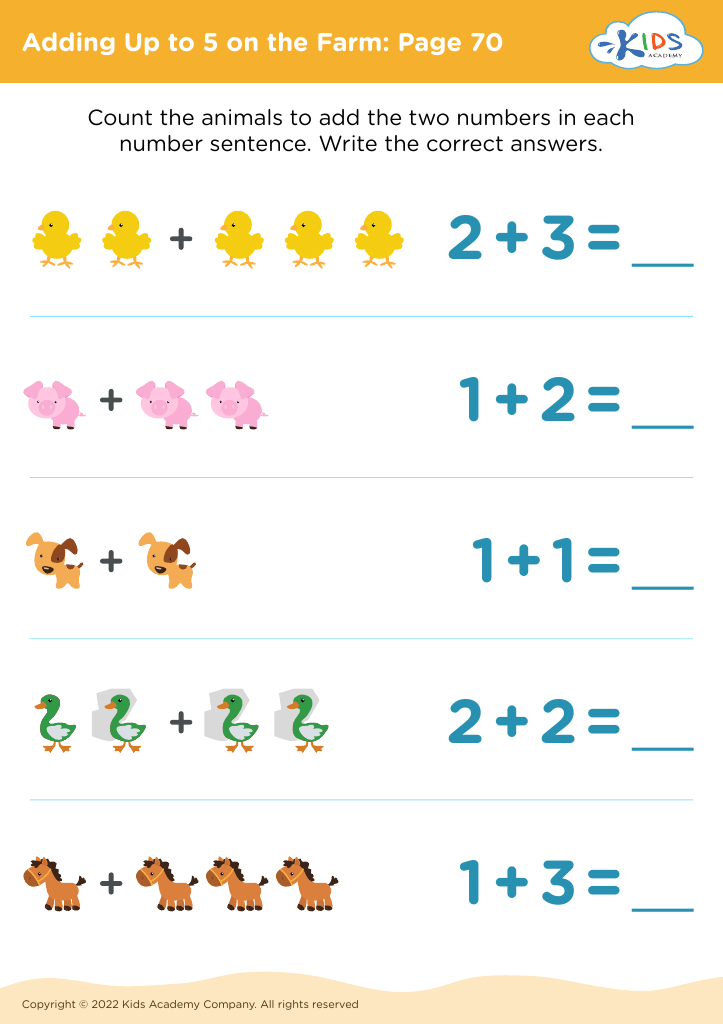
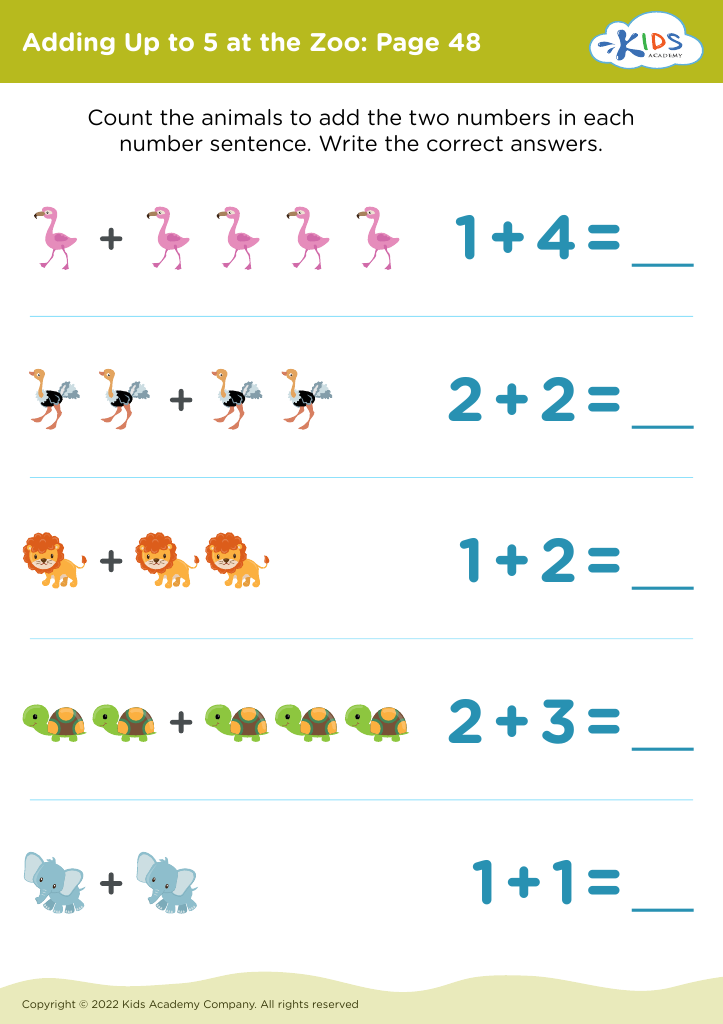
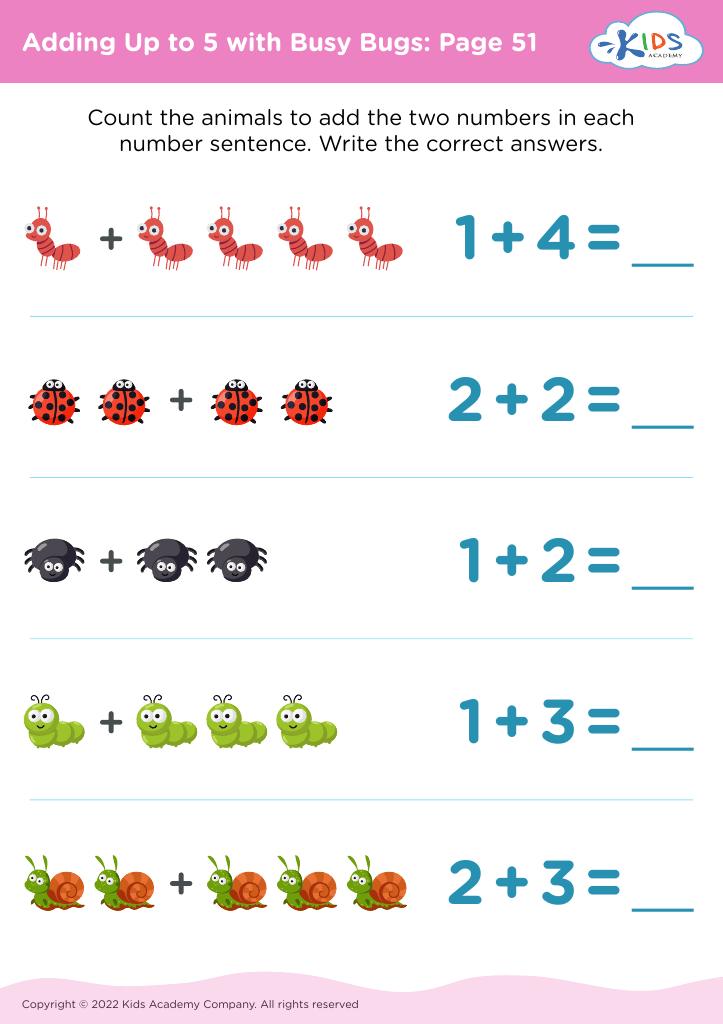
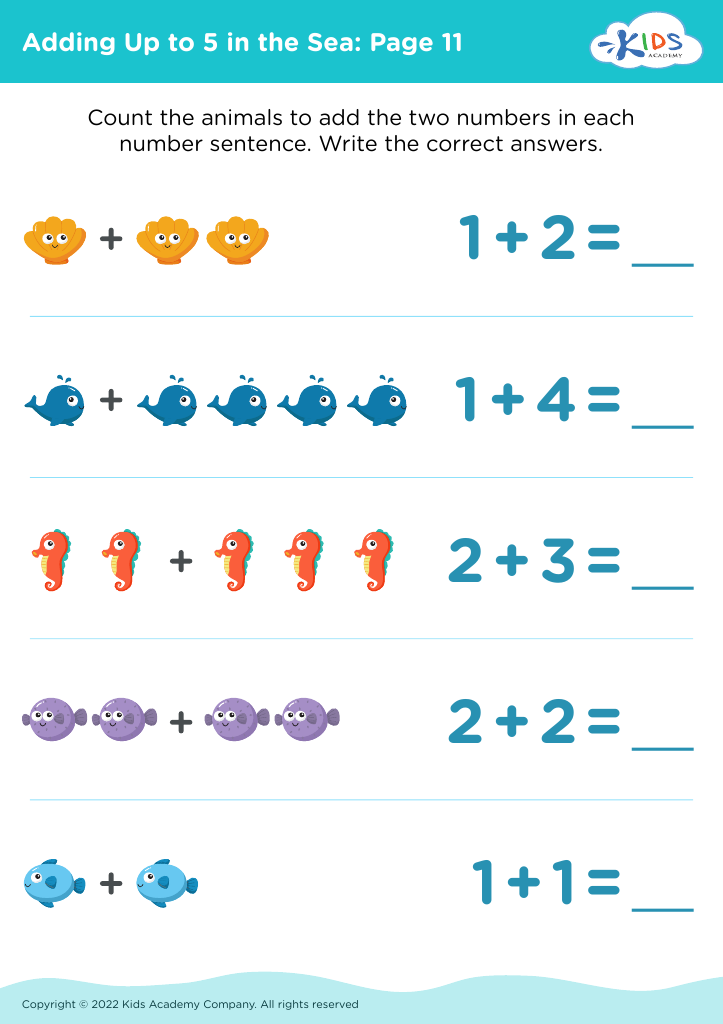
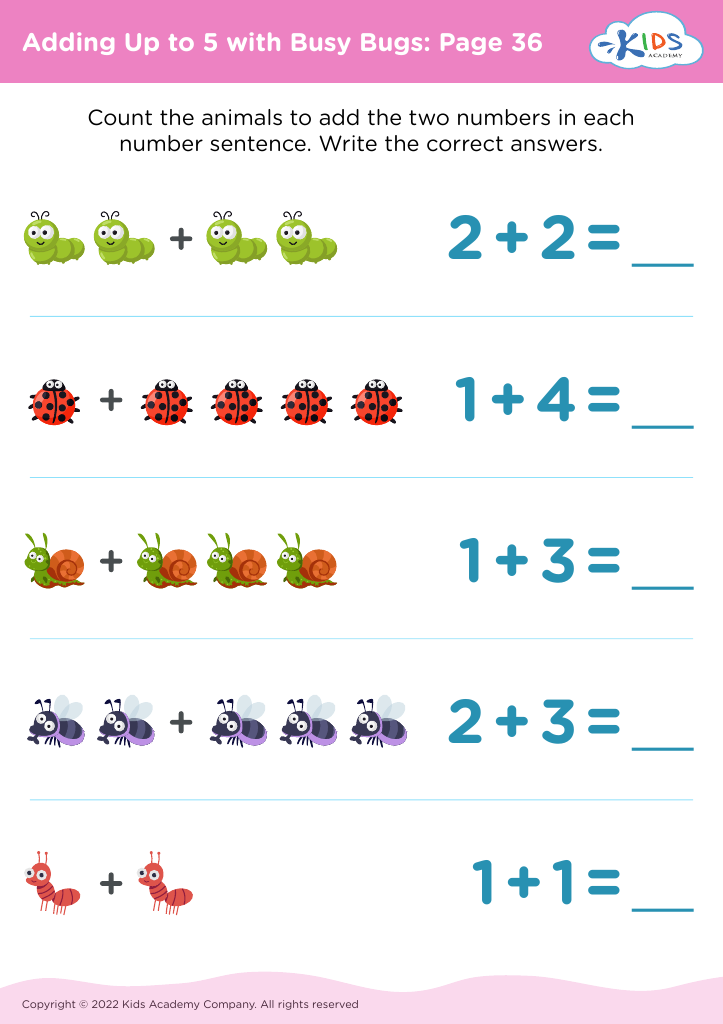
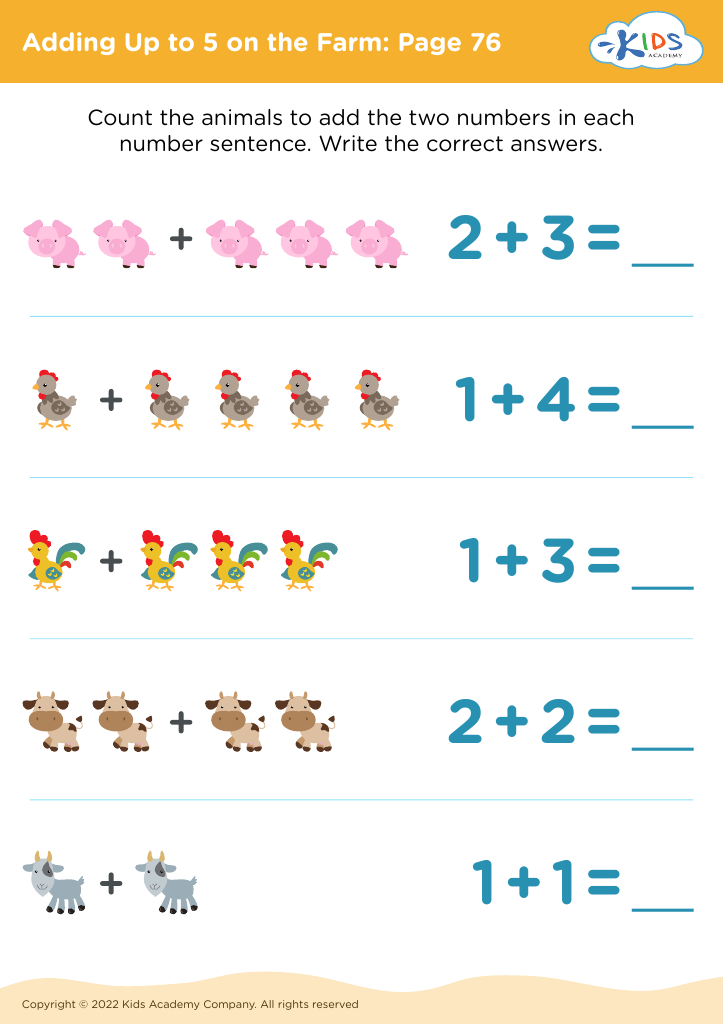
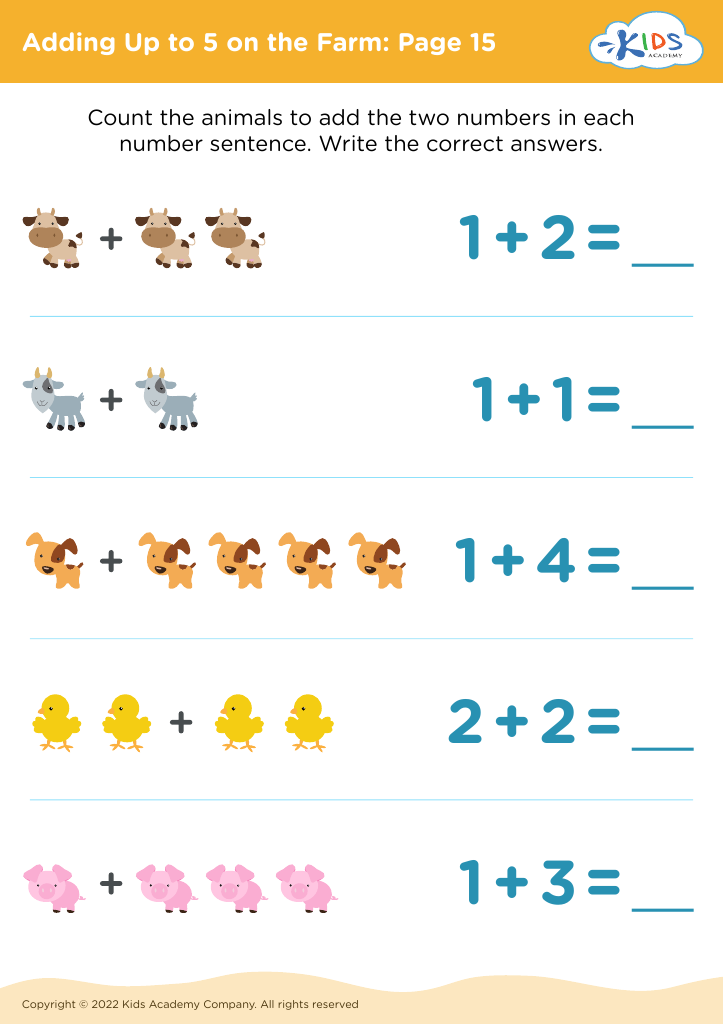
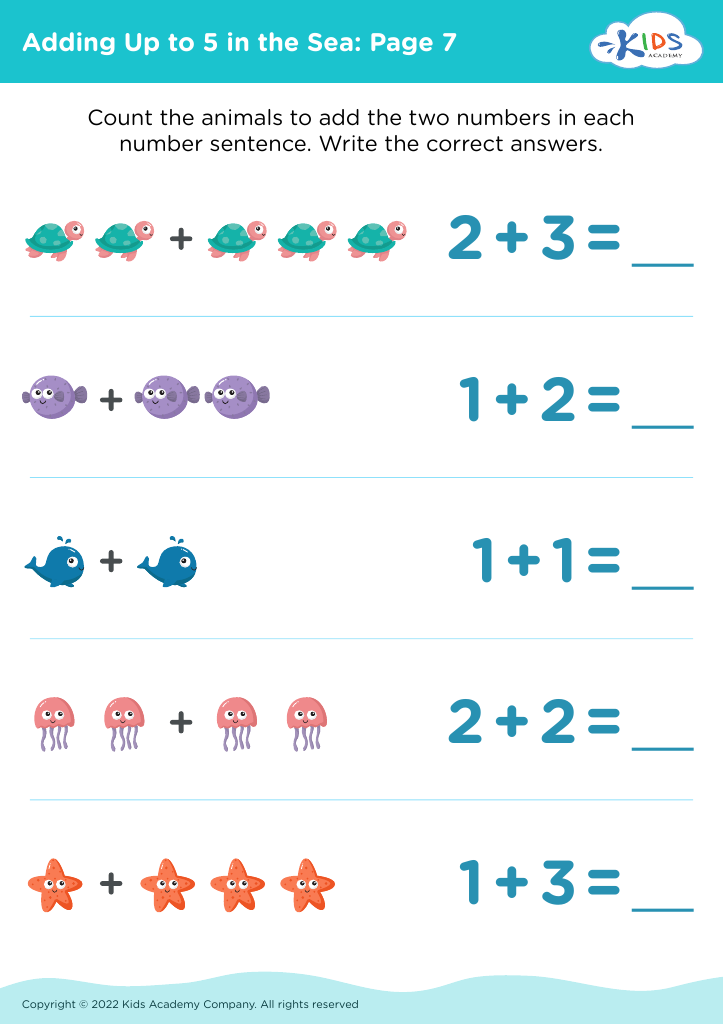
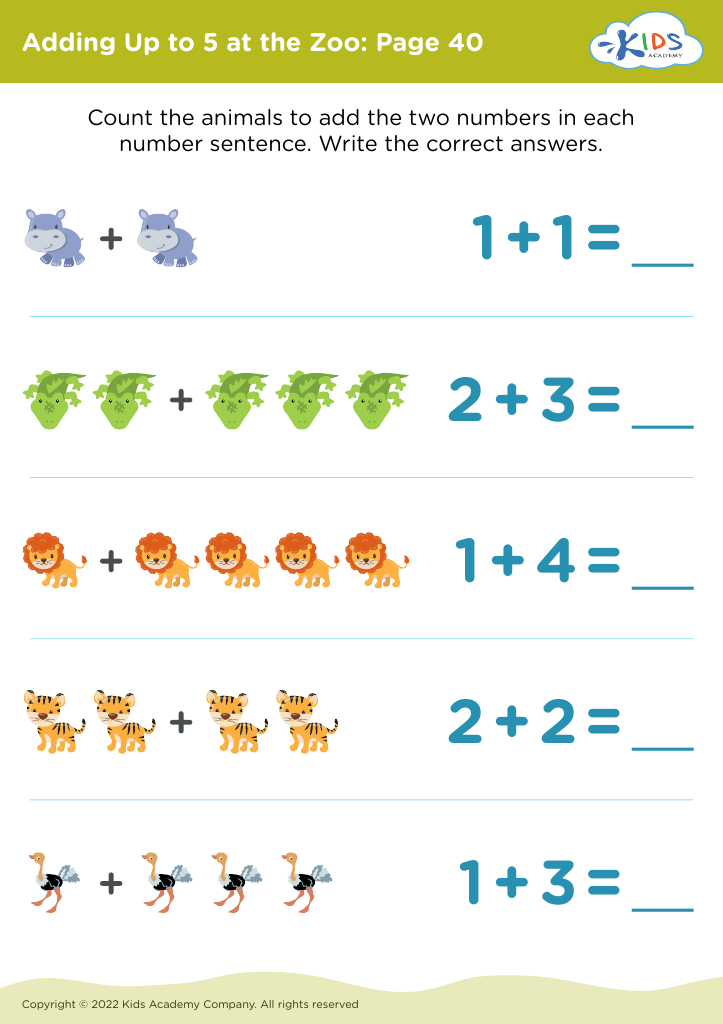
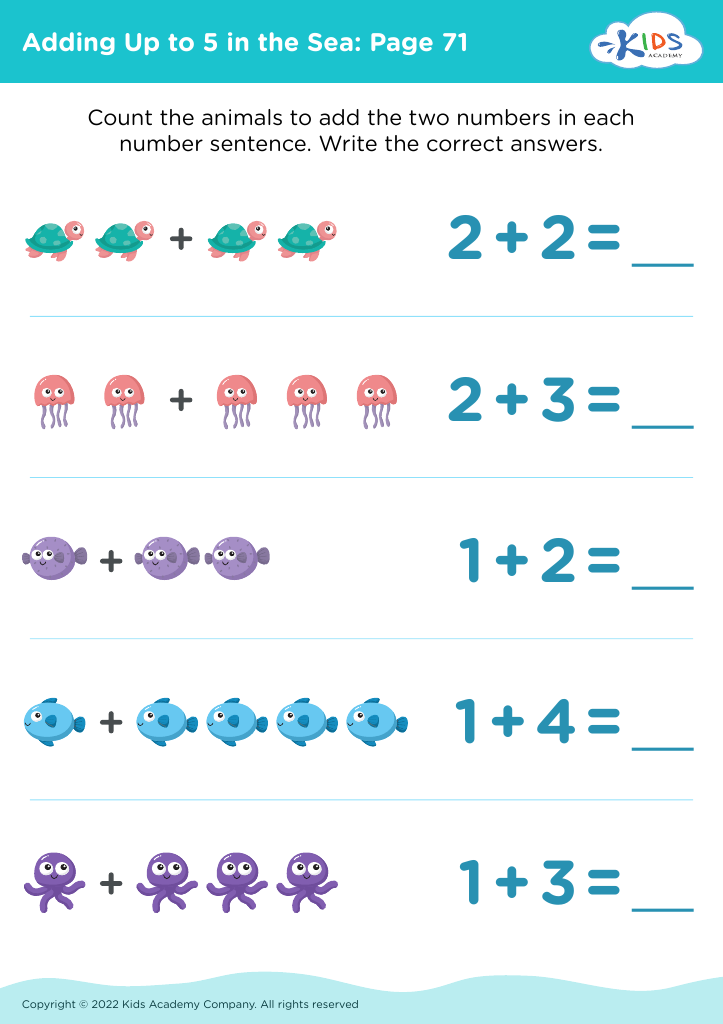
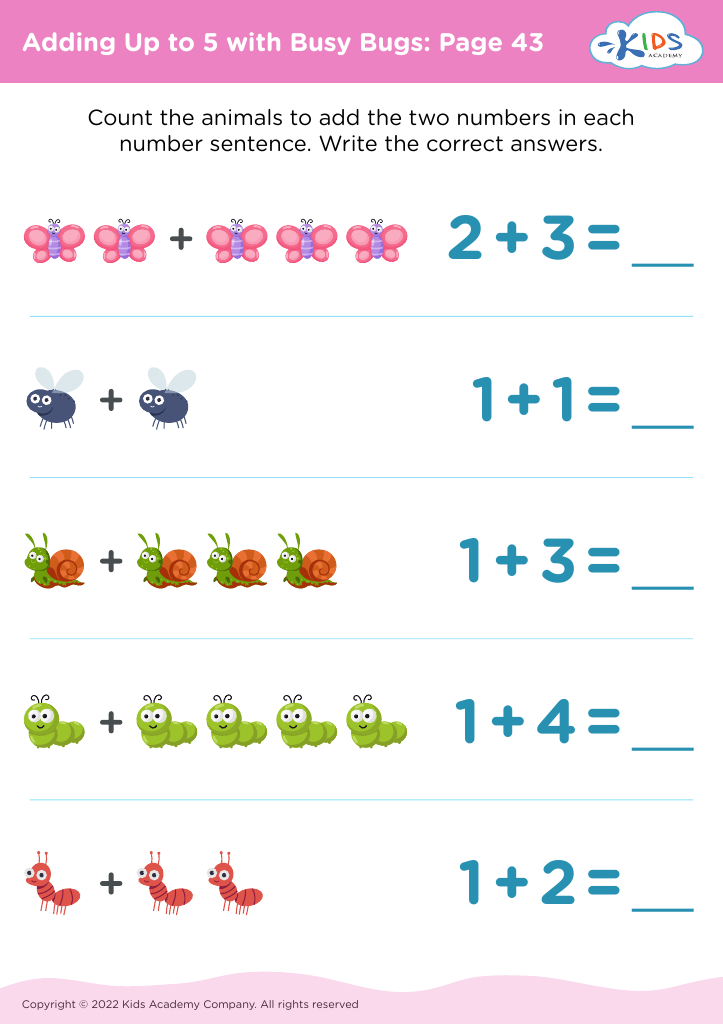
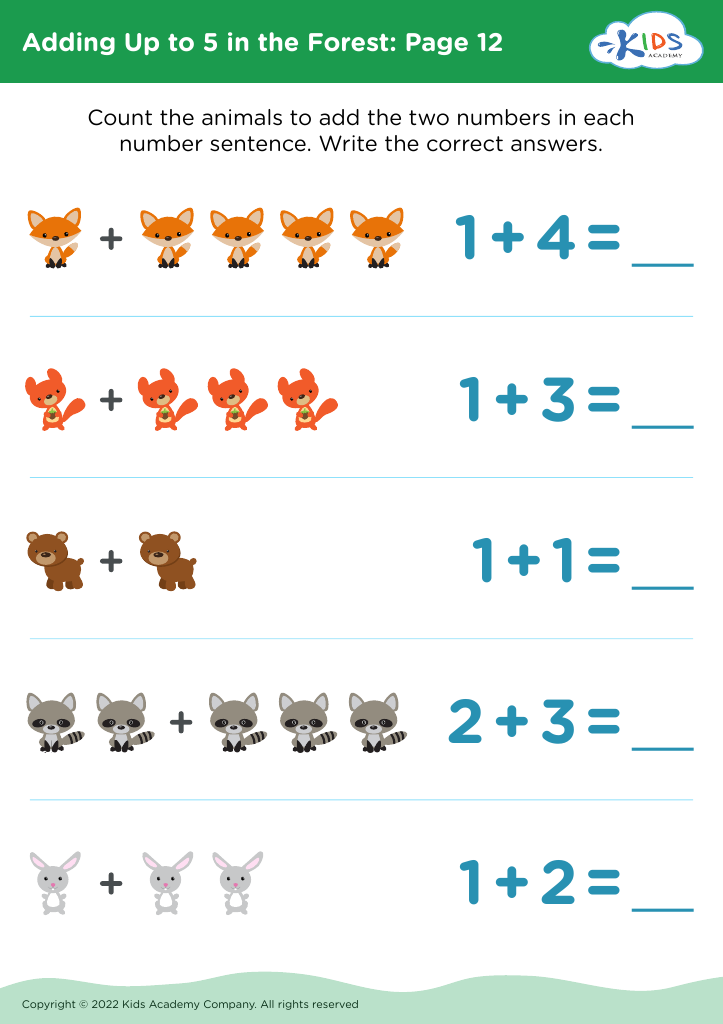
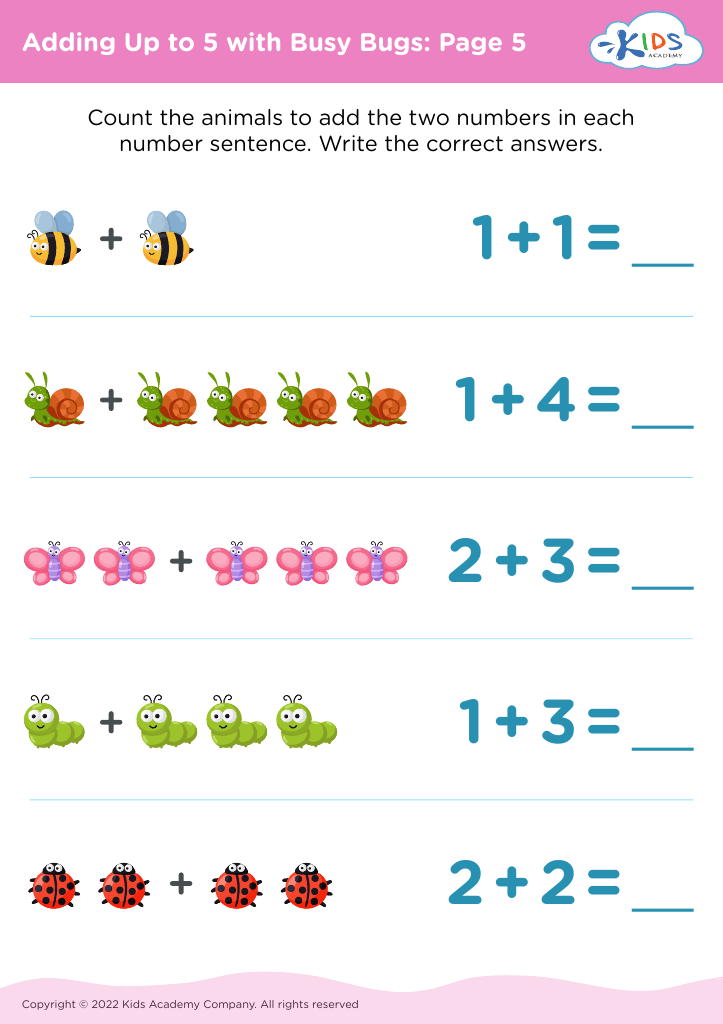
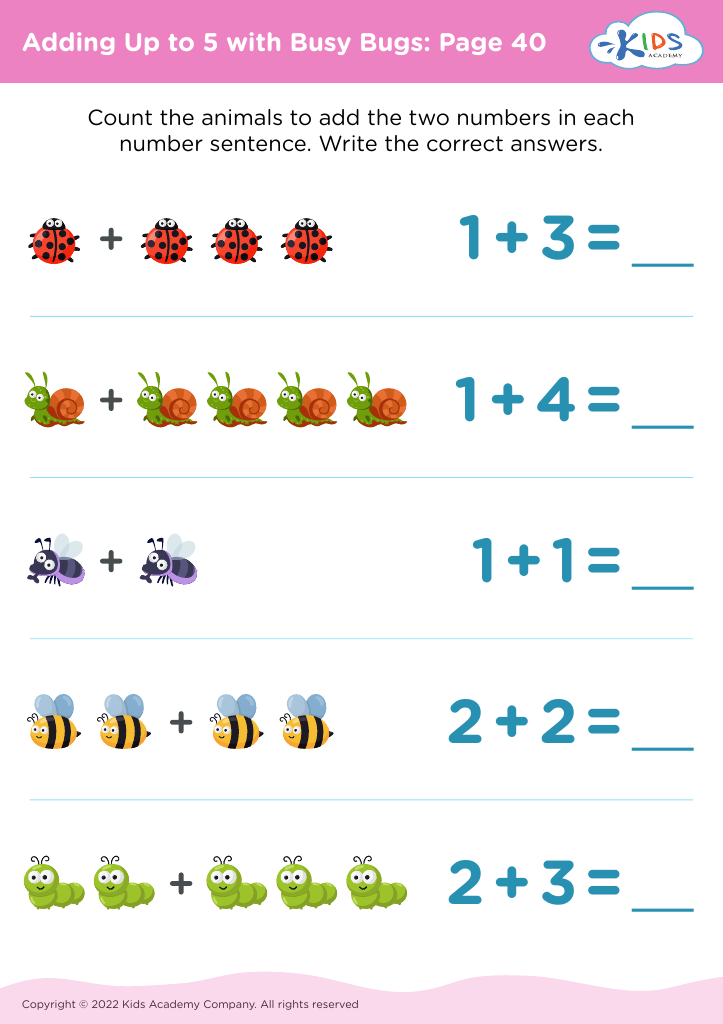
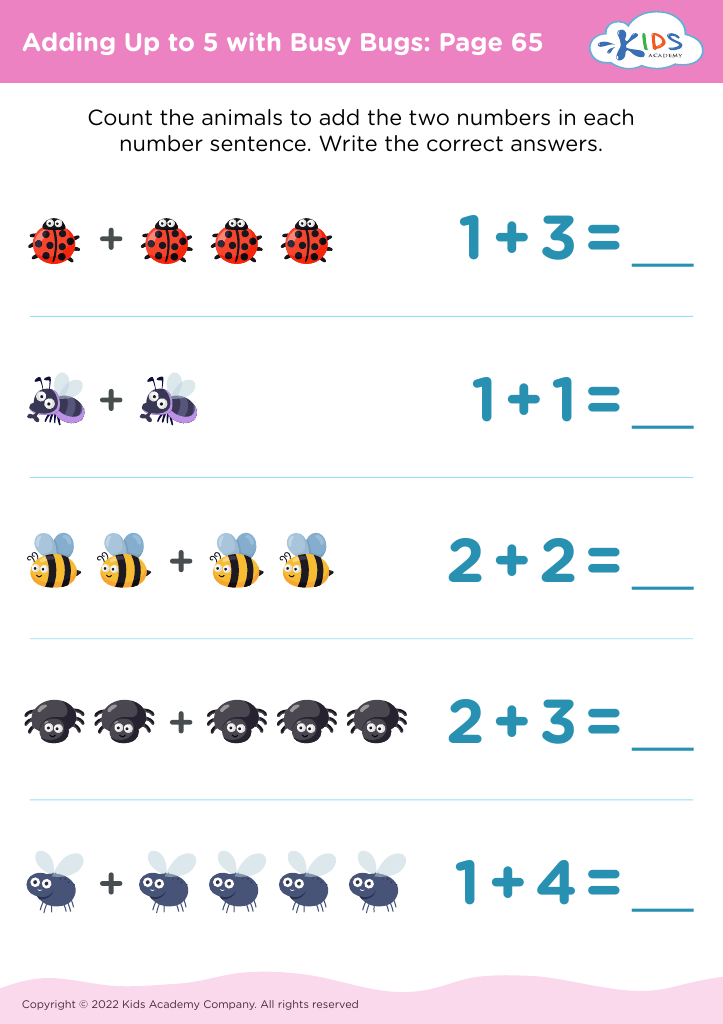
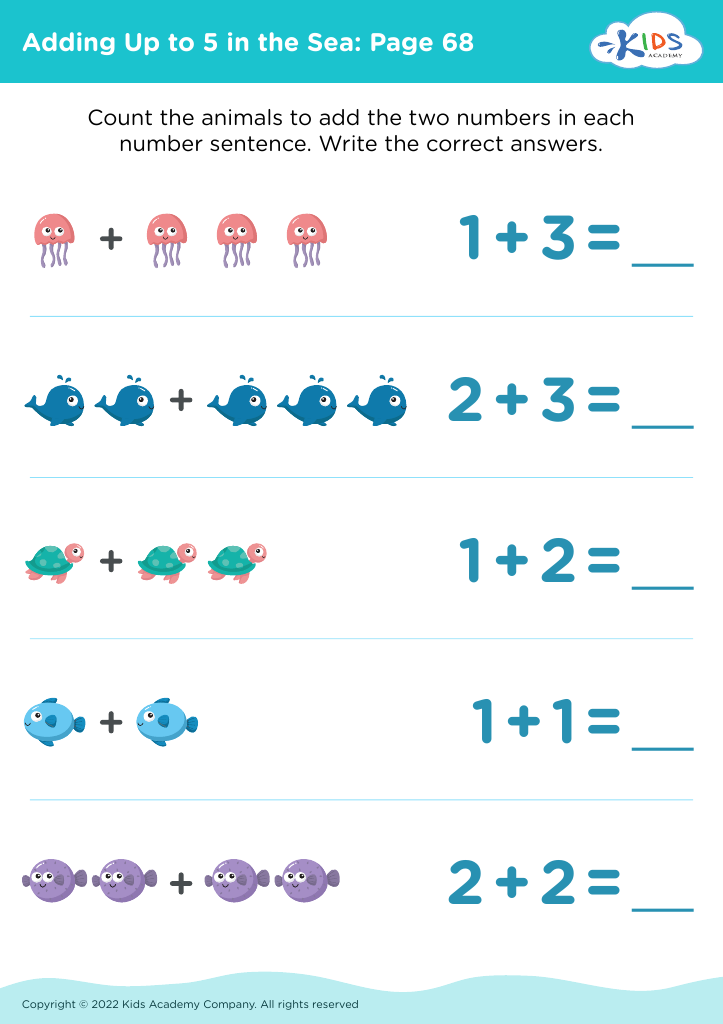
Parents and teachers should prioritize addition practice up to 5 for children aged 4 to 9 because it serves as a foundational skill for later mathematical understanding. Mastery of simple addition enhances children's confidence and enjoyment in learning calculus and problem-solving skills. At this age, children are developing critical cognitive abilities; introducing basic addition in a fun, engaging manner helps to solidify their understanding of numbers and enhances their numerical fluency.
Additionally, early math skills are predictive of later academic success. Becoming comfortable with small sums equips children with tools to tackle more complex mathematic concepts as they progress through school. It supports their cognitive development by encouraging logical thinking, pattern recognition, and focus.
Moreover, addition practice using interactive games, manipulatives, and everyday scenarios makes learning relatable and memorable. Incorporating activities like counting objects or playing math-based games fosters an enjoyable learning experience.
By embracing activities that promote addition practice up to 5, parents and teachers instill a love for math, paving the way for a strong mathematical foundation that will benefit children in their future academic journeys and everyday problem-solving.








