Filters

78 filtered results

Clear all filters
Favorites
With answer key
Interactive

78 filtered results

Difficulty Level

Grade


Check out this FREE Trial Lesson on Adding Up to 5 for age 4-9!

Match Objects that Fit Together

Favorites
With answer key
Interactive
  • 4-9
  • Addition skills
  • Adding Up to 5
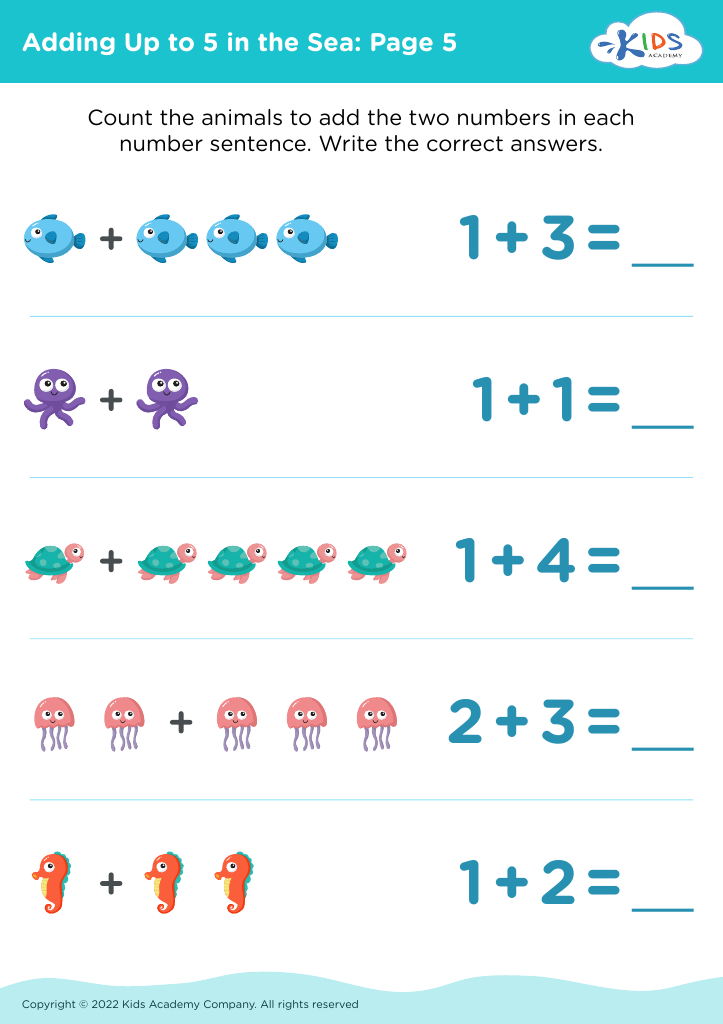
Adding Up to 5 in the Sea: Page 5

Adding Up to 5 in the Sea: Page 5

Adding Up to 5 in the Sea: Page 5
Worksheet
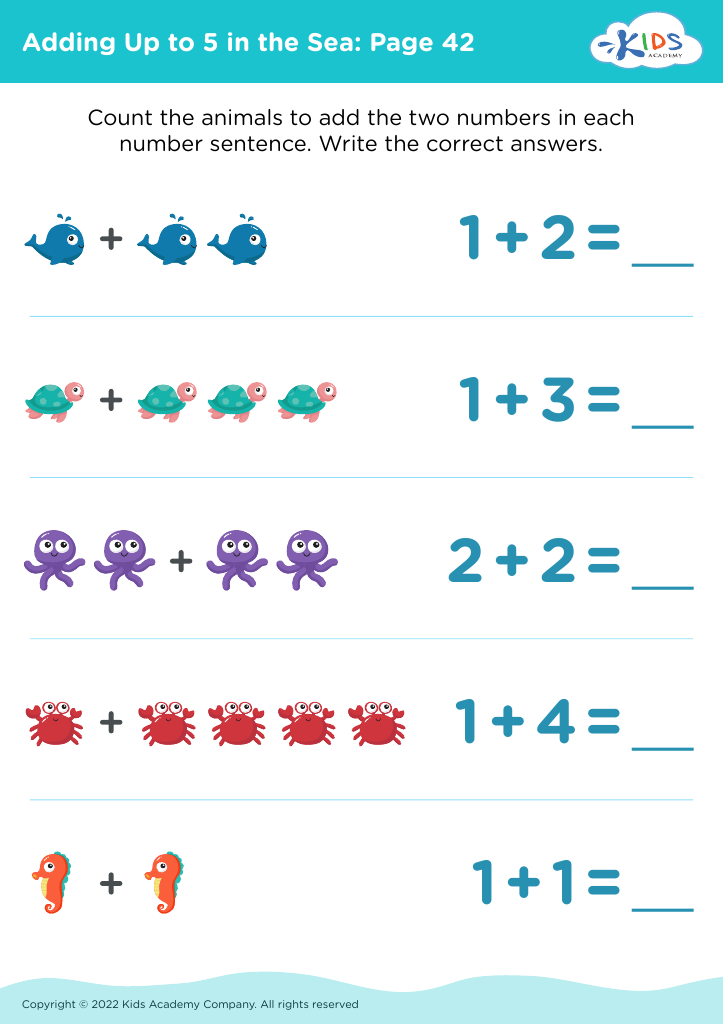
Adding Up to 5 in the Sea: Page 42
Worksheet
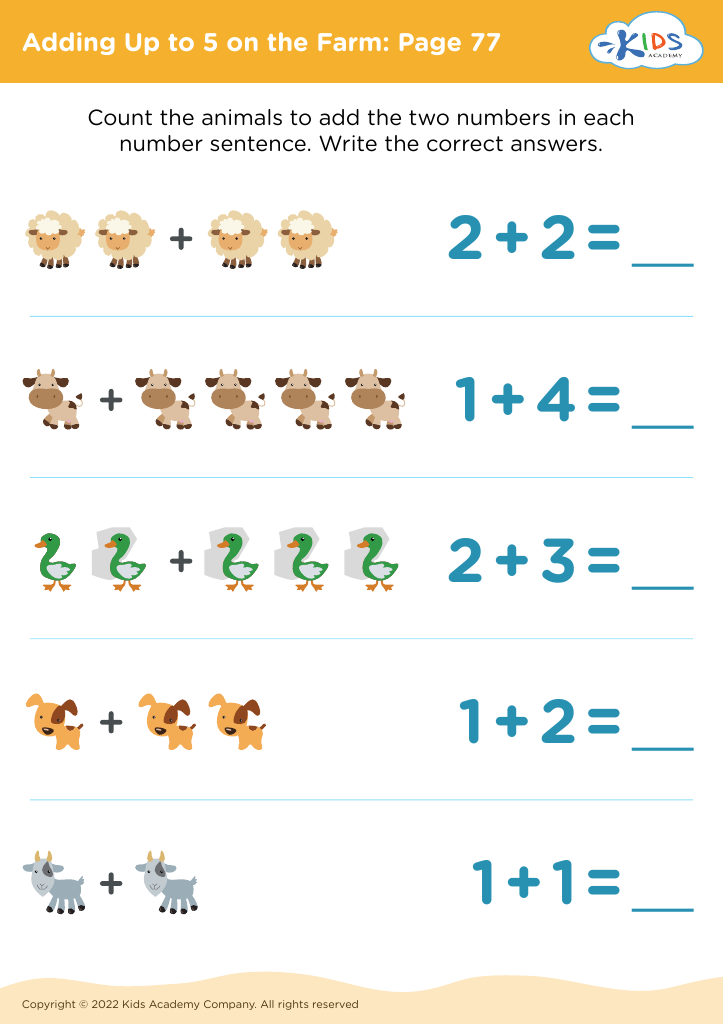
Adding Up to 5 on the Farm: Page 77
Worksheet
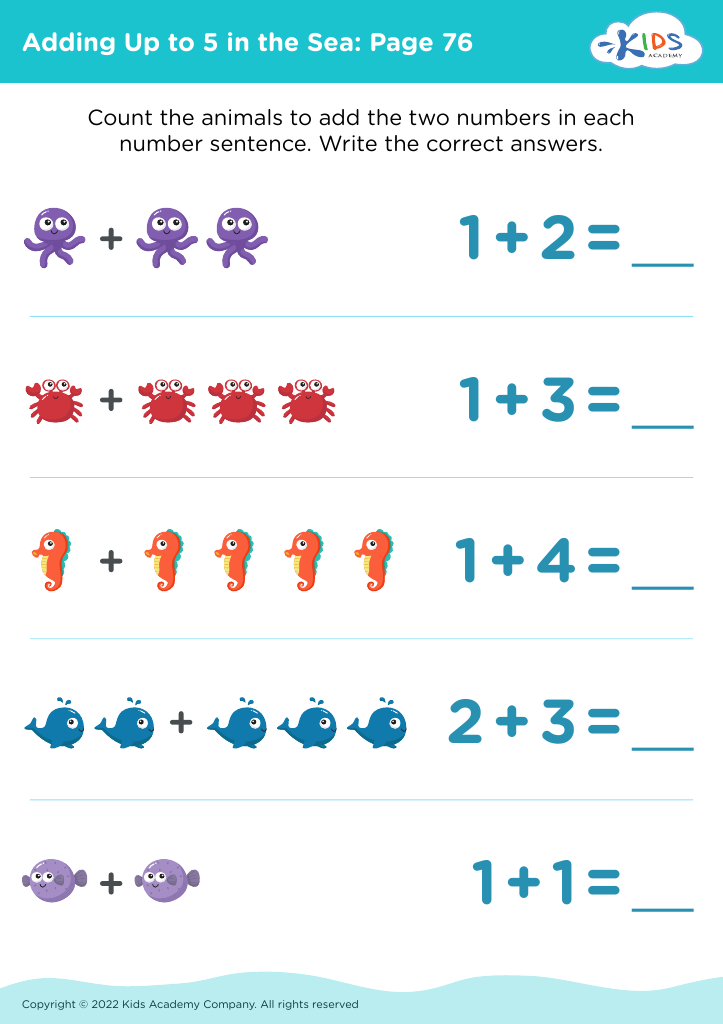
Adding Up to 5 in the Sea: Page 76
Worksheet
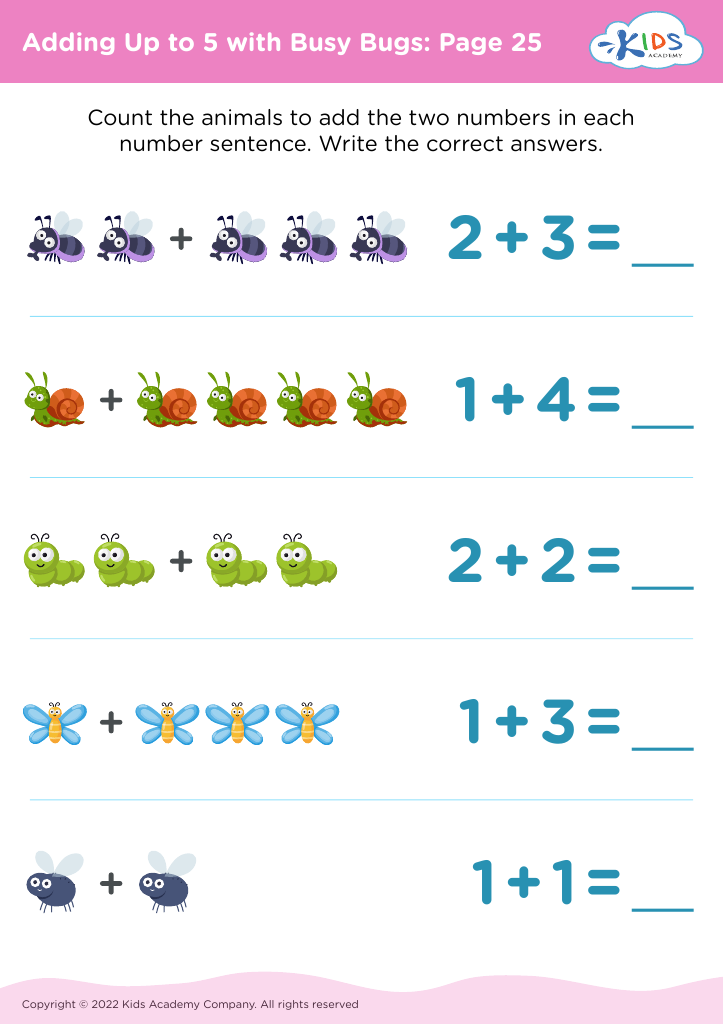
Adding Up to 5 with Busy Bugs: Page 25
Worksheet
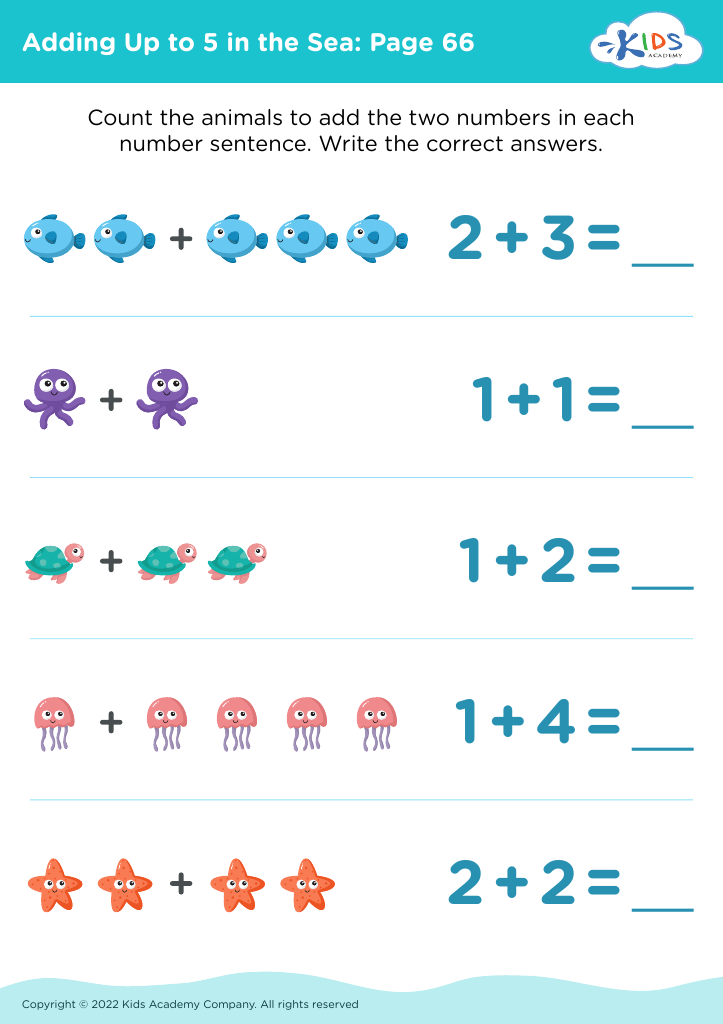
Adding Up to 5 in the Sea: Page 66
Worksheet
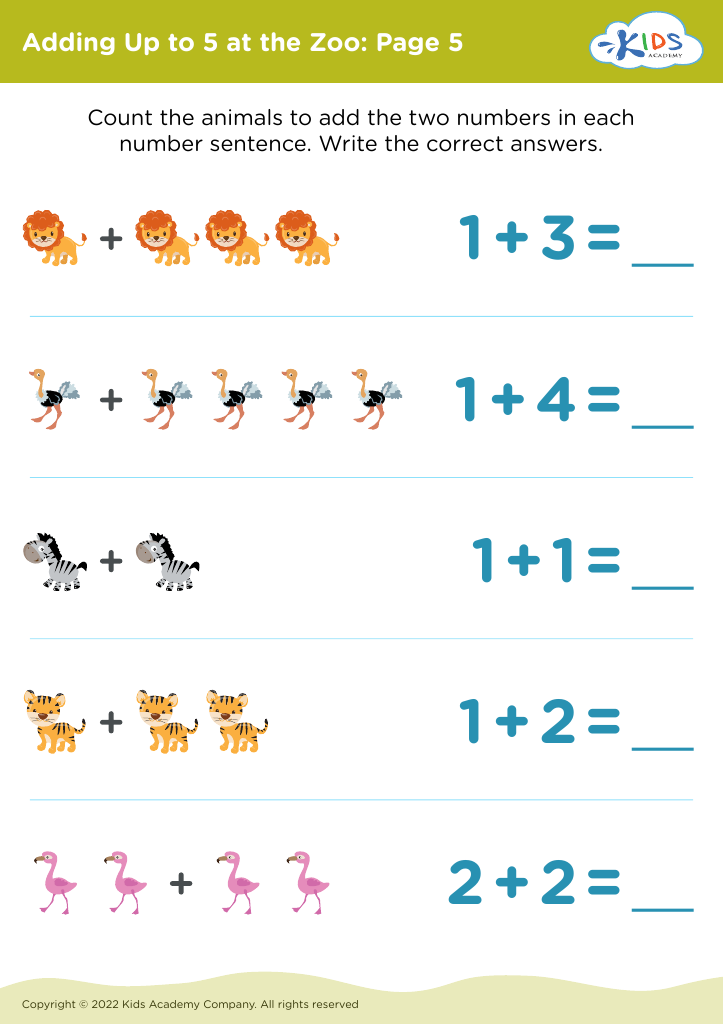
Adding Up to 5 at the Zoo: Page 5

Adding Up to 5 at the Zoo: Page 5

Adding Up to 5 at the Zoo: Page 5
Worksheet
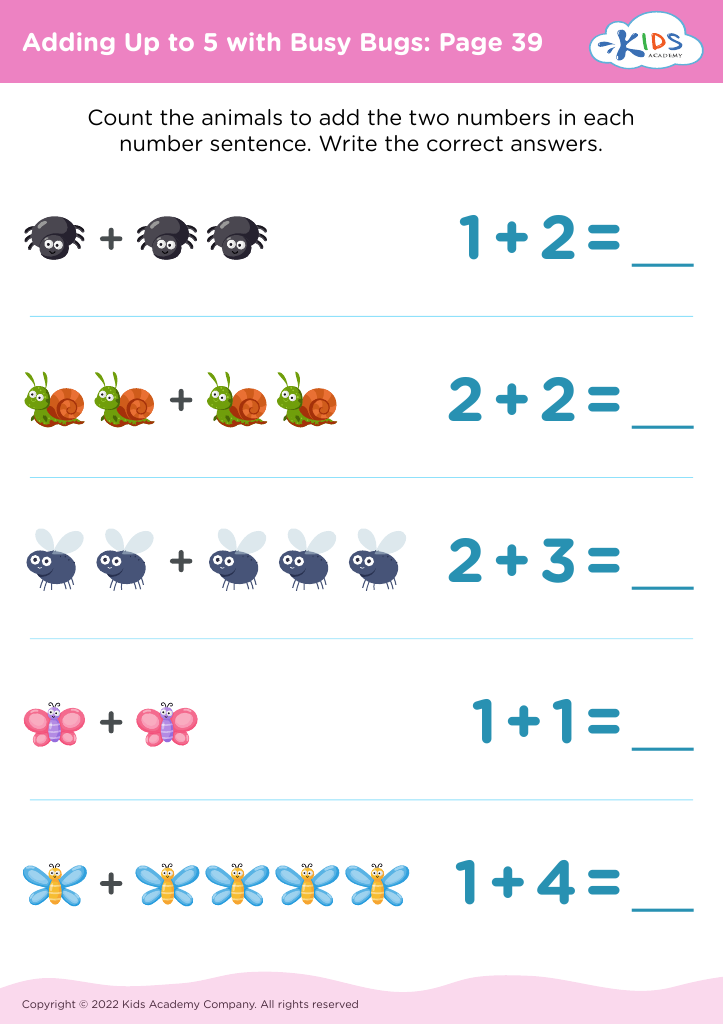
Adding Up to 5 with Busy Bugs: Page 39
Worksheet
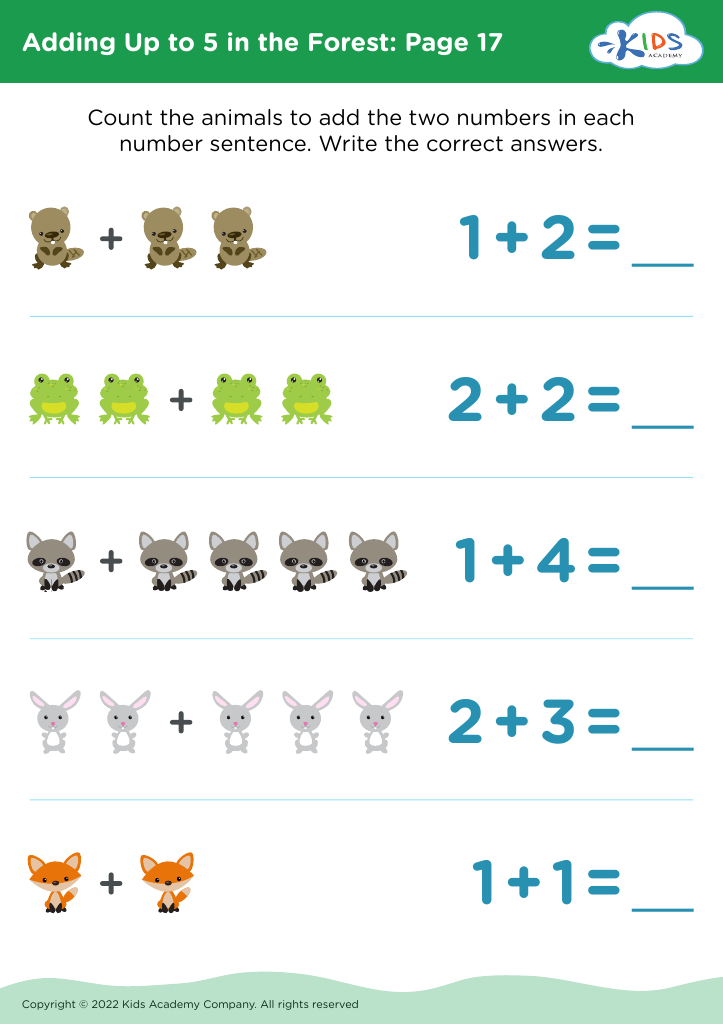
Adding Up to 5 in the Forest: Page 17
Worksheet
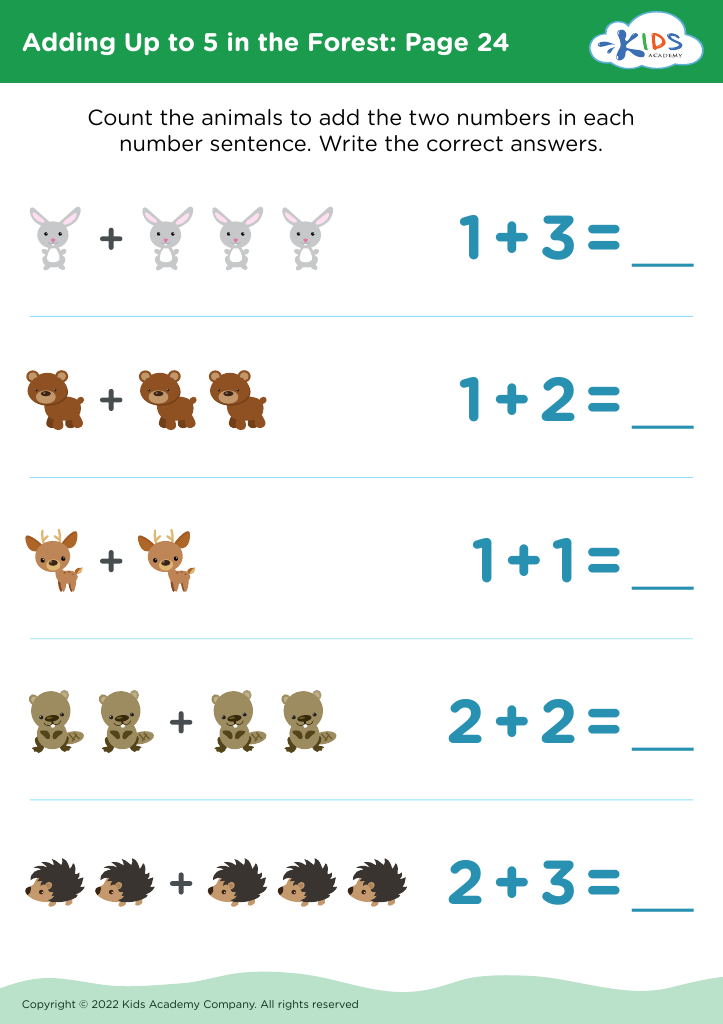
Adding Up to 5 in the Forest: Page 24
Worksheet
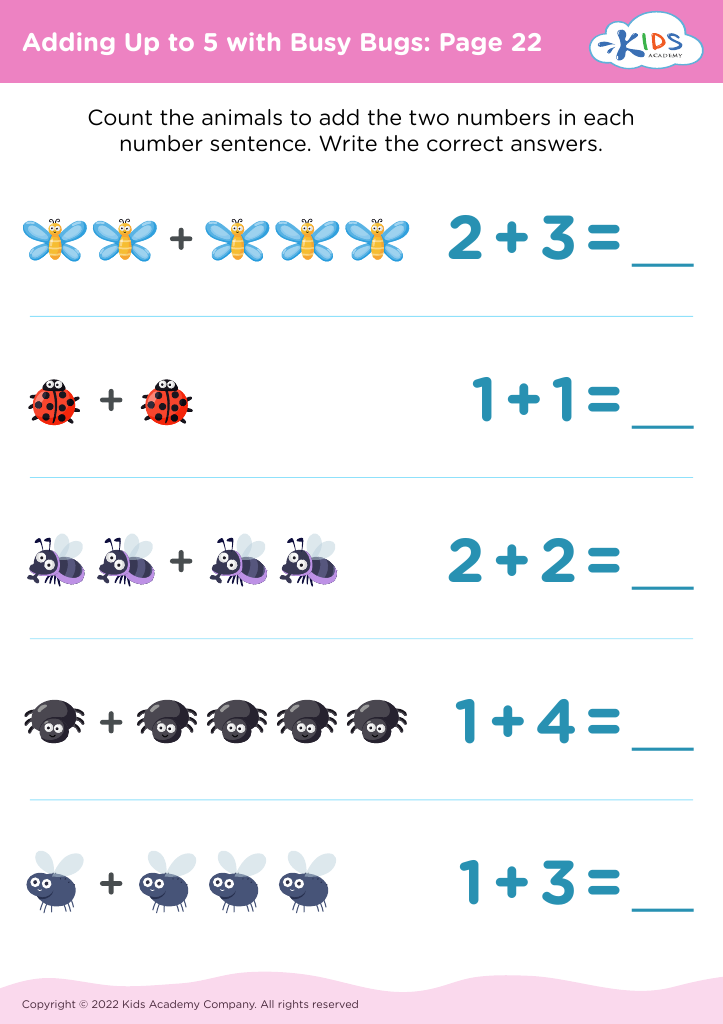
Adding Up to 5 with Busy Bugs: Page 22
Worksheet
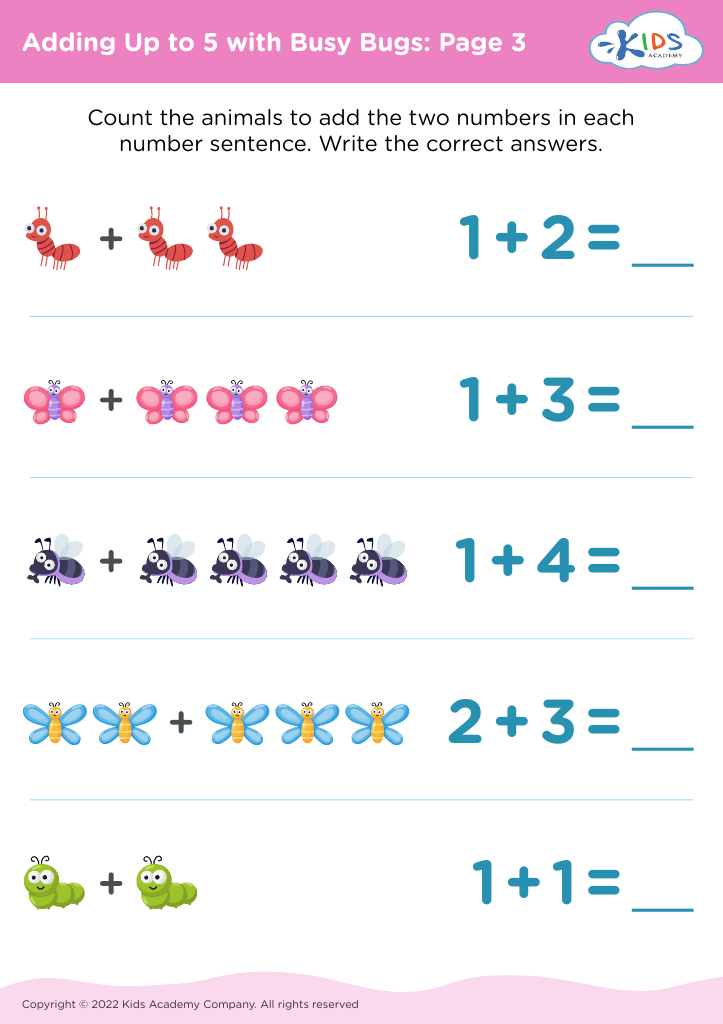
Adding Up to 5 with Busy Bugs: Page 3
Worksheet
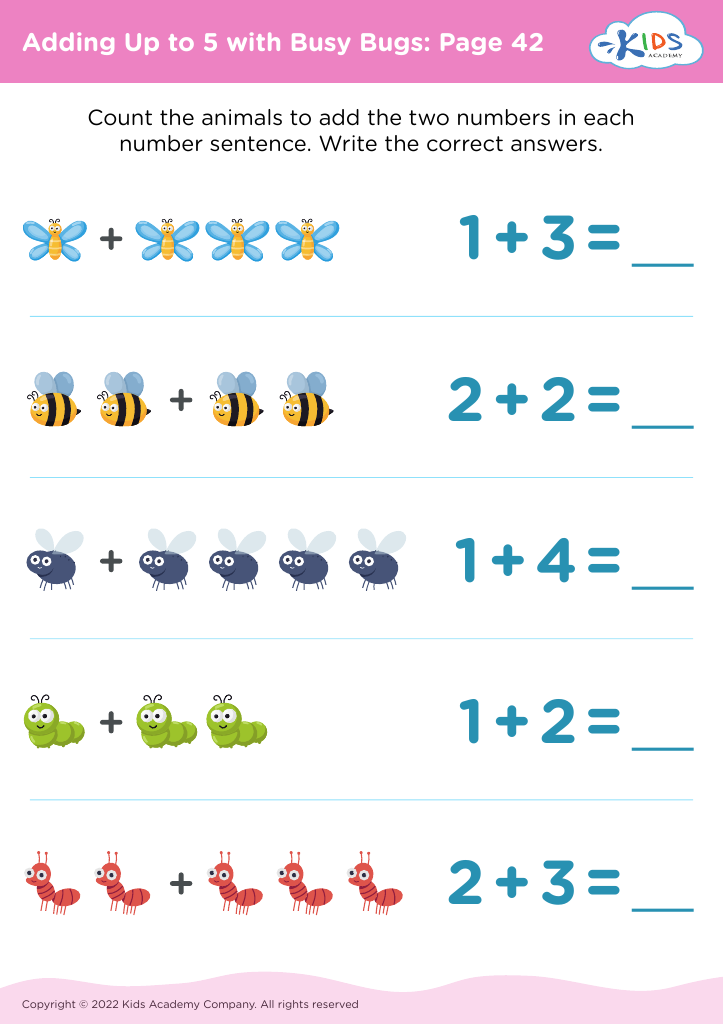
Adding Up to 5 with Busy Bugs: Page 42
Worksheet
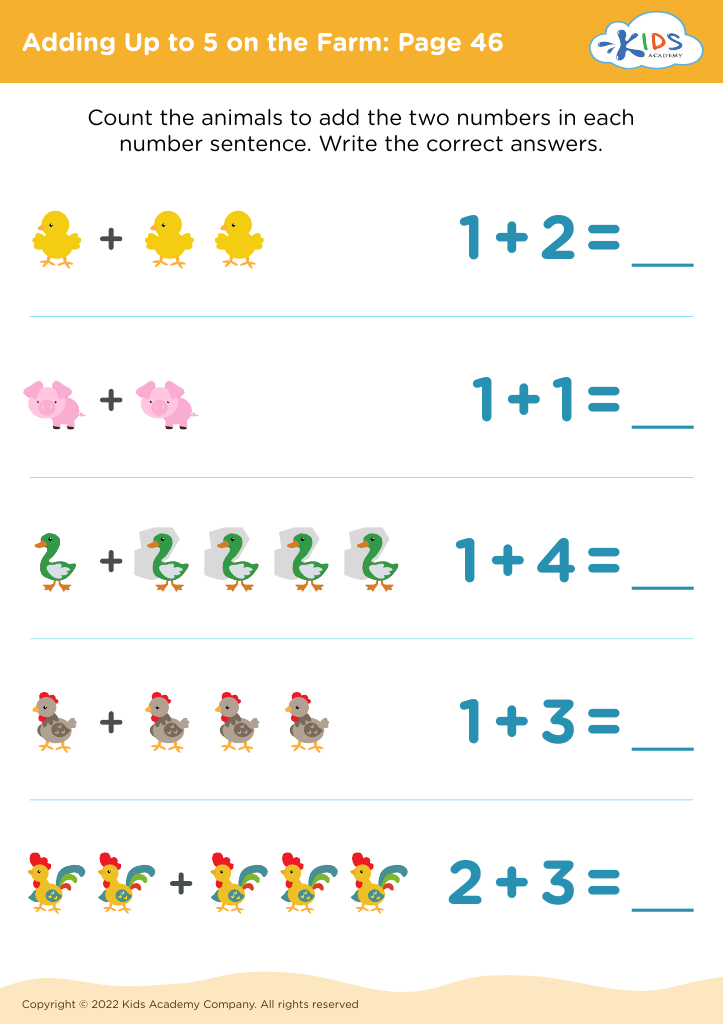
Adding Up to 5 on the Farm: Page 46
Worksheet
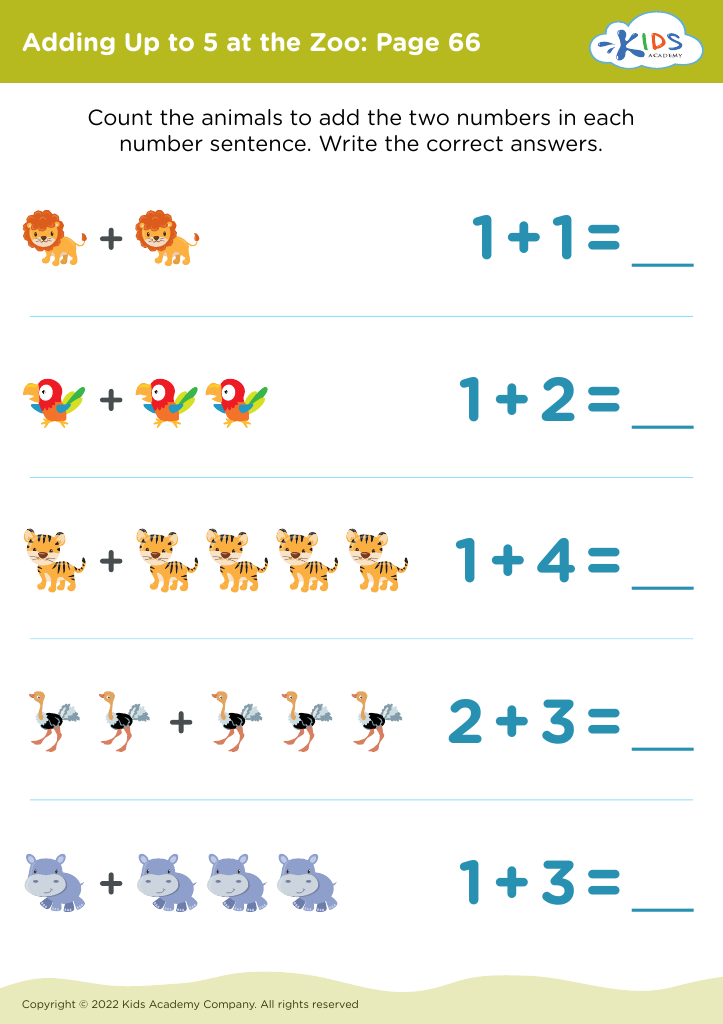
Adding Up to 5 at the Zoo: Page 66
Worksheet
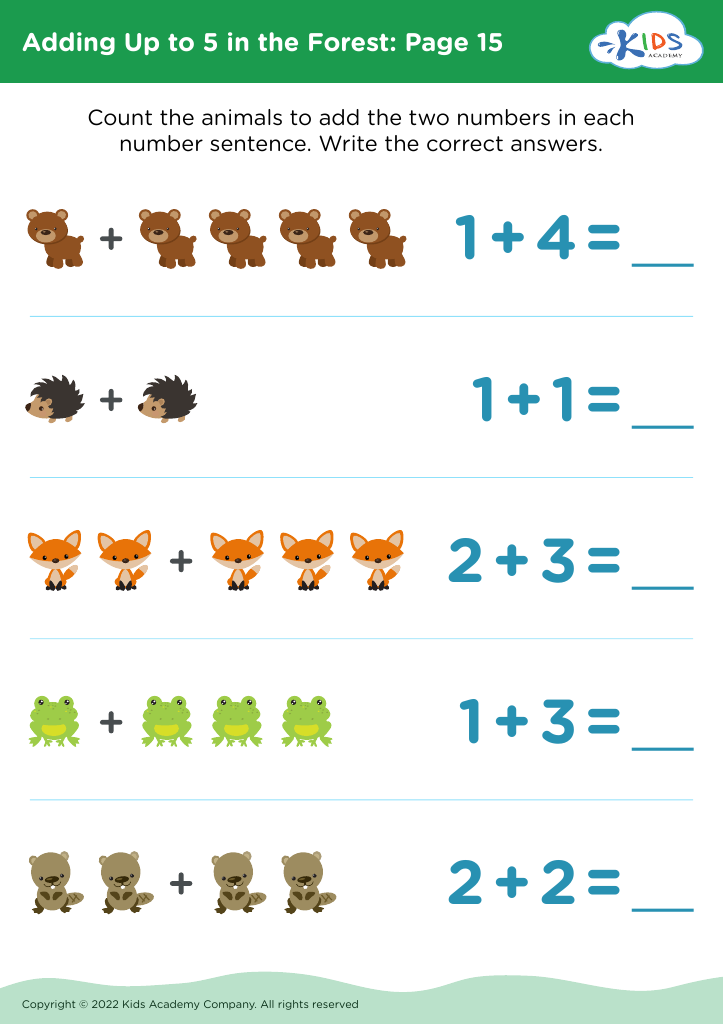
Adding Up to 5 in the Forest: Page 15
Worksheet
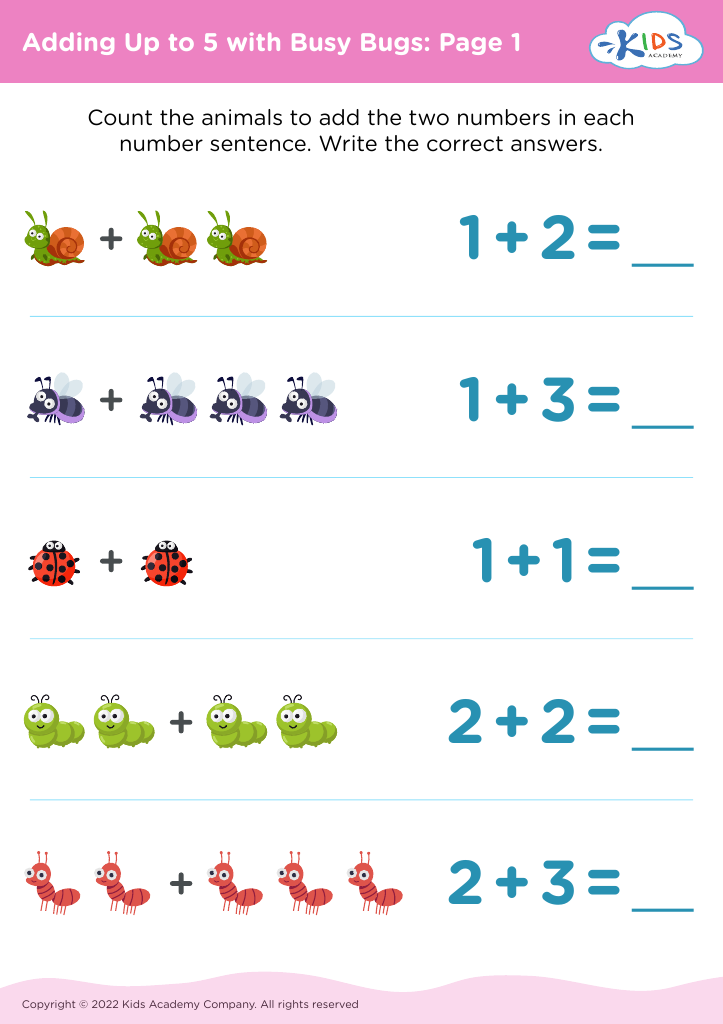
Adding Up to 5 with Busy Bugs: Page 1
Worksheet
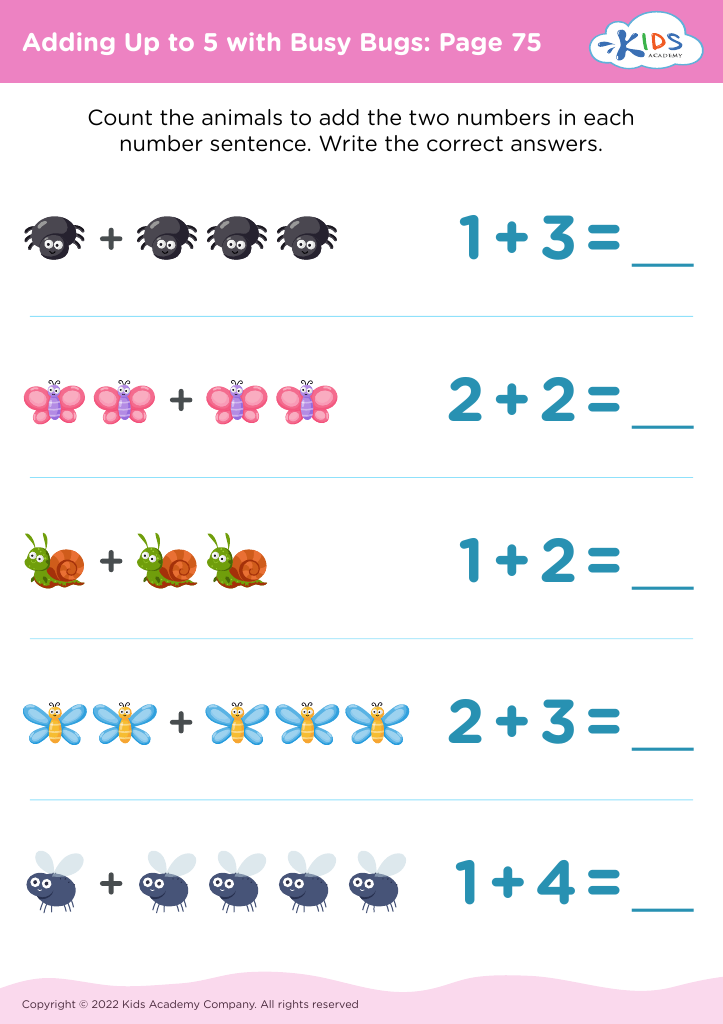
Adding Up to 5 with Busy Bugs: Page 75
Worksheet
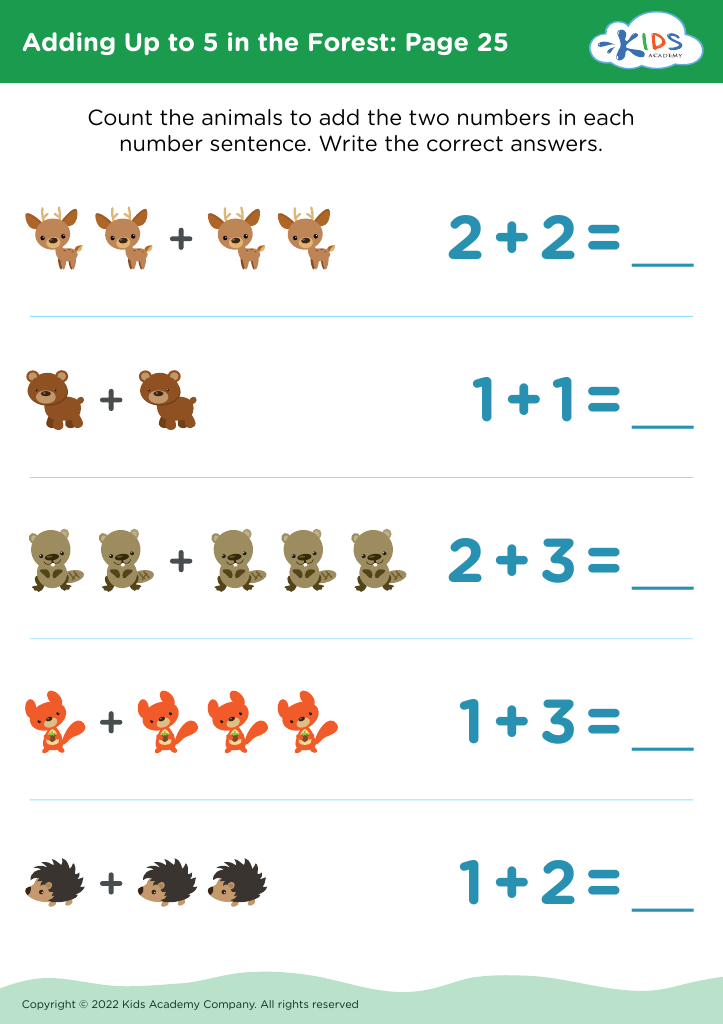
Adding Up to 5 in the Forest: Page 25
Worksheet
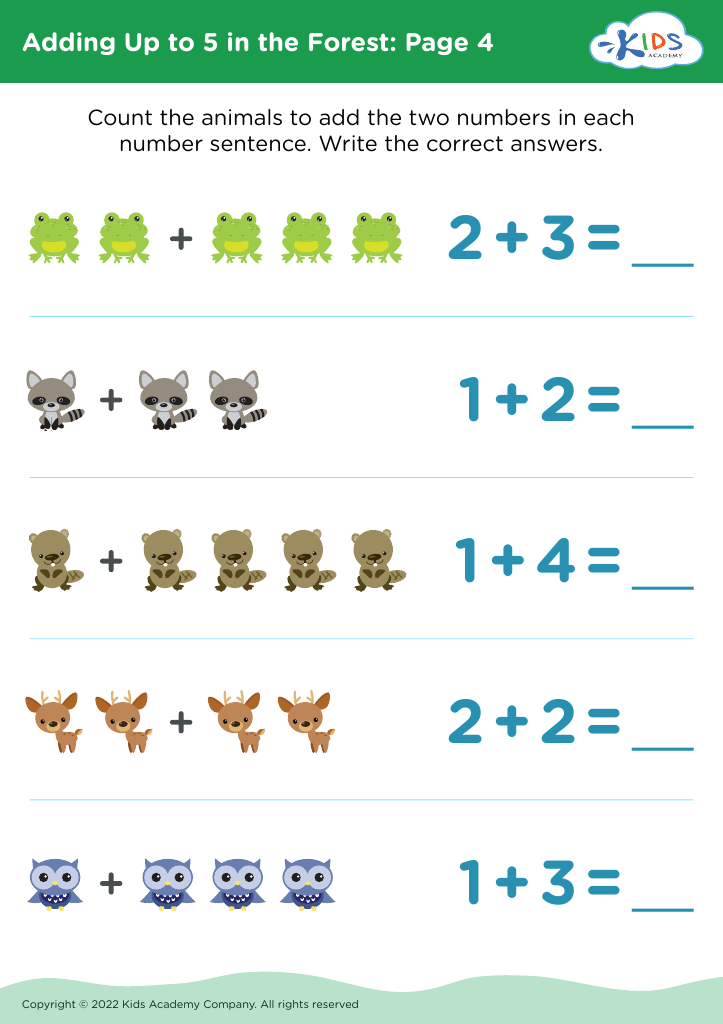
Adding Up to 5 in the Forest: Page 4
Worksheet
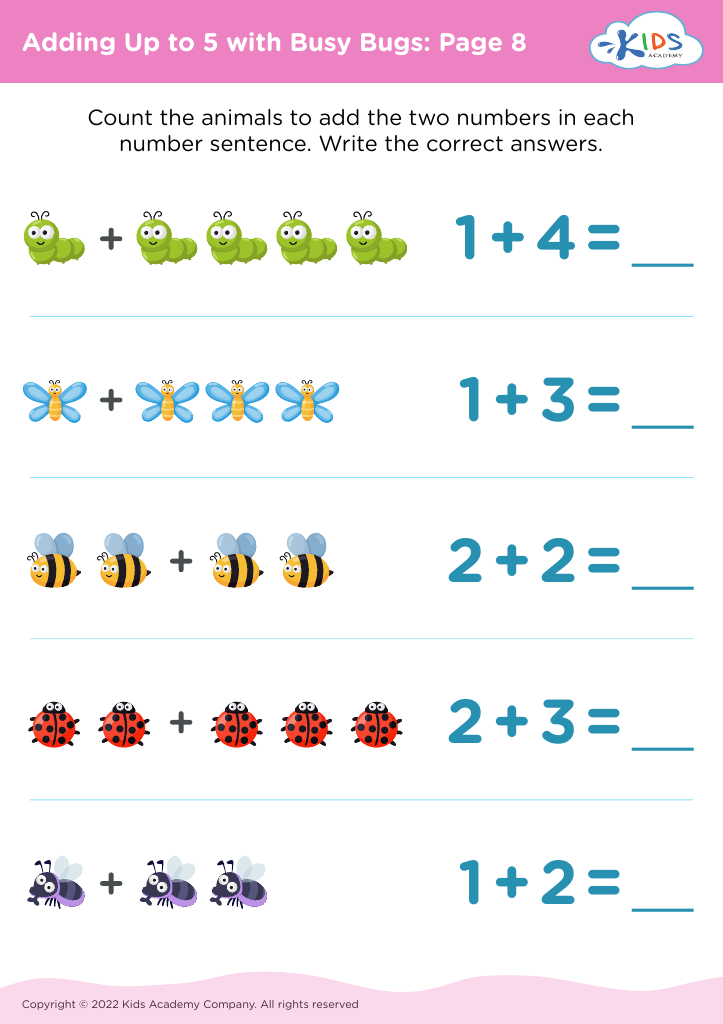
Adding Up to 5 with Busy Bugs: Page 8
Worksheet
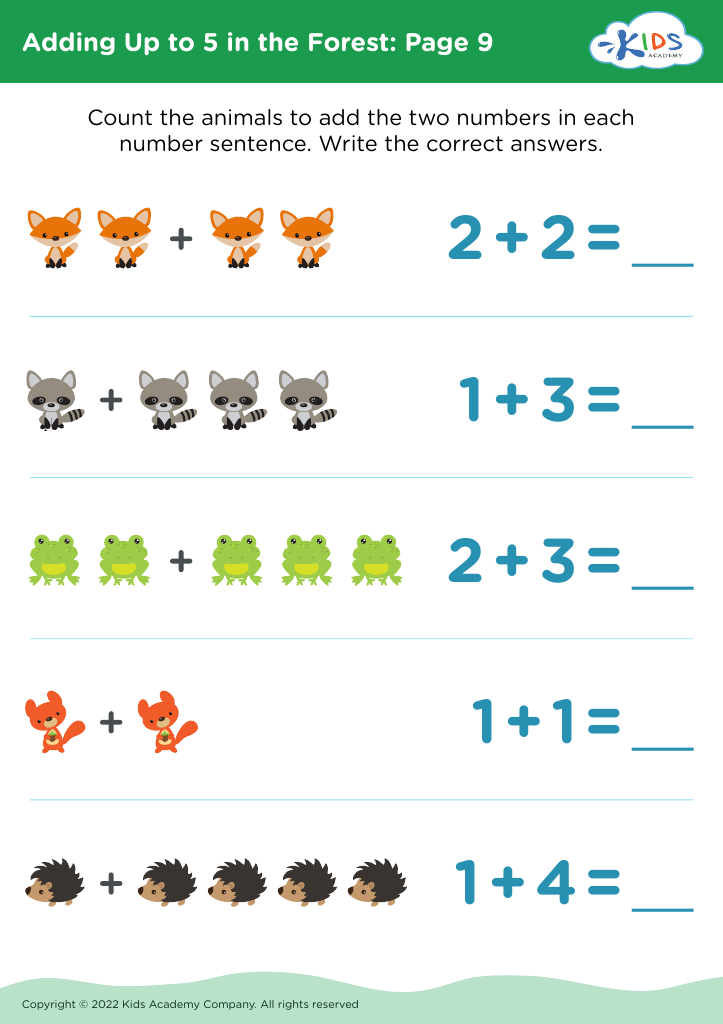
Adding Up to 5 in the Forest: Page 9
Worksheet
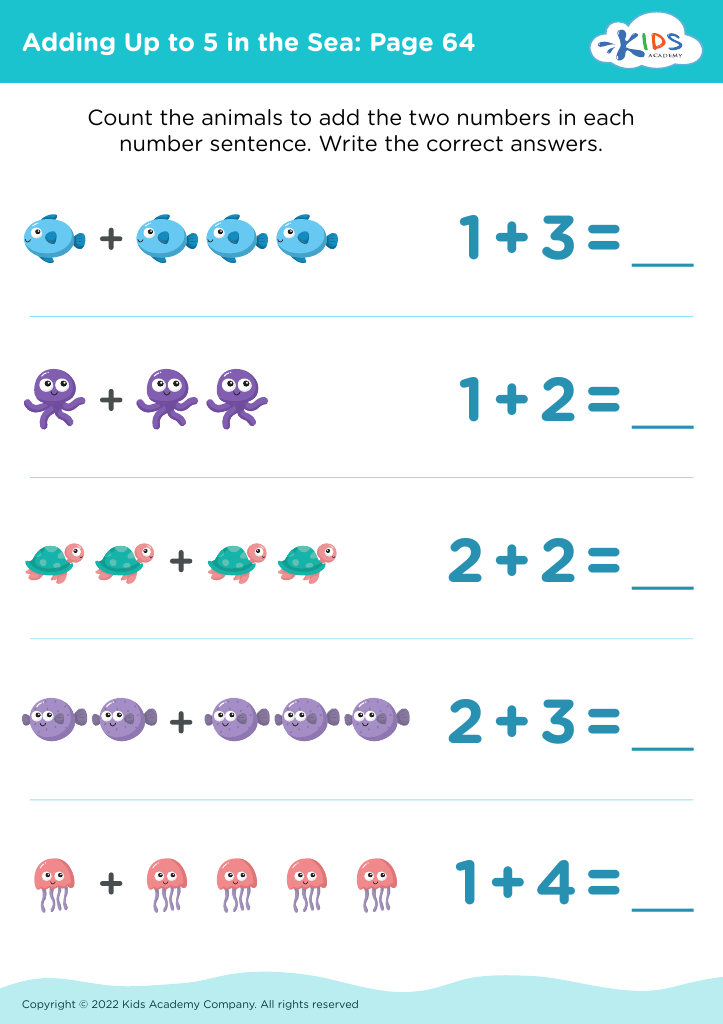
Adding Up to 5 in the Sea: Page 64
Worksheet
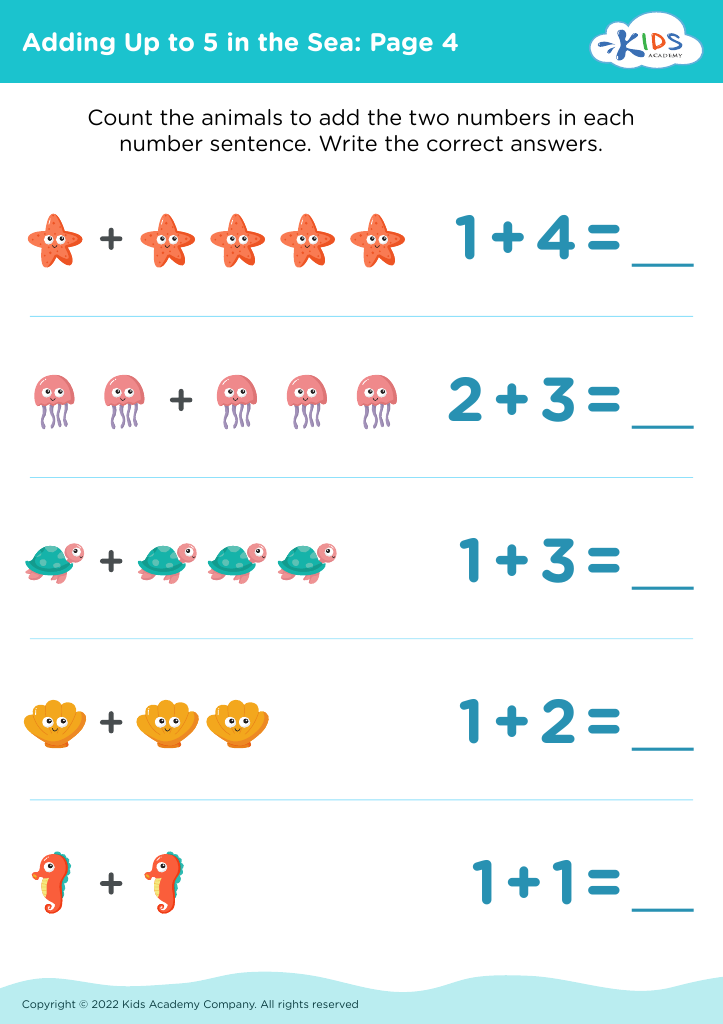
Adding Up to 5 in the Sea: Page 4

Adding Up to 5 in the Sea: Page 4

Adding Up to 5 in the Sea: Page 4
Worksheet


Addition skills, particularly mastering the concept of adding up to 5, are foundational for young learners aged 4 to 9. For parents and teachers, understanding and nurturing these skills is essential for several reasons.

Firstly, early mathematical skills foster critical thinking and problem-solving abilities. When children learn to add up to 5, they're not just memorizing numbers; they’re developing logical reasoning skills that benefit them across subjects.

Secondly, strong addition skills build confidence. Children who feel capable in math are more likely to engage with math-related tasks and persevere through challenges. This positive attitude towards learning not only enhances their academic journey but also influences their overall self-esteem.

Moreover, addition skills form the basis for more complex mathematical concepts. Understanding simple addition prepares children for more challenging operations like subtraction, multiplication, and division later on. In social settings, mastering these skills helps children interact during games and activities that involve counting and sharing.

Lastly, collaboration between parents and teachers in reinforcing addition skills through fun activities, such as games or stories, creates a supportive learning environment. Investing in these fundamental skills early on lays the groundwork for future success both academically and socially.