Comparing lengths Addition & Subtraction Worksheets for Ages 4-9
3 filtered results
-
From - To
Discover our engaging "Comparing Lengths Addition & Subtraction Worksheets" designed for children aged 4-9. These worksheets provide a fun, interactive way for young learners to grasp the concepts of length comparison while honing their addition and subtraction skills. With colorful visuals and age-appropriate exercises, kids will enjoy measuring and comparing objects, all while reinforcing their math abilities. Perfect for classroom activities or home learning, our resources encourage critical reasoning and problem-solving. Give your child the tools they need to succeed in math with these practical and entertaining worksheets, making learning a dynamic and enjoyable experience!
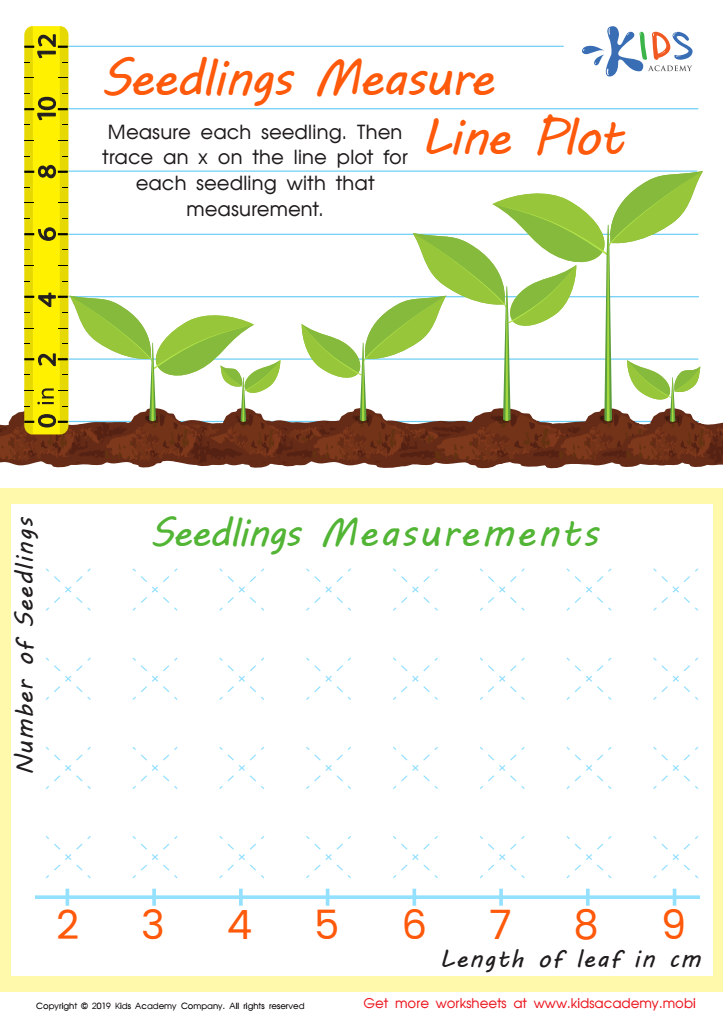
Seedling Measure Line Plot Worksheet
 Assign to My Students
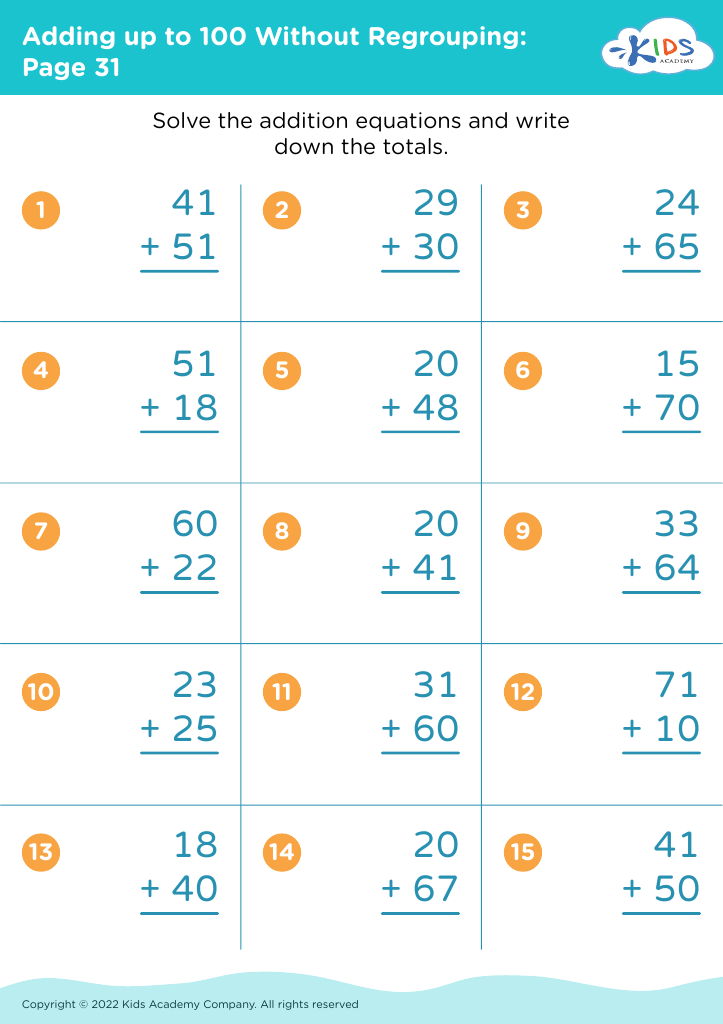
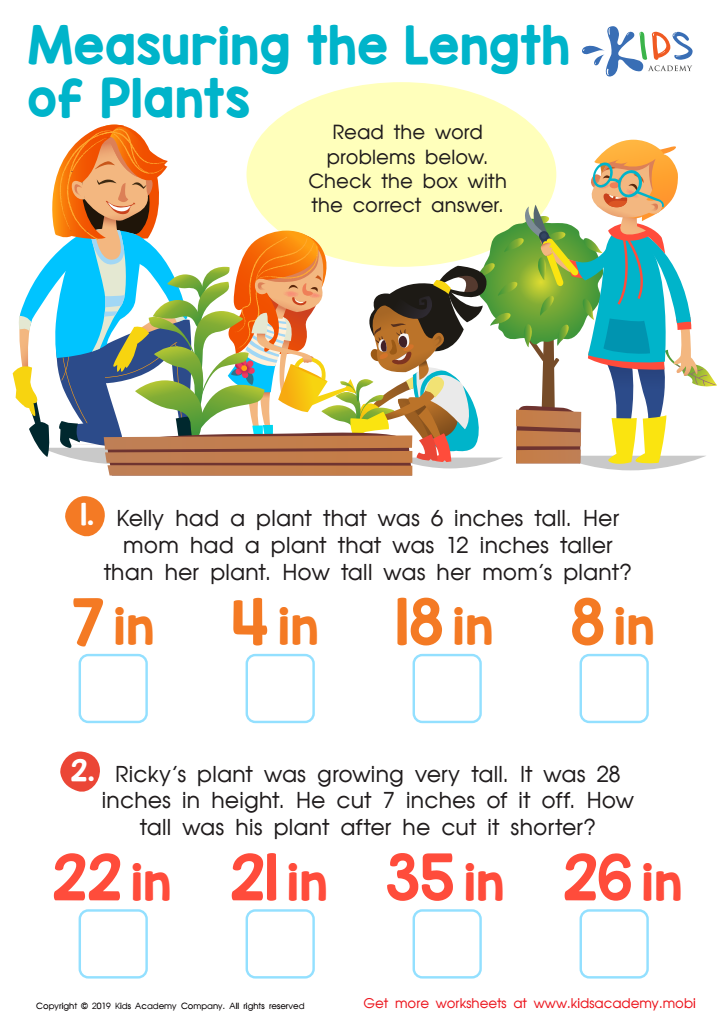
Measuring the Length of Plants Worksheet








Comparing lengths, along with addition and subtraction, forms a crucial component of early mathematics education for children ages 4 to 9. Understanding these concepts not only equips children with essential mathematical skills but also promotes logical thinking and problem-solving abilities. When parents or teachers emphasize comparing lengths, they introduce foundational concepts of measurement, helping children grasp the idea of more and less, richer than just numerical figures.
In early childhood, the ability to visually and experientially compare lengths fosters spatial awareness. This skill lays the groundwork for more complex mathematical concepts the child will encounter in the future. Moreover, addition and subtraction become tools for students to deepen their understanding of quantity and measurement. Incorporating real-world contexts—like comparing the height of plants or the lengths of different toys—makes learning relatable and engaging.
By nurturing this understanding, parents and teachers help children become confident mathematical thinkers. They learn to approach problems analytically while developing perseverance through trial and error. This skillset will be beneficial not just in math, but across disciplines, making it essential for holistic development. Therefore, promoting the basics of comparing lengths, addition, and subtraction shouldn't be overlooked; it forms a stepping stone for lifelong learning.








