Filters

9 filtered results

Clear all filters
Favorites
With answer key
Interactive

9 filtered results

Difficulty Level

Grade


Discover our engaging Critical Thinking Skills Addition and Subtraction Worksheets for children ages 4-9! Designed to bolster essential math abilities, these worksheets promote not just numerical proficiency, but also enhance analytical reasoning and problem-solving skills. Each worksheet is thoughtfully crafted to challenge young minds, encouraging them to explore various strategies for solving addition and subtraction problems. With colorful illustrations and age-appropriate exercises, children will enjoy learning while developing their critical thinking capabilities. Perfect for at-home practice or in-class activities, our worksheets provide a fun and interactive way for kids to master essential math concepts and become confident learners.

Check out this FREE Trial Lesson on Addition & Subtraction for age 4-9!

Add 3 & 4 Numbers at the same time

Favorites
With answer key
Interactive
  • 4-9
  • Critical thinking skills
  • Addition & Subtraction
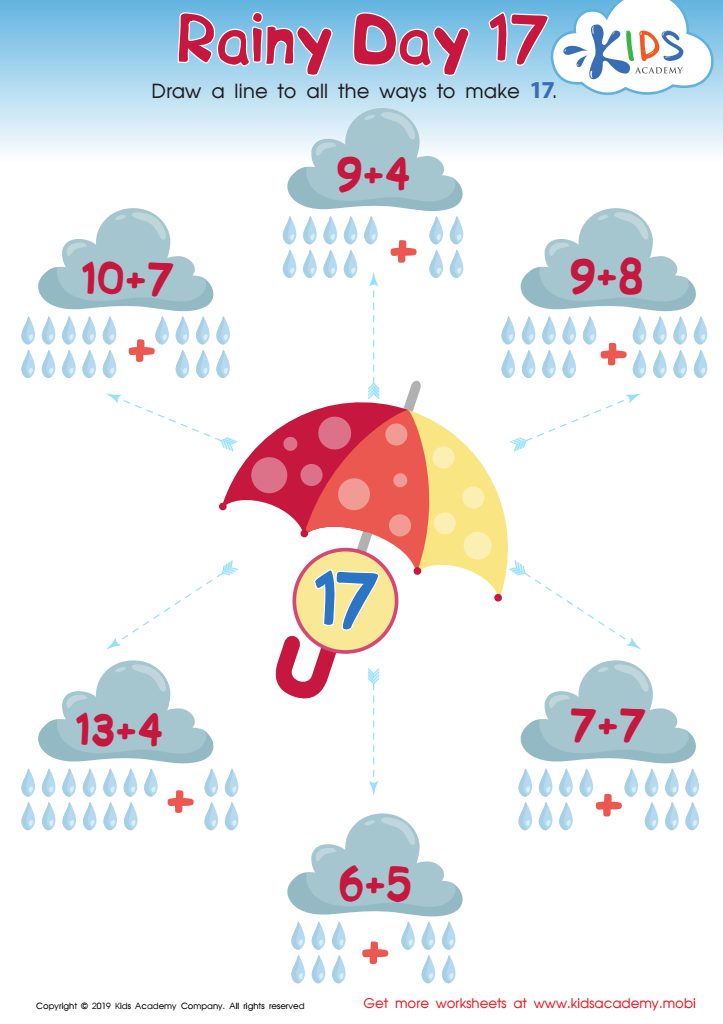
Rainy Day 17 Worksheet

Rainy Day 17 Worksheet

Assist your kids with the 6 equations given. Each cloud displays the sum of two numbers, some of which make 17. Guide them to figure out the total of both numbers when added and draw a line to the umbrella in the center to illustrate the different ways to make 17. This activity will sharpen their addition skills.
Rainy Day 17 Worksheet
Worksheet
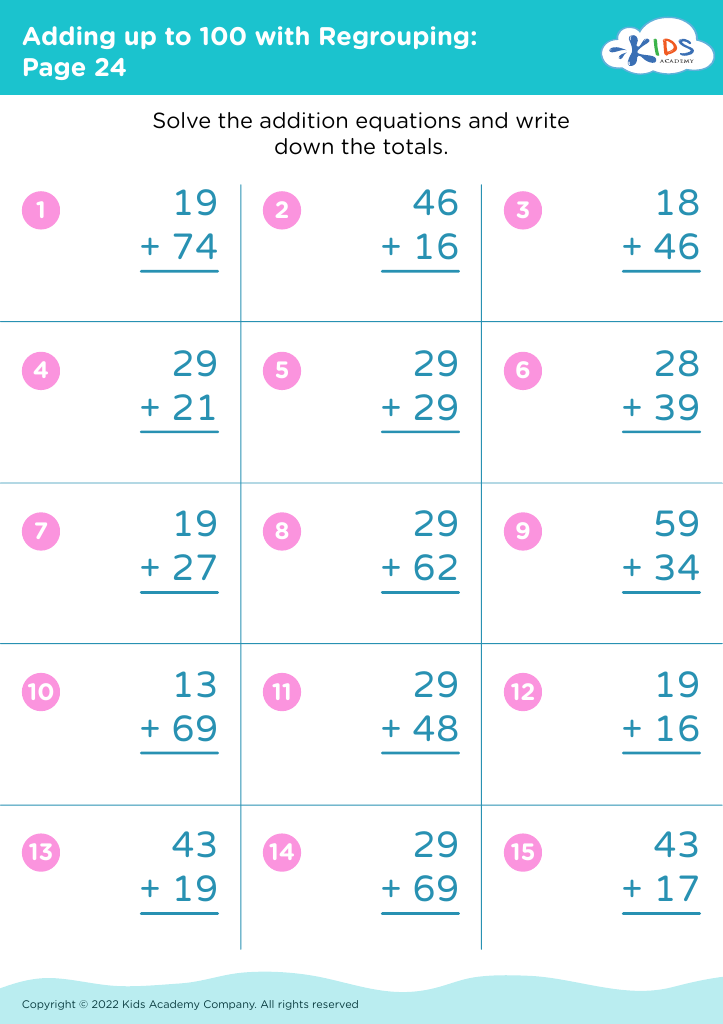
Adding up to 100 with Regrouping: Page 24
Worksheet
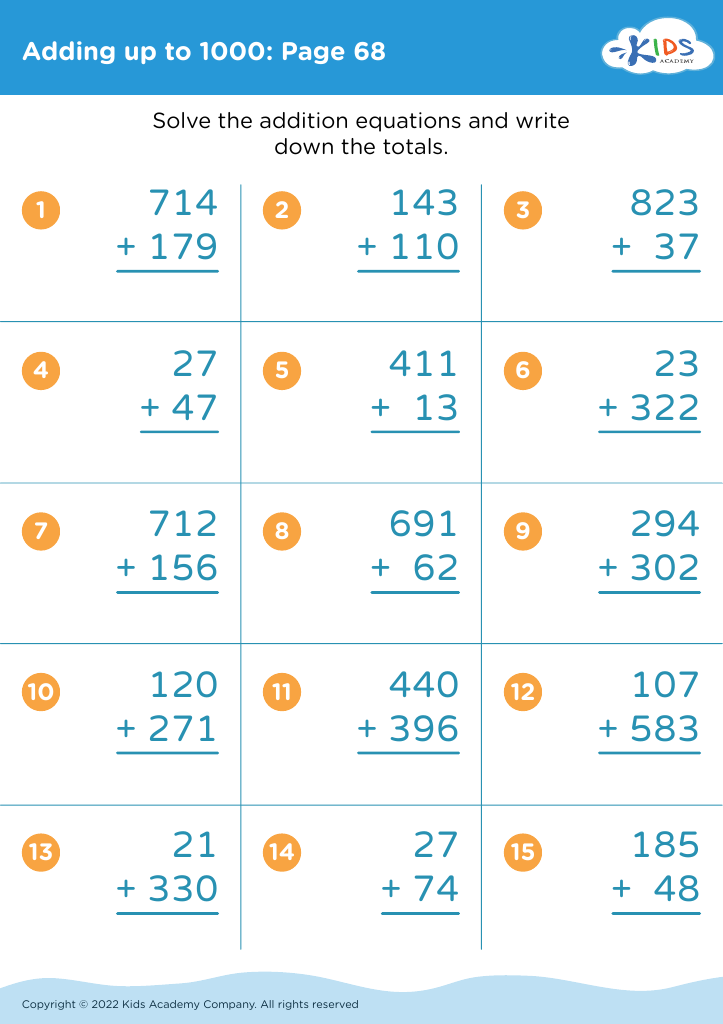
Adding up to 1000: Page 68

Adding up to 1000: Page 68

Adding up to 1000: Page 68
Worksheet
Rainforest Conservation Worksheet

Rainforest Conservation Worksheet

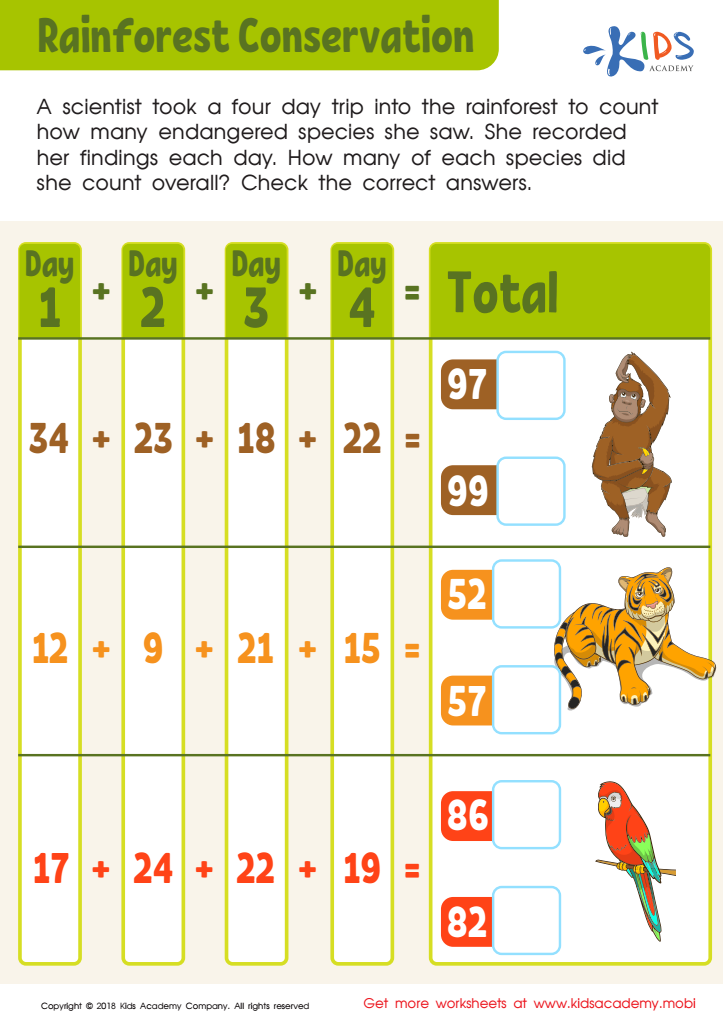
Explain to your child what a rainforest is and why it's important. A scientist took a four-day trip to count endangered species. Let your child count how many of each species were seen in total. Check the answers and help them understand.
Rainforest Conservation Worksheet
Worksheet
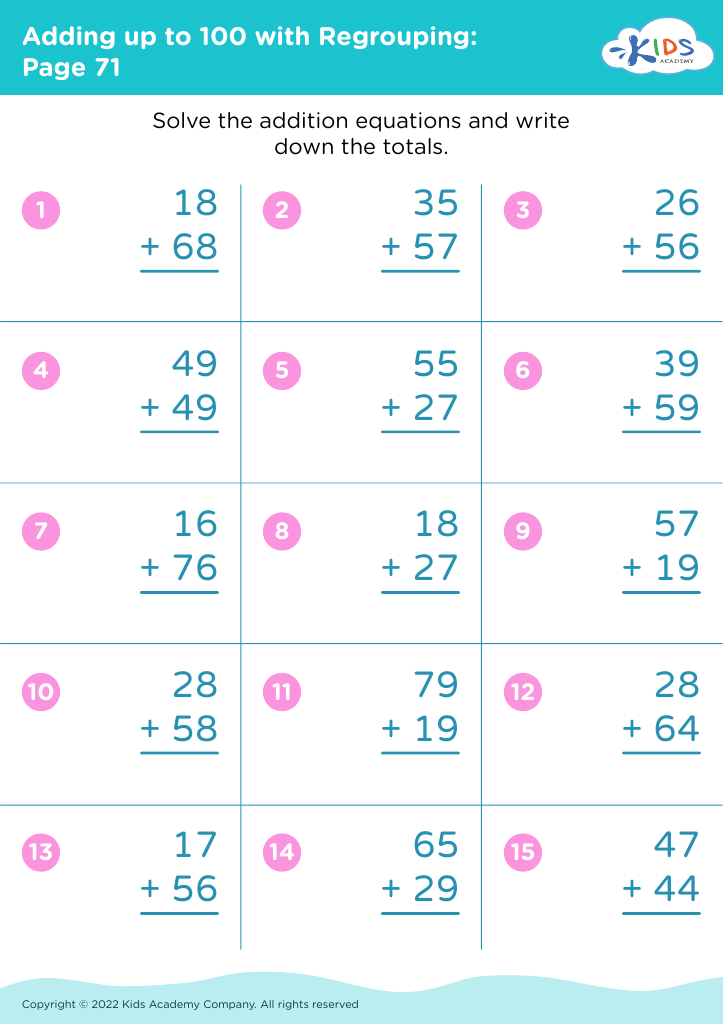
Adding up to 100 with Regrouping: Page 71
Worksheet
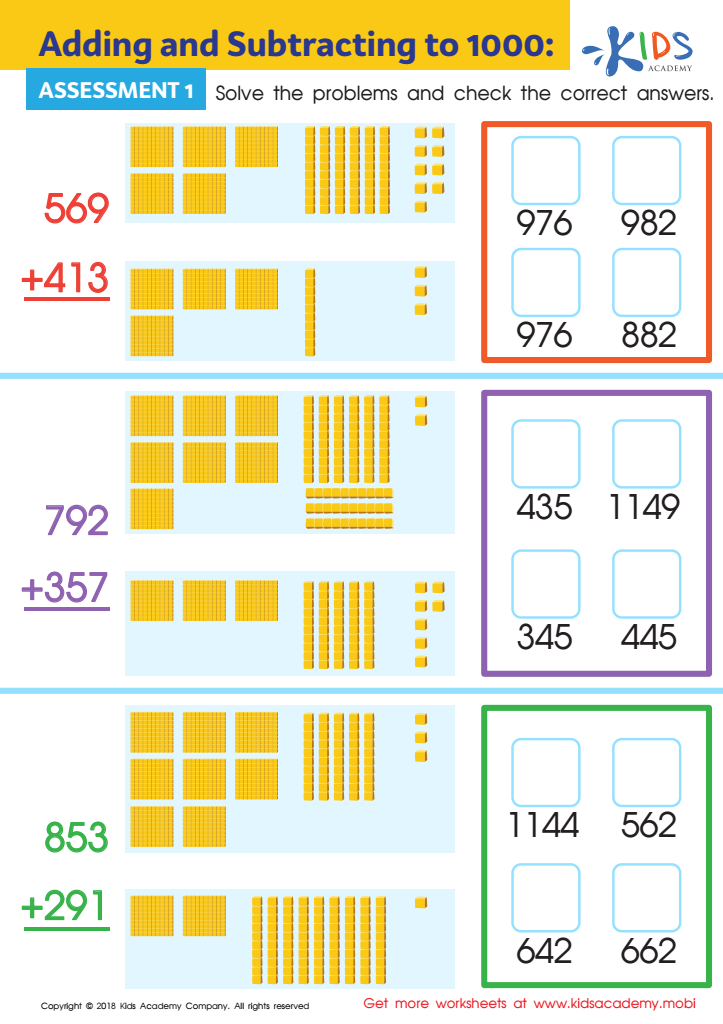
Adding and Subtracting to 1 Worksheet: Assessment 1
Adding and Subtracting to 1 Worksheet: Assessment 1
This assessment worksheet tests your child's addition skills. It has 3 3-digit problems with base ten blocks for visual aid. Encourage learners to use these visuals for better understanding. When they have solved the problems, they can check the box with the right answer. It's a quick and easy way to gauge numeracy development.
Adding and Subtracting to 1 Worksheet: Assessment 1
Worksheet
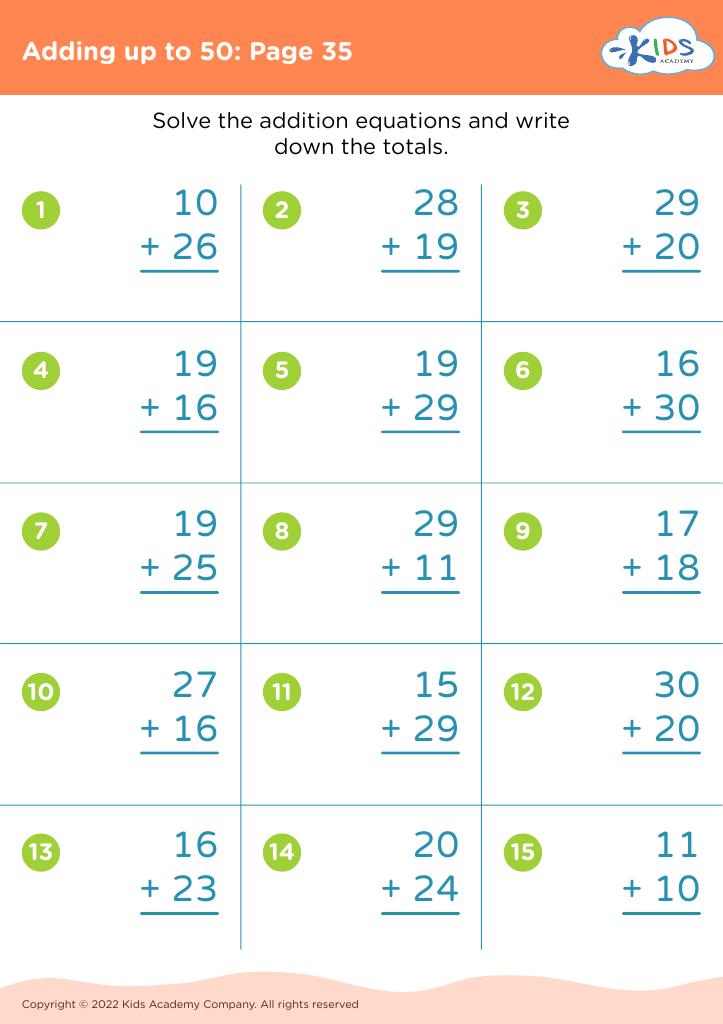
Adding up to 50: Page 35

Adding up to 50: Page 35

Adding up to 50: Page 35
Worksheet
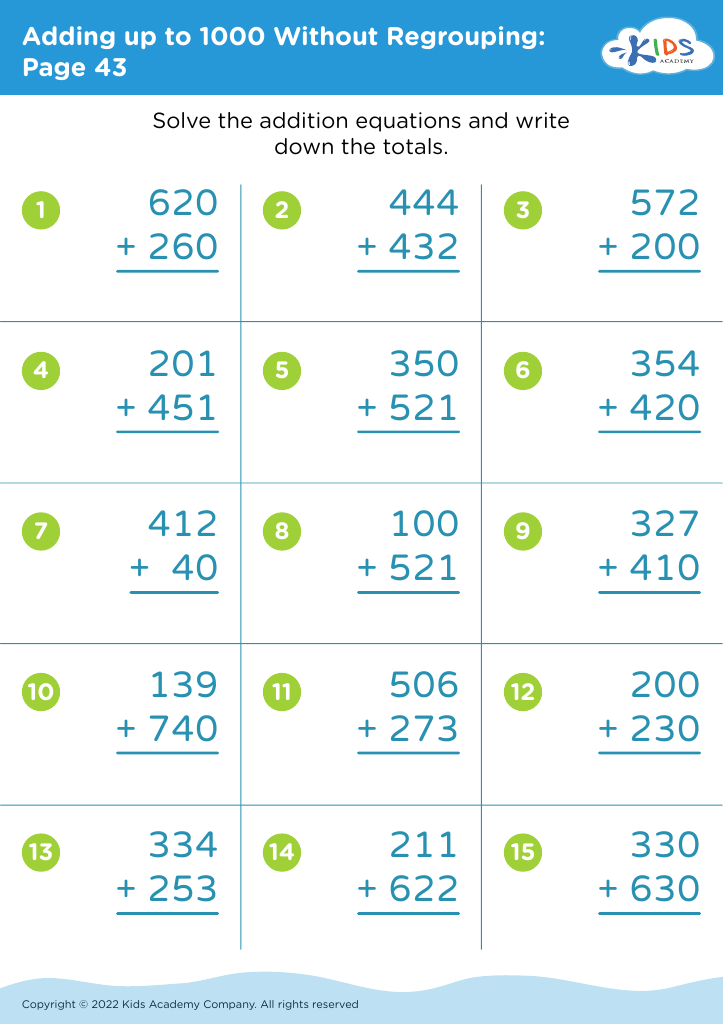
Adding up to 1000 Without Regrouping: Page 43
Worksheet
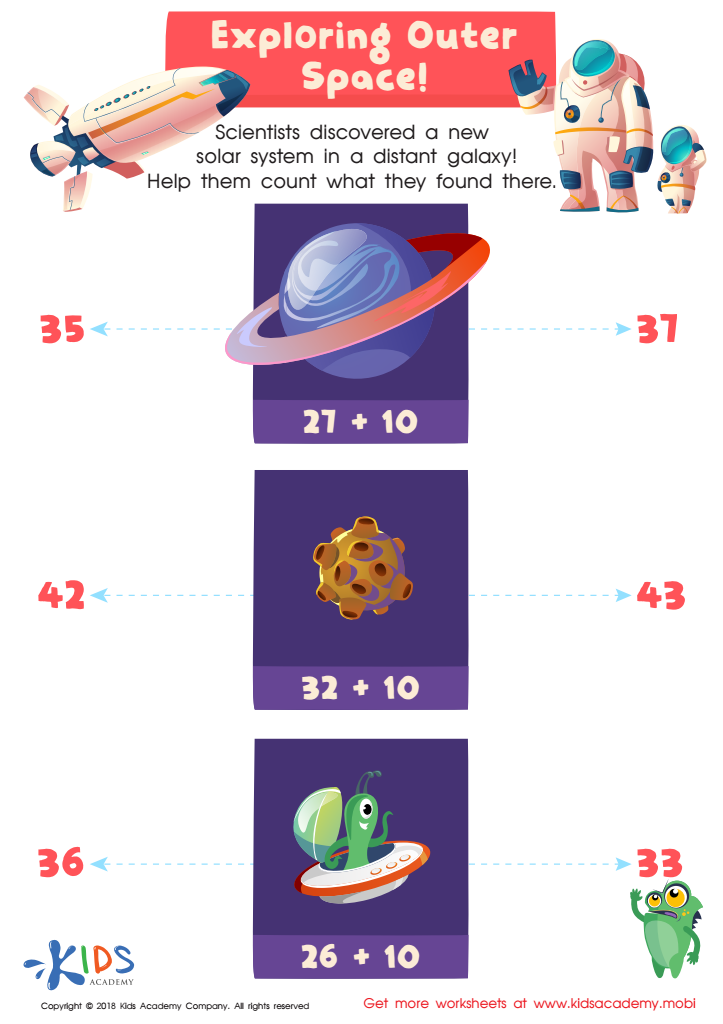
Exploring Outer Space Worksheet


Exploring Outer Space Worksheet

Outer space is an intriguing world. Physics behave differently than on Earth, and much remains to be uncovered. In this worksheet, scientists have located a new solar system in a distant galaxy. Explain to your kids what these two things are, then have them help count the findings. Solve the math problems, then link the lines to the right answer.
Exploring Outer Space Worksheet

Worksheet


Critical thinking skills in addition and subtraction for children aged 4-9 are essential for their overall cognitive development and future learning outcomes. During these formative years, children are not just memorizing facts or rules; they are learning how to analyze, evaluate, and apply math concepts in various contexts. By fostering critical thinking in basic arithmetic, we equip them with problem-solving skills that transcend math and apply to daily life.

Engaging young learners in critical thinking activities enhances their ability to understand the "why" behind calculations, fostering a deeper comprehension of numbers. For example, instead of simply teaching children to add or subtract, parents and teachers can encourage them to explore different strategies, discuss various solutions, and relate mathematical operations to real-world situations. This approach cultivates a love for learning and builds resilience as children learn to tackle challenges and understand mistakes as opportunities for growth.

Furthermore, developing critical thinking skills in math sets a solid foundation for future academic success across all subjects. As these children progress in their education, they will be better prepared to tackle complex problems, think independently, and navigate an increasingly challenging world. Ultimately, investing time in nurturing these skills reaps lifelong benefits for children.