Developing Concentration Addition & Subtraction Worksheets for Ages 4-9
6 filtered results
-
From - To
Discover engaging "Developing Concentration Addition & Subtraction Worksheets" designed for children aged 4-9 on our web page. These worksheets enhance essential math skills while boosting focus and attention through fun, interactive activities. By integrating concentration games with addition and subtraction exercises, children will not only build their arithmetic abilities but also strengthen their cognitive skills. Our colorful, easy-to-use worksheets are perfect for home or classroom learning, ensuring young learners stay motivated and enthusiastic about math. Explore our collection today to support your child’s educational journey and make math a delightful experience!
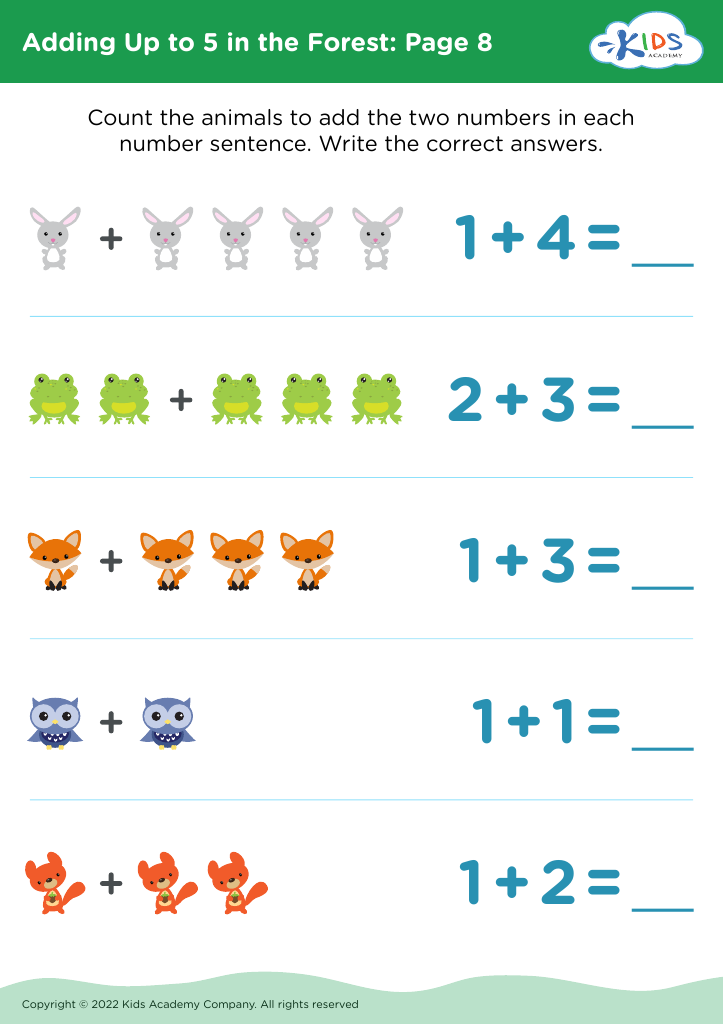
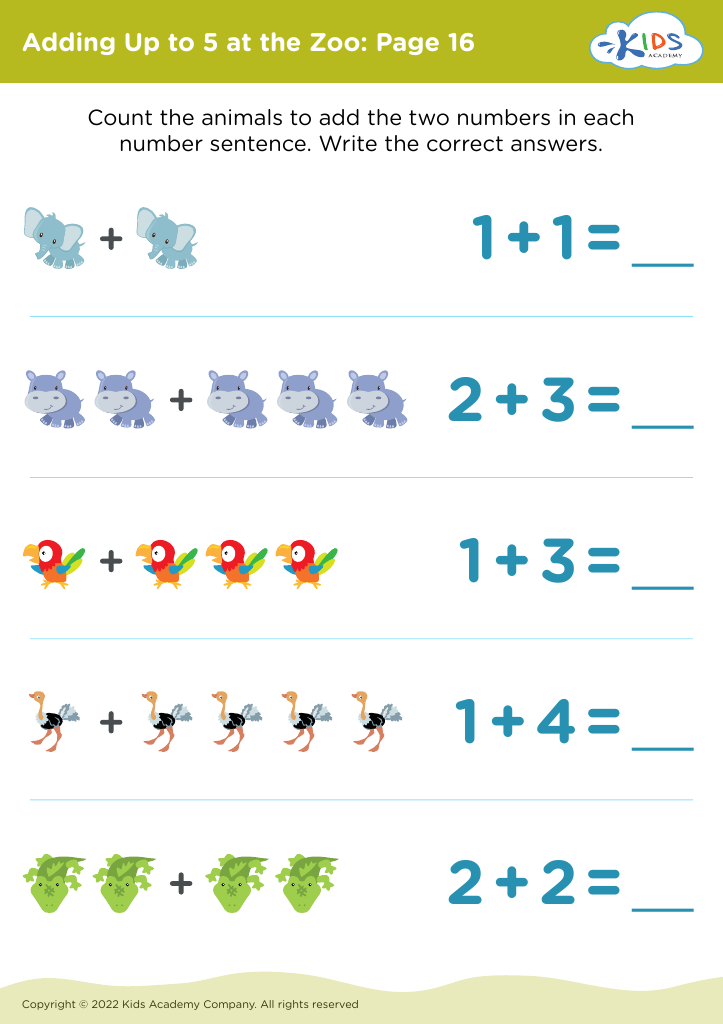
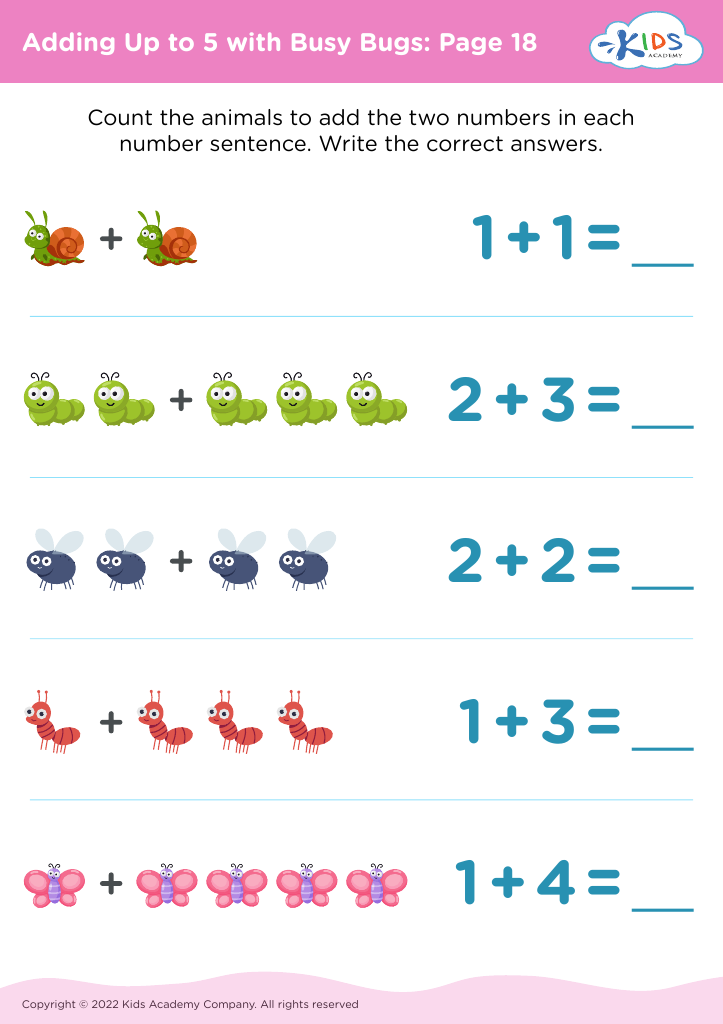
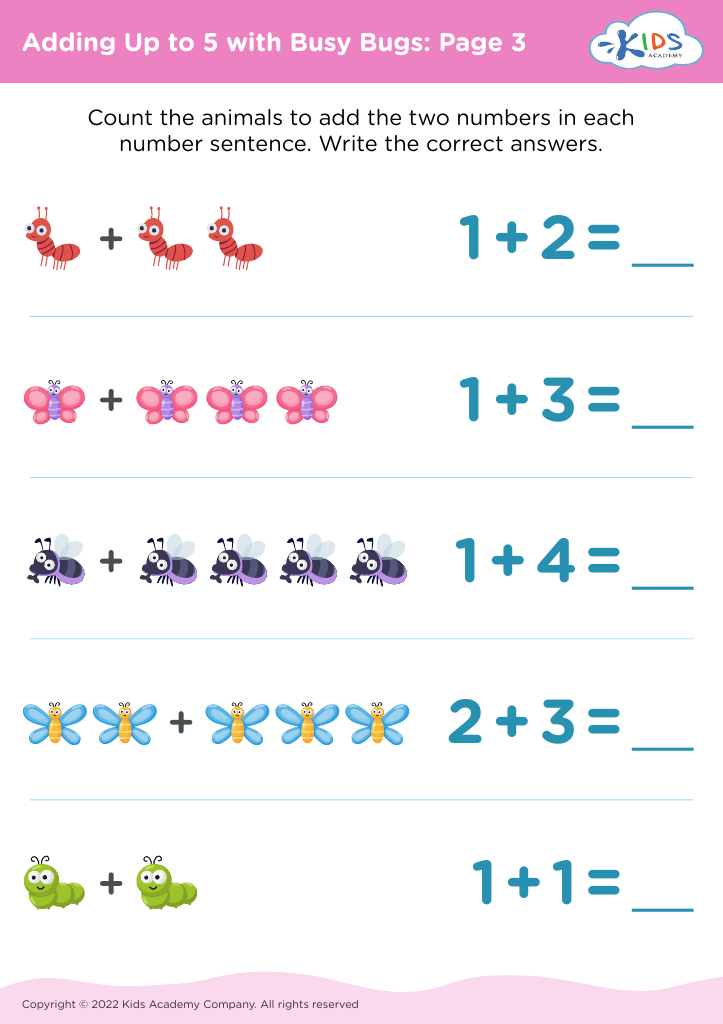
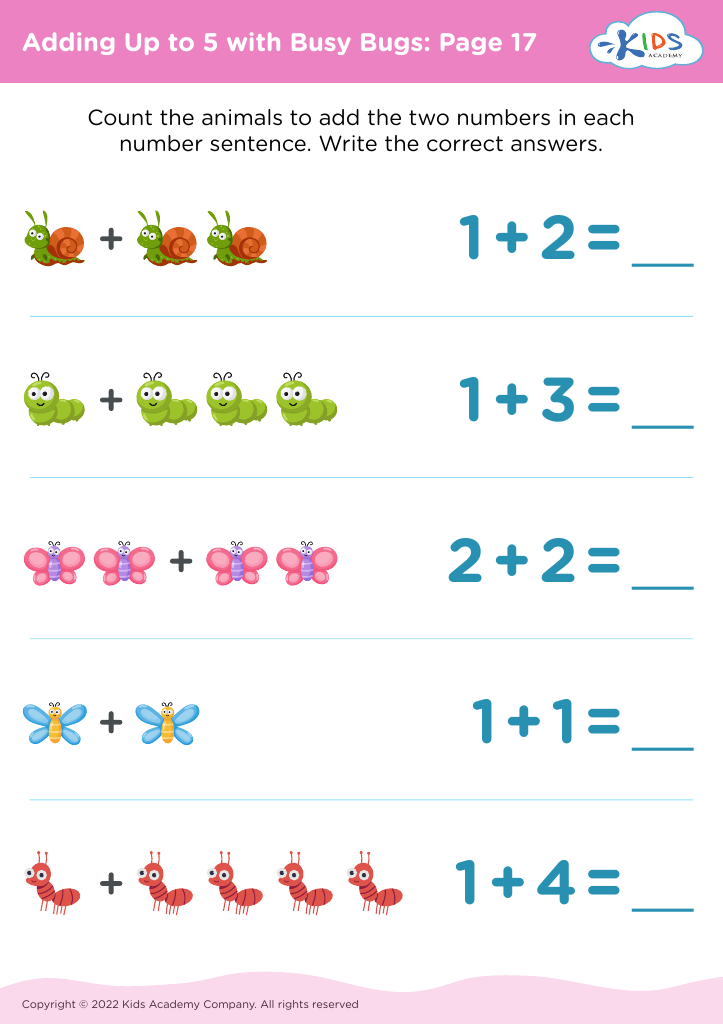
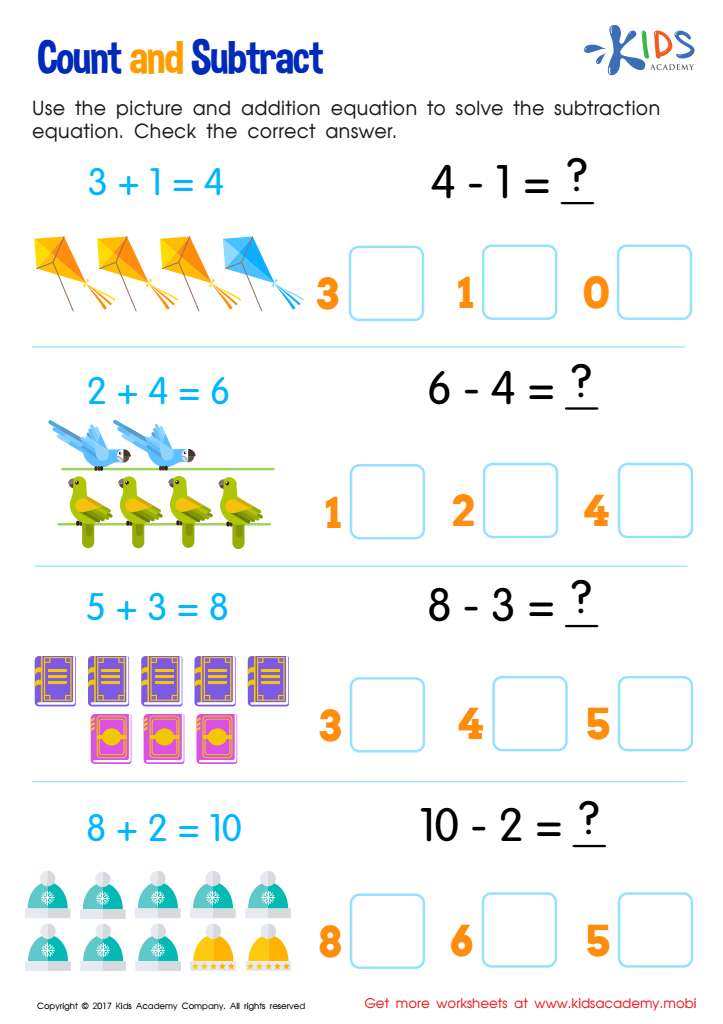
Count and Subtract Worksheet
 Assign to My Students








Developing concentration in addition and subtraction for children aged 4 to 9 is pivotal for several reasons. At this early, formative stage of education, building a strong foundation in mathematical skills not only enhances numeric literacy but also fortifies cognitive abilities, such as critical thinking and problem-solving. Concentration is essential in a child’s ability to learn effectively; it helps them focus and retain information during lessons.
Moreover, mastering basic addition and subtraction develops a sense of accomplishment and boosts a child's self-confidence. When children succeed in these areas, they are more likely to approach future challenges with a positive attitude. Engaging in focused math activities also strengthens their working memory, further aiding in academic progress across various subjects.
Parents and teachers play crucial roles in fostering these skills. By creating fun and stimulating environments for practice — whether through games, interactive apps, or group activities — educators can help children develop a love for learning, making math not just a subject, but an enjoyable experience. Involving parents by encouraging activities at home ensures a supportive learning continuum. Overall, prioritizing concentration in early math not only prepares children for future academic success but enriches their lifelong learning.








