Fine motor skills development Addition & Subtraction Worksheets for Ages 4-9
3 filtered results
-
From - To
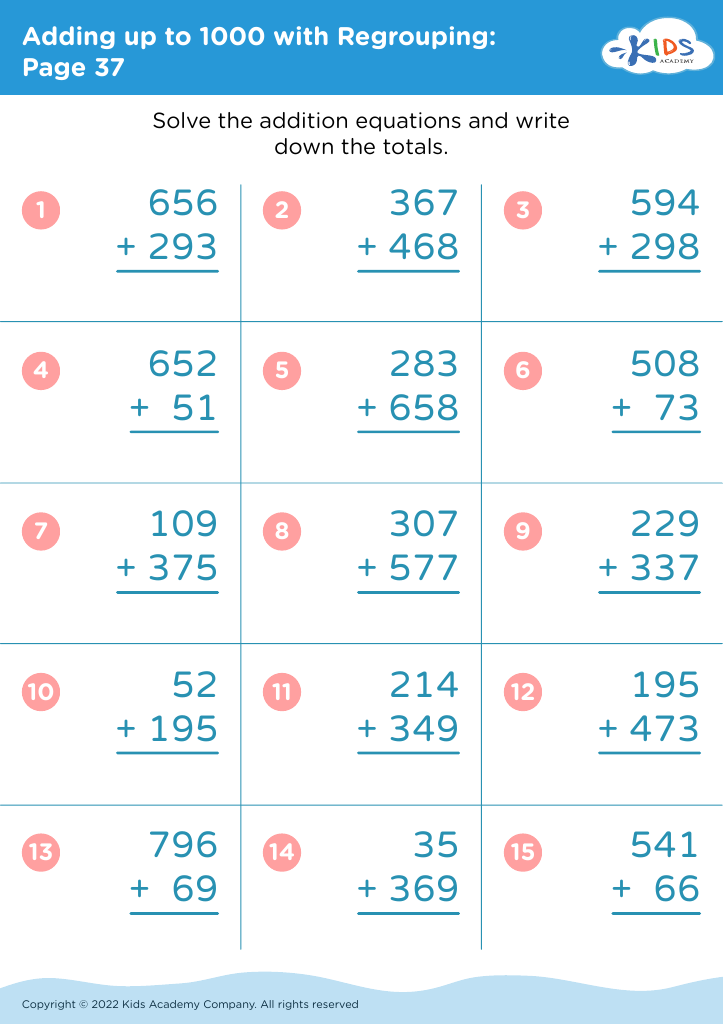
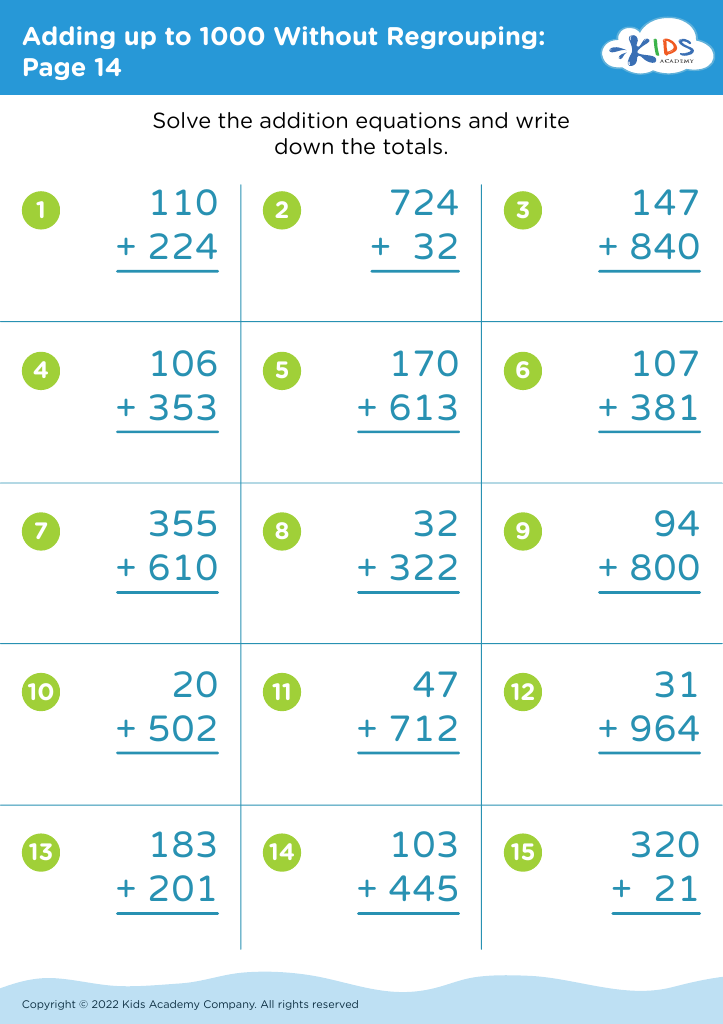
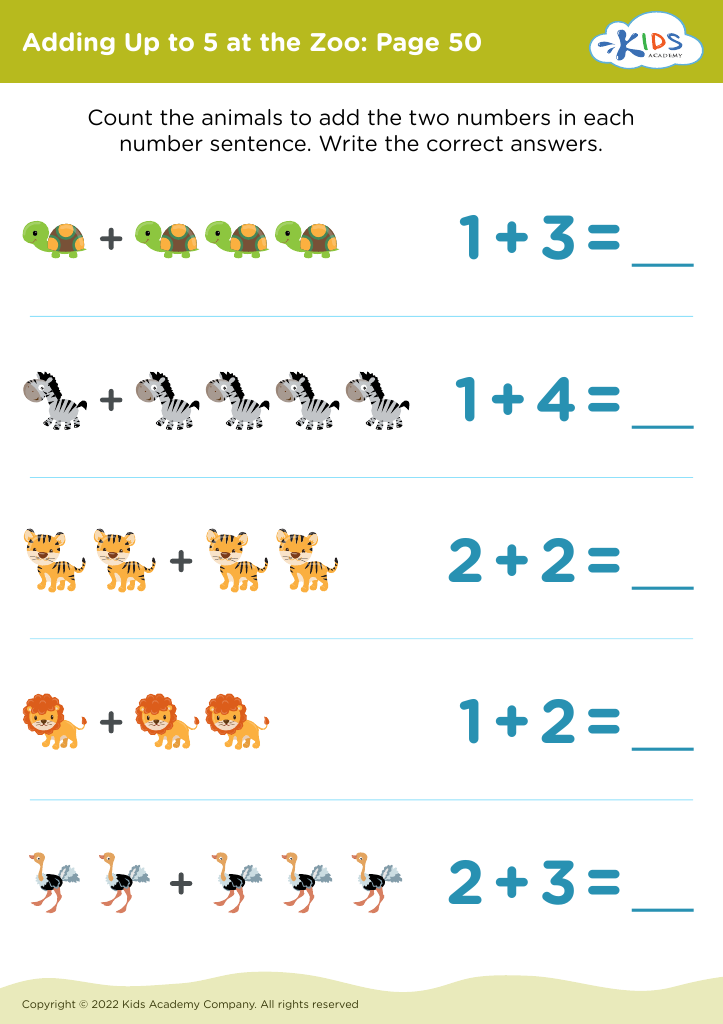
Enhance your child's fine motor skills while introducing foundational math concepts with our engaging addition and subtraction worksheets tailored for ages 4-9. These thoughtfully designed resources combine fun and learning, helping young learners develop dexterity and hand-eye coordination through varied activities, such as coloring, tracing, and cutting. Our worksheets not only foster mathematical understanding but also promote essential fine motor skills that are critical for writing and everyday tasks. Ideal for home or classroom use, these printable worksheets ensure that children stay engaged and motivated as they master addition and subtraction in a playful, interactive way.








Fine motor skills development is crucial for children aged 4-9, as these abilities directly impact their ability to perform everyday tasks, including writing, cutting, and manipulating objects. Parents and teachers should prioritize this aspect of development because it lays the foundation for academic success and independent living. When children master fine motor skills, they gain confidence in their academic abilities, which fosters a love for learning.
In the context of early math education, fine motor skills are particularly important for addition and subtraction. Children engage in activities that require the use of manipulatives—like counting blocks or beads—which allows them to physically interact with numbers. This tangible experience solidifies their understanding of mathematical concepts. Additionally, sharpening fine motor skills enhances hand-eye coordination and concentration, both of which are vital for writing numbers and solving math problems accurately.
Moreover, developing fine motor skills can prevent frustrations that might arise from difficulties in writing or manipulating math tools. By incorporating playful activities that promote fine motor development into lessons, educators and parents not only teach math skills but also equip children with the necessary tools to thrive academically and socially in their future endeavors.








