Fraction representation Addition & Subtraction Worksheets for Ages 4-9
3 filtered results
-
From - To
Explore our engaging Fraction Representation Addition and Subtraction Worksheets designed for children aged 4-9! These interactive worksheets provide a fun and effective way to teach young learners essential fraction concepts through addition and subtraction exercises. With vibrant visuals and relatable examples, kids will easily grasp the idea of forming and manipulating fractions. Our carefully crafted worksheets help boost mathematical confidence while enhancing critical thinking skills. Perfect for teachers and parents looking to supplement classroom learning or for extra practice at home, these resources ensure a solid math foundation. Download now and watch your child's understanding of fractions soar!
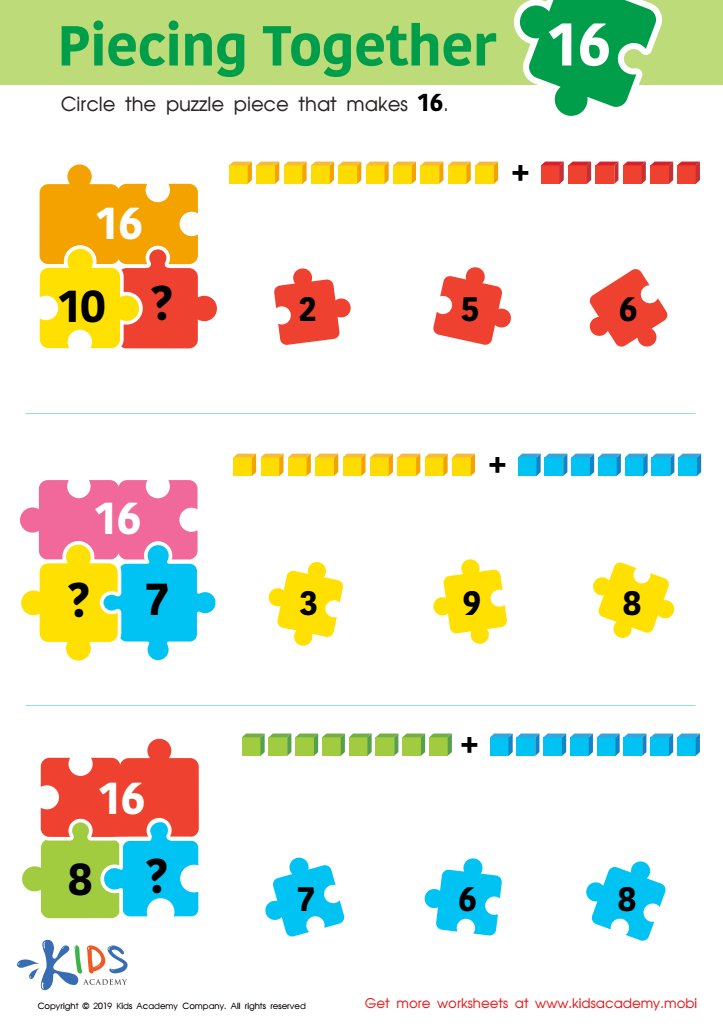
Piecing Together 16 Worksheet
 Assign to My Students
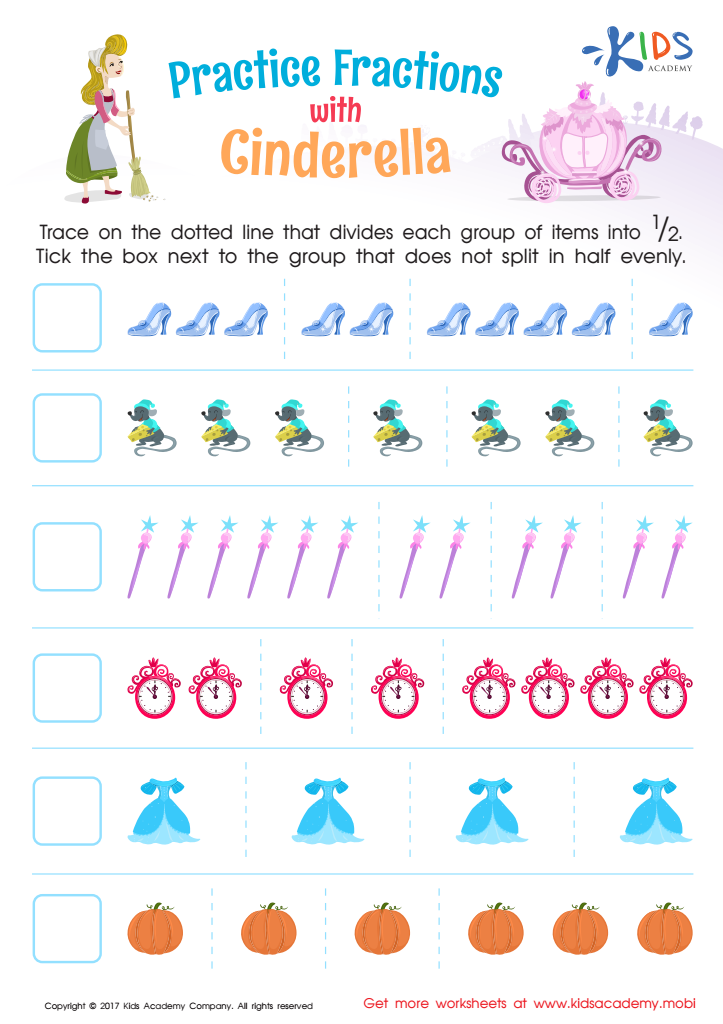
Fractions: Cinderella Printable








Understanding fraction representation, addition, and subtraction is crucial for children aged 4-9 as it lays a foundational math framework that will support their future learning. At this stage, children start developing number sense, and introducing them to fractions allows for an exploration of parts of a whole, enhancing their comprehension of quantities and relationships.
Fraction concepts also aid in developing critical thinking and problem-solving skills. When children learn to represent and manipulate fractions, they gain a greater understanding of division and multiplication. This is particularly important as they advance in their math education.
Furthermore, frail acceptance of decimals, percentages, and ratios—all interconnected concepts—depends on children having a solid grasp of fractions from an early age. Engaging children with visual aids, hands-on activities, and real-life applications makes learning fractions exciting and relatable, fostering a positive attitude toward math.
Moreover, by addressing fractions early, parents and teachers can help identify any misunderstandings, ensuring that children build confidence in their math abilities. Early familiarity with these concepts not only prepares them for more complex math topics but also cultivates essential life skills such as budgeting and cooking, where fractions play a practical role.








