Hand-eye Coordination Addition & Subtraction Worksheets for Ages 4-9 - Page 2
29 filtered results
-
From - To
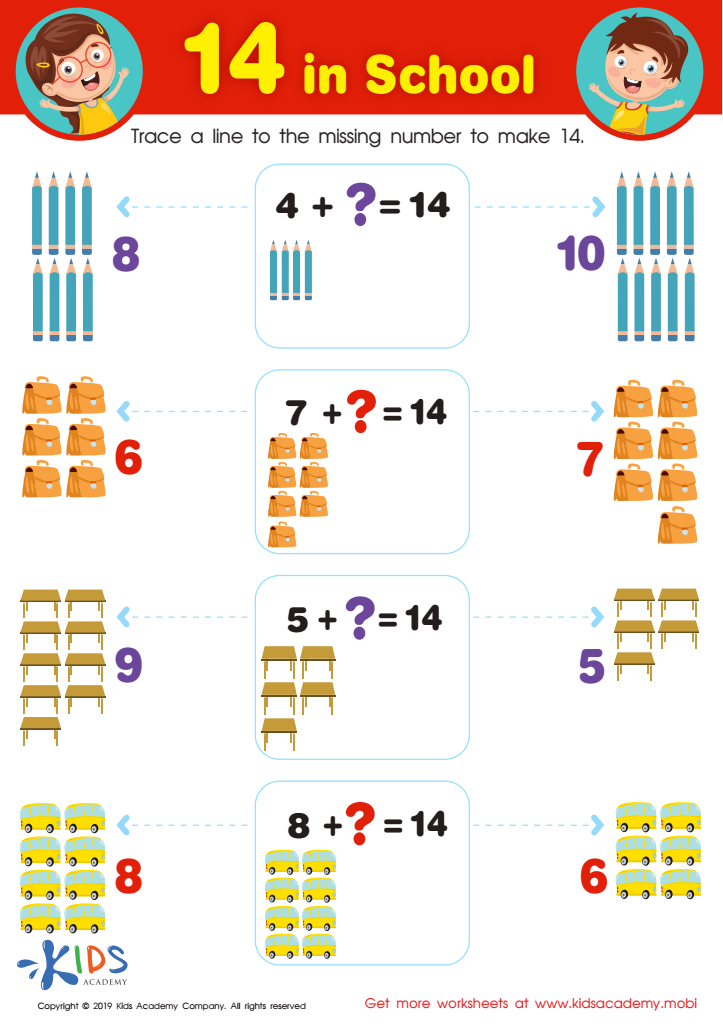
14 in School Worksheet
 Assign to My Students
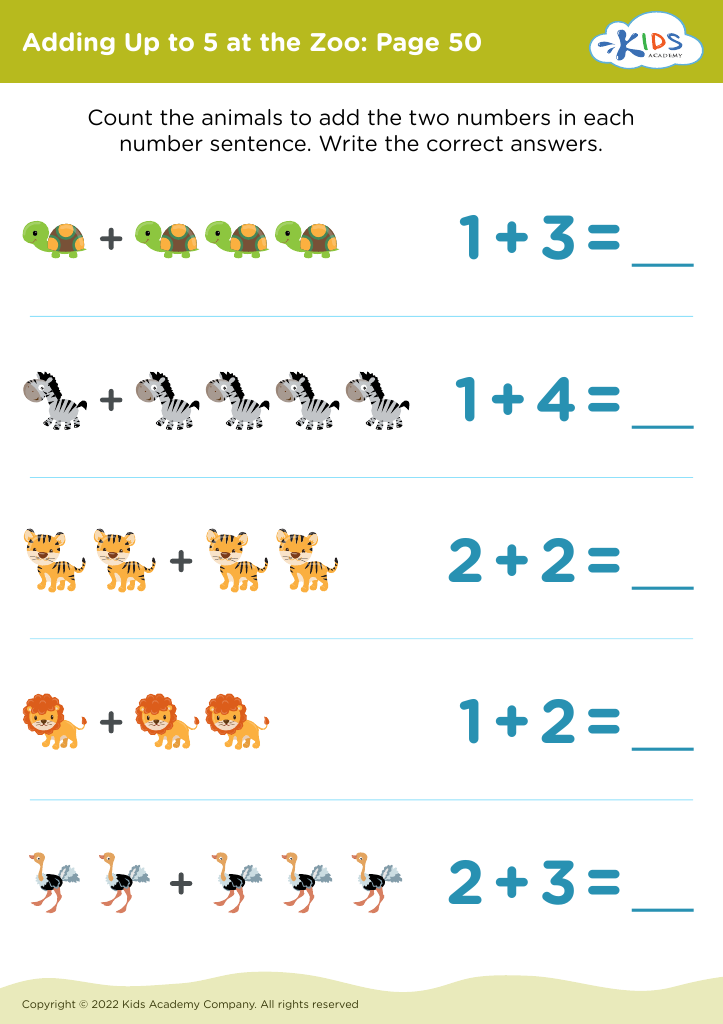








Hand-eye coordination is an essential developmental skill that allows children to use their vision to direct the movements of their hands and other parts of the body. When focusing on addition and subtraction for ages 4-9, strong hand-eye coordination can significantly enhance a child’s learning experience in crucial ways.
First, practicing addition and subtraction through hands-on activities, such as stacking blocks, counting objects, or using educational games, physically engages children in their learning process. This physical engagement reinforces learning concepts by making abstract numerical operations more concrete and understandable. For example, using beads to visually represent math problems helps children better grasp the concepts of adding and subtracting, laying a strong foundation for future math competency.
Secondly, fine motor skills, such as holding a pencil to write numbers or solving problems in worksheets, are directly linked to hand-eye coordination. Good coordination can lead to clearer handwriting, faster processing of written information, and greater ease in performing mathematical operations, allowing children to focus more on problem-solving rather than struggling with the physical act of writing.
Lastly, developing strong hand-eye coordination can boost confidence. Children who are successful in these foundational years gain a sense of accomplishment and are more likely to approach complex tasks with enthusiasm. Therefore, parents and teachers should focus on activities that integrate hand-eye coordination with math skills to foster an engaging and supportive learning environment for young learners.








