Problem Solving Addition & Subtraction Worksheets for Ages 4-9 - Page 2
29 filtered results
-
From - To
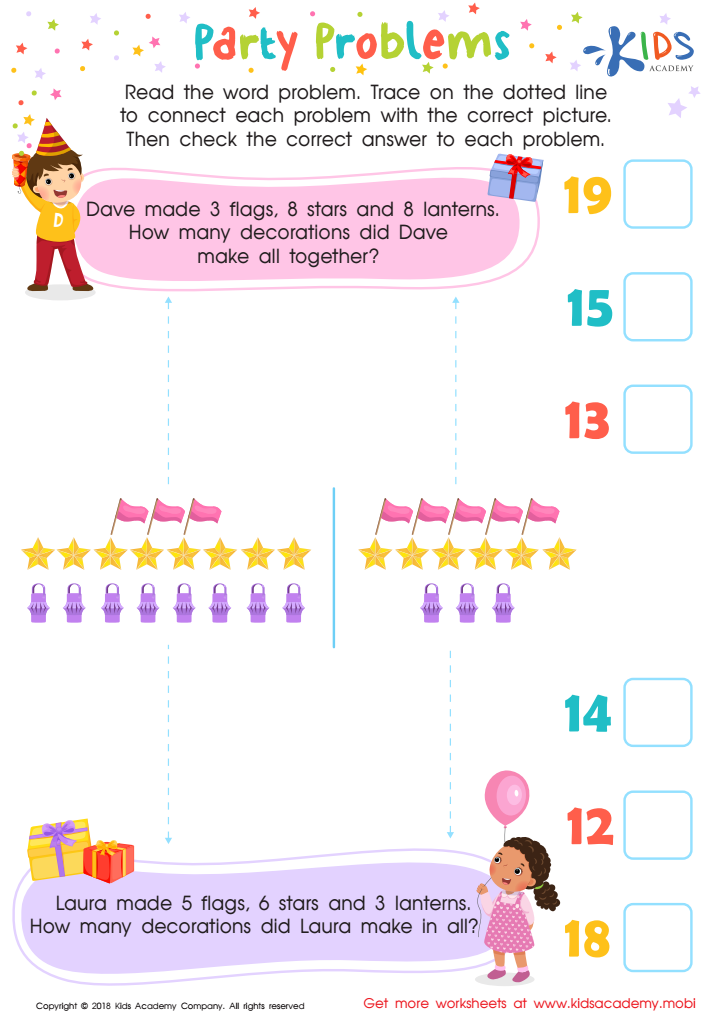
Party Problems Worksheet
 Assign to My Students
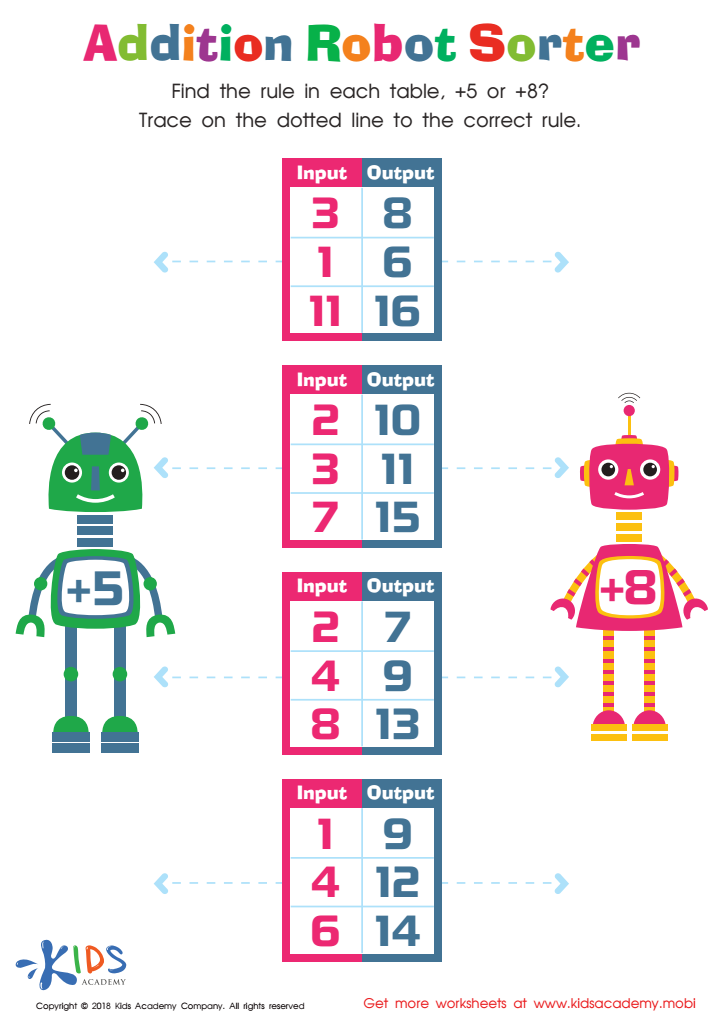
Addition Robot Sorter Worksheet
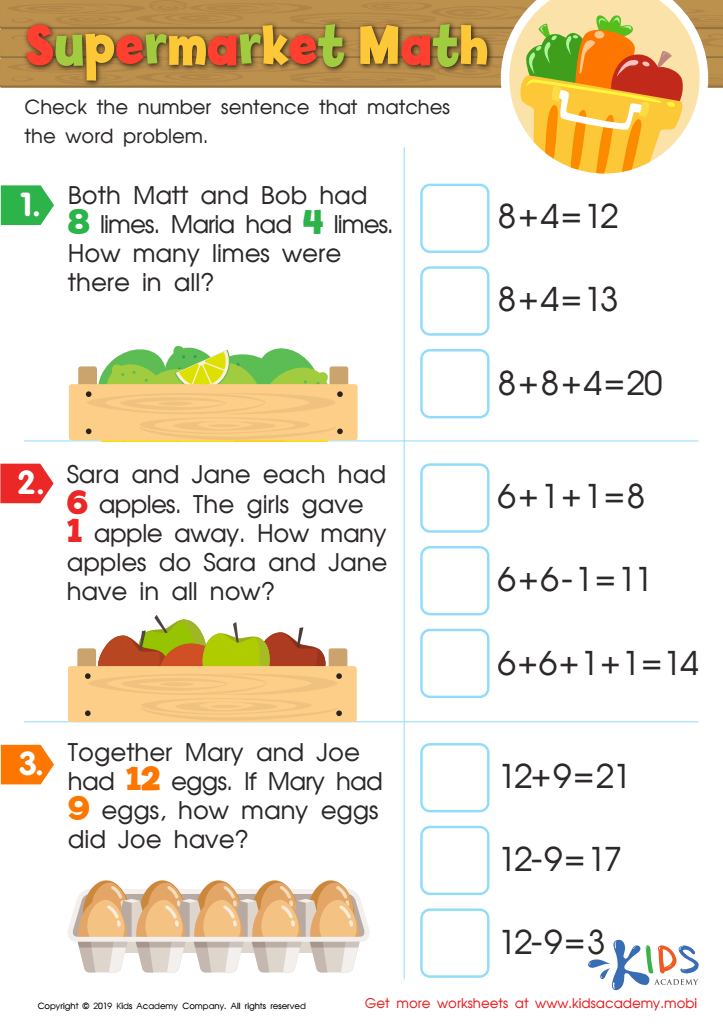
Supermarket Math Worksheet
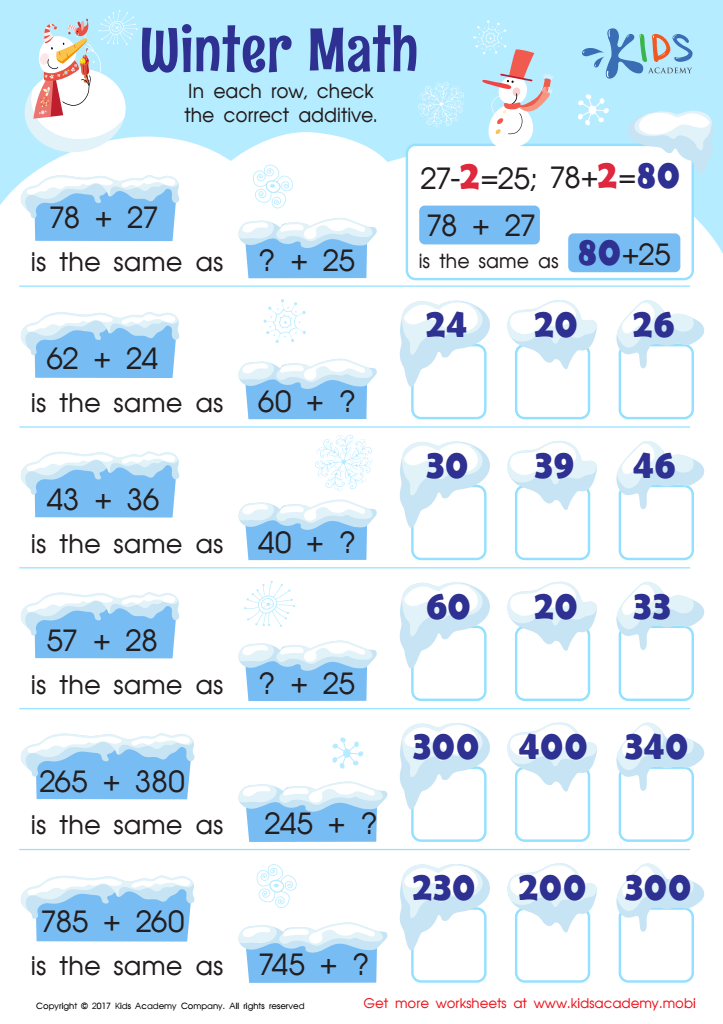
Free Addition Worksheet








Problem solving in addition and subtraction is a crucial skill for children aged 4-9, laying the foundation for their mathematical understanding and critical thinking. From an early age, children encounter everyday situations requiring them to add or subtract, such as sharing toys or determining how many snacks are left. By mastering these problem-solving techniques, children develop not only mathematical competence but also the ability to approach challenges methodically.
Teaching these concepts encourages persistence and resilience, as children learn to tackle problems in various contexts. It nurtures logical thinking, helping them to break down complex scenarios into manageable parts. Furthermore, integrating problem-solving strategies into addition and subtraction fosters a growth mindset, allowing children to embrace mistakes as learning opportunities.
Parents and teachers play a pivotal role in this process. By creating engaging, real-world problems and guiding children through the reasoning involved in finding solutions, they can spark curiosity and enthusiasm for math. Research indicates that strong foundational skills in math lead to improved academic performance later on. Thus, prioritizing problem-solving in addition and subtraction is essential for empowering children not just in math, but in their overall cognitive development and confidence.








