Explore our engaging "Simplifying Fractions Addition & Subtraction Worksheets" designed for children aged 4-9! These worksheets foster a deep understanding of fractional concepts while making math fun and accessible. Perfect for young learners, they focus on simplifying fractions, assisting students in mastering adding and subtracting fractions with ease. Our carefully crafted activities provide clear explanations, hands-on practice, and colorful visuals that capture children's attention. Whether in the classroom or at home, these worksheets support early math development and build confidence in young mathematicians. Help your child embark on a journey to math success with our interactive materials. Download now!
Check out this FREE Trial Lesson on Addition & Subtraction for age 4-9!

Match Objects that Fit Together

Favorites
With answer key
Interactive
  • 4-9
  • Simplifying Fractions
  • Addition & Subtraction
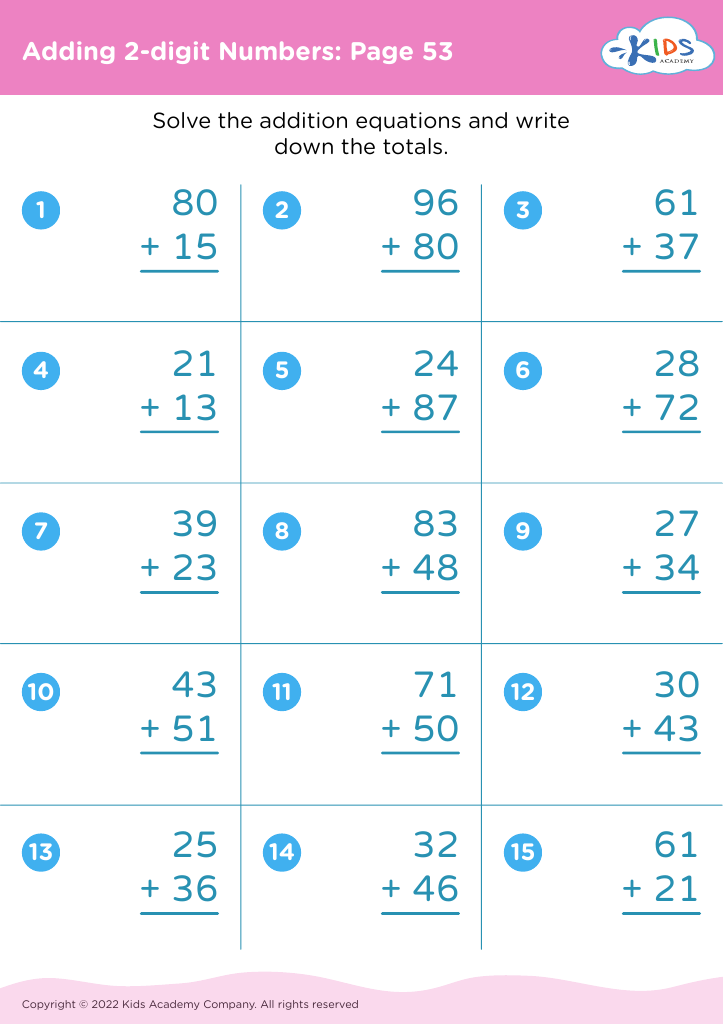
Adding 2-digit Numbers: Page 53

Adding 2-digit Numbers: Page 53

Adding 2-digit Numbers: Page 53
Worksheet
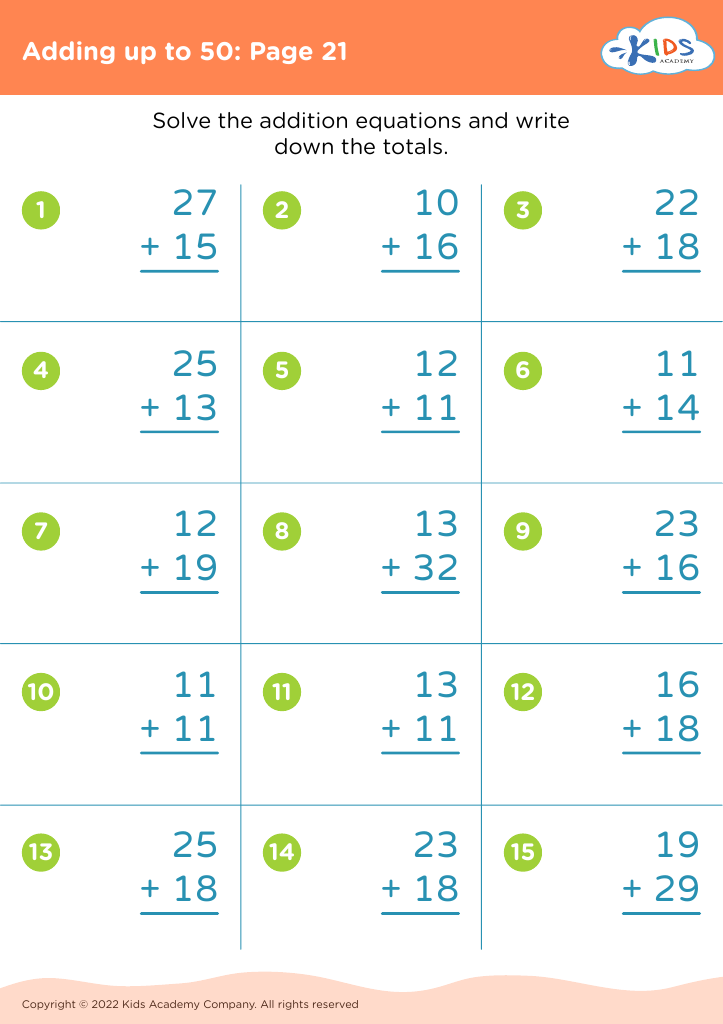
Adding up to 50: Page 21

Adding up to 50: Page 21

Adding up to 50: Page 21
Worksheet
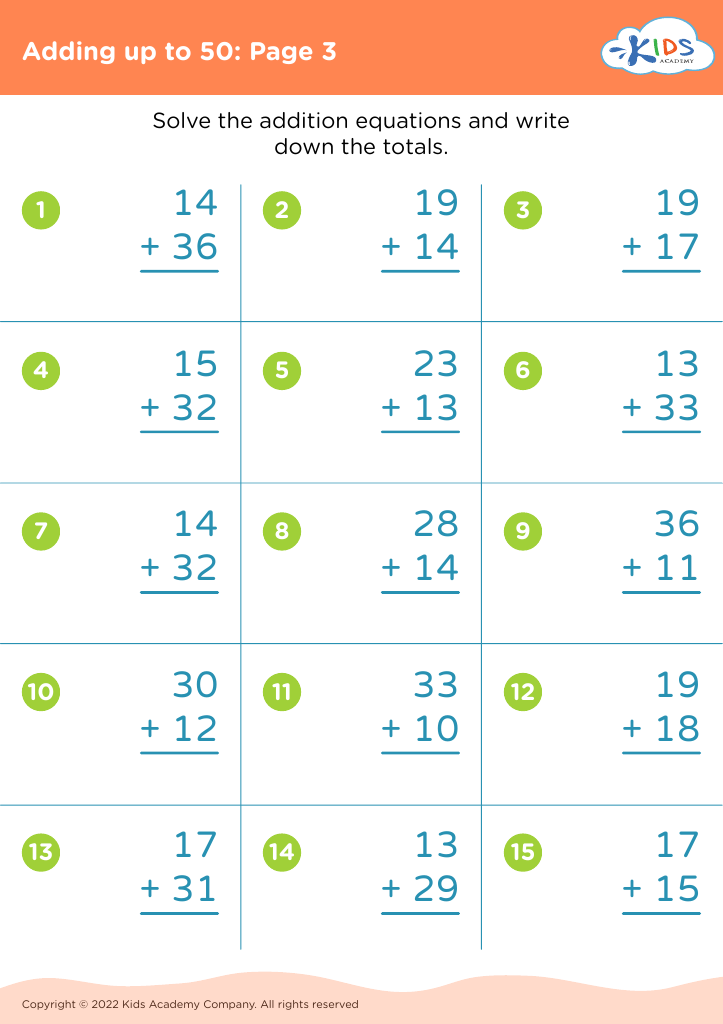
Adding up to 50: Page 3

Adding up to 50: Page 3

Adding up to 50: Page 3
Worksheet
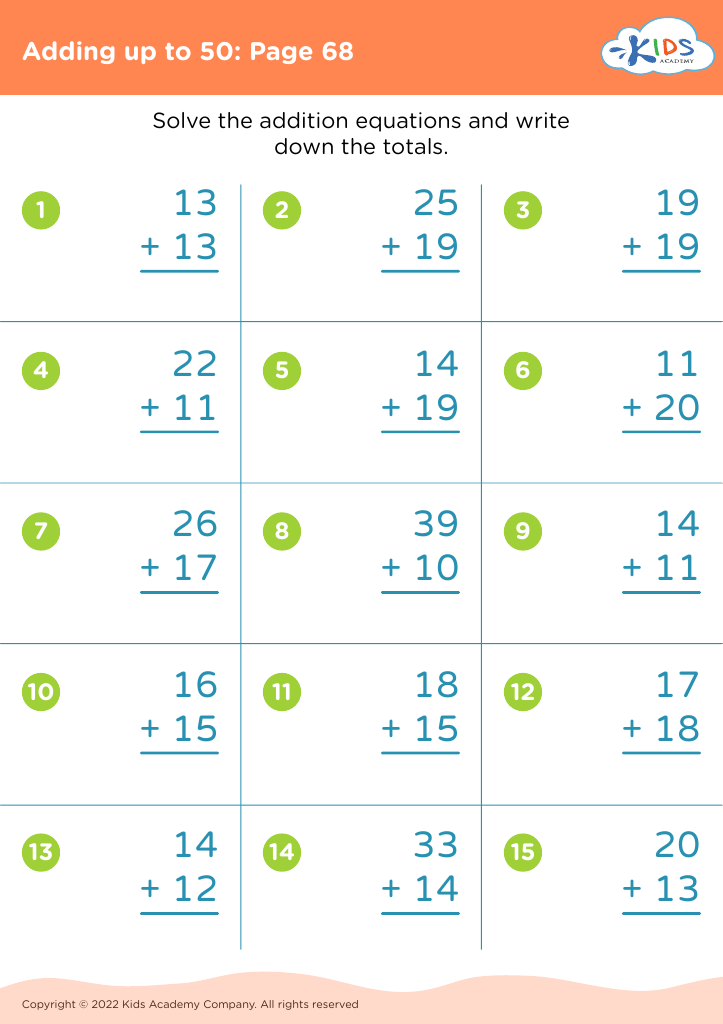
Adding up to 50: Page 68

Adding up to 50: Page 68

Adding up to 50: Page 68
Worksheet
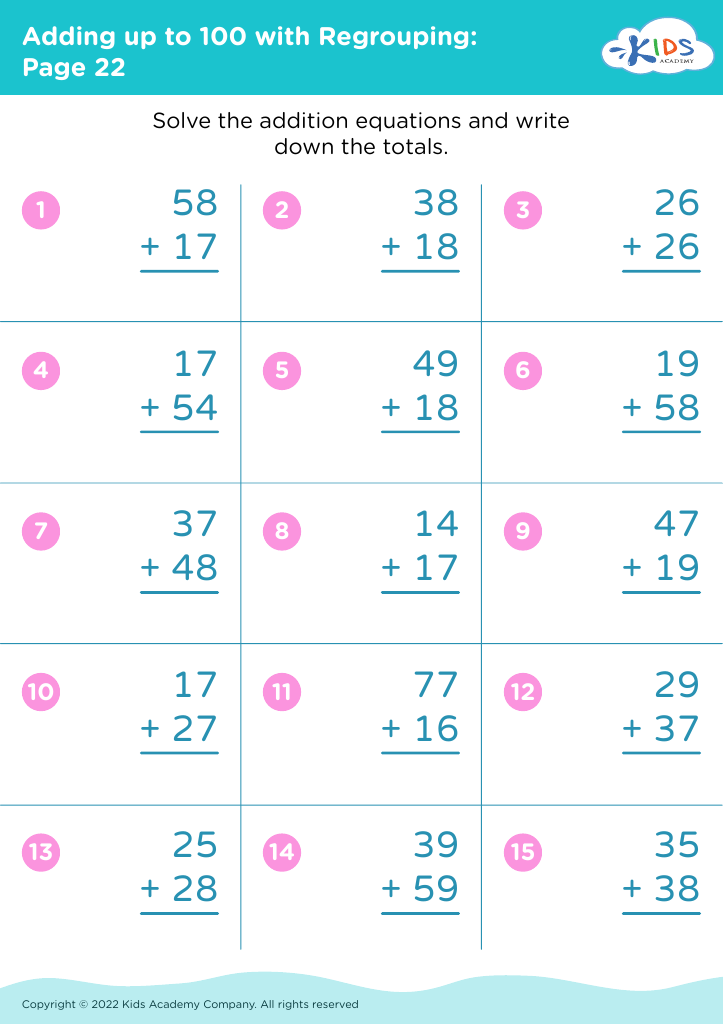
Adding up to 100 with Regrouping: Page 22
Worksheet
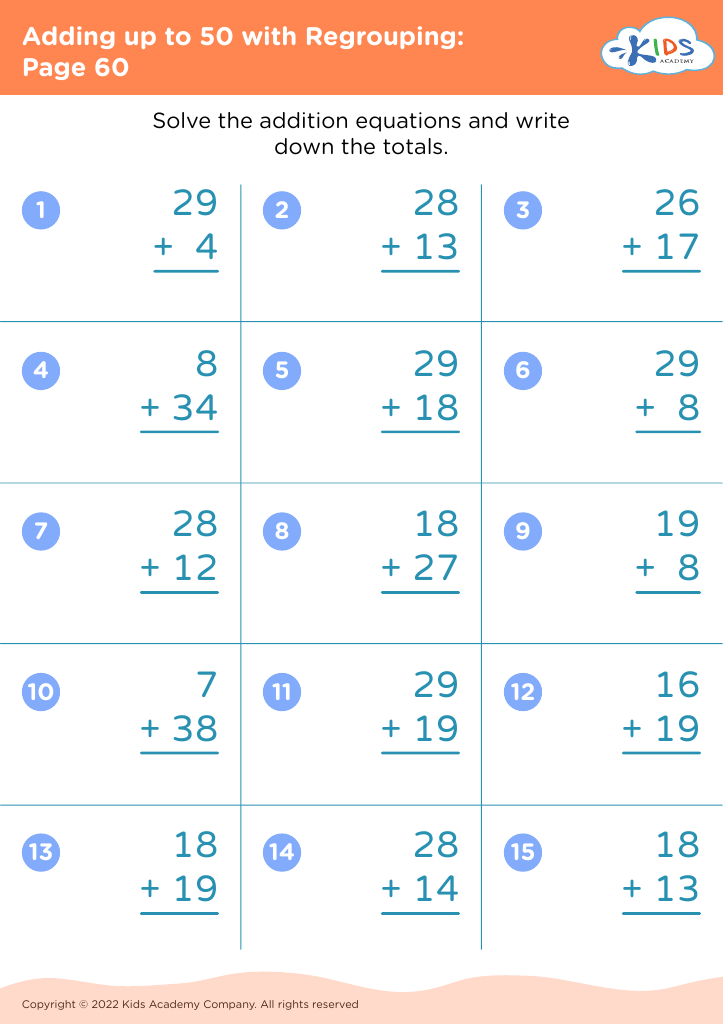
Adding up to 50 with Regrouping: Page 60
Worksheet
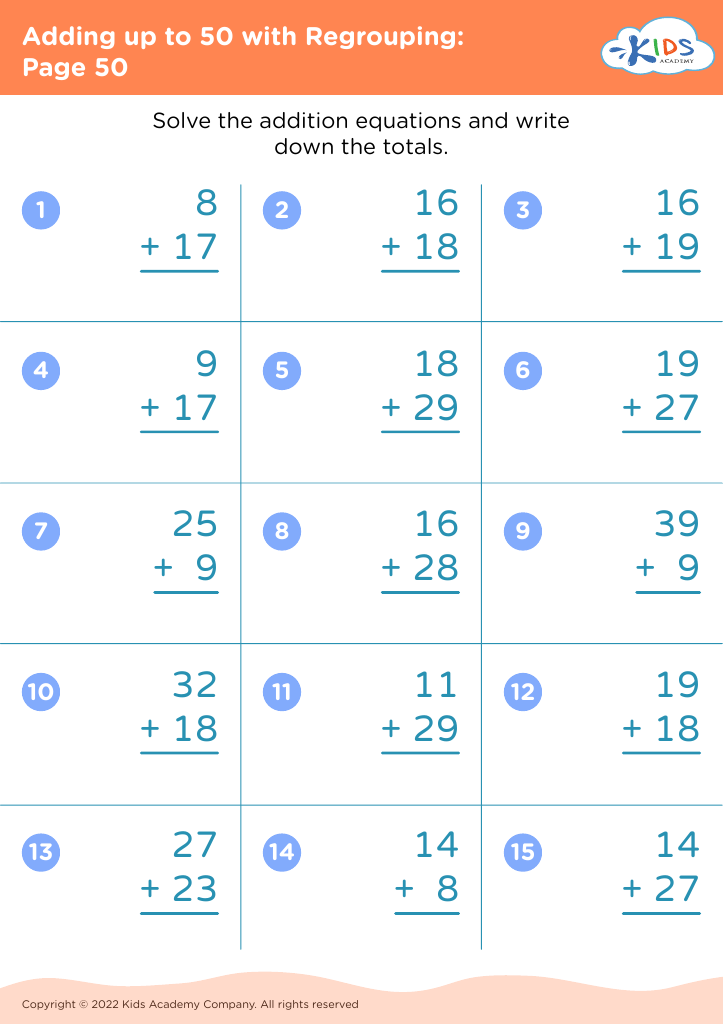
Adding up to 50 with Regrouping: Page 50
Worksheet
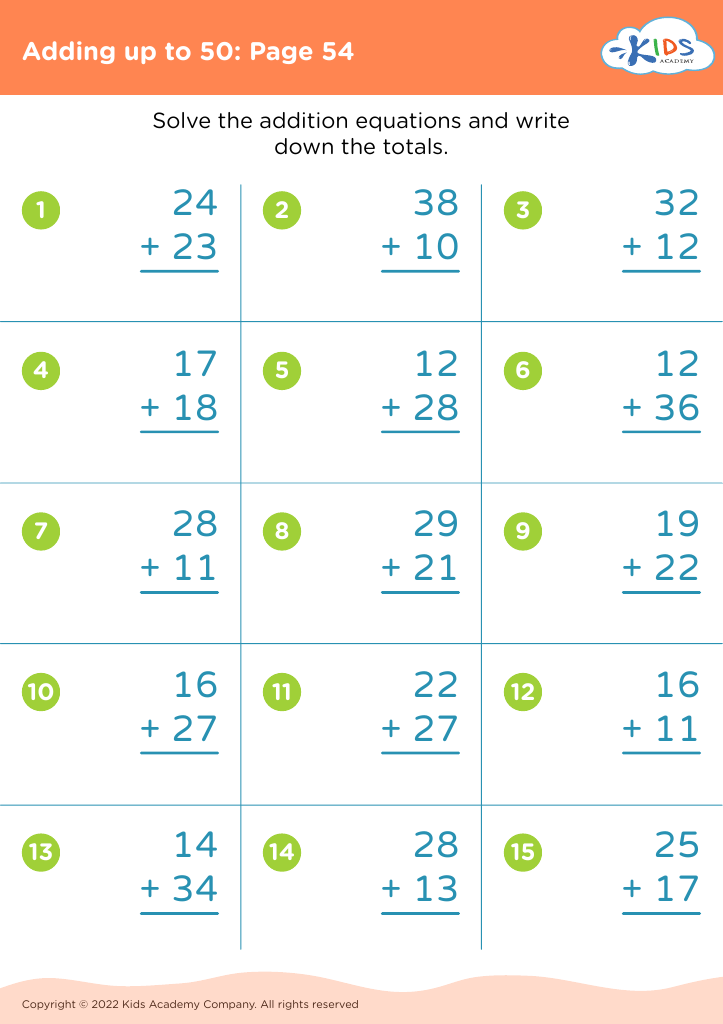
Adding up to 50: Page 54

Adding up to 50: Page 54

Adding up to 50: Page 54
Worksheet
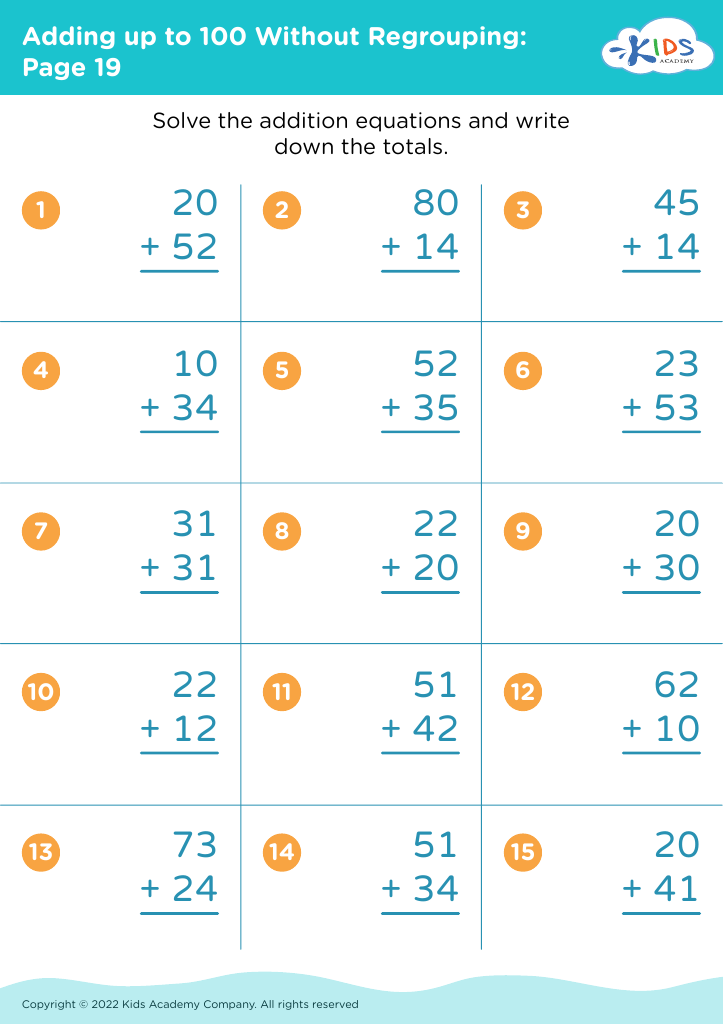
Adding up to 100 Without Regrouping: Page 19
Worksheet
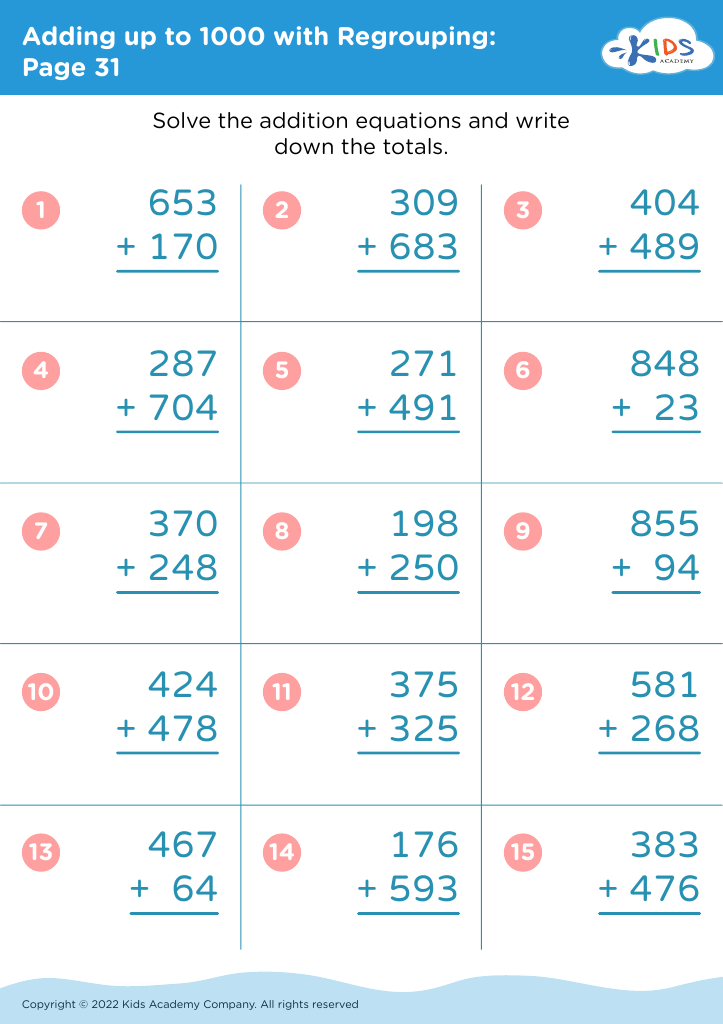
Adding up to 1000 with Regrouping: Page 31
Worksheet
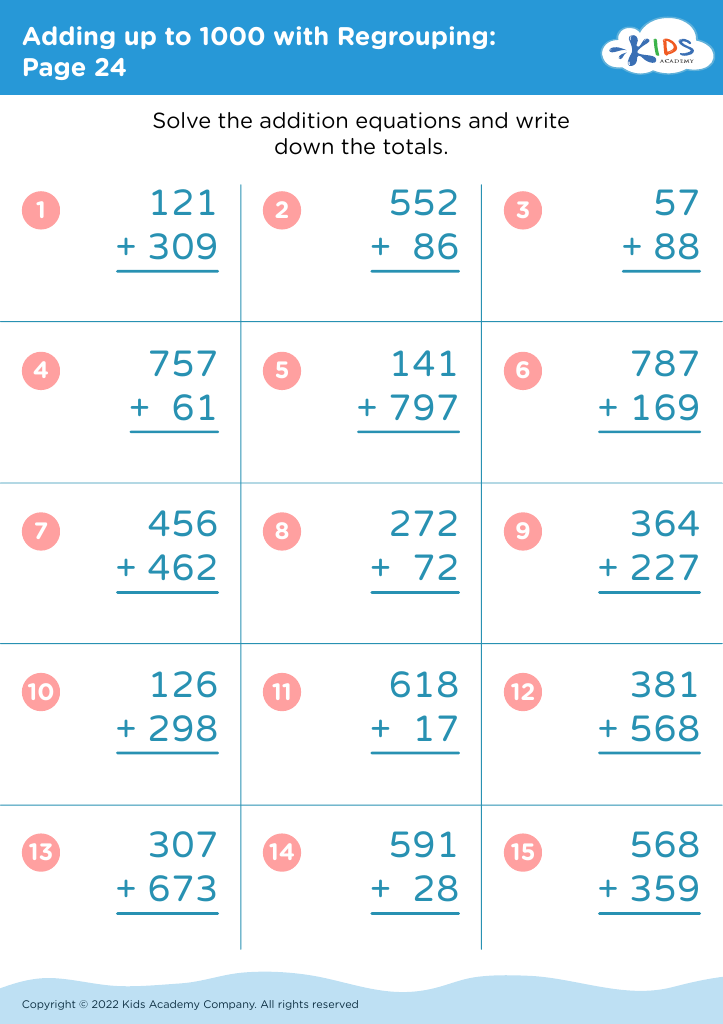
Adding up to 1000 with Regrouping: Page 24
Worksheet
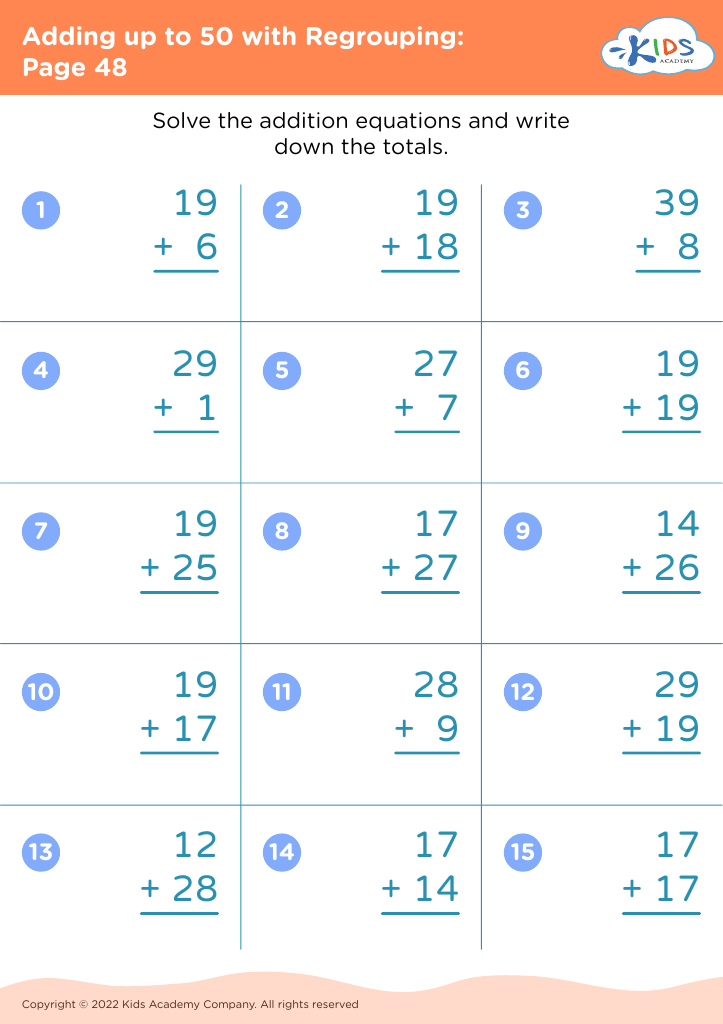
Adding up to 50 with Regrouping: Page 48
Worksheet
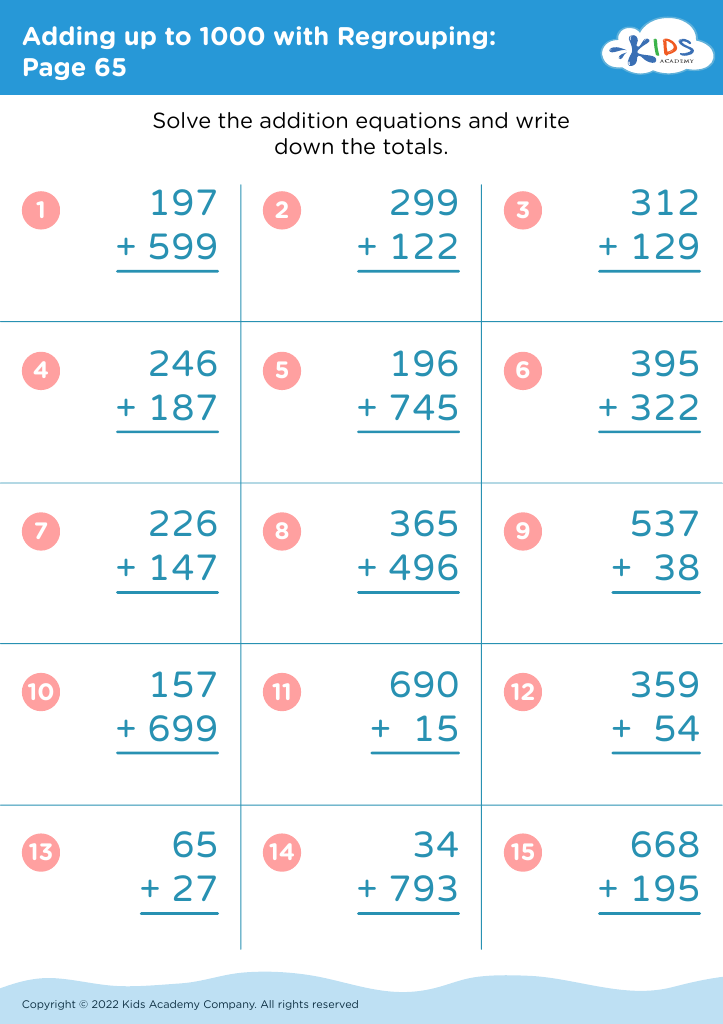
Adding up to 1000 with Regrouping: Page 65
Worksheet
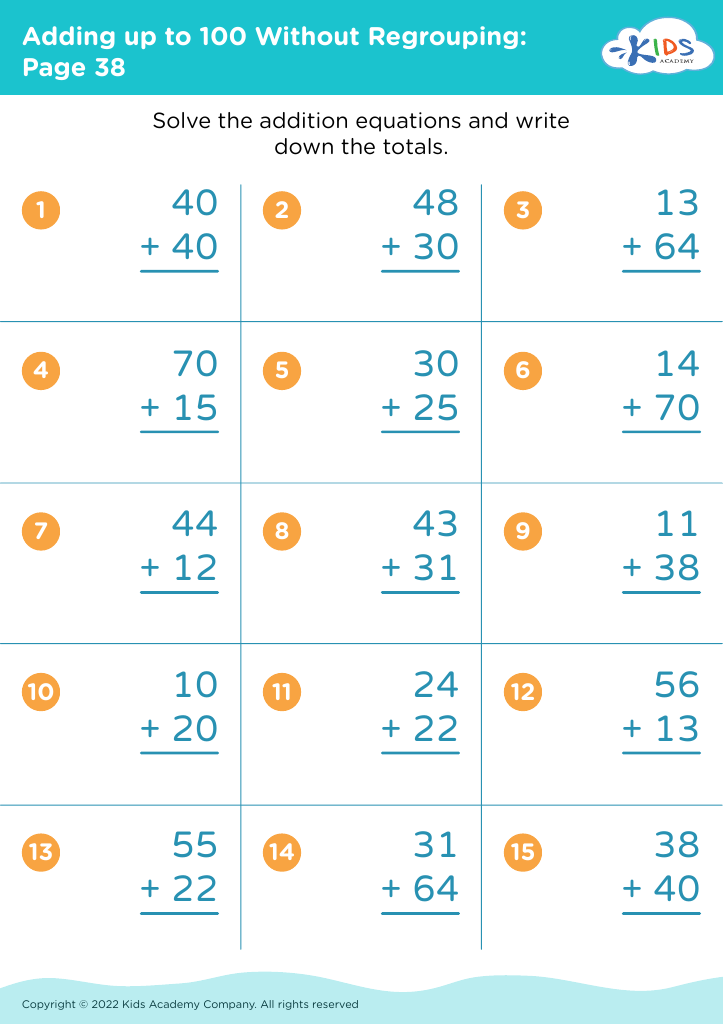
Adding up to 100 Without Regrouping: Page 38
Worksheet
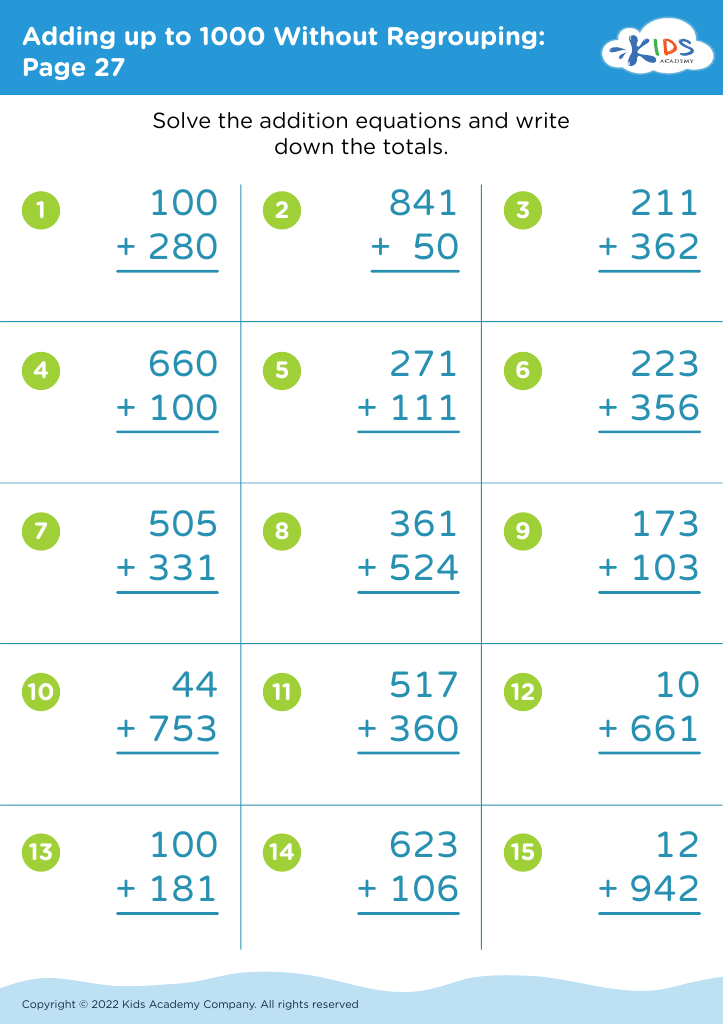
Adding up to 1000 Without Regrouping: Page 27
Worksheet
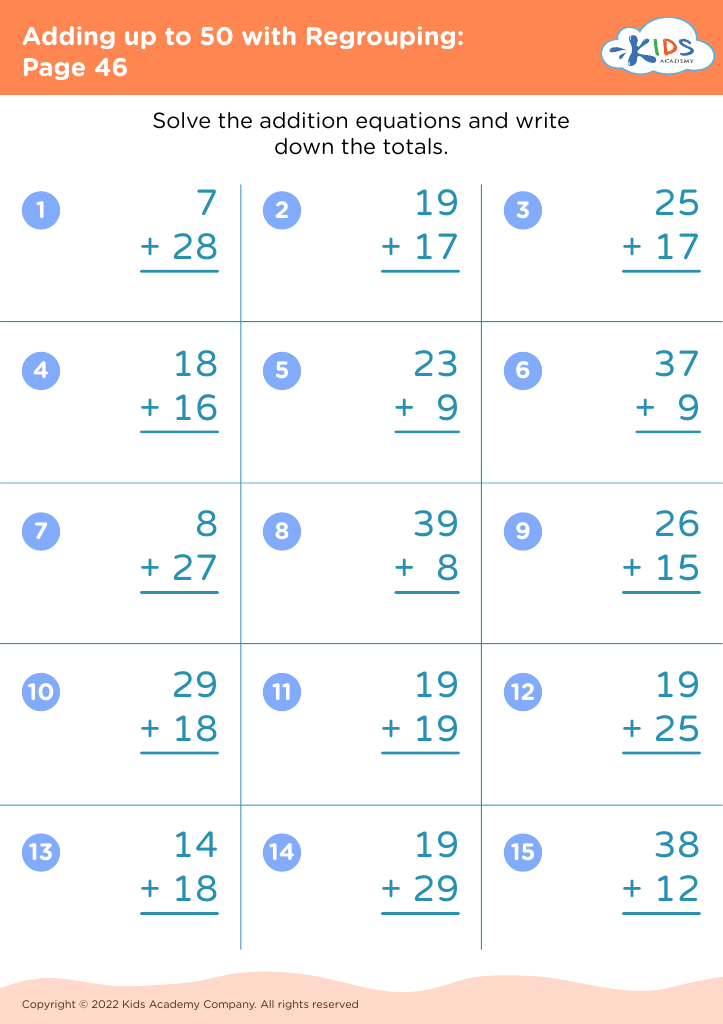
Adding up to 50 with Regrouping: Page 46
Worksheet
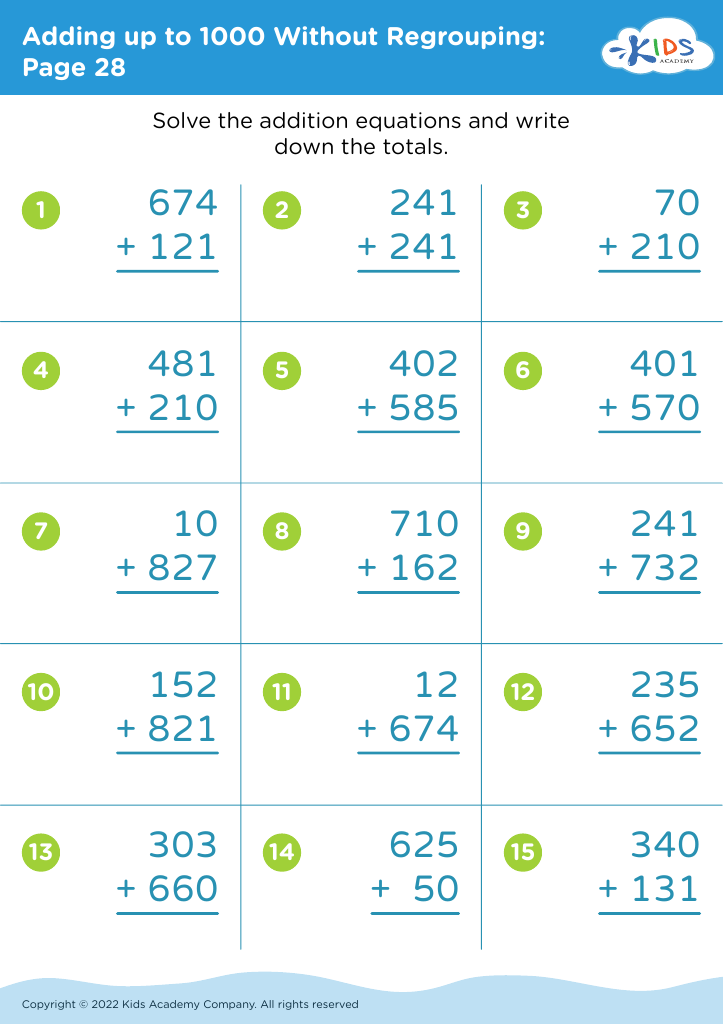
Adding up to 1000 Without Regrouping: Page 28
Worksheet
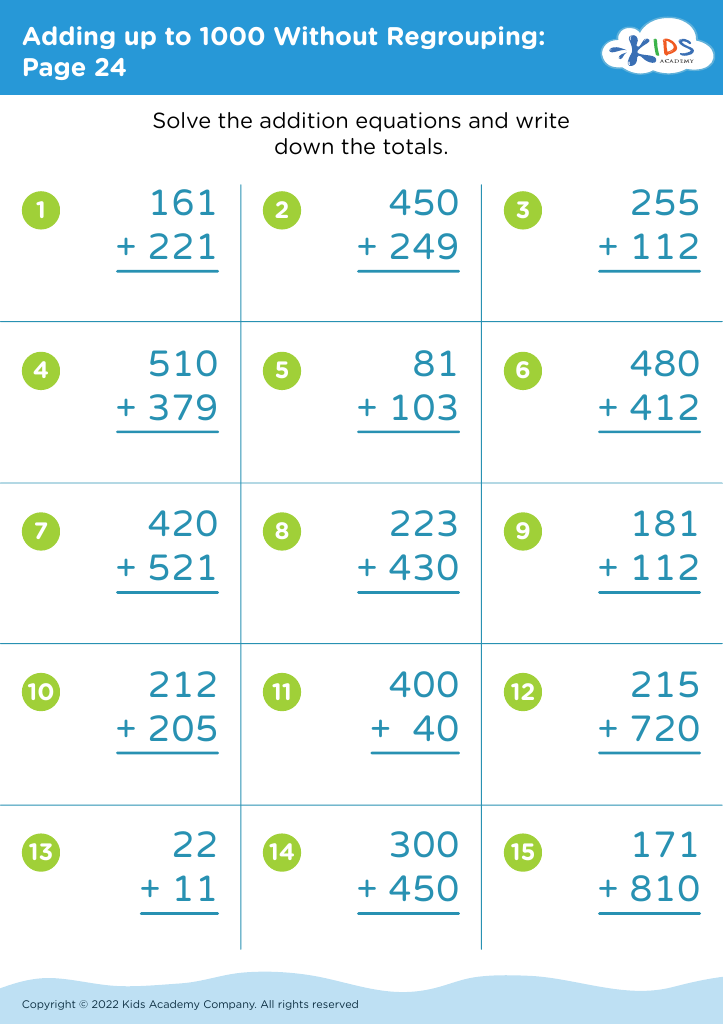
Adding up to 1000 Without Regrouping: Page 24
Worksheet


Understanding how to simplify fractions, particularly in the context of addition and subtraction, is essential for young learners aged 4-9. For parents and teachers, fostering this understanding is vital for several reasons.

First, fractions are foundational concepts in mathematics, and simplifying them helps students develop essential problem-solving skills. When students grasp simplification, they can tackle more complex math challenges with confidence. Simplification also nurtures their number sense, enabling children to understand relationships between numbers and recognize patterns, which are critical for their overall mathematical development.

Moreover, teaching this concept early instills a positive mindset towards math. Children who engage with fractions at a young age are more likely to view math as approachable rather than daunting. This lays the groundwork for future academic success, allowing them to embrace challenging topics like geometry and algebra later on.

Additionally, understanding fractions has real-world applications—whether it’s splitting a pizza among friends or measuring ingredients in a recipe. By caring about simplifying fractions, parents and teachers equip young learners with both practical skills and a solid mathematical foundation, fostering lifelong critical thinking and analytical skills essential for success in everyday life and future learning opportunities.