Understand number relationships Addition & Subtraction Worksheets for Ages 4-9
3 filtered results
-
From - To
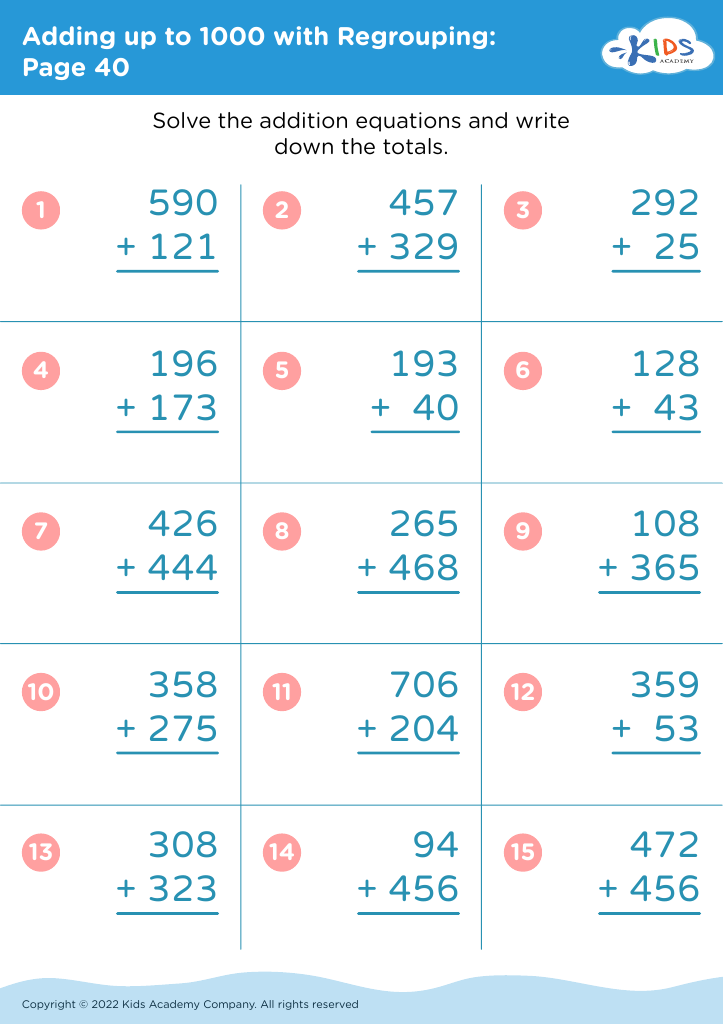
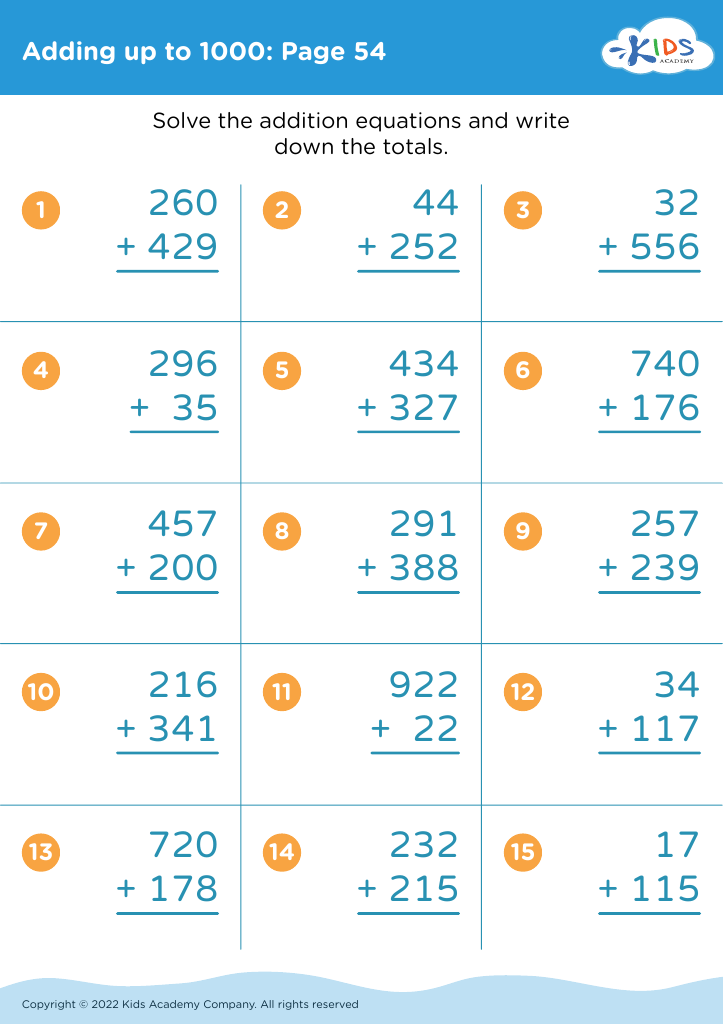
Welcome to our "Understand Number Relationships: Addition & Subtraction Worksheets" page, specially designed for children aged 4 to 9! These engaging worksheets aim to foster a solid understanding of number relationships by exploring addition and subtraction concepts. Kids will enjoy fun activities that promote mathematical thinking and problem-solving skills, helping them grasp how numbers interact. Our resources are ideal for both classroom and home use, making learning accessible and enjoyable. Empower your young learners with essential math skills that build a strong foundation for future success. Start your child's math journey today with our colorful, interactive worksheets!
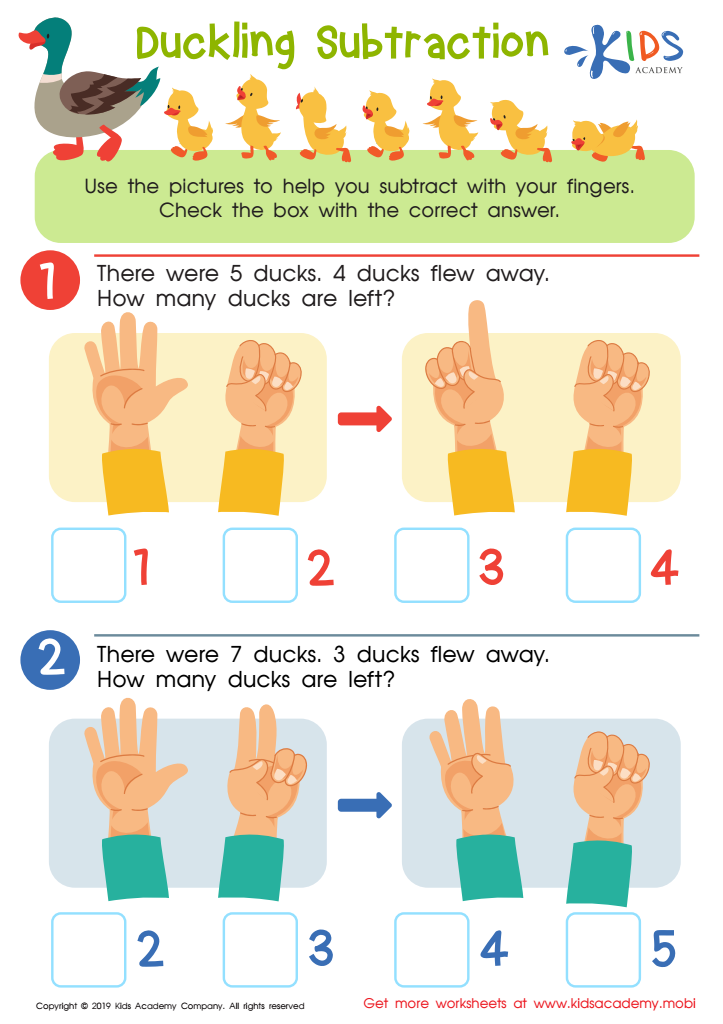
Duckling Subtraction Worksheet
 Assign to My Students








Understanding number relationships, particularly addition and subtraction, is crucial for children aged 4-9 as it lays the foundation for their mathematical skills and overall cognitive development. At this stage, children are beginning to make sense of numbers and their meanings, which can significantly influence their confidence and attitudes towards math throughout their educational journey.
Parents and teachers should care about this topic because it not only helps children develop computational skills but also enhances their problem-solving abilities. Early mastery of addition and subtraction fosters a deeper understanding of mathematical concepts such as number sense, measurement, and geometry. Additionally, recognizing patterns and relationships within numbers aids in developing critical thinking skills.
Furthermore, emphasizing number relationships encourages a growth mindset in young learners. When children see the connections between numbers, they become more resilient in facing challenges, viewing mistakes as opportunities for learning rather than failures. By investing in this foundational knowledge, parents and teachers contribute to better academic outcomes and lifelong skills. Recognizing the significance of addition and subtraction in everyday life—such as managing money or measuring ingredients—also reinforces the practical applications of mathematics, making learning more relevant and engaging for young children.








