Understanding numbers Addition & Subtraction Worksheets for Ages 4-9
6 filtered results
-
From - To
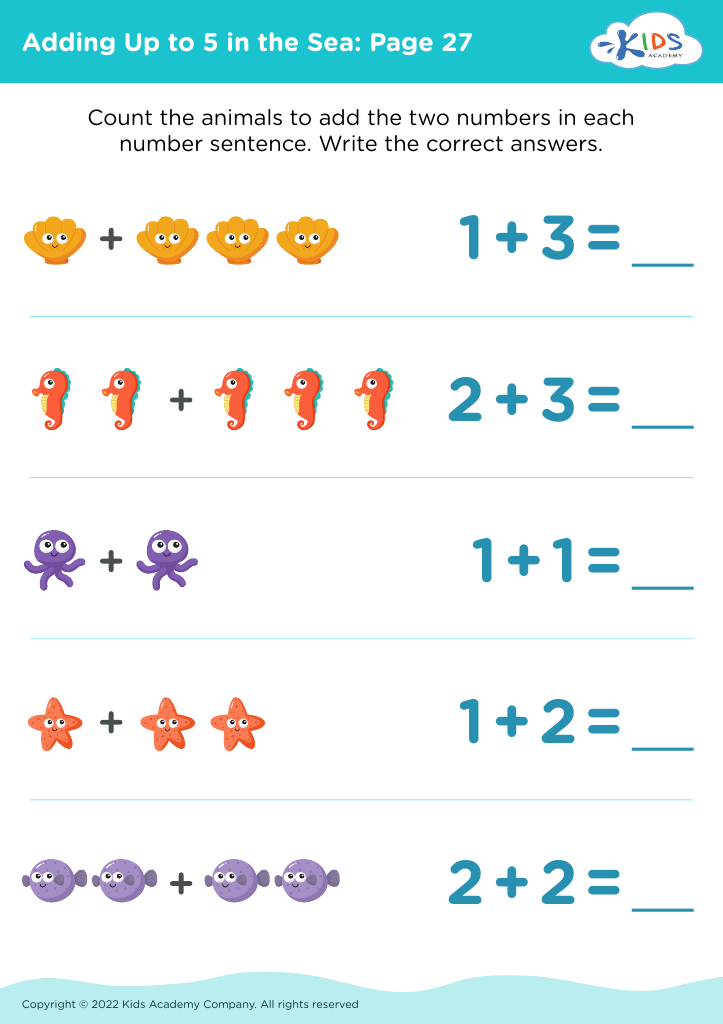
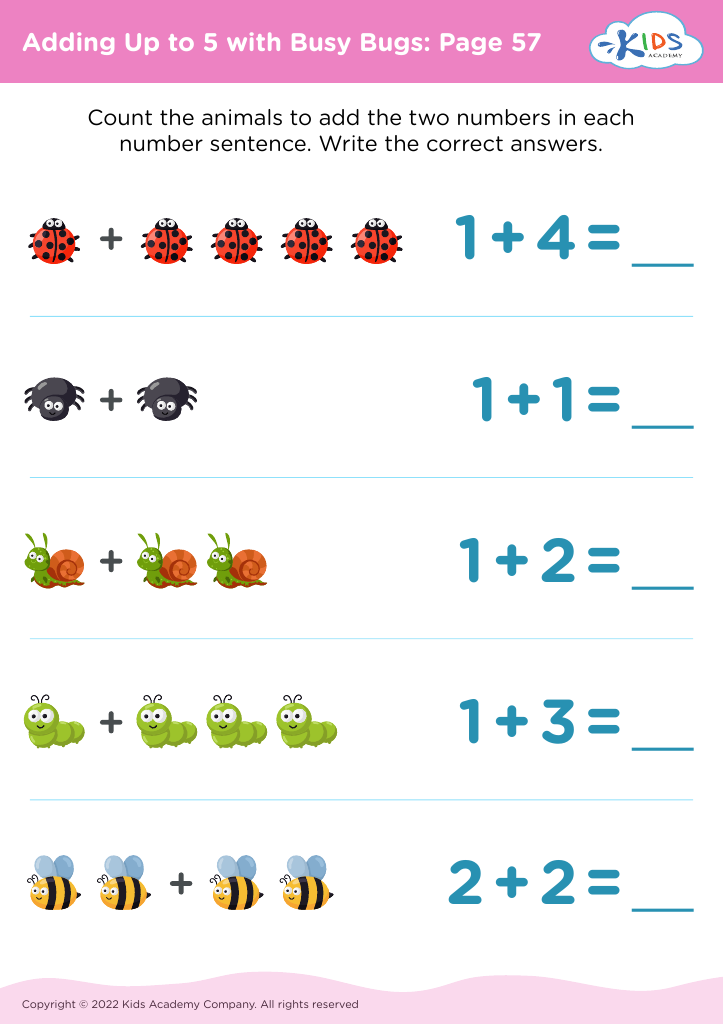
Explore our engaging Addition & Subtraction worksheets tailored for ages 4-9, designed to enhance young learners' understanding of numbers. These interactive activities provide a solid foundation in essential math skills, allowing children to practice simple addition and subtraction operations. Each worksheet incorporates fun themes and vibrant visuals to maintain interest while reinforcing concepts. With a variety of exercises, including comparing quantities and troubleshooting basic math problems, students will develop critical thinking and number recognition. Perfect for both classroom and at-home practice, our worksheets make math enjoyable and approachable, setting the stage for future mathematical success. Start your child’s math journey today!
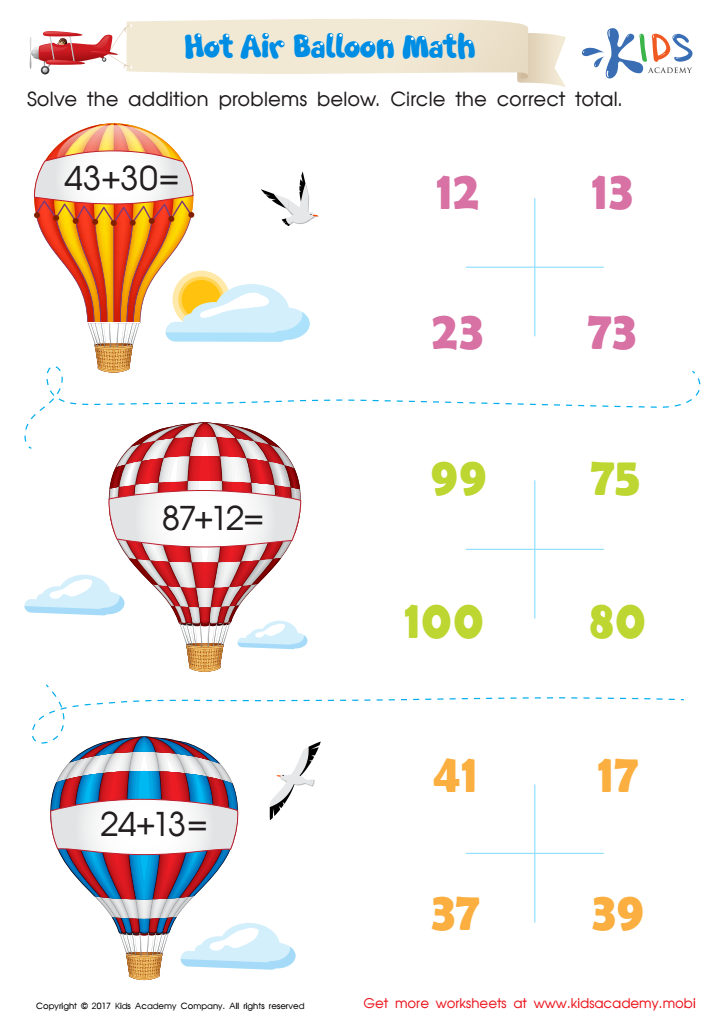
Hot Air Balloon Math Worksheet
 Assign to My Students
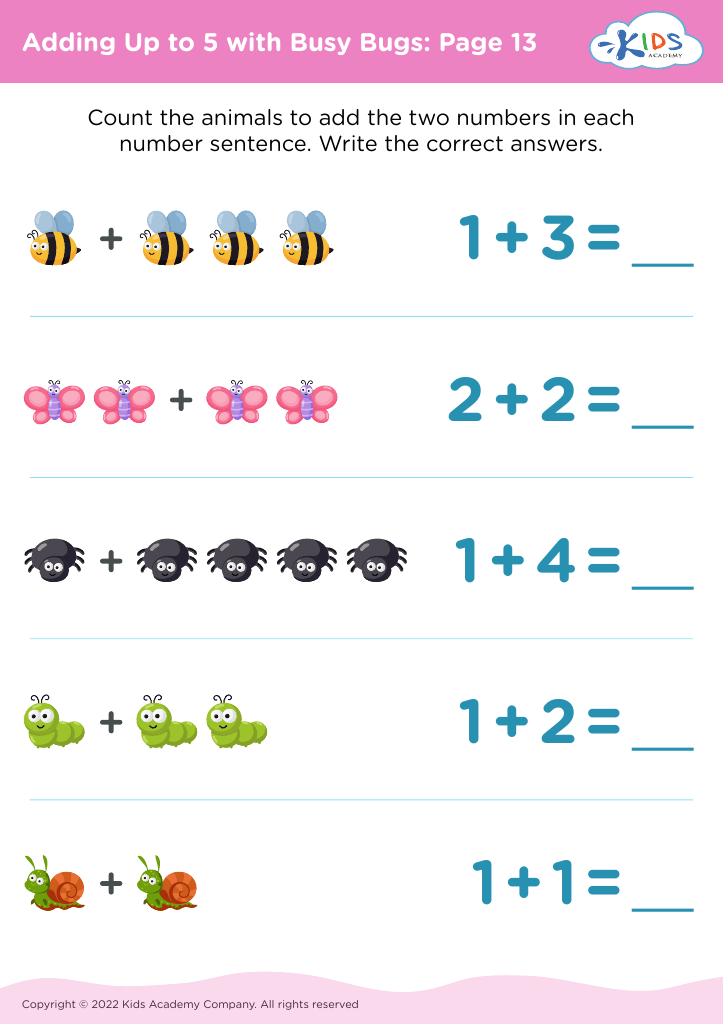
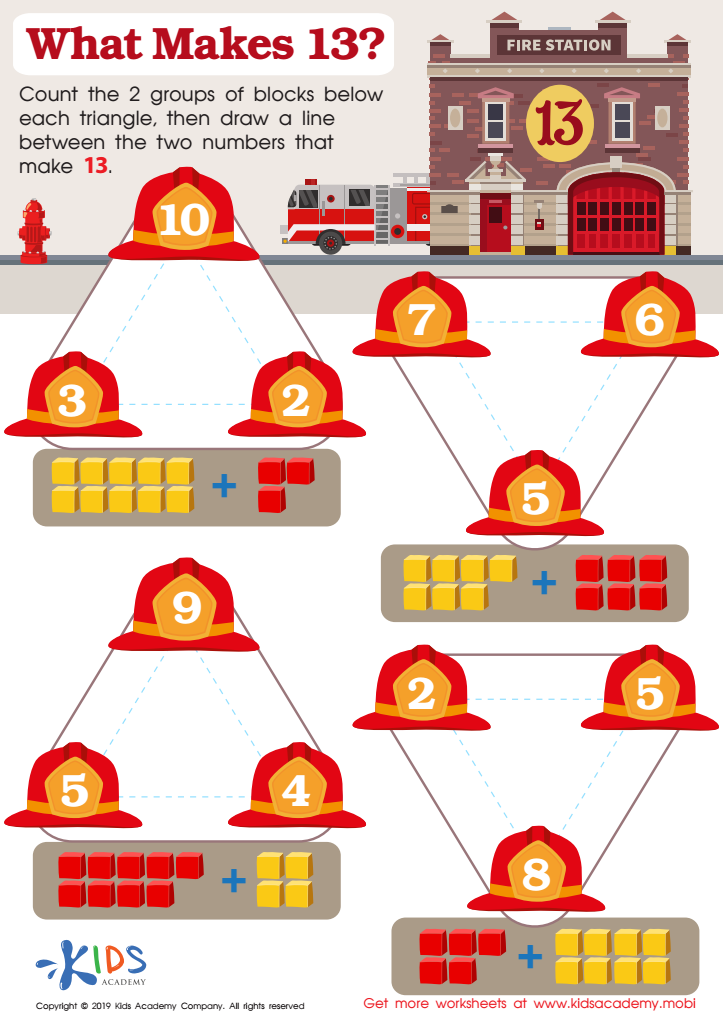
What Makes 13 Worksheet
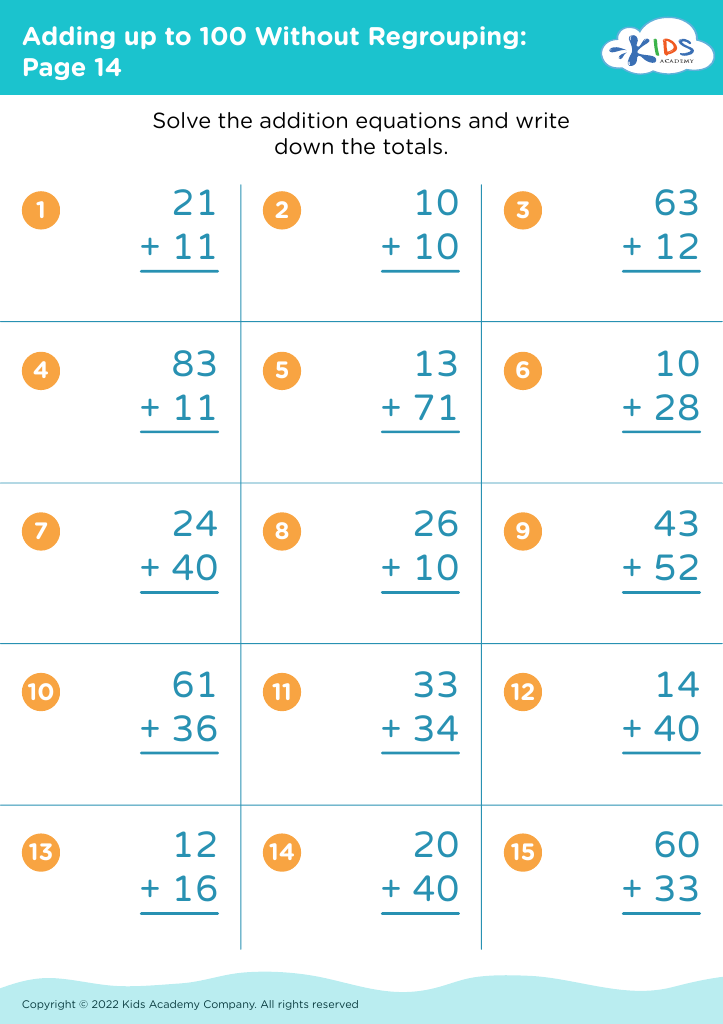








Understanding numbers, particularly addition and subtraction, is foundational for children aged 4-9, as it sets the stage for future mathematical learning. At this stage, children begin to form the core skills necessary for critical thinking and problem-solving. Grasping these concepts fosters numerical fluency, enabling children to tackle life’s everyday challenges with confidence, such as measuring ingredients for a recipe or budgeting their allowance.
Moreover, learning addition and subtraction enhances cognitive development, linking mathematical concepts to real-life scenarios. Parents and teachers play a vital role in this process, as engaging with numbers together can create a fun and supportive learning environment. It promotes positive attitudes towards math, reducing anxiety and fostering resilience in facing challenges. Additionally, foundational skills in math contribute to academic success across all subjects, as many areas of study require basic numeracy.
Attention to these skills can also highlight any learning gaps early on, allowing for timely intervention and support. Ultimately, nurturing an understanding of numbers promotes self-confidence, encourages curiosity, and equips children with essential skills they will carry into adulthood, making it a crucial focus for parents and educators alike. The goal is to support not just academic achievement, but also lifelong mathematical literacy.








