Filters

34 filtered results

Clear all filters
Favorites
With answer key
Interactive

34 filtered results

Difficulty Level

Grade


Discover our comprehensive "Understanding Patterns: Addition & Subtraction Worksheets for Ages 4-9." These expertly designed worksheets from Kids Academy focus on cultivating your child’s mathematical reasoning through engaging activities. Specifically tailored for young learners, these printables enhance problem-solving skills by integrating fun patterns with addition and subtraction tasks. Each worksheet is creatively crafted to align with early-grade math curricula, fostering a positive learning experience. Ideal for both classroom and home use, Kids Academy ensures your child builds a solid foundation in math while enjoying the learning journey. Unlock the world of patterns and numbers today!
Check out this FREE Trial Lesson on Addition & Subtraction for age 4-9!

Making 15

Favorites
With answer key
Interactive
  • 4-9
  • Understanding patterns
  • Addition & Subtraction
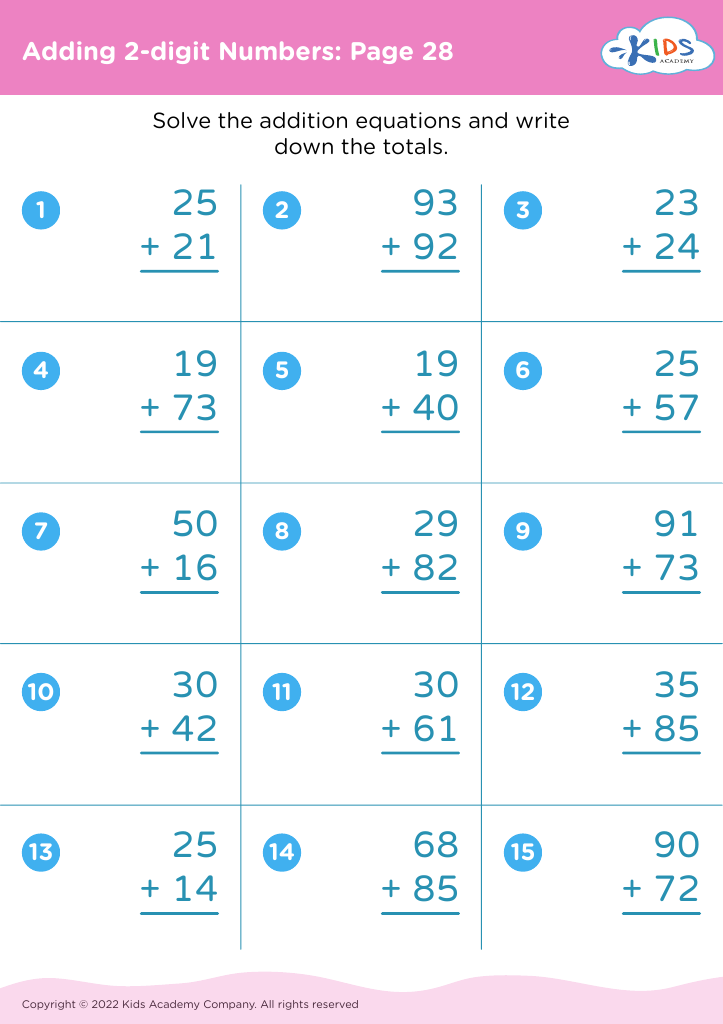
Adding 2-digit Numbers: Page 28

Adding 2-digit Numbers: Page 28

Adding 2-digit Numbers: Page 28
Worksheet
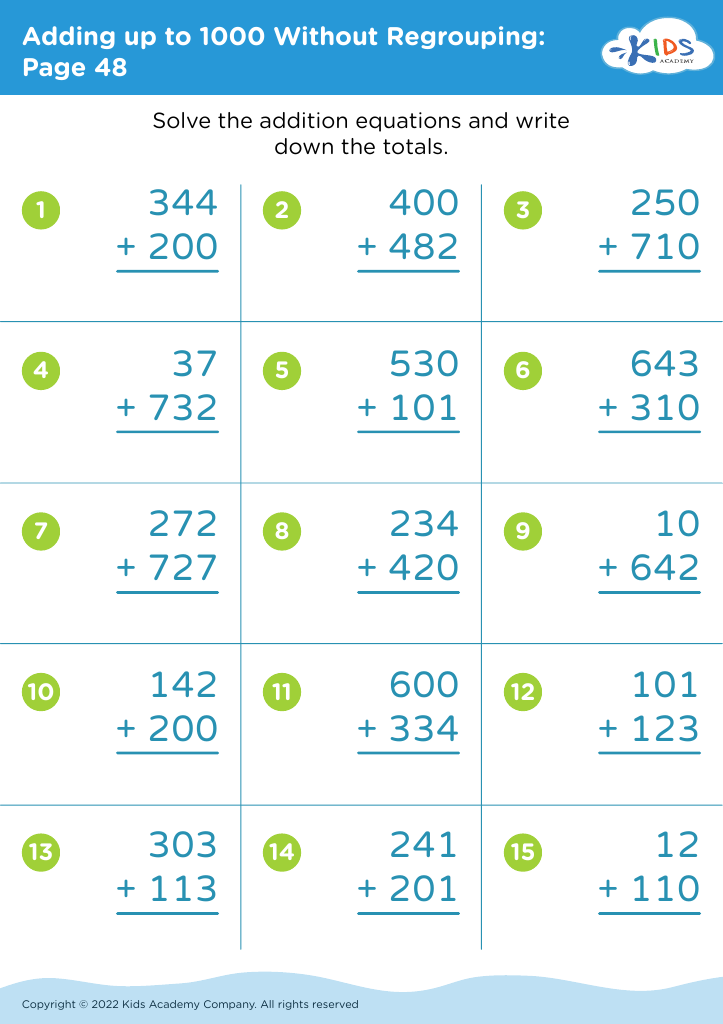
Adding up to 1000 Without Regrouping: Page 48
Worksheet
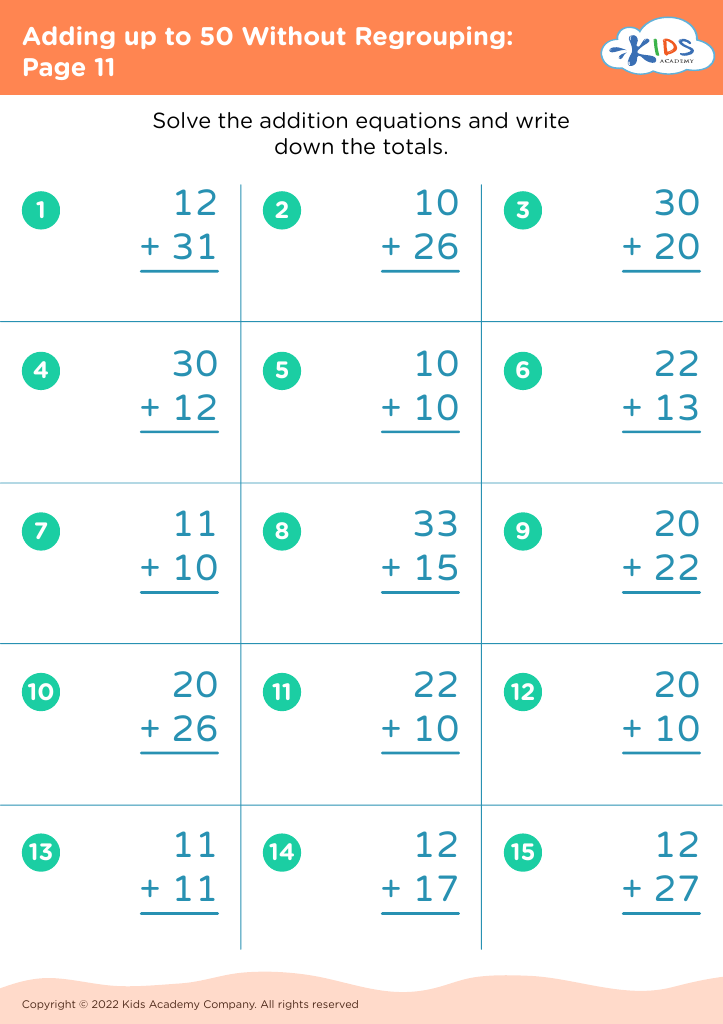
Adding up to 50 Without Regrouping: Page 11
Worksheet
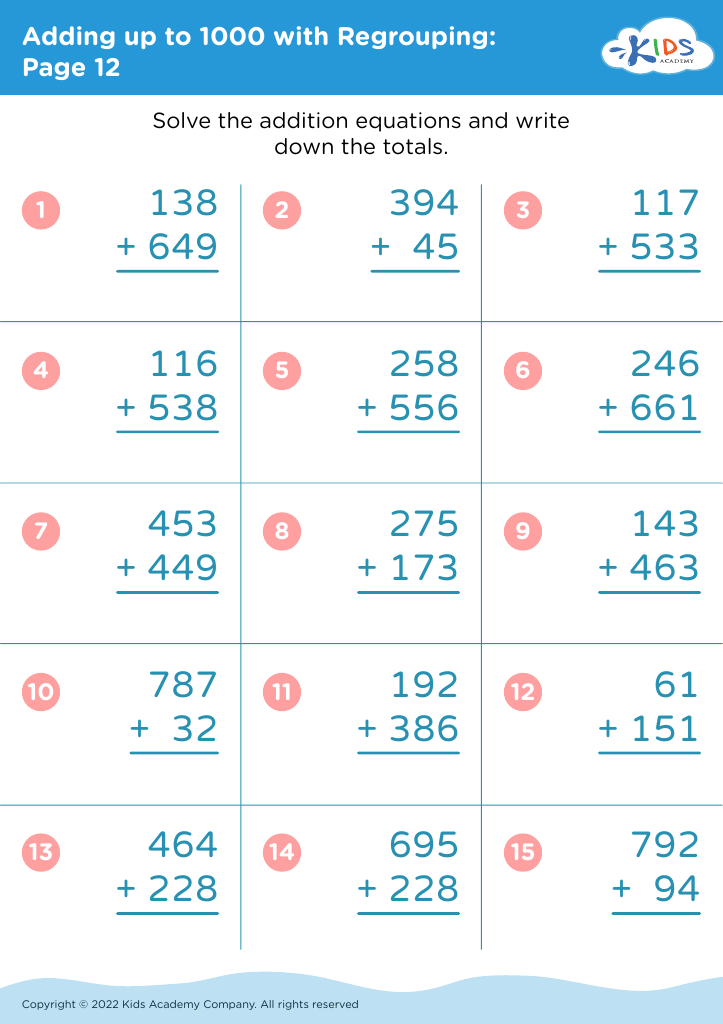
Adding up to 1000 with Regrouping: Page 12
Worksheet
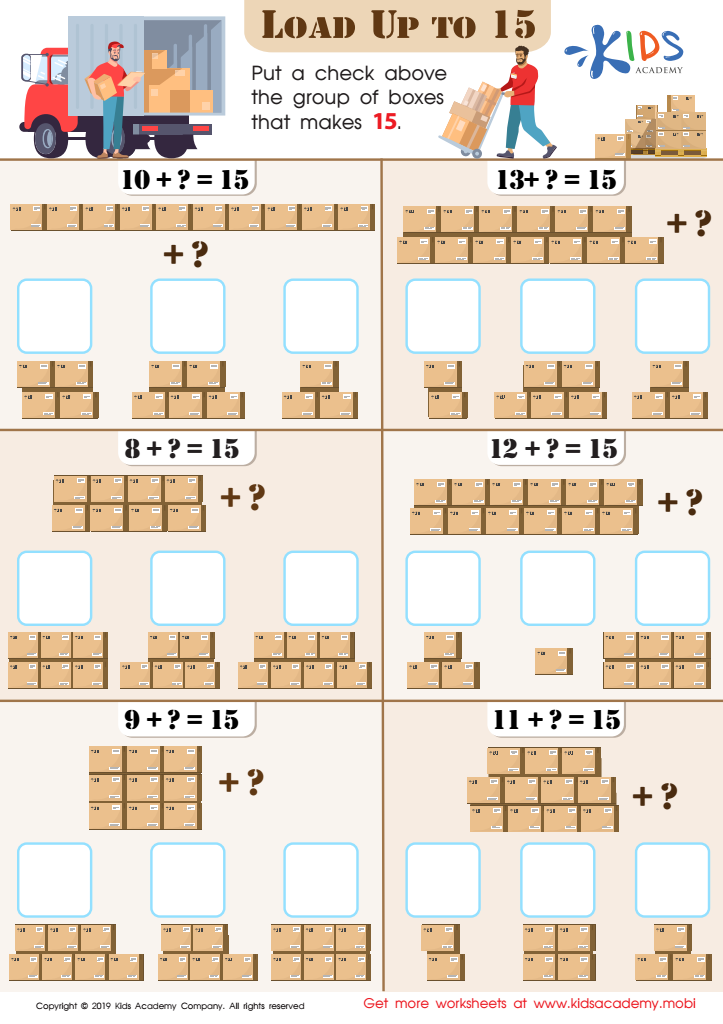
Load up to 15 Worksheet

Load up to 15 Worksheet

Your students can practice addition and counting skills with this worksheet. Each equation has 6 boxes to count. Check the group that equals 15 to complete the exercise. Help your kindergartners if they need it.
Load up to 15 Worksheet
Worksheet
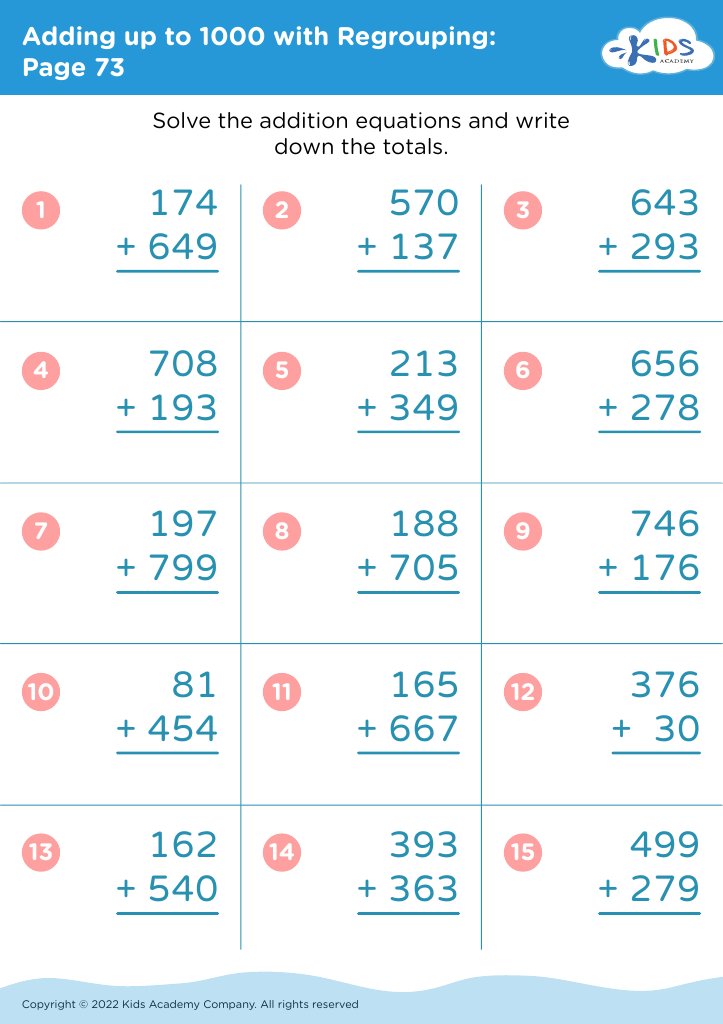
Adding up to 1000 with Regrouping: Page 73
Worksheet
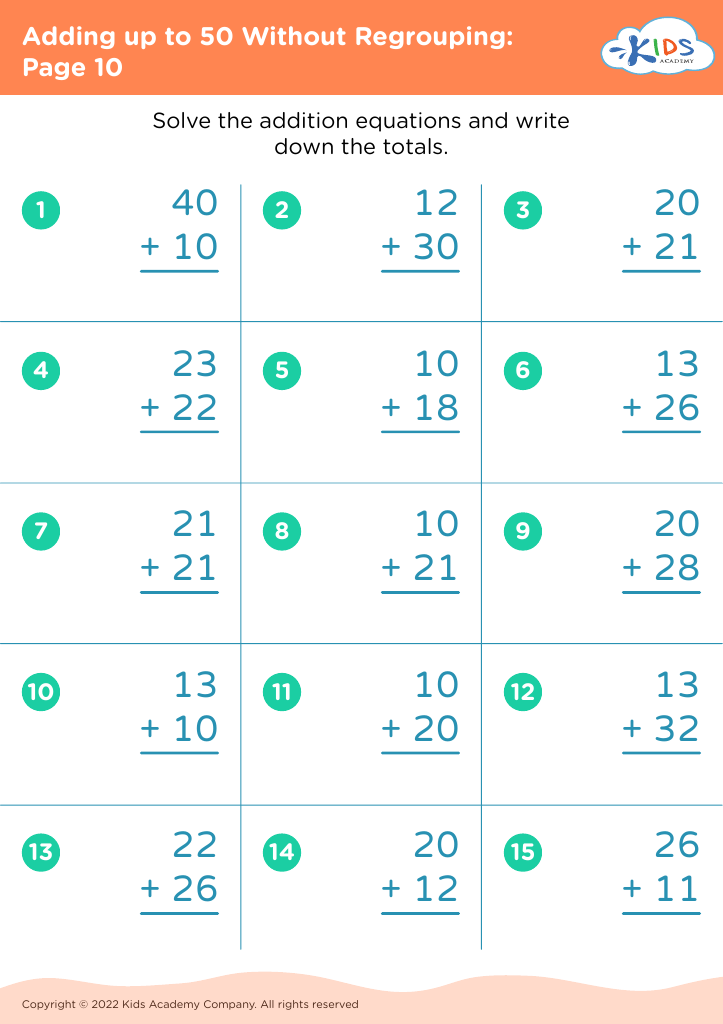
Adding up to 50 Without Regrouping: Page 10
Worksheet
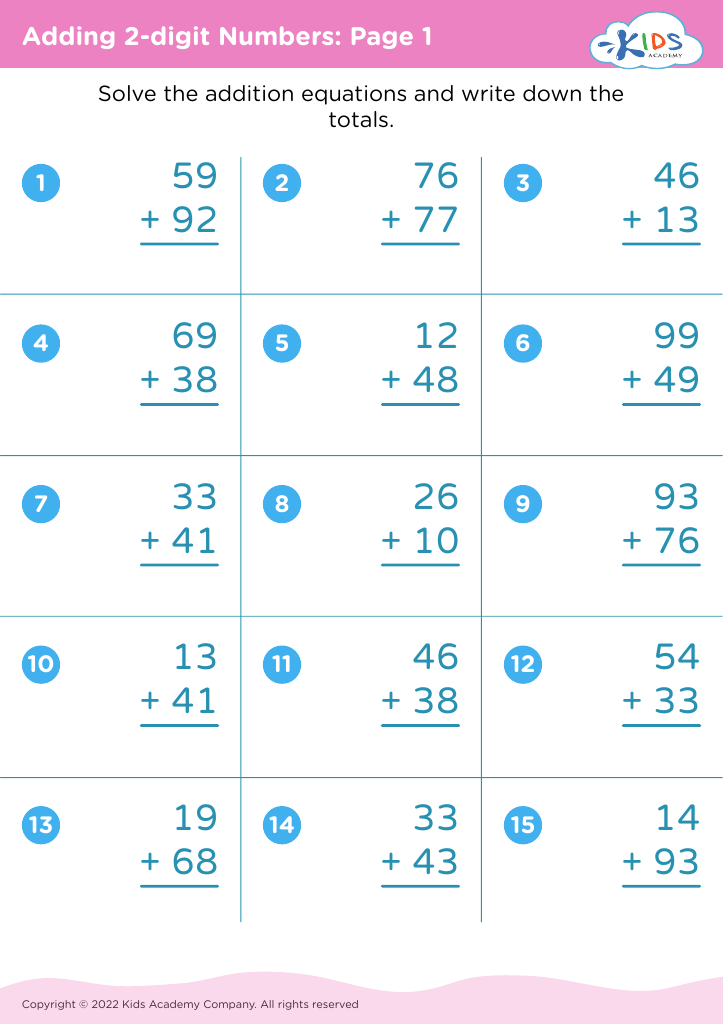
Adding 2-digit Numbers: Page 1

Adding 2-digit Numbers: Page 1

Adding 2-digit Numbers: Page 1
Worksheet
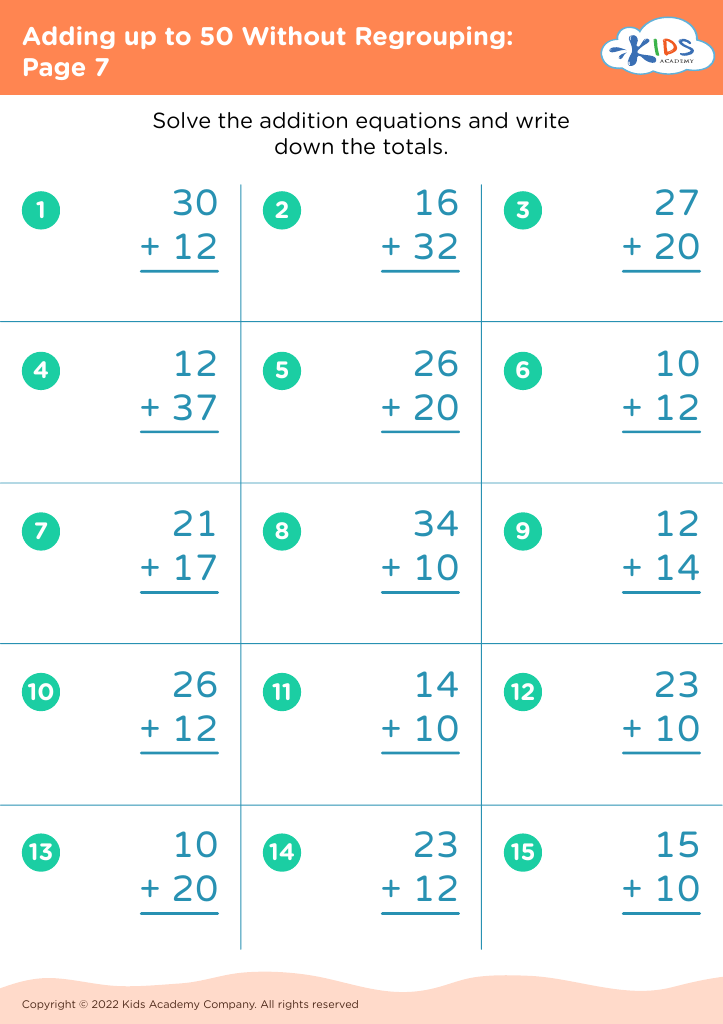
Adding up to 50 Without Regrouping: Page 7
Worksheet
Second Grade Math Worksheets

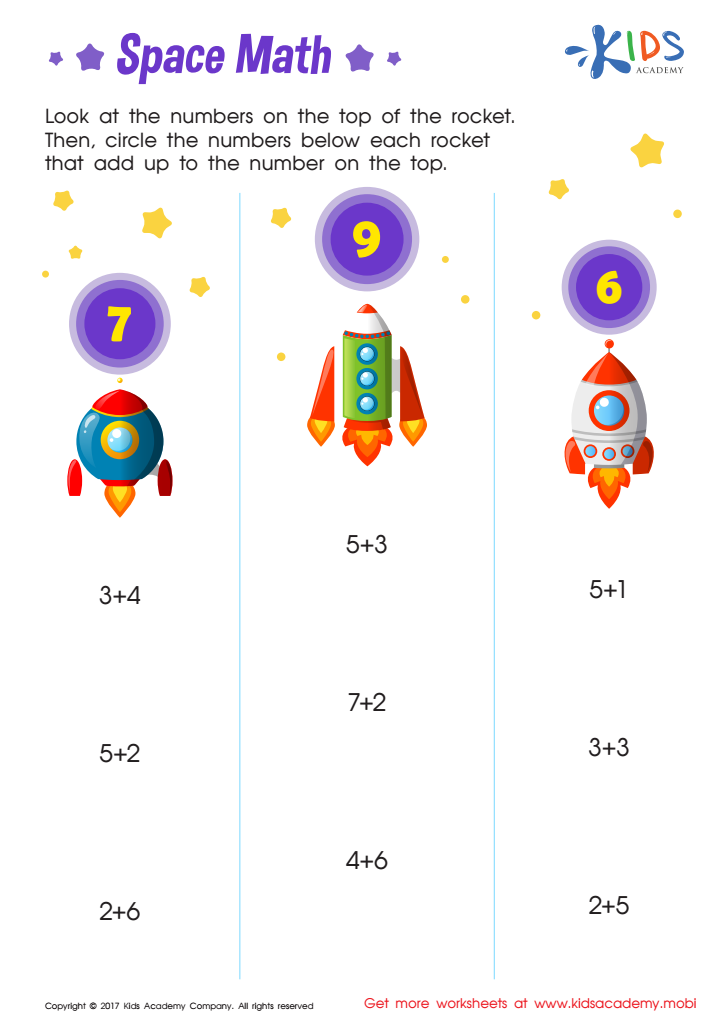
Addition: Space Math Worksheet
Fun and engaging space-themed practice with vivid pictures and matching numbers will make learning more meaningful. Take their math skills out of this galaxy today with Kids Academy!
Addition: Space Math Worksheet
Worksheet
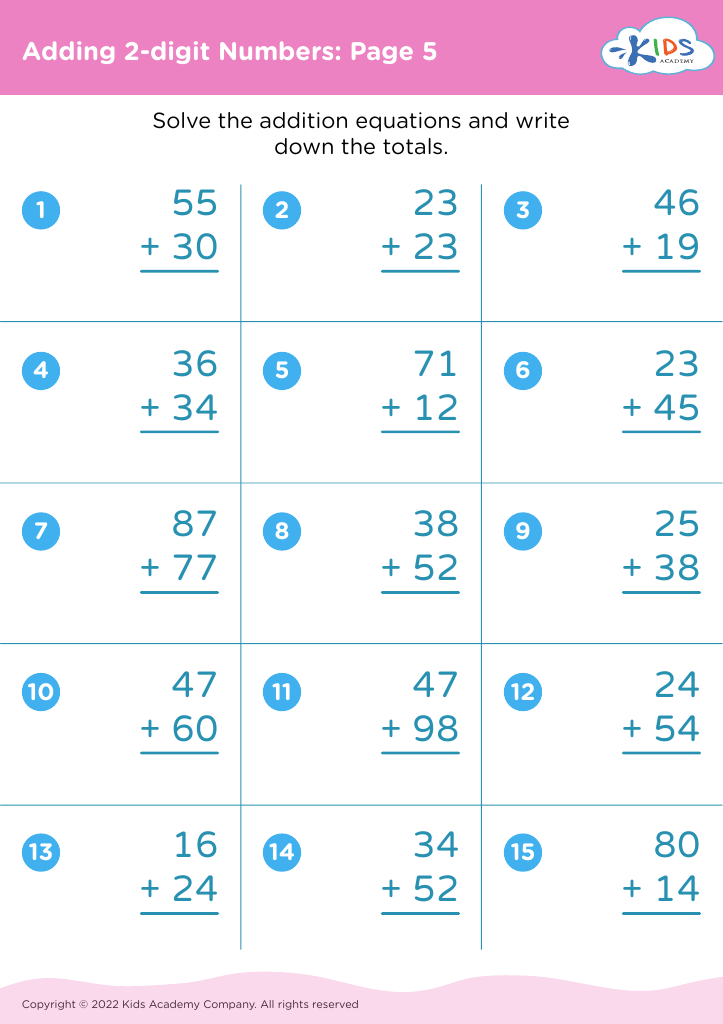
Adding 2-digit Numbers: Page 5

Adding 2-digit Numbers: Page 5

Adding 2-digit Numbers: Page 5
Worksheet
What's the Rule Worksheet
What's the Rule Worksheet

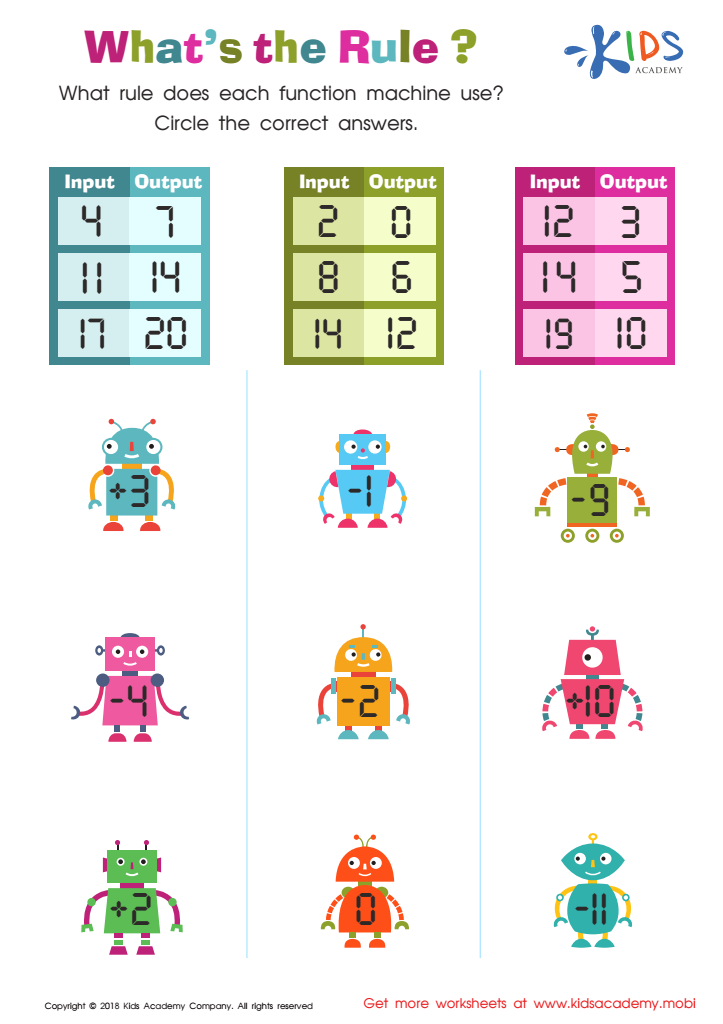
Robots are here to help your child find the relationship between each set of numbers! Adorably illustrated worksheets use vivid pictures that each contain a rule. Look at each function machine and find the pattern or relationship between the input and output. Then, complete the sheet by circling the correct answer!
What's the Rule Worksheet
Worksheet
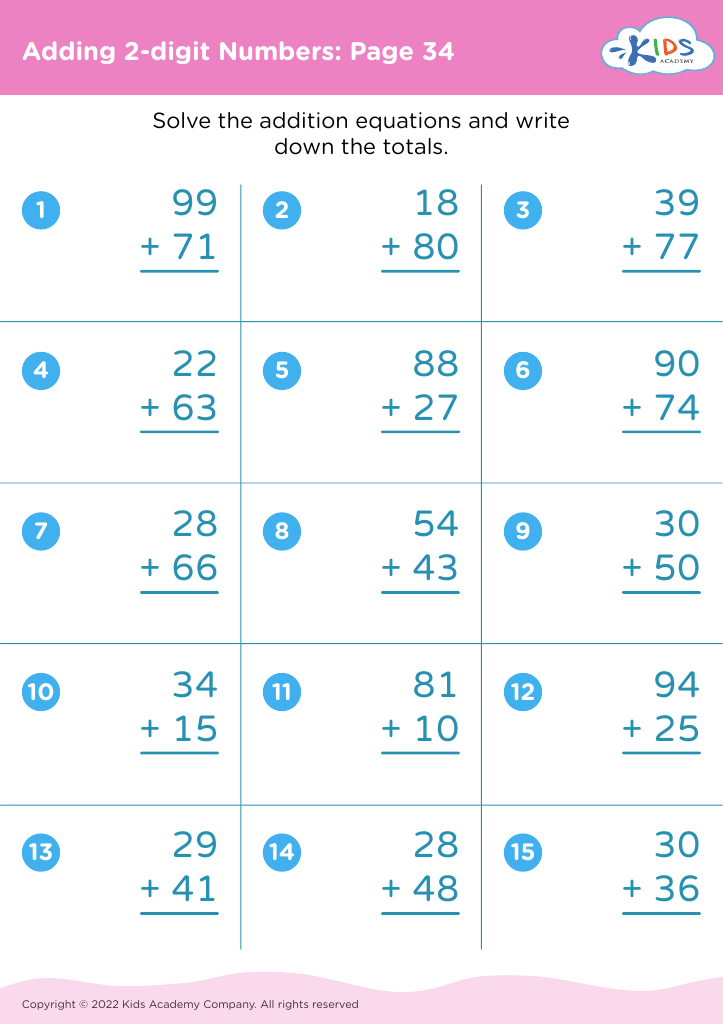
Adding 2-digit Numbers: Page 34

Adding 2-digit Numbers: Page 34

Adding 2-digit Numbers: Page 34
Worksheet
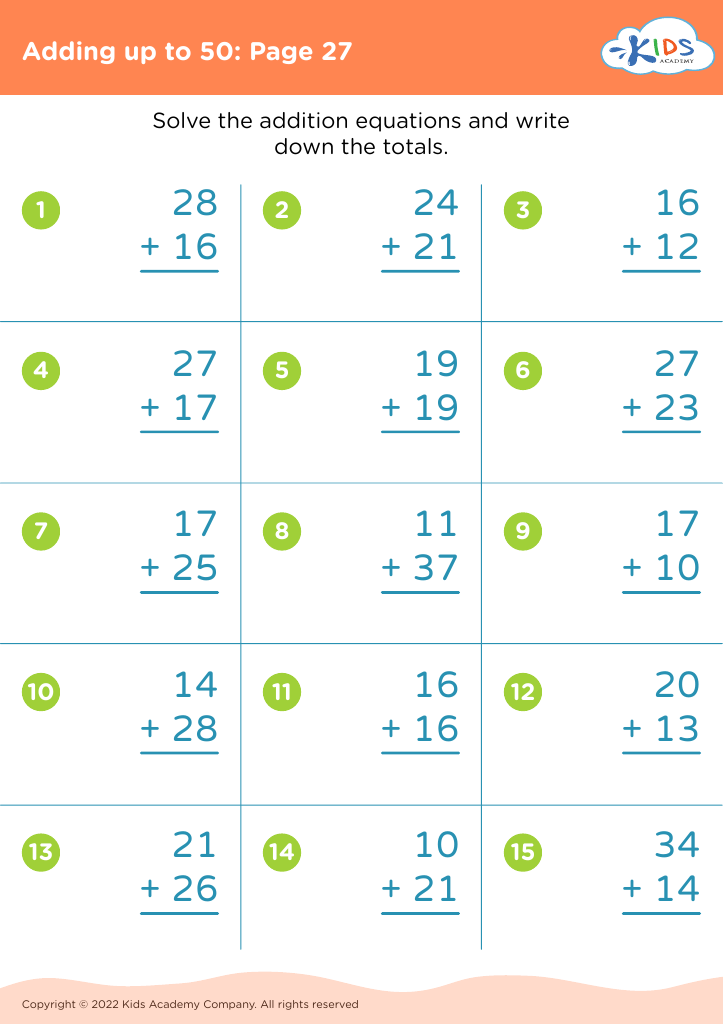
Adding up to 50: Page 27

Adding up to 50: Page 27

Adding up to 50: Page 27
Worksheet
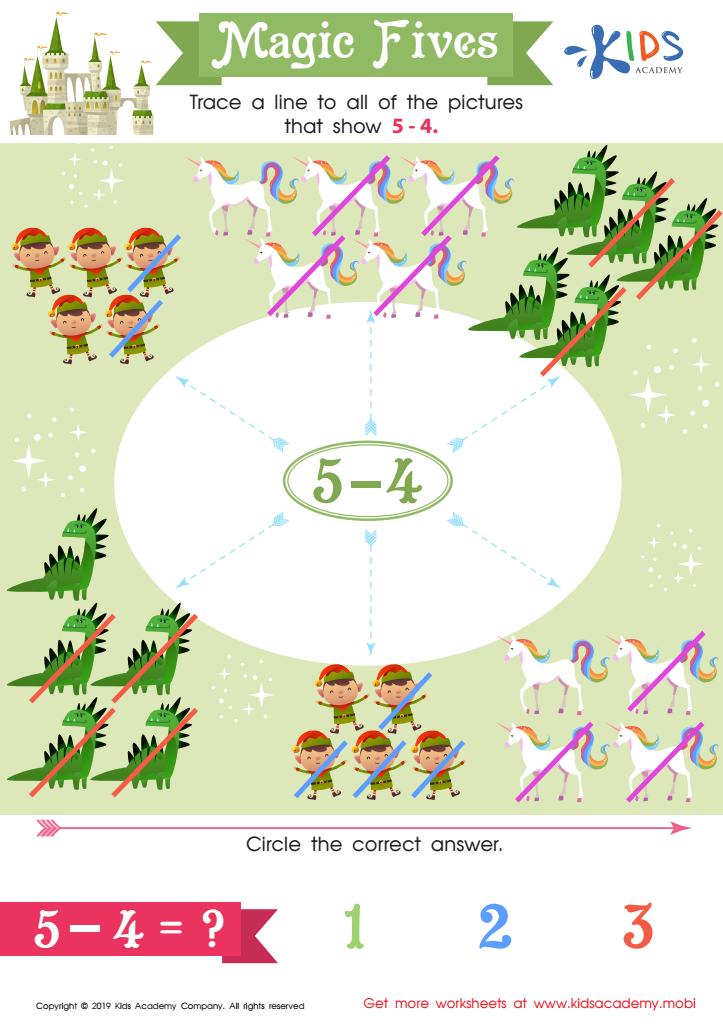
Magic Fives Worksheet
Magic Fives Worksheet
Help your students identify the objects & people in the worksheet. Point to the equation 5 -4 in the center, then get them to count the items and trace a line connecting those that add up to 5 - 4.
Magic Fives Worksheet
Worksheet
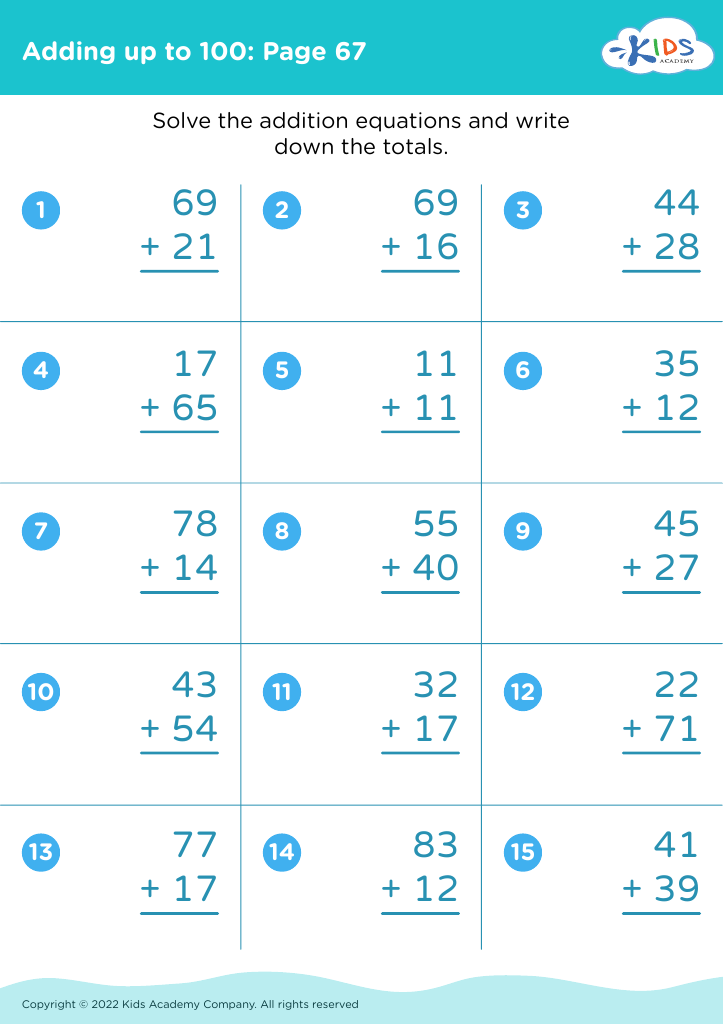
Adding up to 100: Page 67

Adding up to 100: Page 67

Adding up to 100: Page 67
Worksheet
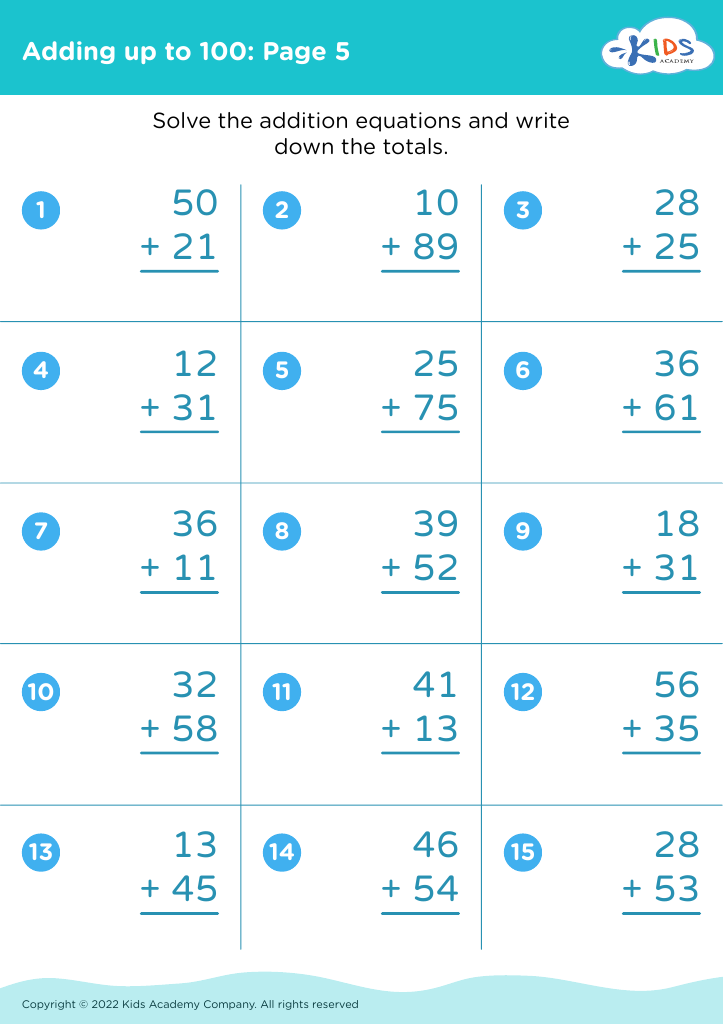
Adding up to 100: Page 5

Adding up to 100: Page 5

Adding up to 100: Page 5
Worksheet
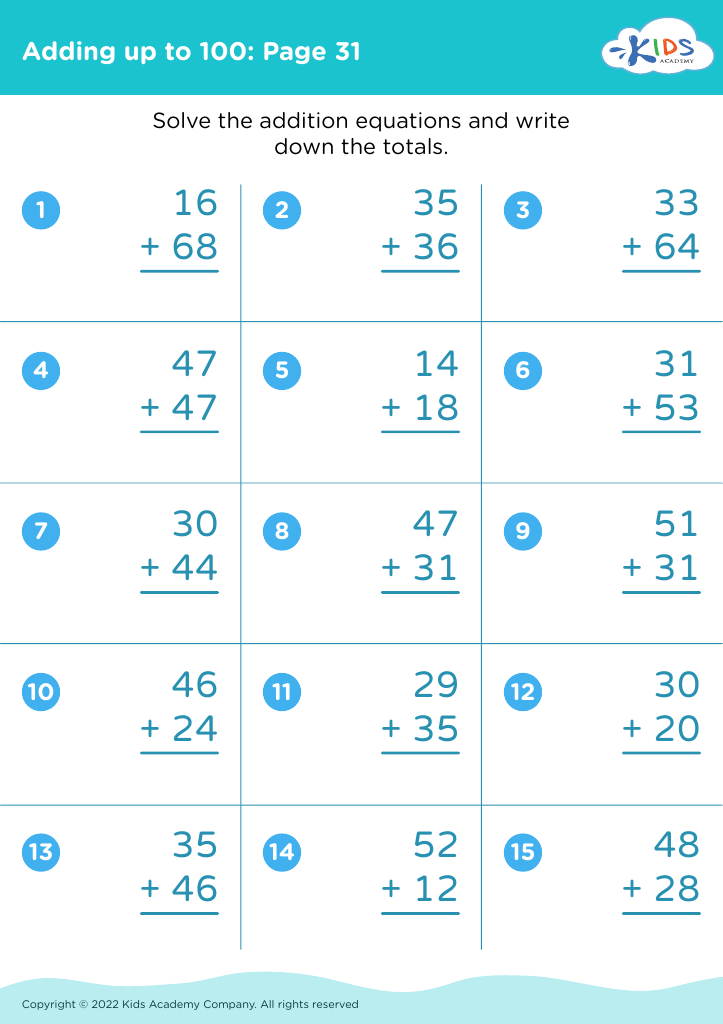
Adding up to 100: Page 31

Adding up to 100: Page 31

Adding up to 100: Page 31
Worksheet
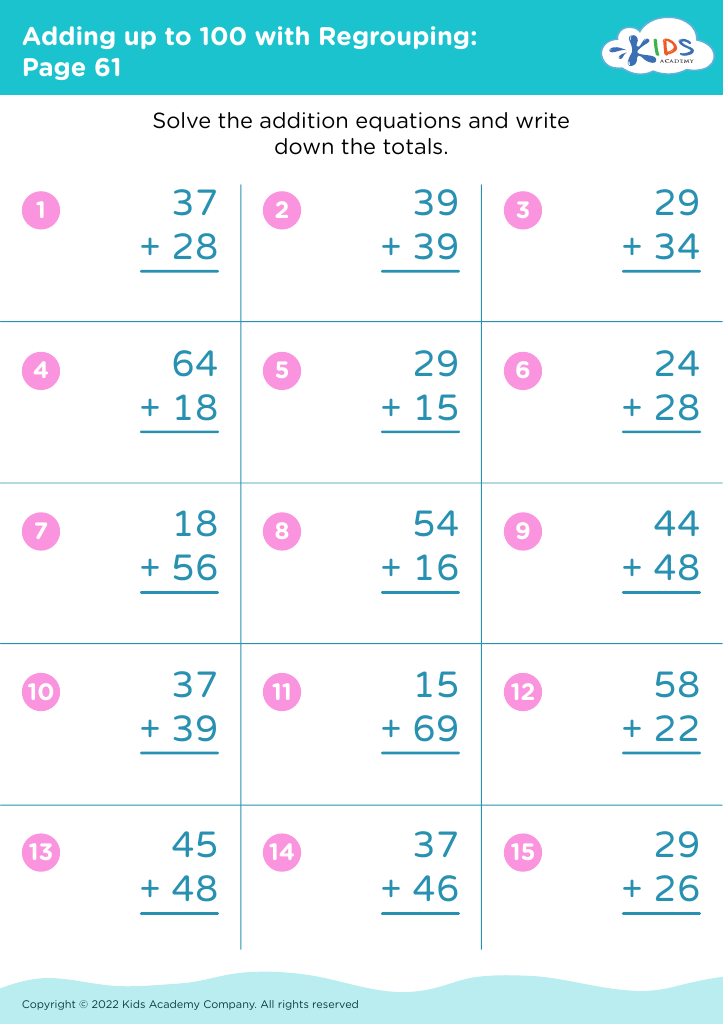
Adding up to 100 with Regrouping: Page 61
Worksheet
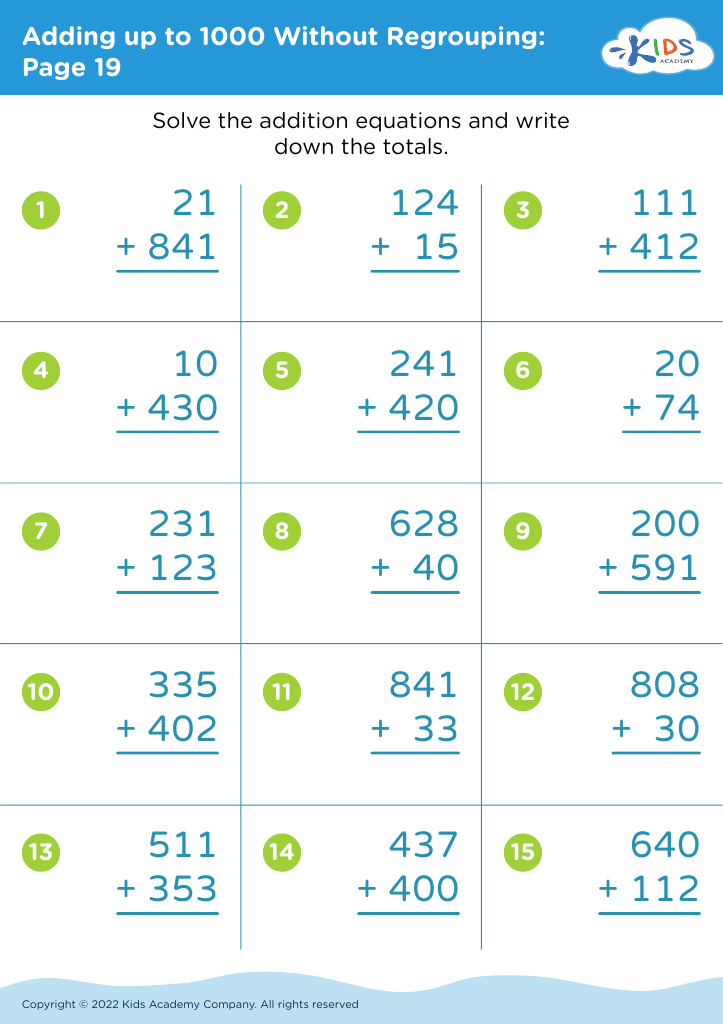
Adding up to 1000 Without Regrouping: Page 19
Worksheet
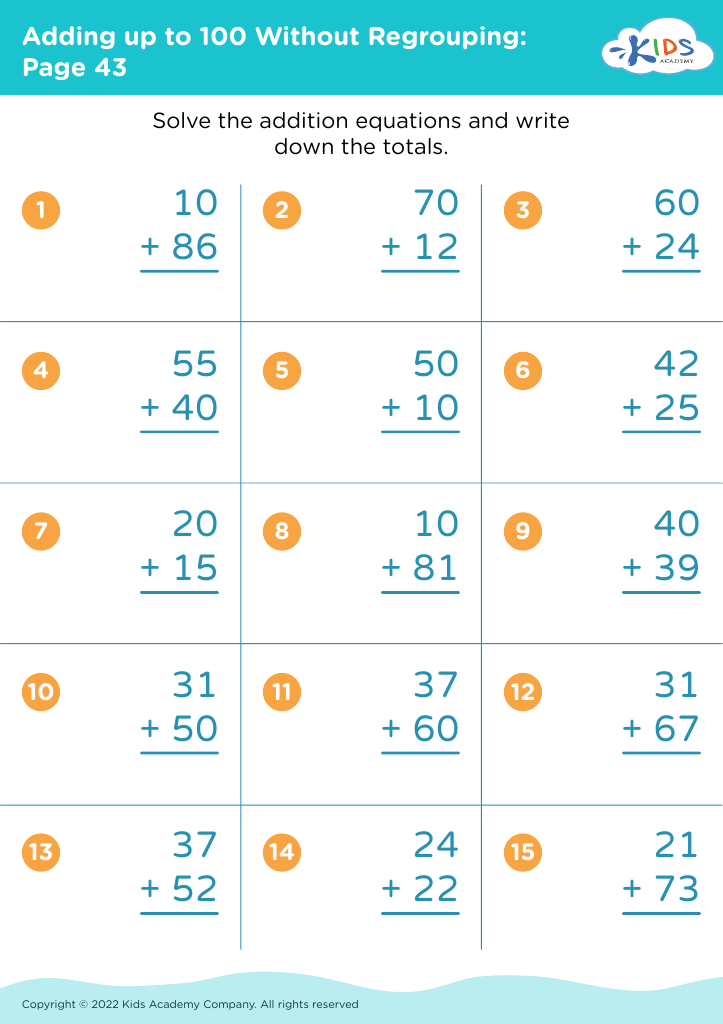
Adding up to 100 Without Regrouping: Page 43
Worksheet
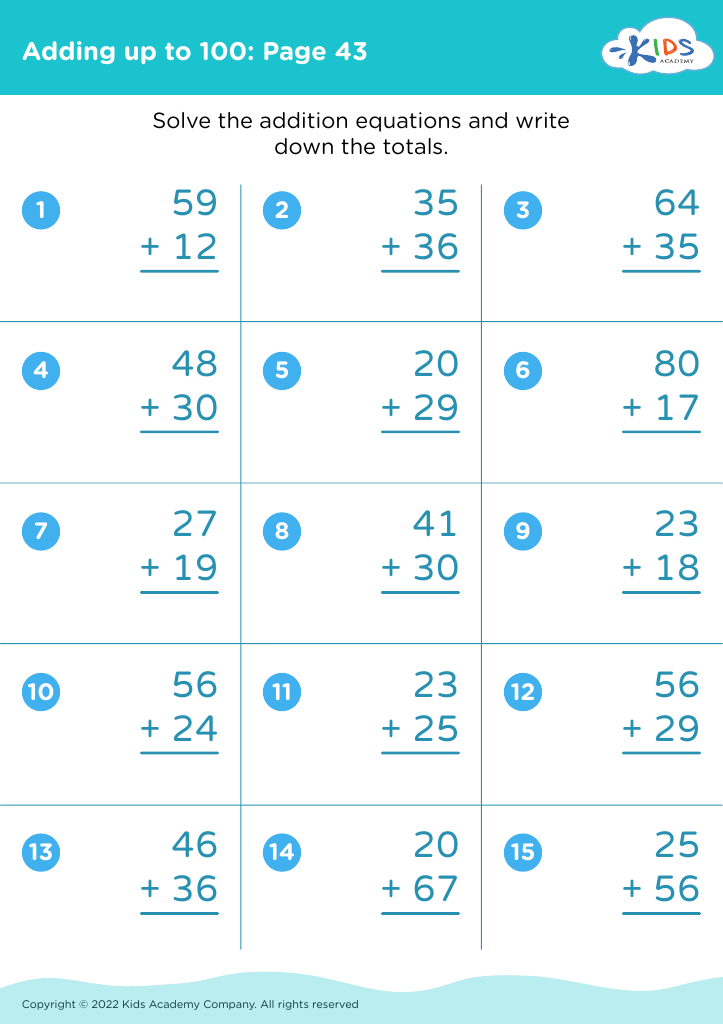
Adding up to 100: Page 43

Adding up to 100: Page 43

Adding up to 100: Page 43
Worksheet
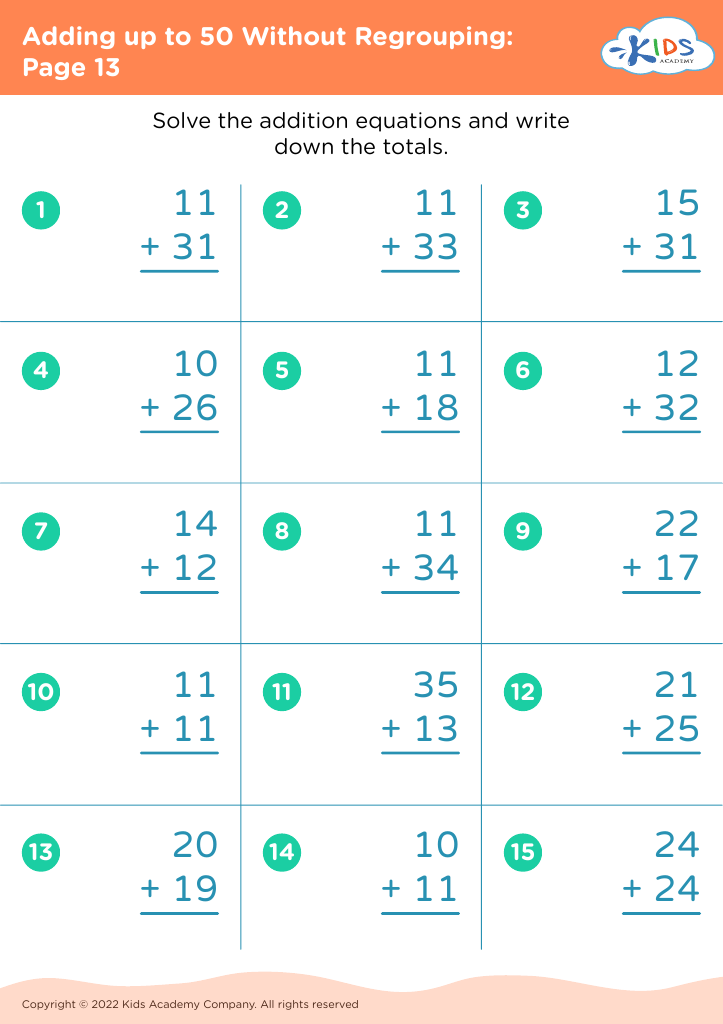
Adding up to 50 Without Regrouping: Page 13
Worksheet
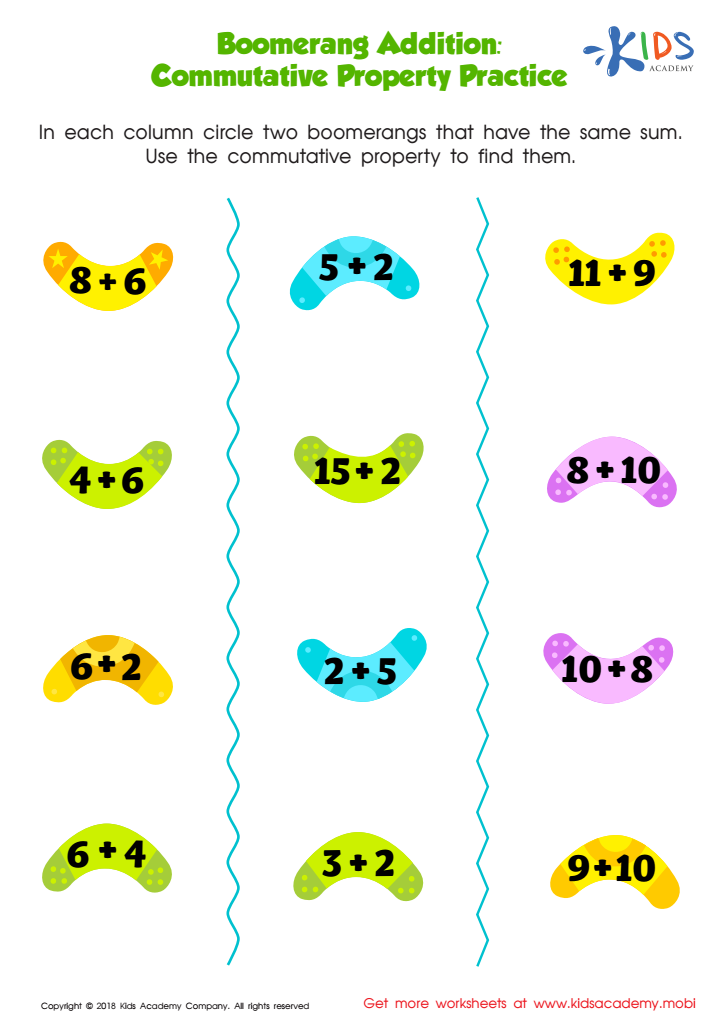
Boomerang Addition Worksheet


Boomerang Addition Worksheet

Kids know that when a boomerang is thrown, it reverses its path back. The same goes for addition: numbers can be rearranged and the sum will remain the same. Use this worksheet to find matching pairs of colorful boomerangs and equations. Look through each column and use the commutative property to find the pairs with the same sum.
Boomerang Addition Worksheet

Worksheet


Understanding patterns in addition and subtraction is immensely important for children aged 4-9 because these foundational skills enable them to grasp more complex math concepts later on. For one, recognizing patterns helps improve problem-solving abilities and analytical thinking. When children understand that adding a series of numbers (like 1, 2, 3) follows a certain pattern, they start to predict outcomes, enhancing their cognitive abilities.

Early proficiency in addition and subtraction forms the bedrock for all future math learning, including multiplication, division, and beyond. It equips kids with the skills necessary for academic success, not just in math, but in subjects that require analytical reasoning, like science and even language arts. Besides, hands-on experience with these arithmetic principles can make math seem less intimidating and more entertaining, fostering a positive attitude towards learning.

Moreover, skills in addition and subtraction integrate seamlessly into everyday activities. Whether it’s counting toys, dividing snacks, or even understanding time and money, these real-world applications highlight the practicality and relevance of what they’re learning.

Lastly, the age group 4-9 marks crucial developmental years, where children are naturally curious and absorbent. Nurturing their capabilities at this stage sets a strong foundation for lifelong learning while fostering intellectual curiosity and confidence.