
Visual perception Addition & Subtraction Worksheets for Ages 4-9
18 filtered results
Difficulty Level
Grade
Age
-
From - To
Subject
Activity
Standards
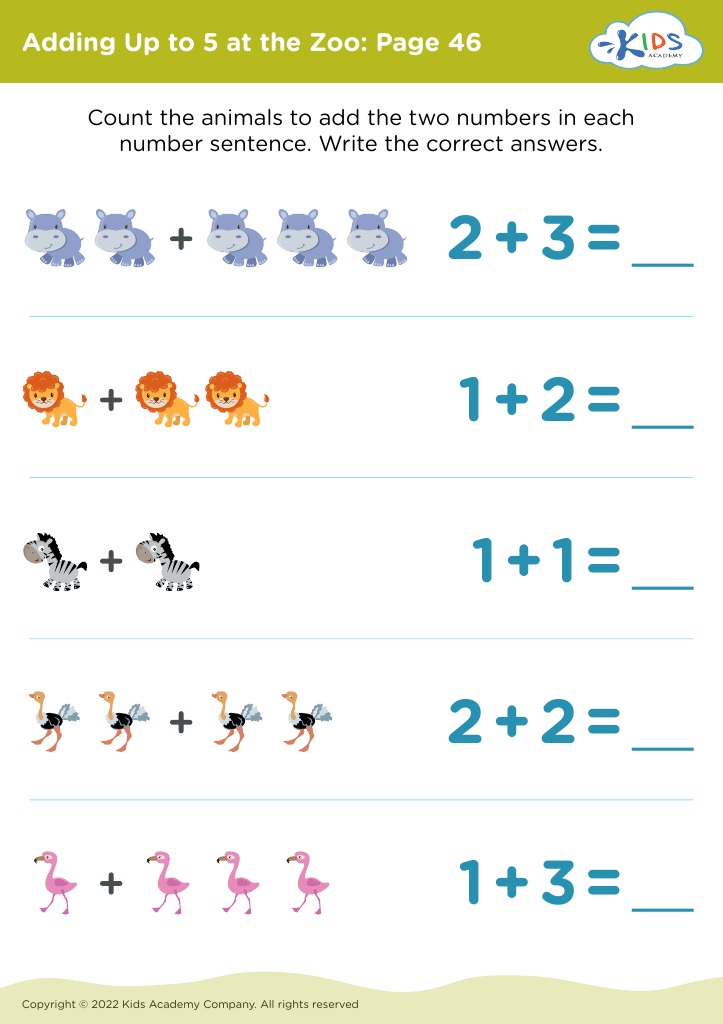
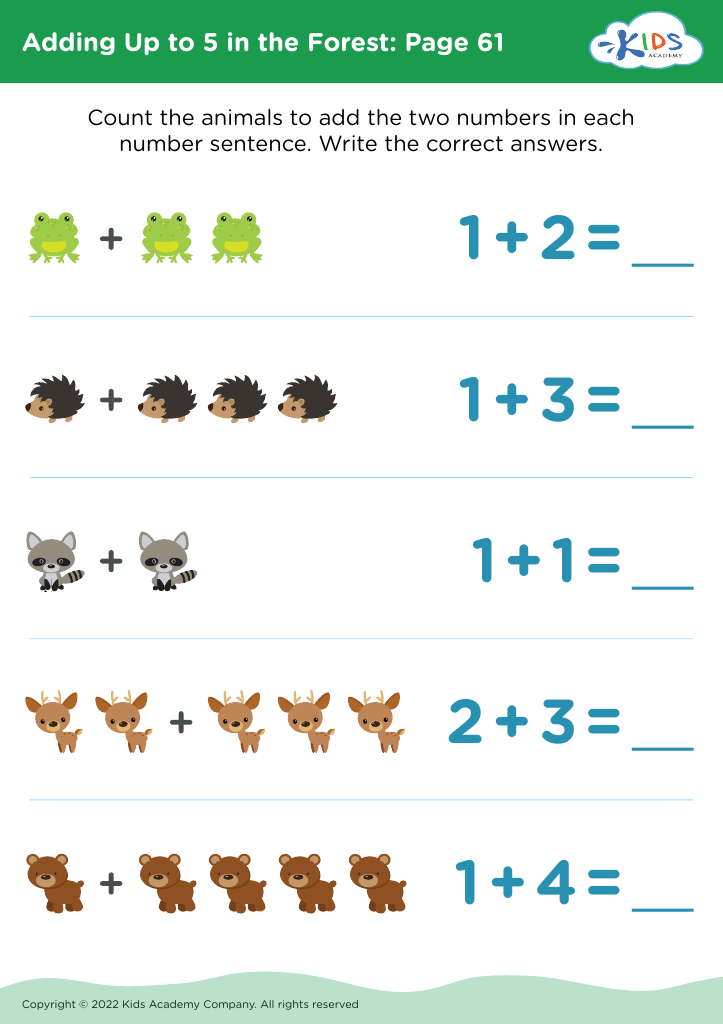
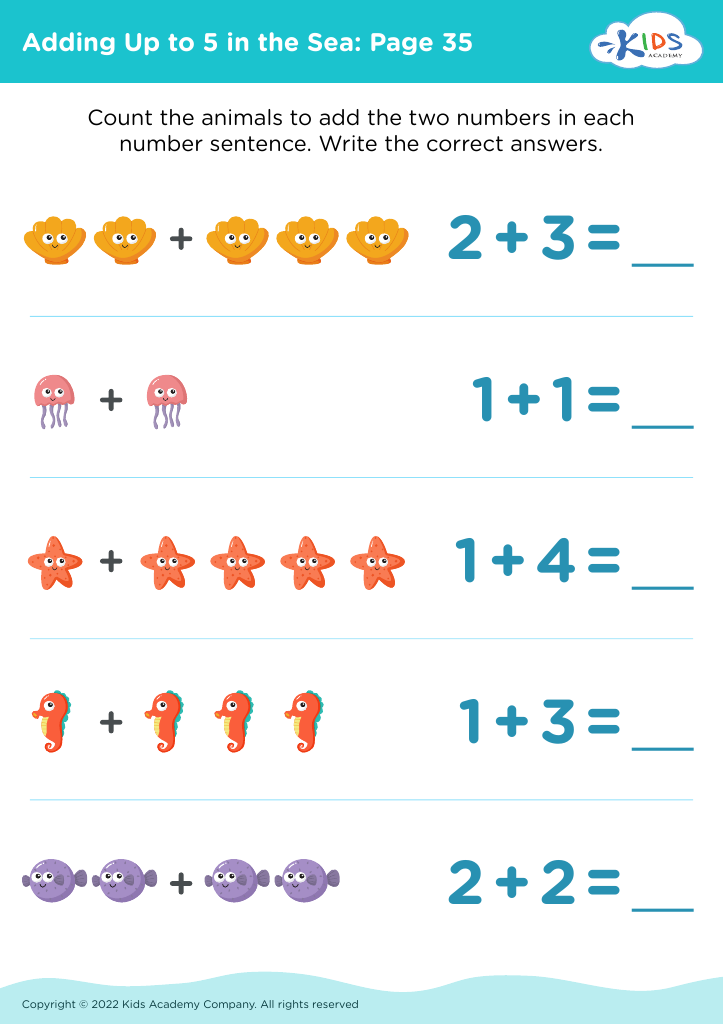
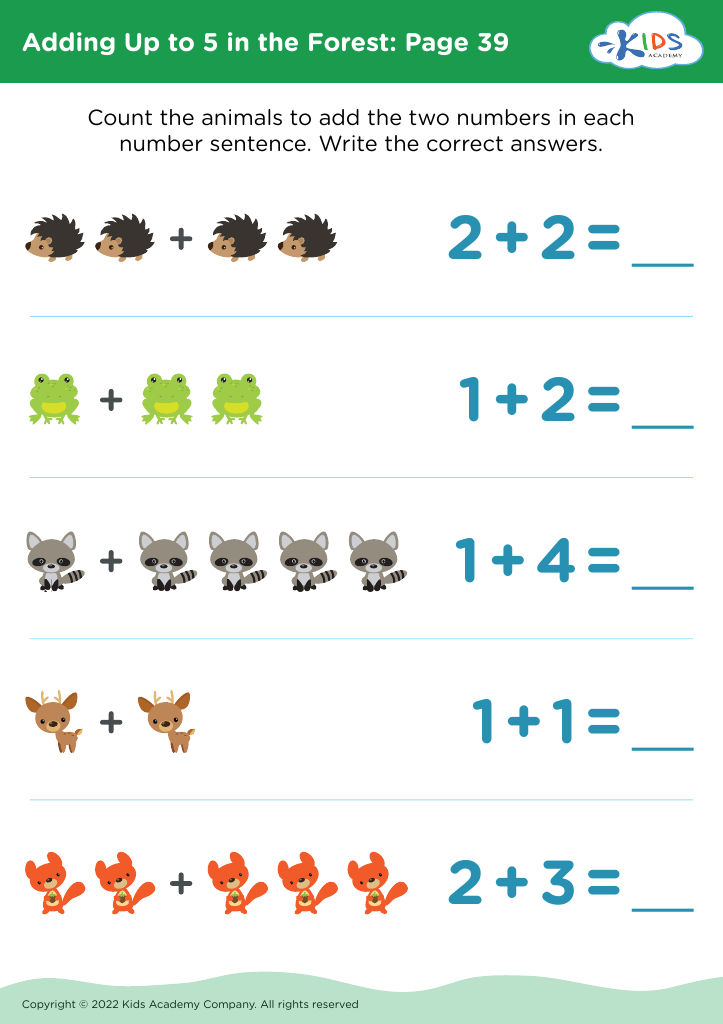
Boost your child’s mathematical skills with our captivating Visual Perception Addition and Subtraction Worksheets, specifically designed for ages 4 to 9. These engaging worksheets enhance visual recognition and spatial awareness, vital components for mastering basic math concepts. By integrating visual elements, children will practice addition and subtraction through fun activities that build confidence and understanding. Our resources support preschool and early primary learners, making math an enjoyable experience. Ideal for home or classroom use, these worksheets foster critical thinking and problem-solving. Empower your child’s learning journey today with these essential tools that blend visual learning with foundational math skills!
Favorites
With answer key
Interactive
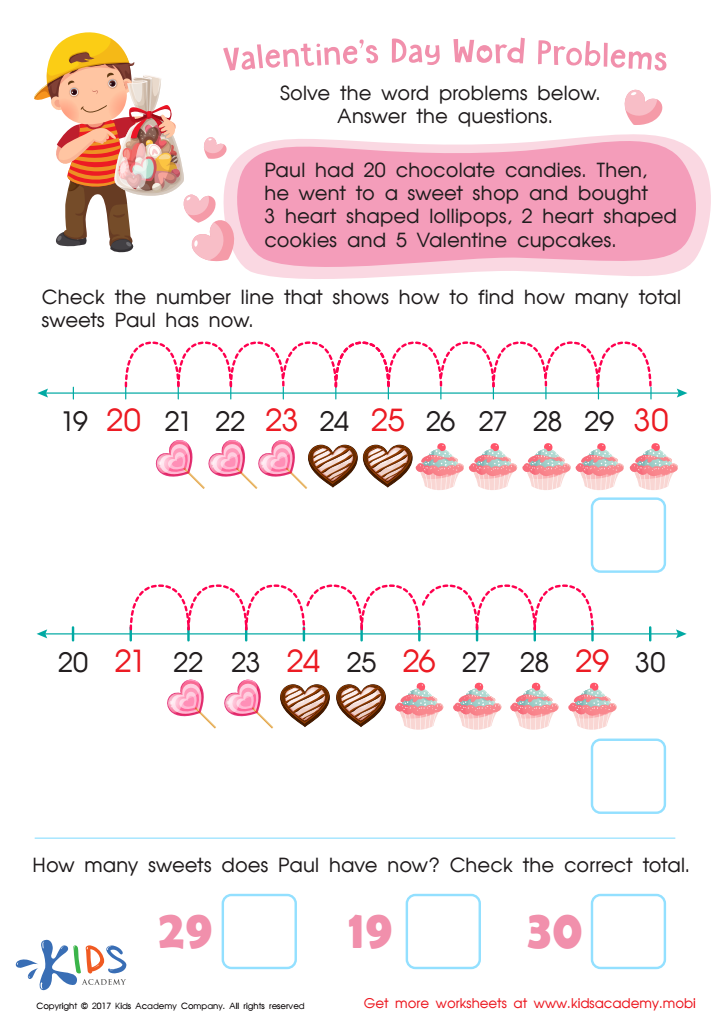
Valentines Day 2 Printable
This PDF worksheet uses a number line to help solve the problems. Your child will be ready for Valentine's Day after completing it. Counting and adding from 20 is also reinforced.
 Assign to My Students
Valentines Day 2 Printable
Worksheet
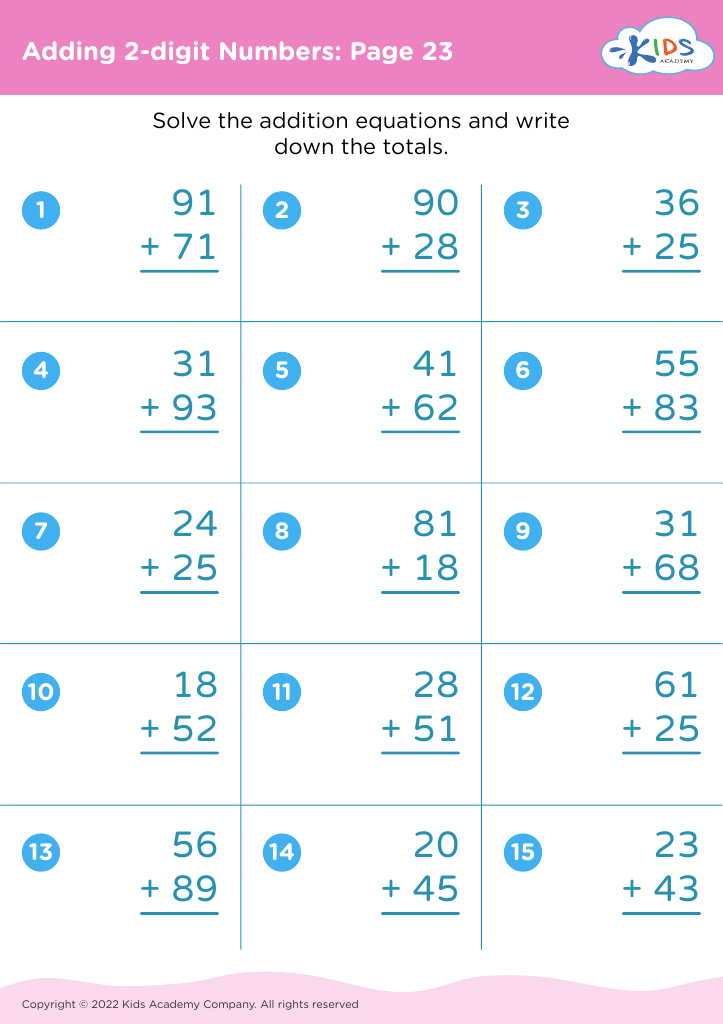
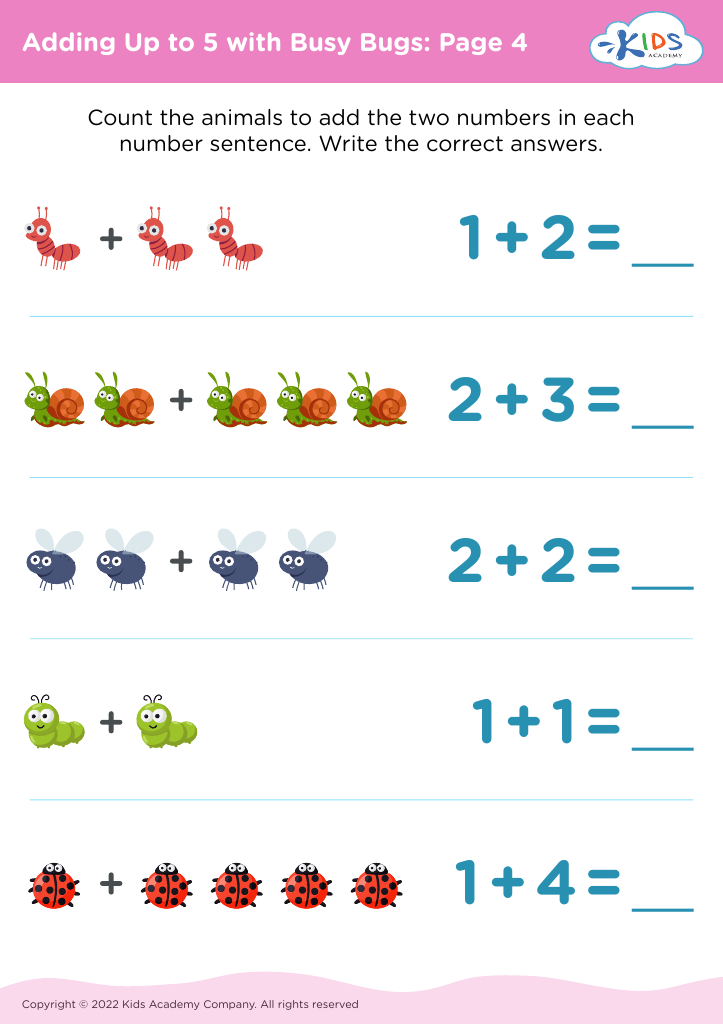
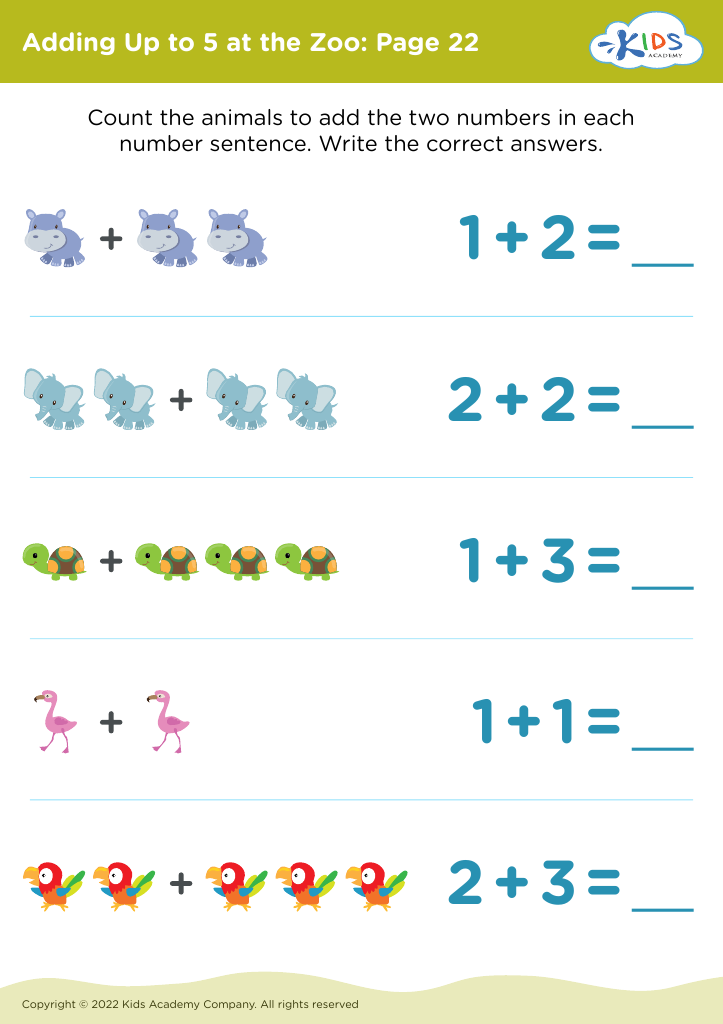
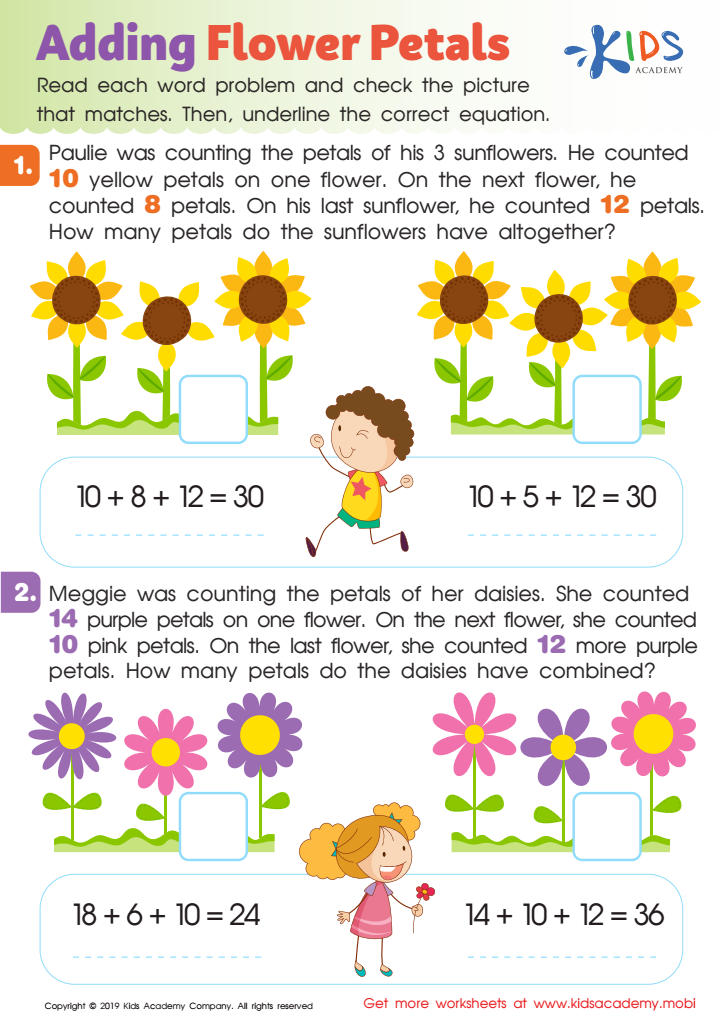
Adding Flower Petals Worksheet
This free worksheet helps little mathematicians learn to understand word problems. They'll read each one and match it to the corresponding picture. Important info is highlighted, teaching kids to look for key info when solving problems. Then they'll underline the correct number equation that matches the picture. A great way to practice problem-solving skills!
Adding Flower Petals Worksheet
Worksheet
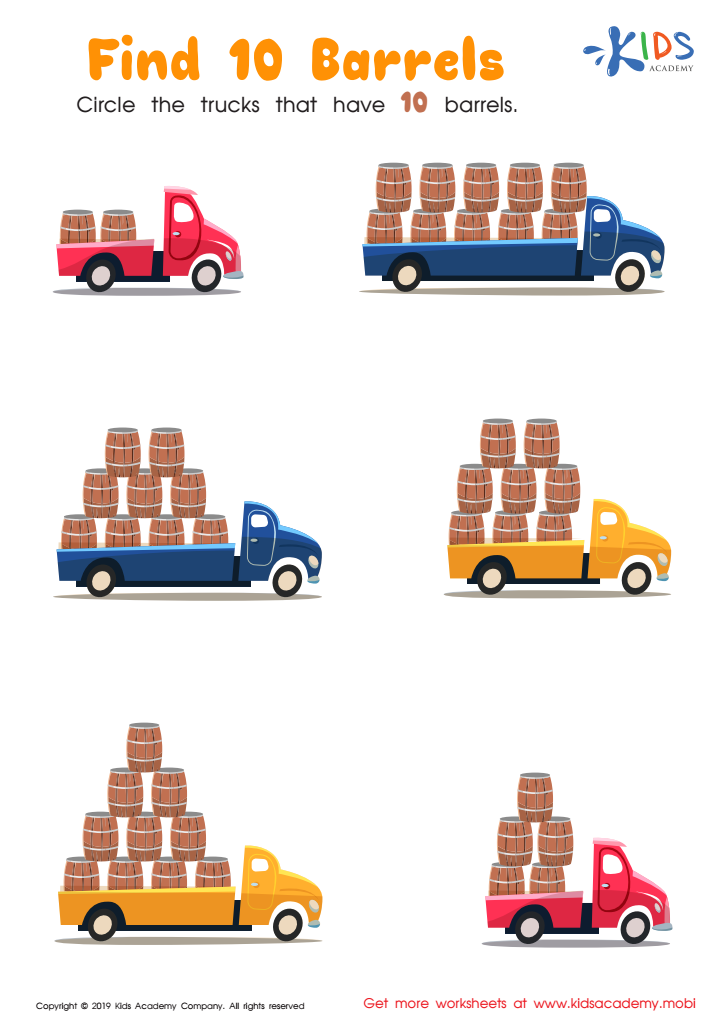
Find 10 Barrels Worksheet
Help your kids learn to count with 1, 2 and 3, then progress to tens and hundreds. Supplied with educational materials and colorful worksheets, they'll be counting as high as they can. Together, count the barrels on the trucks in the printout and encourage them to circle the ones with 10 barrels.
Find 10 Barrels Worksheet
Worksheet
Join Kids Academy for Free
Who is primarily going to use this learning content?








Visual perception is a crucial skill that significantly impacts children's ability to understand and perform addition and subtraction, particularly for those aged 4-9. This skill allows children to interpret and make sense of visual information, such as numbers, shapes, and spatial relationships. As they engage with mathematical concepts, effective visual perception helps them to recognize patterns and quantities, facilitating mental calculations and problem-solving abilities.
For parents and teachers, nurturing visual perception is essential because it lays the foundation for more advanced mathematical skills. Children who develop strong visual perception are typically better equipped to grasp concepts like place value, number comparison, and patterns. Engaging in activities that enhance visual perception—like puzzles, games, and visual tracking exercises—can make learning both effective and enjoyable.
Moreover, the ability to visualize numbers and operations aids in reducing anxiety around math, fostering a positive attitude toward learning. By providing targeted support in visual perception, parents and educators help cultivate children’s academic confidence and enthusiasm. Ultimately, a solid foundation in visual perception not only enhances addition and subtraction skills but also prepares children for future success in more complex mathematical concepts and everyday problem-solving.








