Animal recognition Addition Worksheets for Ages 4-9
95 filtered results
-
From - To
Explore our engaging Animal Recognition Addition Worksheets, designed for children ages 4-9! These fun and interactive worksheets combine essential addition skills with captivating animal themes, making math enjoyable for young learners. Each activity features delightful illustrations and relatable scenarios that help kids recognize various animals while sharpening their arithmetic abilities. Our resources cater to different skill levels, ensuring that every child can progress at their own pace. Whether used at home or in the classroom, these worksheets promote a love for math and promote critical thinking. Perfect for reinforcing basic addition concepts, our worksheets make learning exciting and effective! Start your animal adventure in math today!
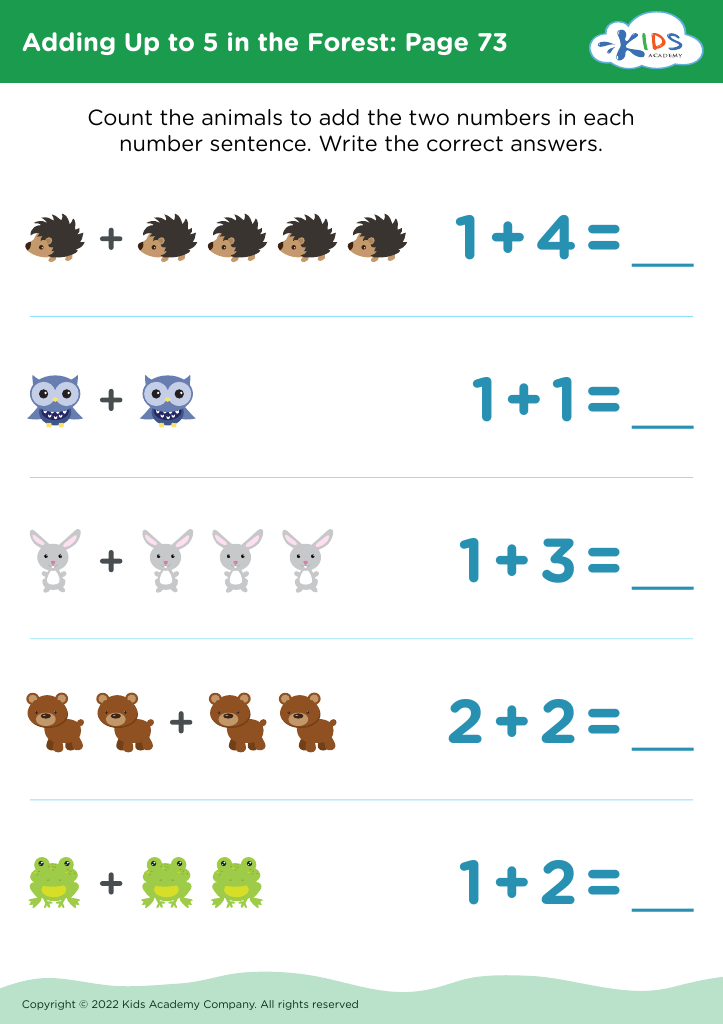
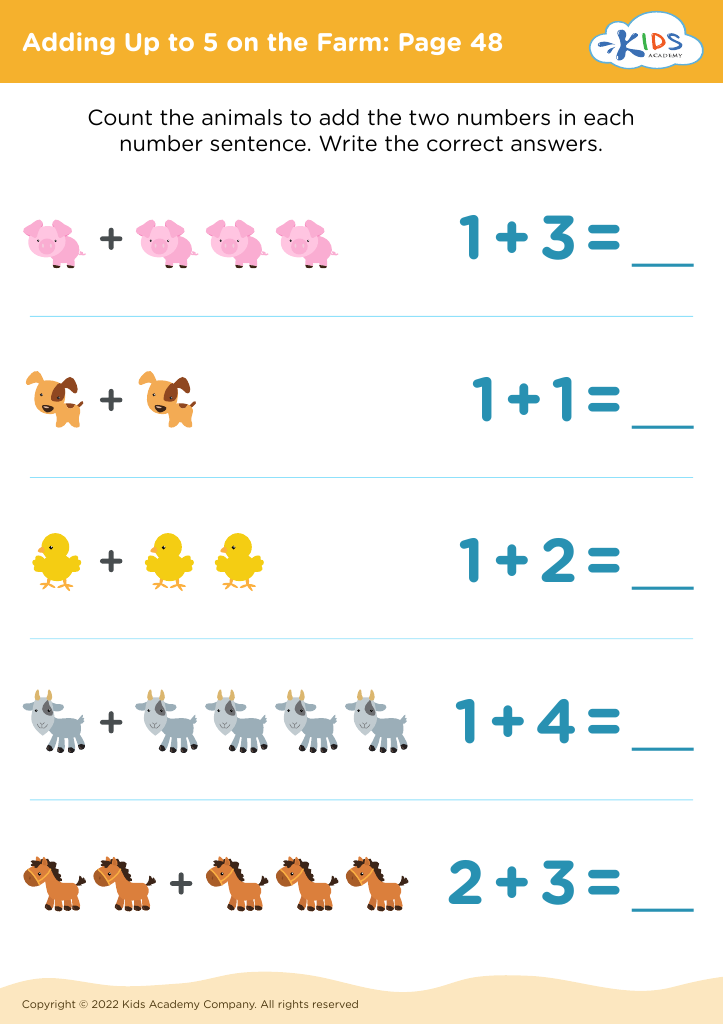
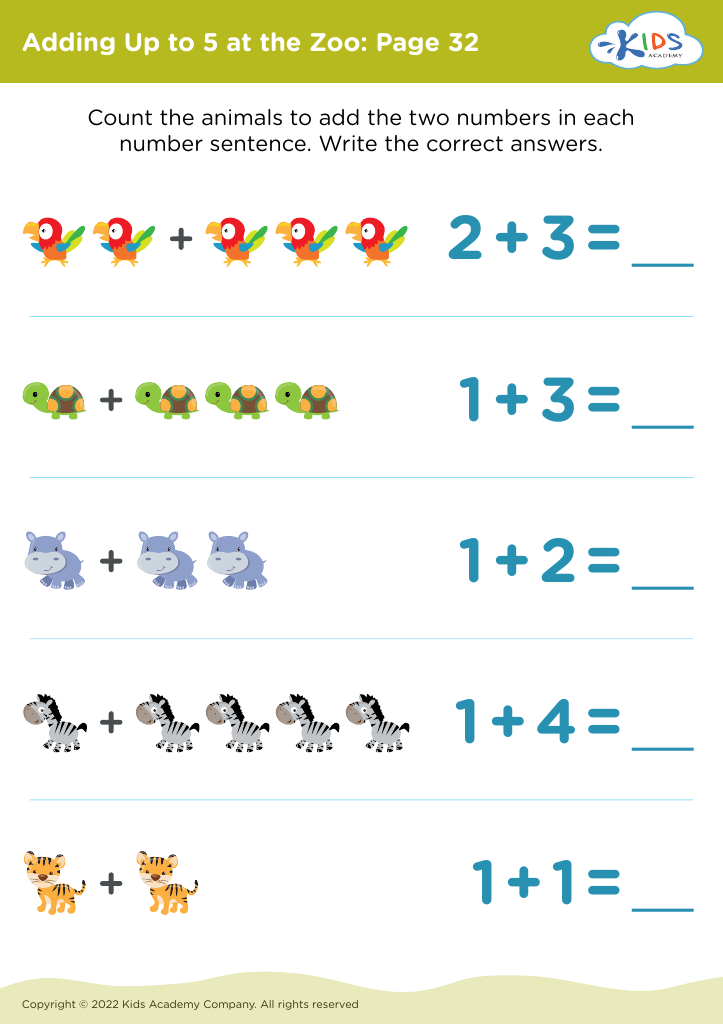
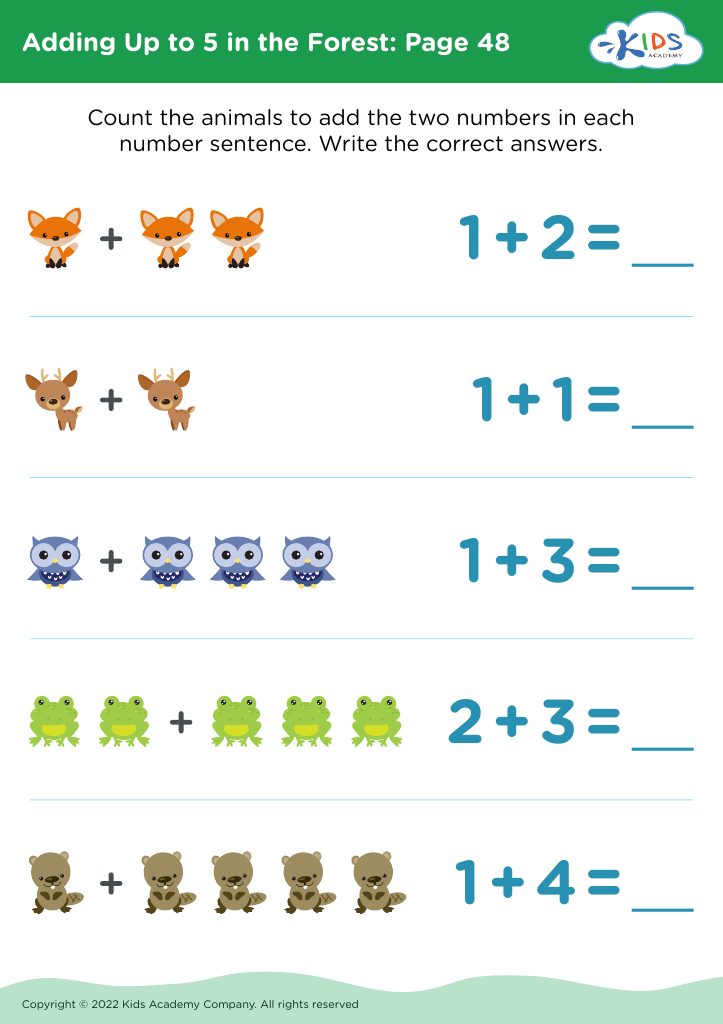
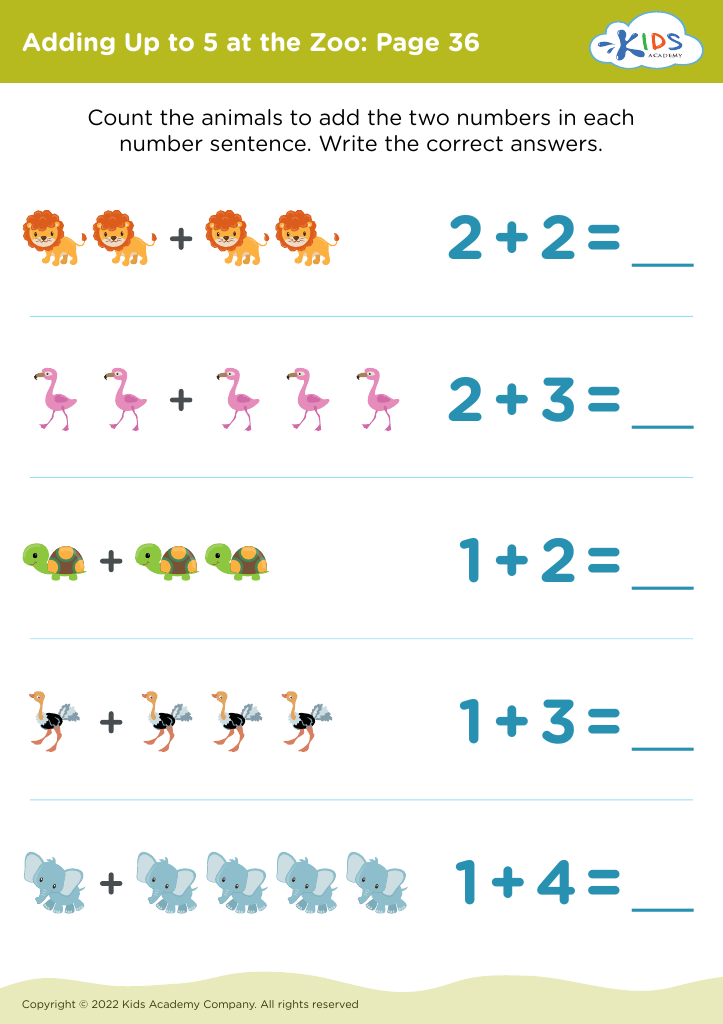
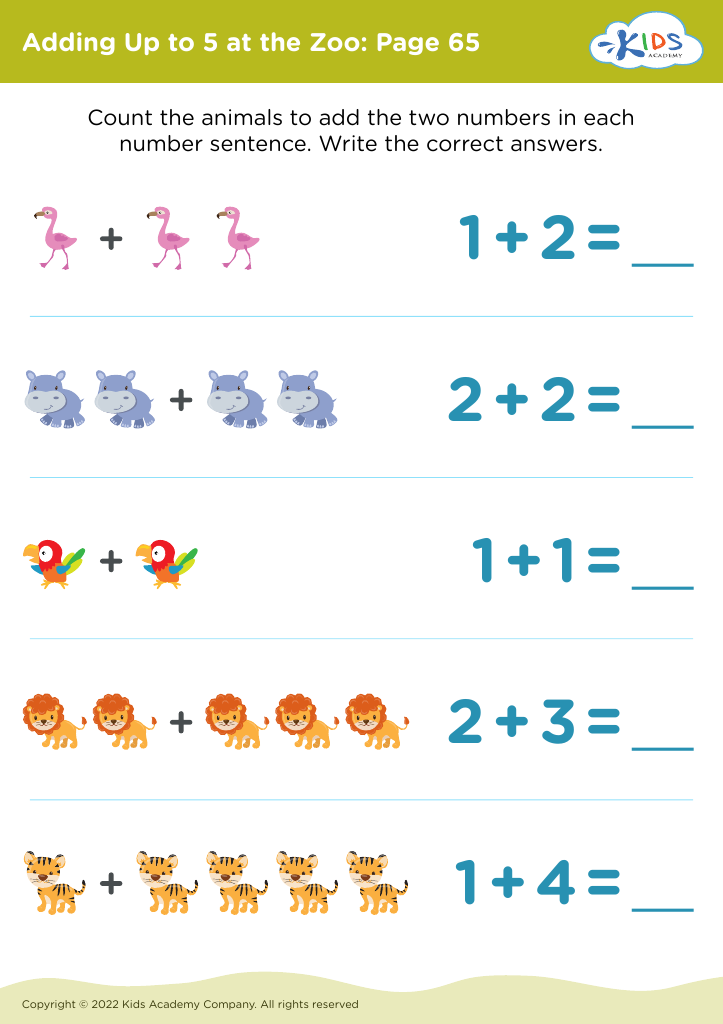
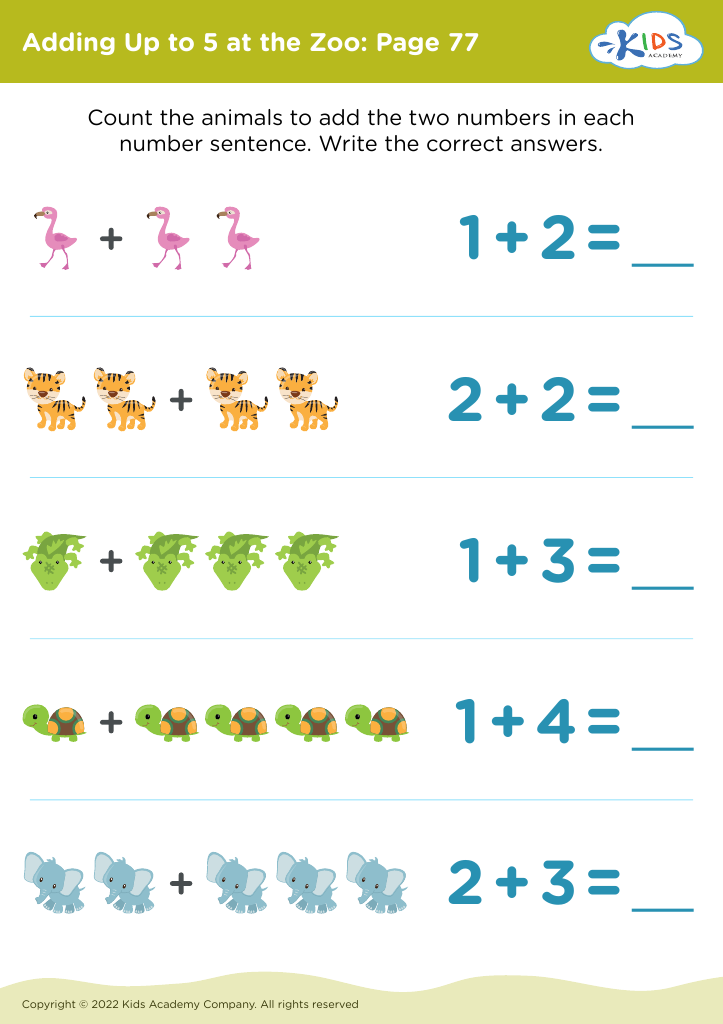
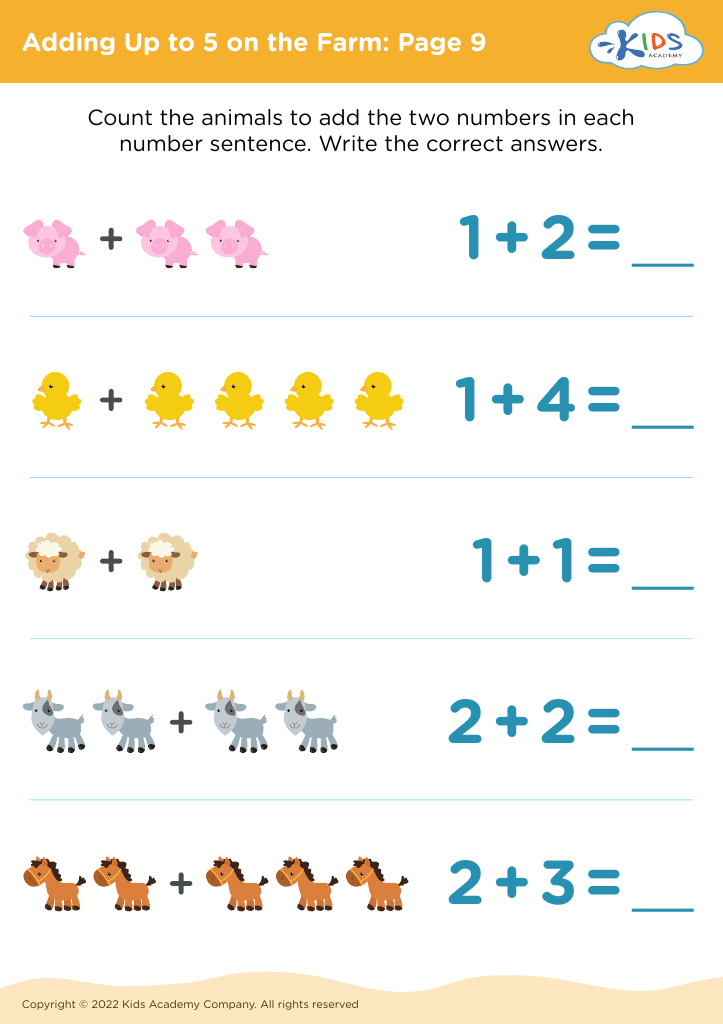
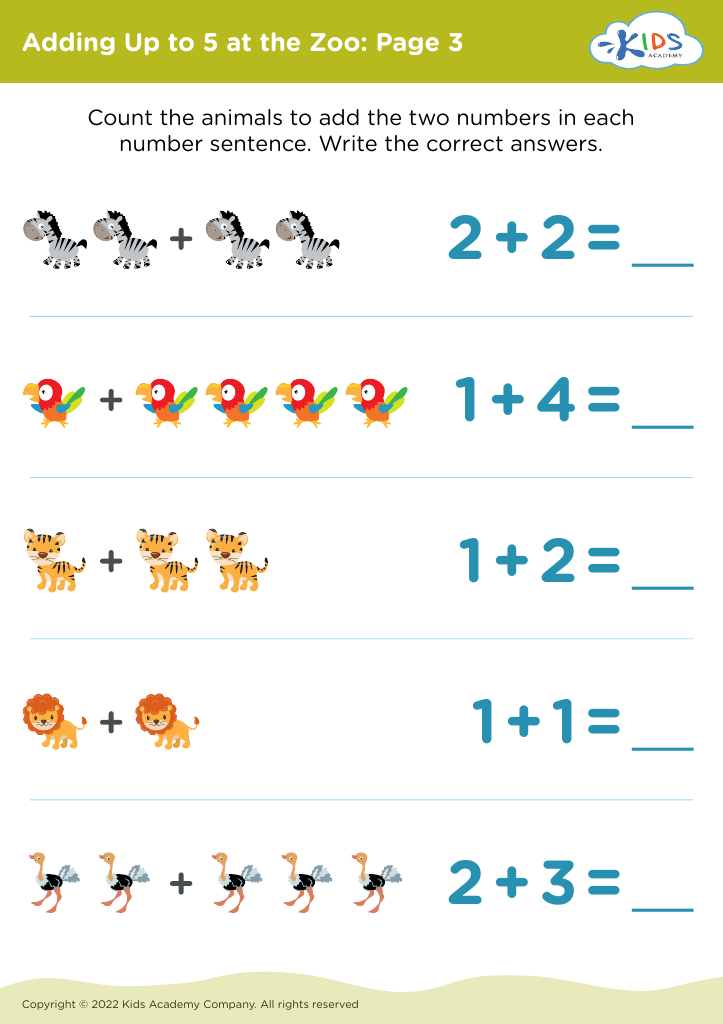
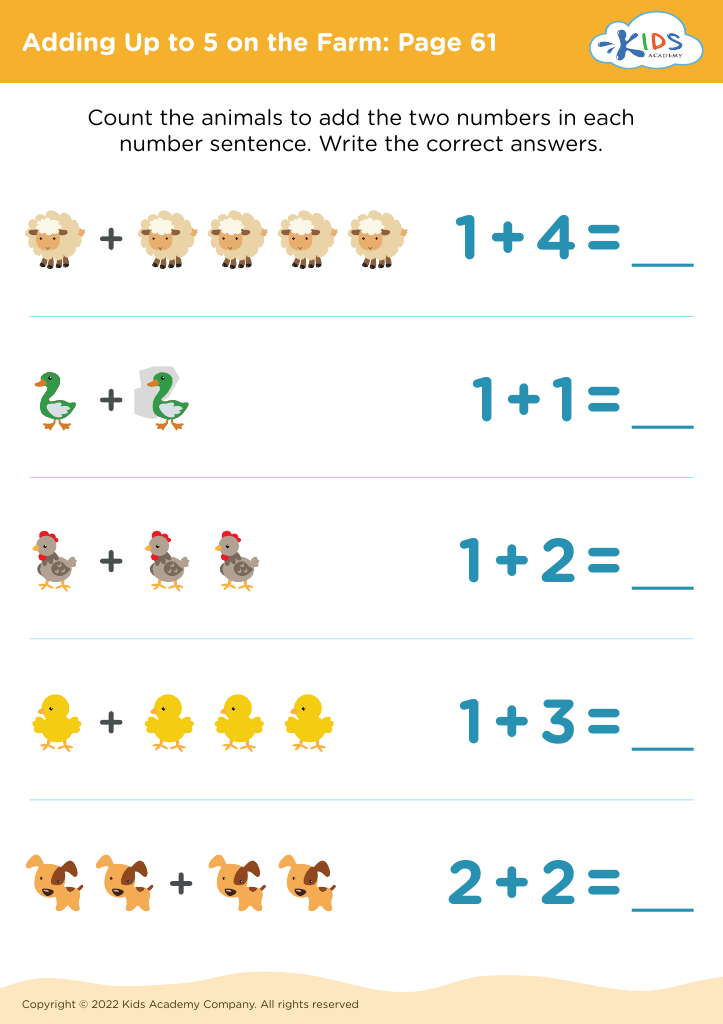
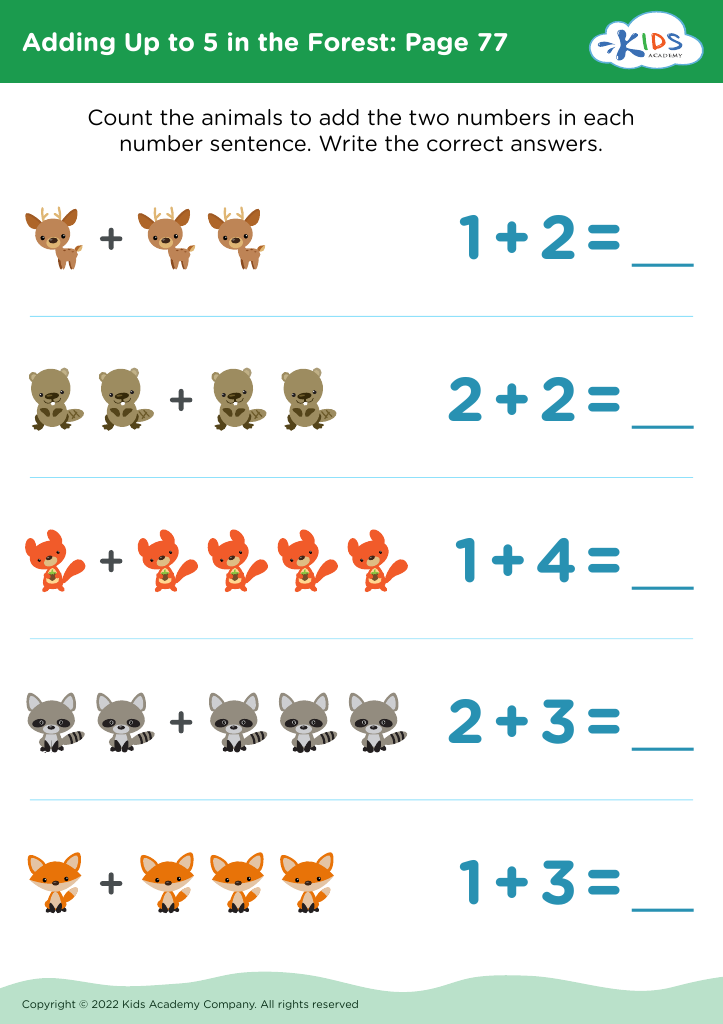
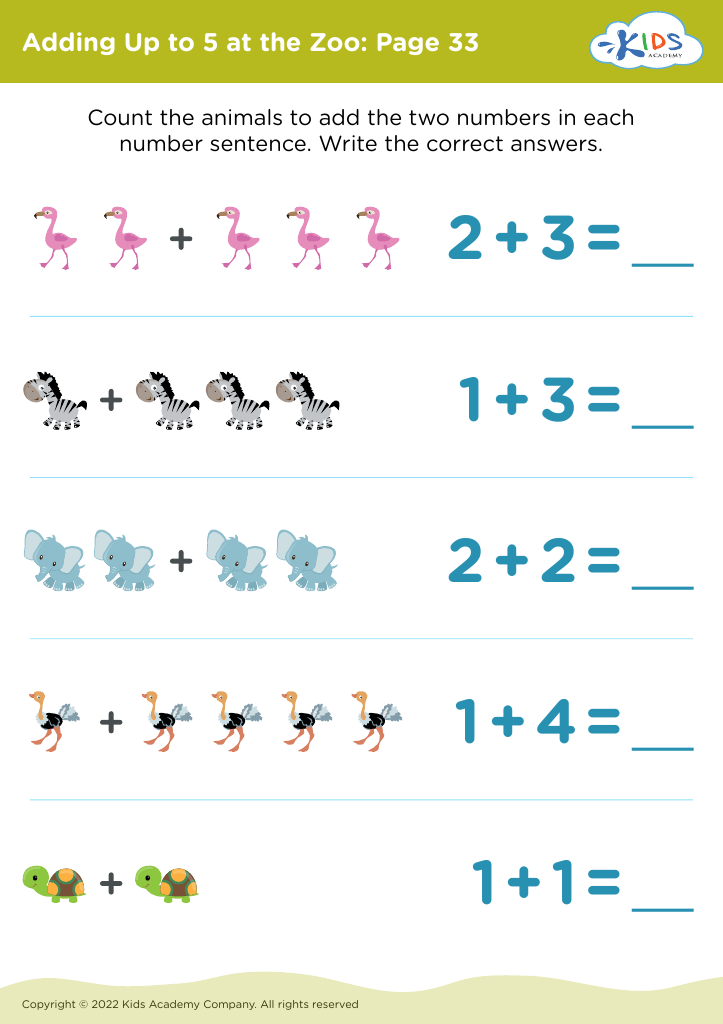
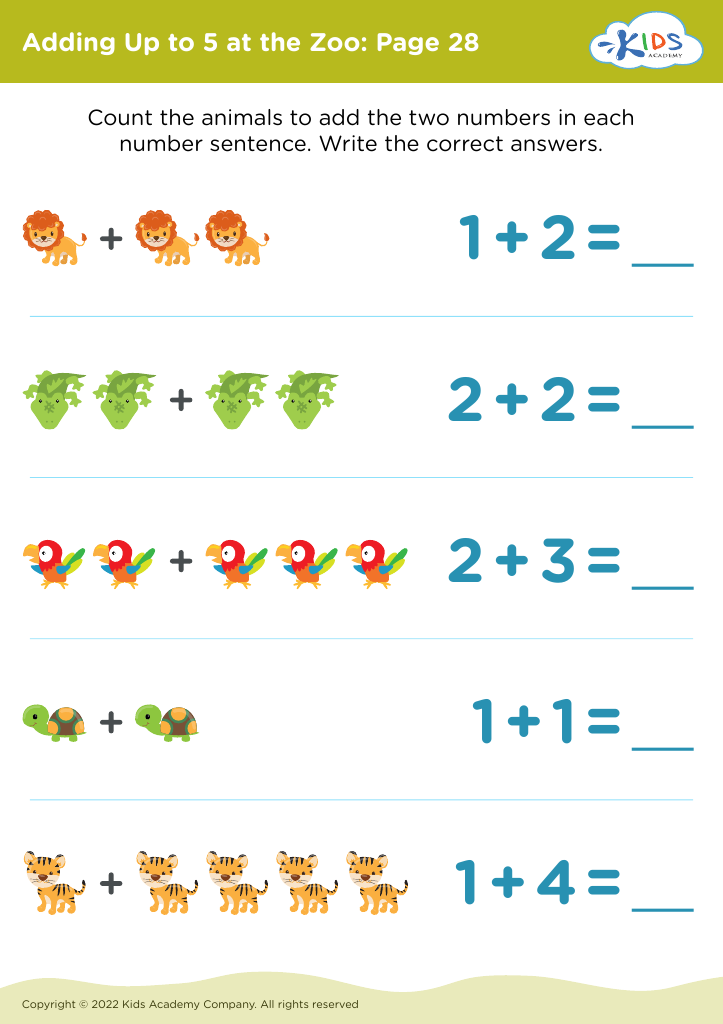
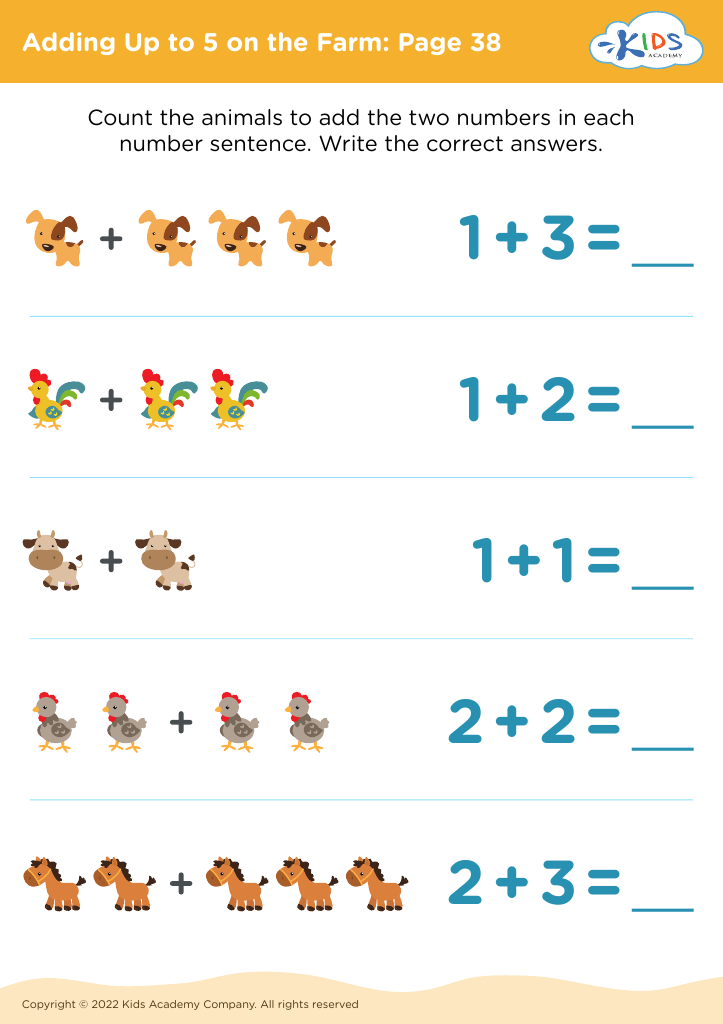
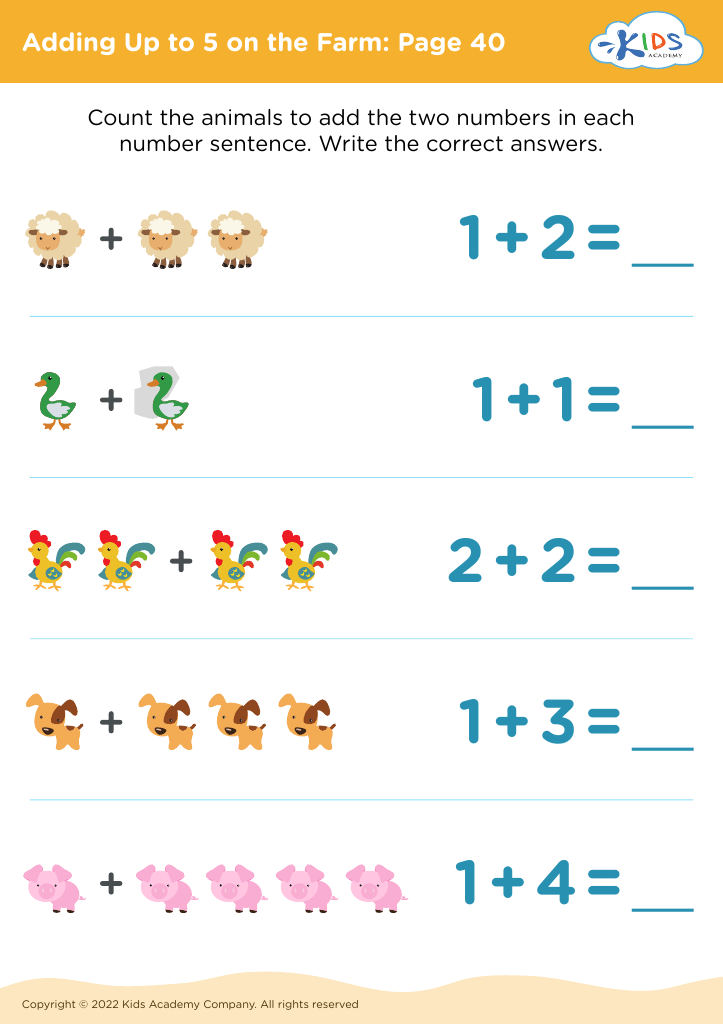
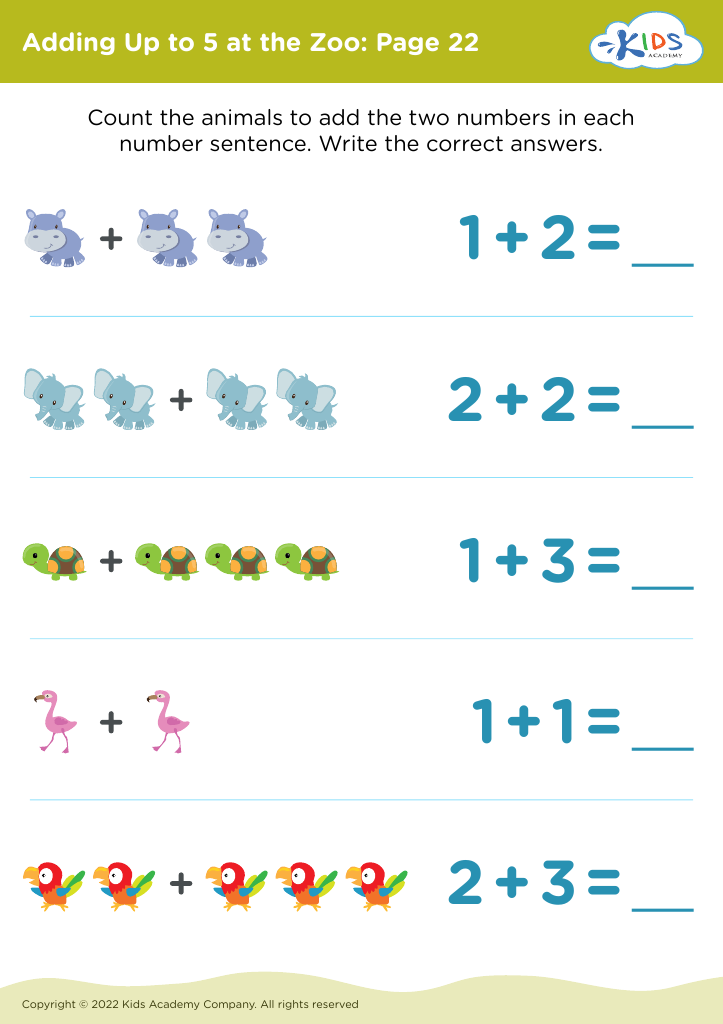
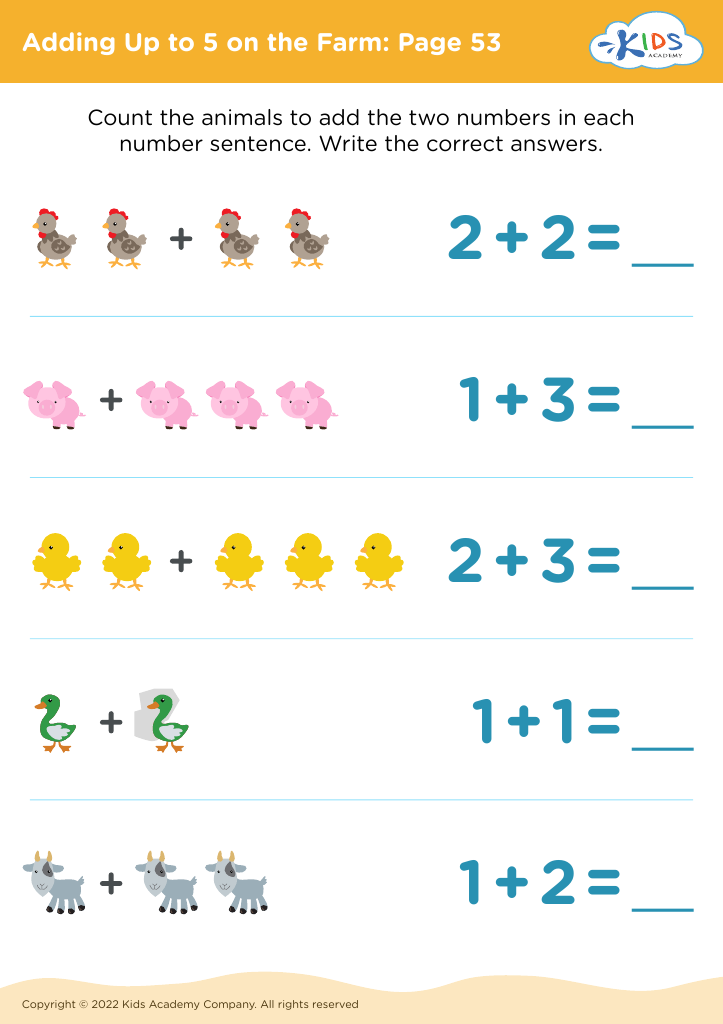
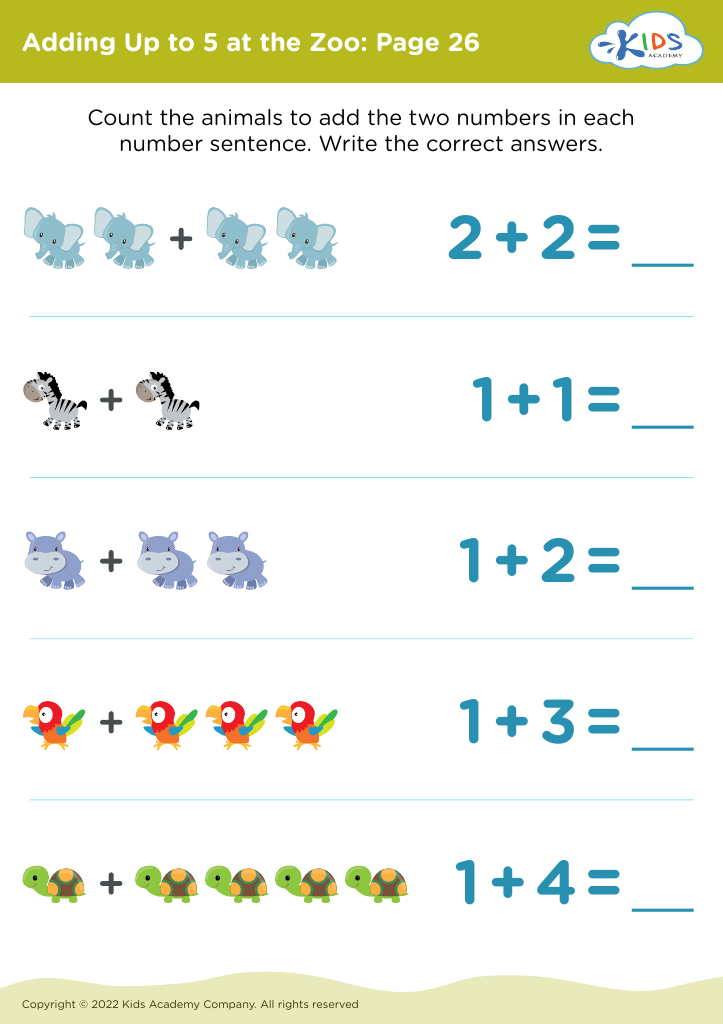
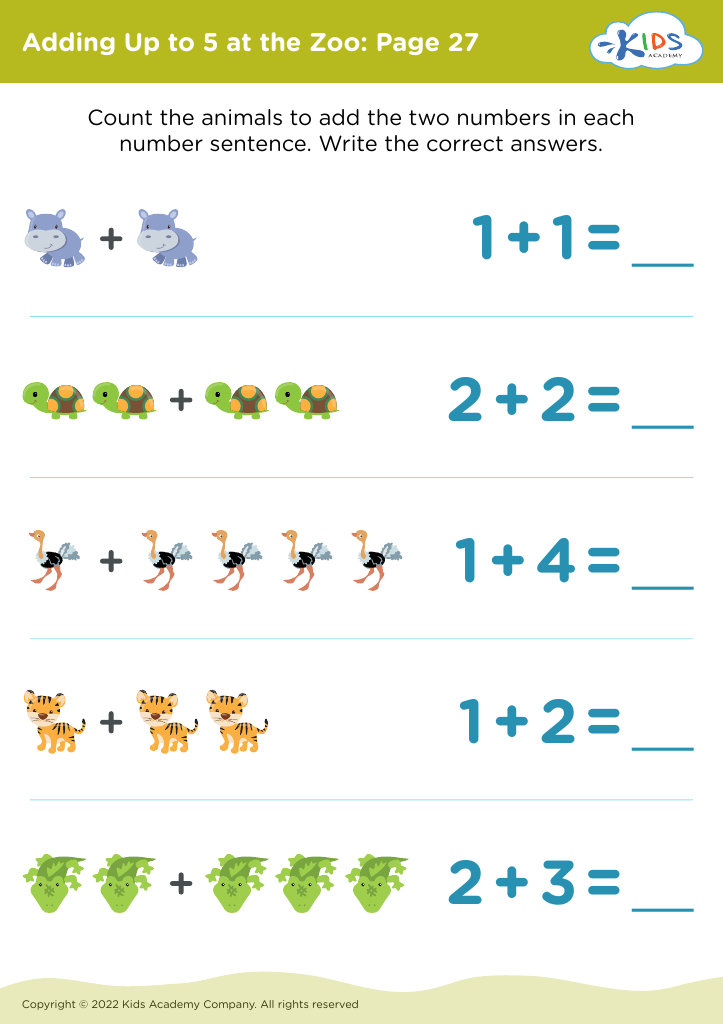
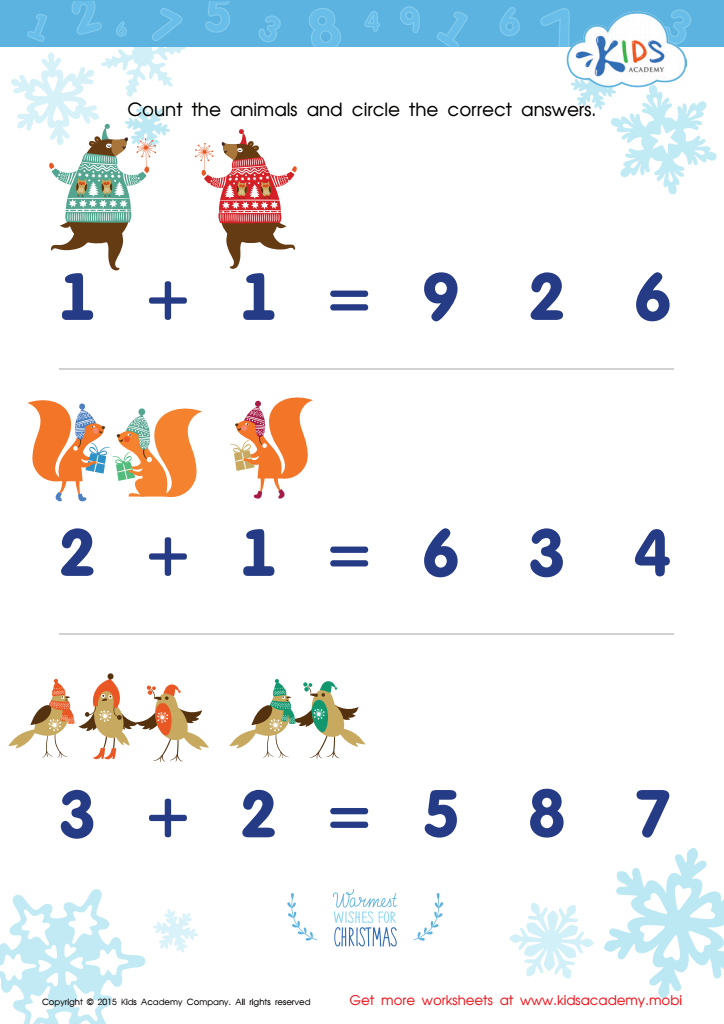
Count Funny Animals Worksheet
 Assign to My Students
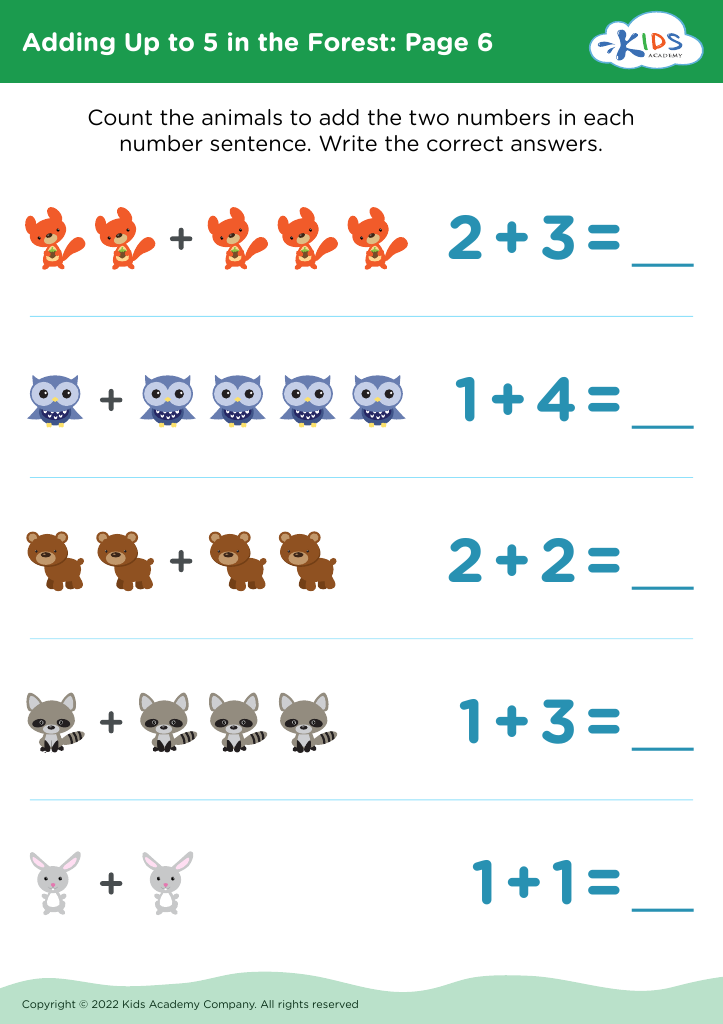
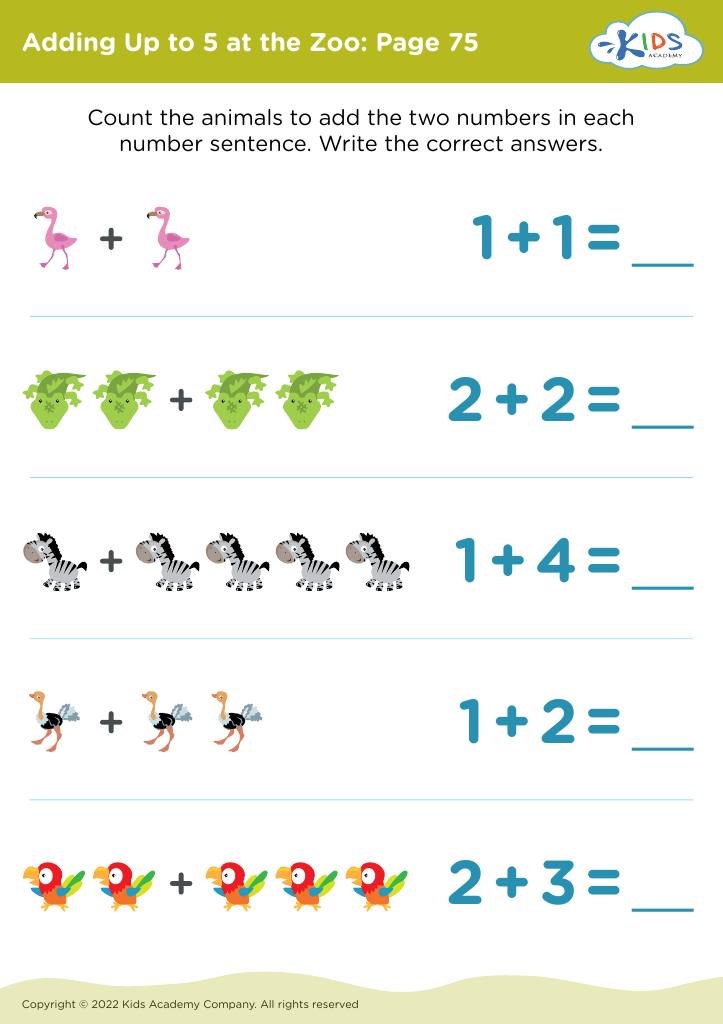
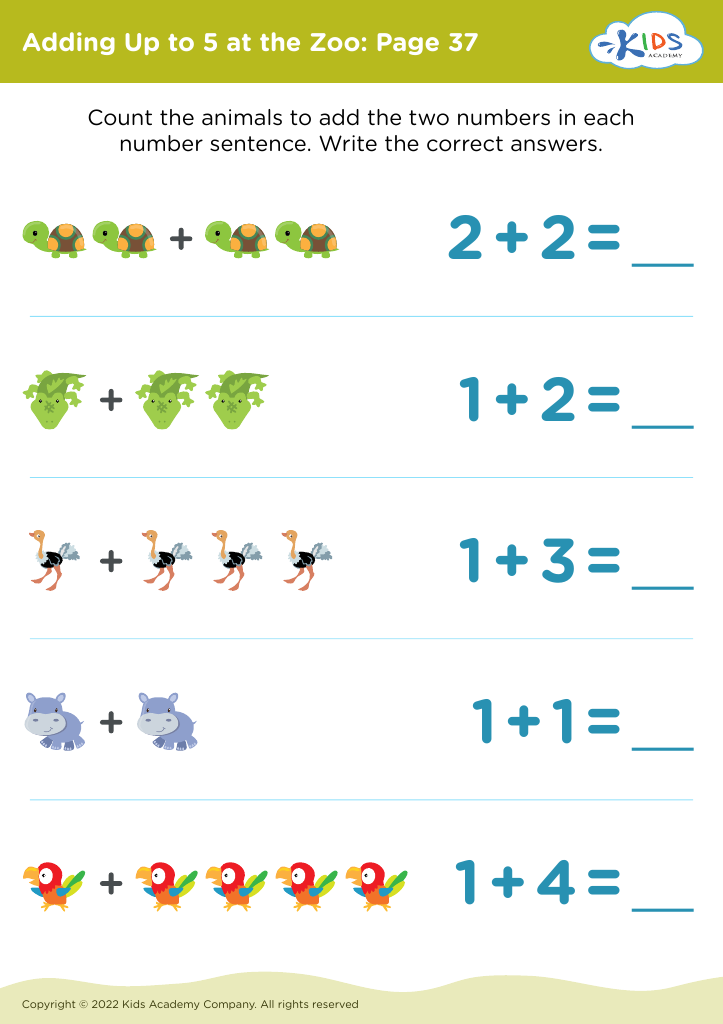
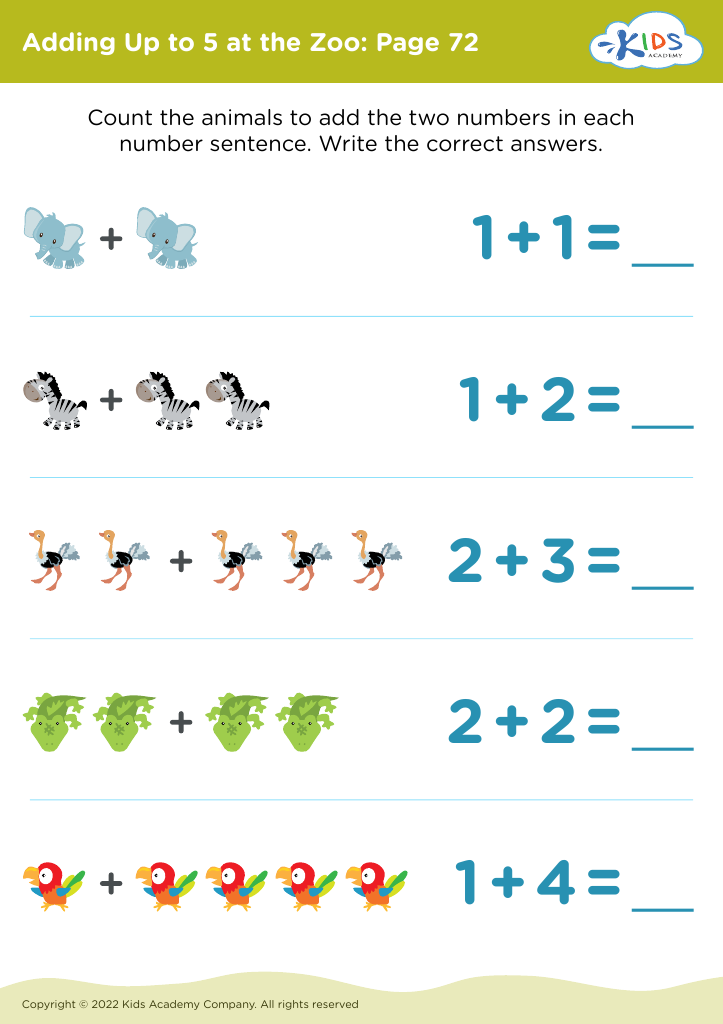








Animal recognition addition is a crucial educational activity for children aged 4-9 because it seamlessly combines learning mathematics with engaging content. At this age, children are in a critical developmental stage where they begin to explore the world around them, and incorporating animals—something many kids are genuinely interested in—makes learning enjoyable and relatable.
By introducing addition through familiar animals, educators and parents can capture children's attention more effectively. This technique harnesses the natural curiosity of young learners, making mathematical concepts more tangible and less abstract. For instance, using illustrations or counting toys that feature various animals can help children visualize numbers and understand the notion of quantity.
Additionally, animal recognition addition promotes cognitive and language skills. As children identify different animals while solving addition problems, they enhance their vocabulary and knowledge about the animal kingdom. Furthermore, this activity supports critical thinking and problem-solving abilities, providing a solid foundation for future mathematical learning.
Ultimately, prioritizing activities like animal recognition addition helps to create a stimulating and positive learning environment. It fosters a love for math and learning that can shape children's academic journeys, making the role of parents and teachers pivotal in guiding this enriching experience.








