Comparing numbers Addition Worksheets for Ages 4-9
4 filtered results
-
From - To
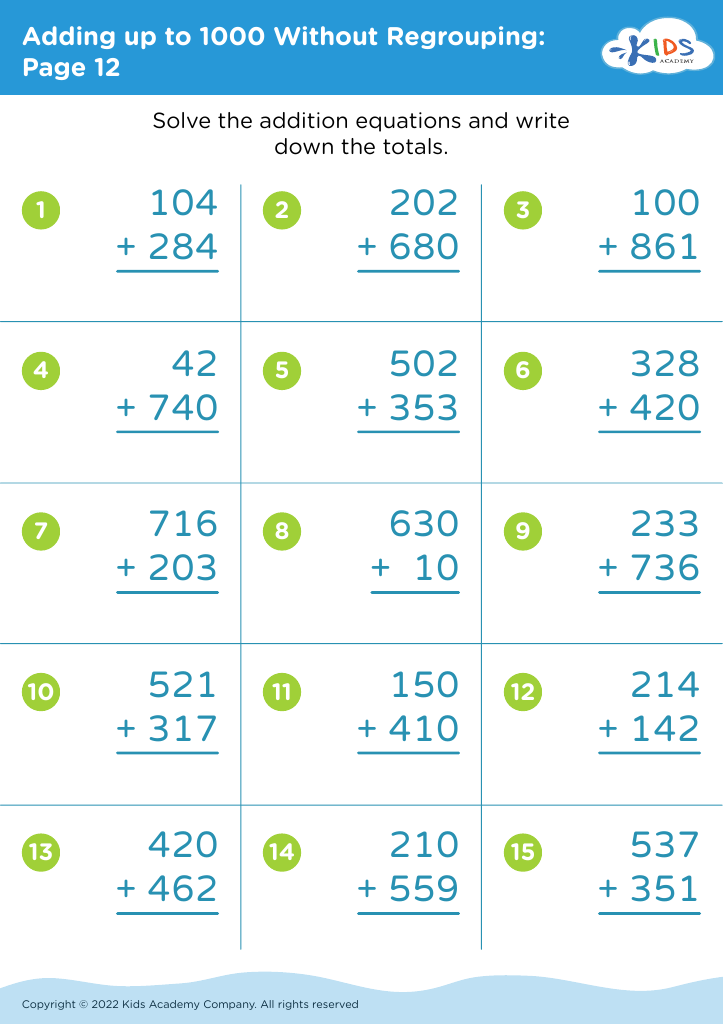
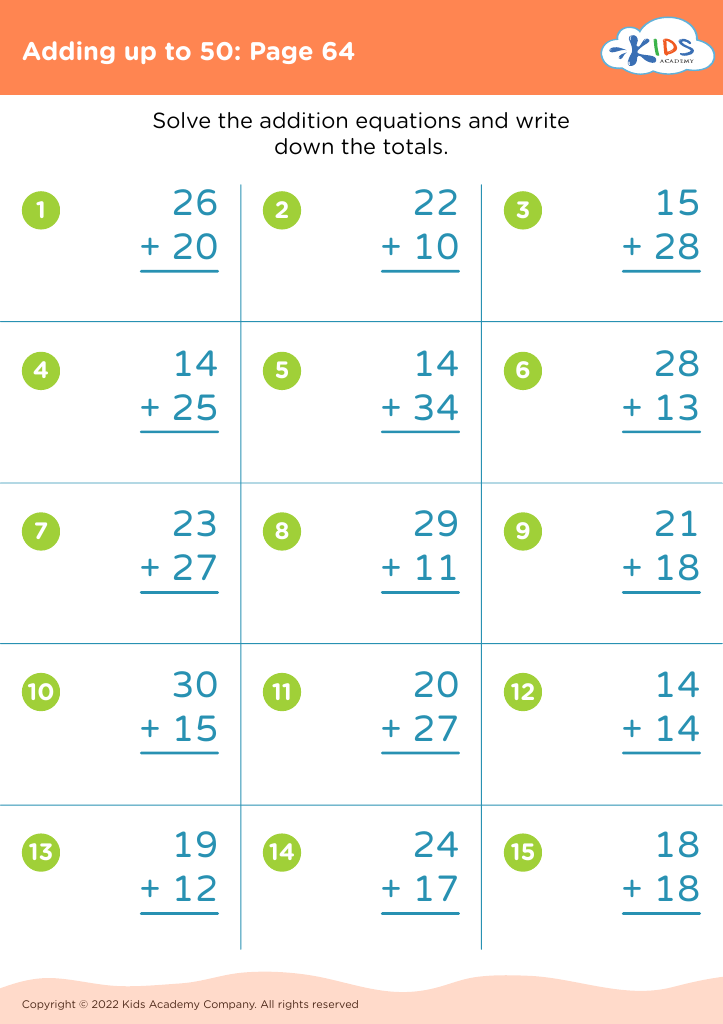
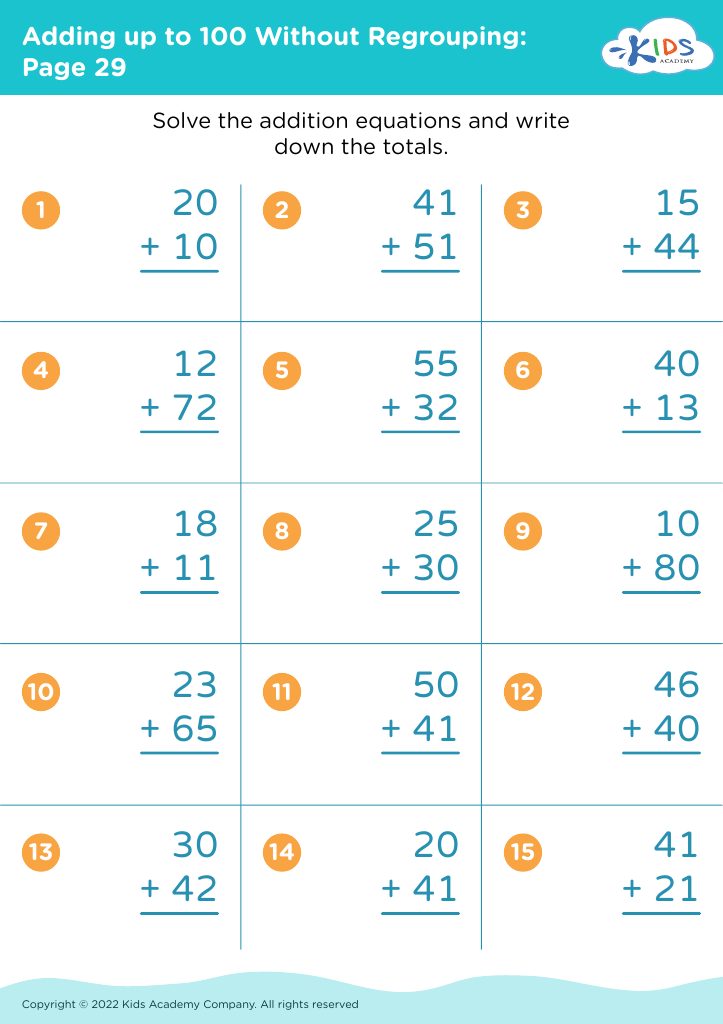
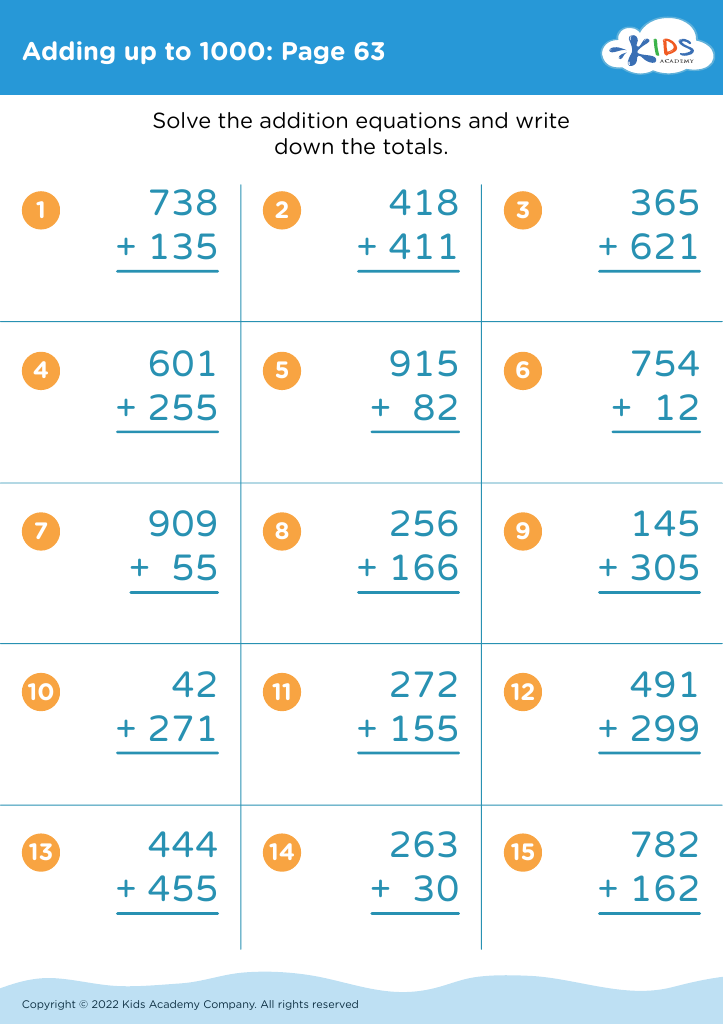
Enhance your child's math skills with our engaging "Comparing Numbers Addition Worksheets for Ages 4-9." Designed by experts, these printable worksheets help children practice comparing numbers while mastering addition. Ideal for young learners, the worksheets feature fun and colorful exercises that make learning numbers and addition enjoyable and effective. Perfect for classroom or home use, our worksheets are tailored to develop critical thinking and problem-solving skills. Encourage a strong math foundation with our carefully crafted resources that support your child's early educational journey. Visit now and discover a variety of worksheets to boost your child's confidence in math!








Parents and teachers should care about teaching comparing numbers and addition to children ages 4-9 because these fundamental skills are the building blocks of mathematical understanding. This age range is a critical period for cognitive development, during which children are particularly receptive to learning new concepts. When children learn to compare numbers, they develop a sense of numerical order, which is essential for understanding more complex math concepts later on. Comparing numbers helps children grasp which numbers are larger or smaller and provides a foundation for understanding value, sequence, and basic arithmetic operations.
Addition is equally important as it is one of the primary operations in mathematics. Early addition skills help children learn to combine quantities and understand the concept of 'more,' 'less,' and 'equal.' Mastering addition also fosters logical thinking and problem-solving abilities. These skills are not just essential for academic success but are also crucial for everyday life, such as counting objects, making purchases, and managing time.
Furthermore, engaging children in these activities enhances their confidence and promotes a positive attitude toward mathematics. Effective early math education can spark a lifelong interest in the subject and academic success in various other disciplines. Therefore, dedicating time to comparing numbers and addition for young children is profoundly beneficial for their overall development.








