Critical thinking skills Addition Worksheets for Ages 4-9
7 filtered results
-
From - To
Discover our engaging Critical Thinking Skills Addition Worksheets, designed for children ages 4-9! These worksheets provide a fun and interactive way for young learners to enhance their addition skills while fostering essential critical thinking abilities. Our carefully crafted exercises encourage problem-solving, logical reasoning, and number manipulation, ensuring kids grasp mathematical concepts in an enjoyable manner. Ideal for both classroom and home use, these downloadable worksheets include various activities that challenge students to think creatively as they solve addition problems. Support your child's math journey today and watch them develop confidence and competence in their arithmetic skills! Explore our collection now!
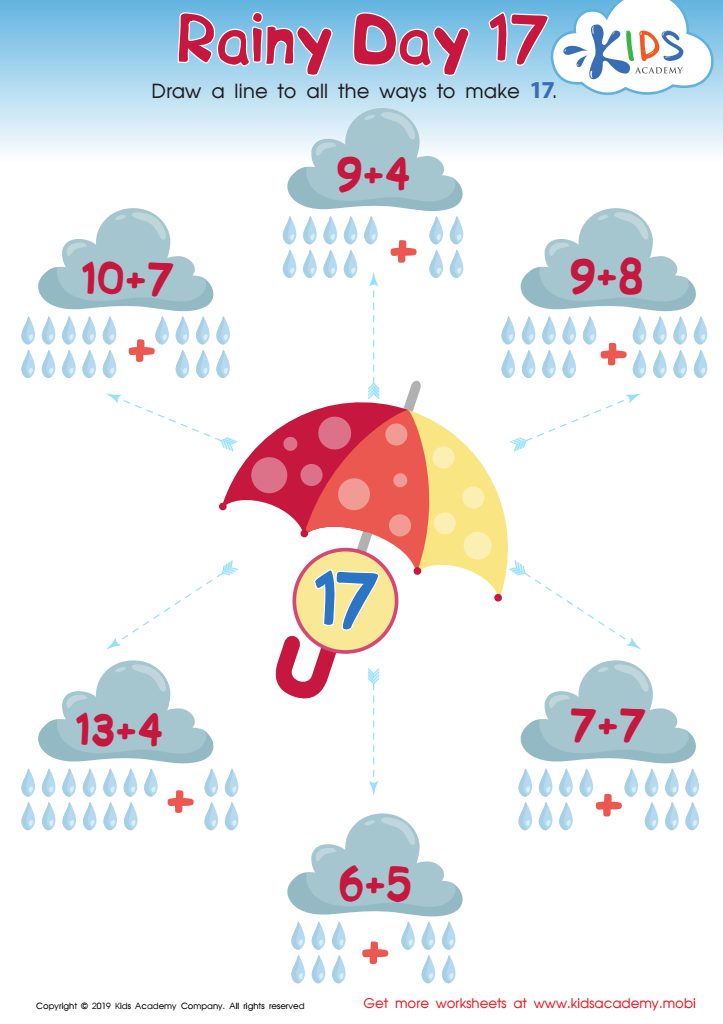
Rainy Day 17 Worksheet
 Assign to My Students
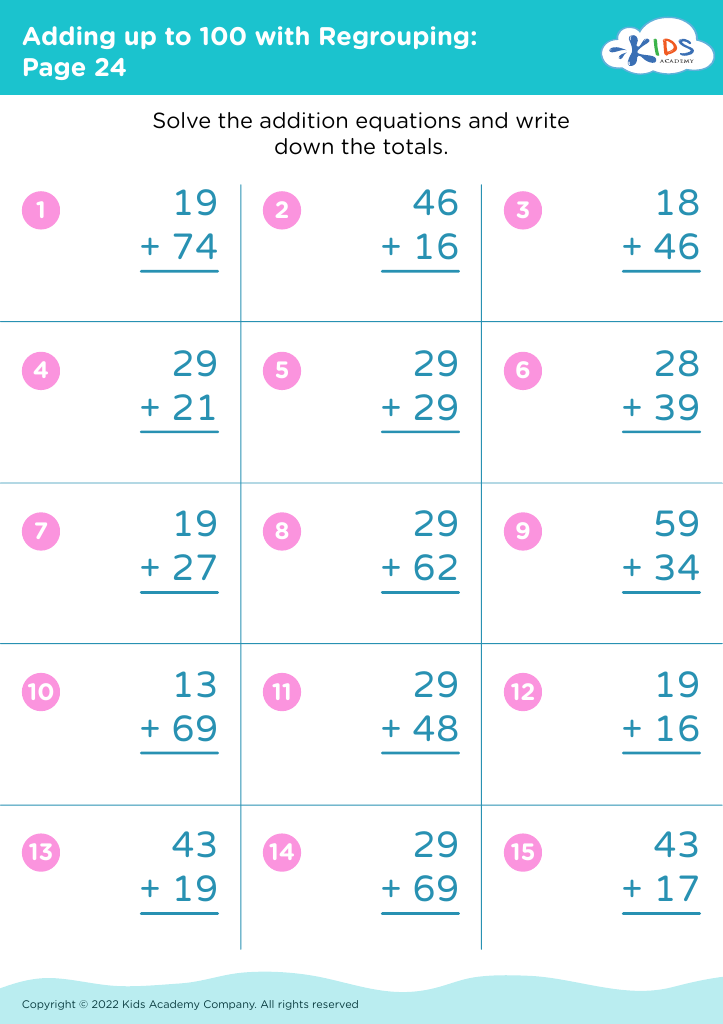
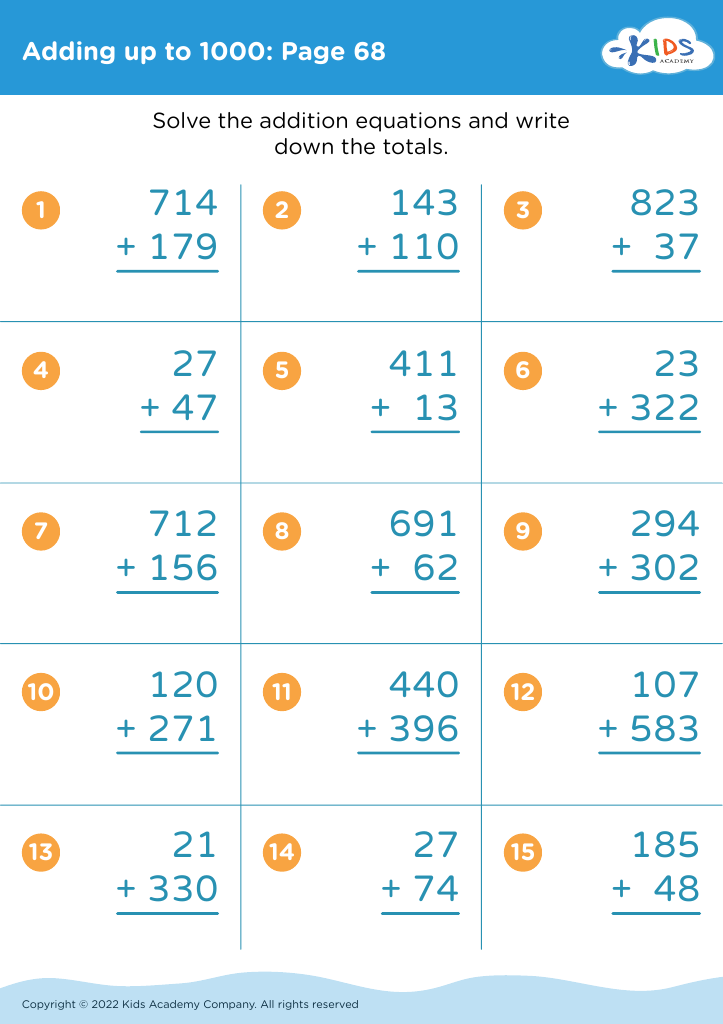
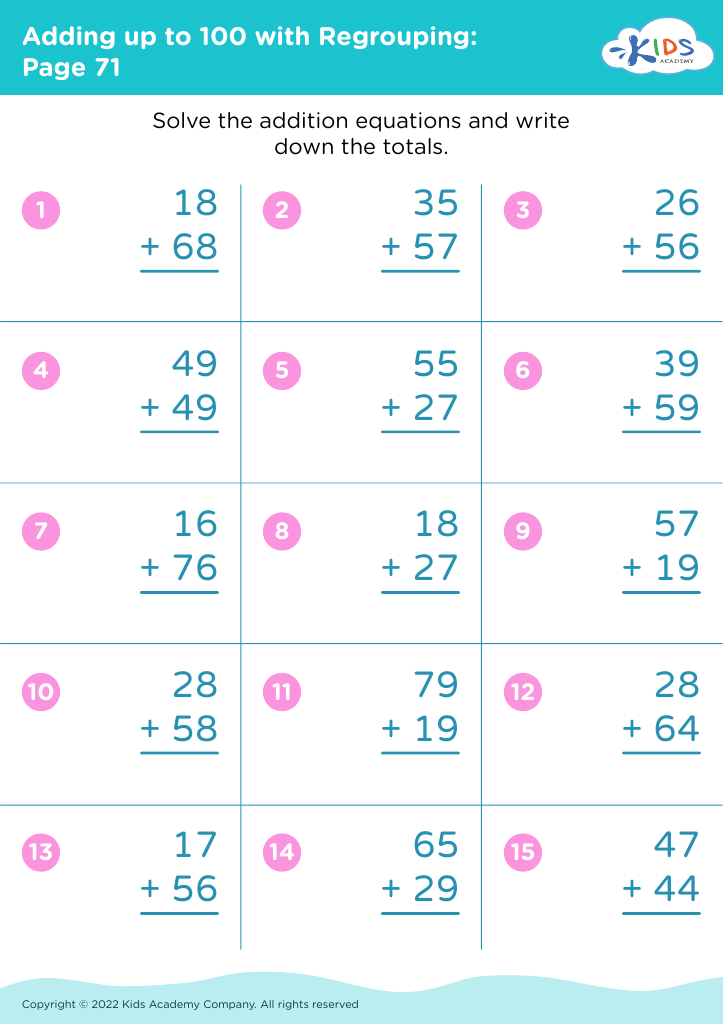
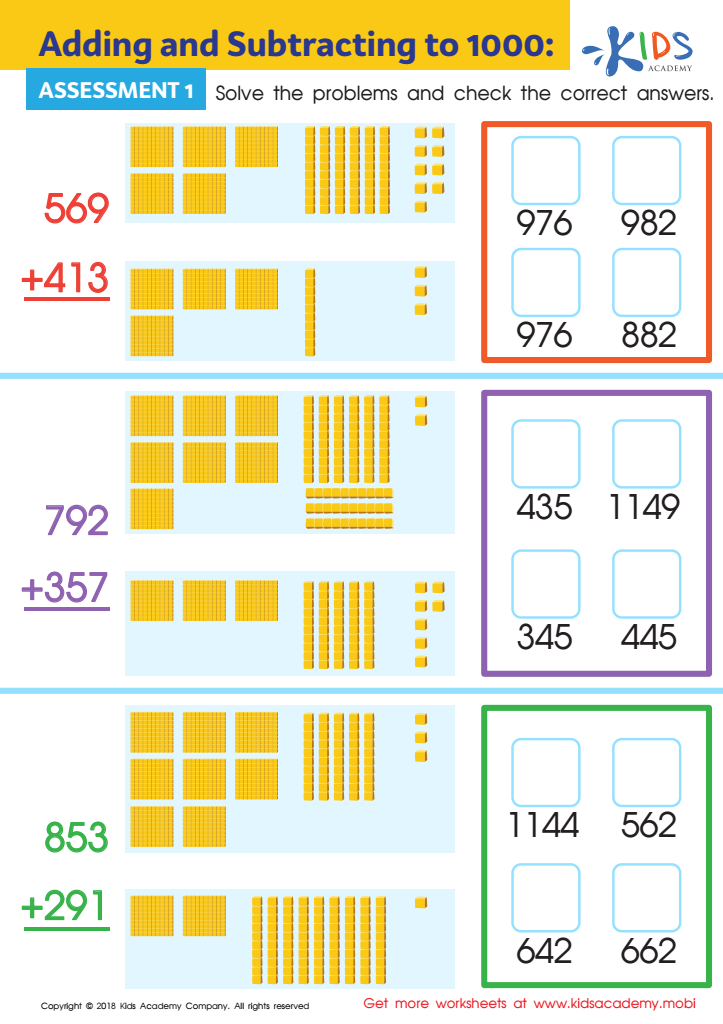
Adding and Subtracting to 1 Worksheet: Assessment 1
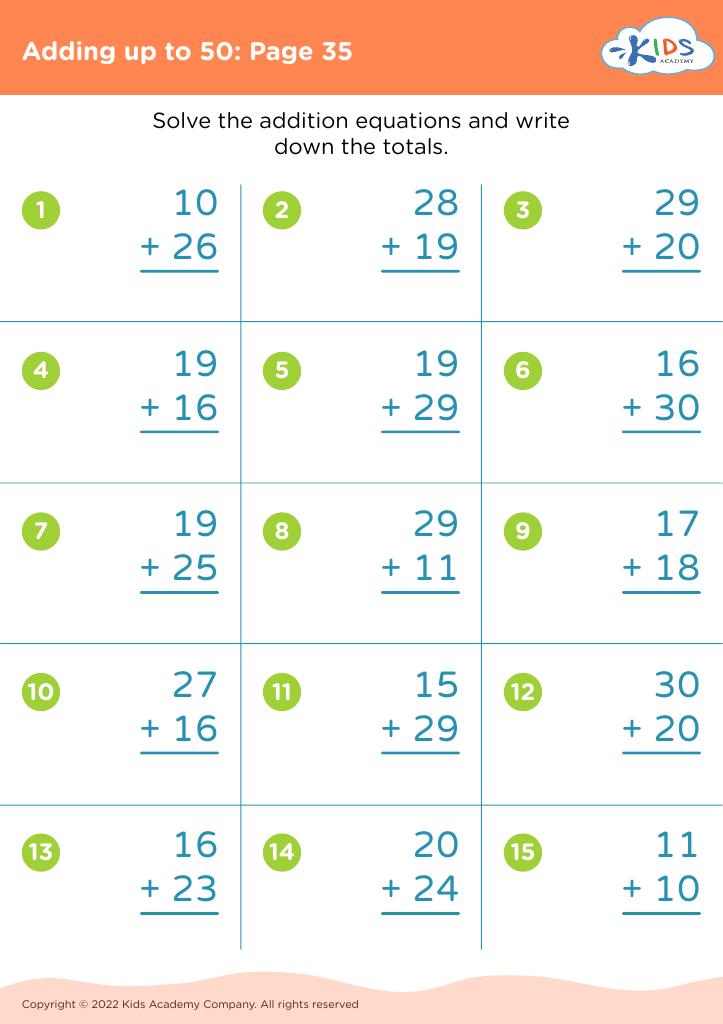
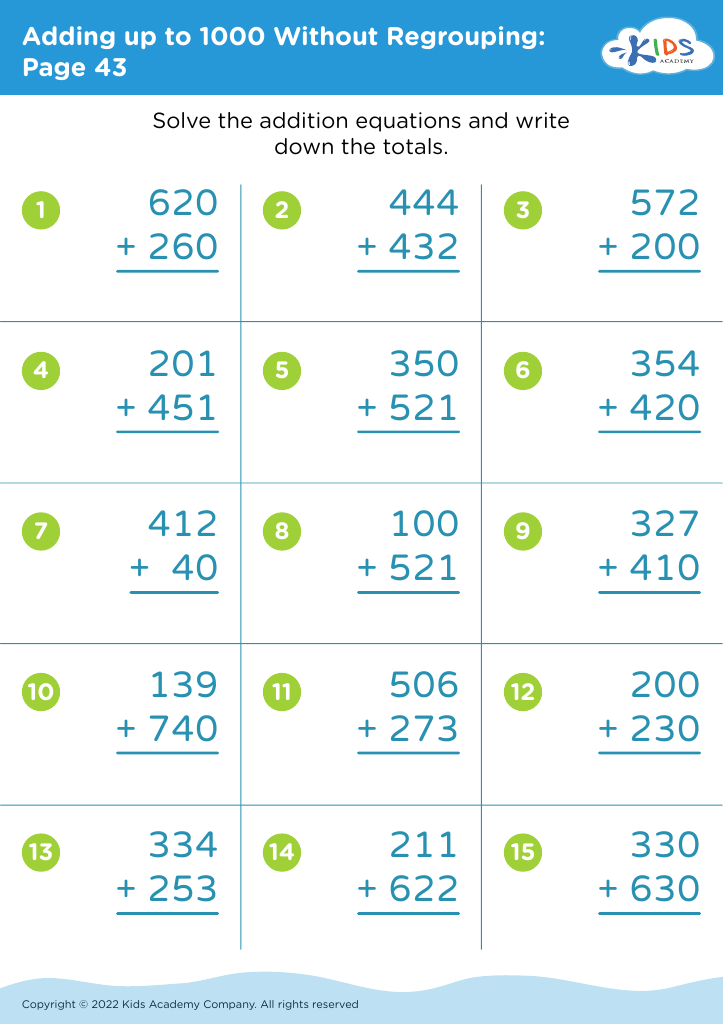








Critical thinking skills are vital for children aged 4-9, shaping their ability to analyze, evaluate, and apply knowledge to real-life situations. For parents and teachers, fostering these skills during early education has long-lasting benefits. At this age, children are naturally curious, and encouraging critical thinking nurtures this curiosity into a powerful tool for learning and problem-solving.
Moreover, critical thinking enhances a child’s academic performance. It equips them with the ability to interpret information, ask questions, and form logical connections, which are essential in subjects like math and science. When children think critically, they better understand concepts, rather than merely memorizing facts.
In addition, critical thinking promotes independence and confidence. As children learn to make decisions and solve problems on their own, they develop resilience and adaptability. These traits are crucial in a rapidly changing world where creativity and innovation thrive.
Ultimately, investing time and effort into developing critical thinking skills helps children become engaged, thoughtful learners who can navigate challenges successfully. Whether at home or school, nurturing these skills will empower the next generation to think deeply, advocate for themselves, and contribute positively to society.








