Fine motor skills (writing numbers) Addition Worksheets for Ages 4-9
15 filtered results
-
From - To
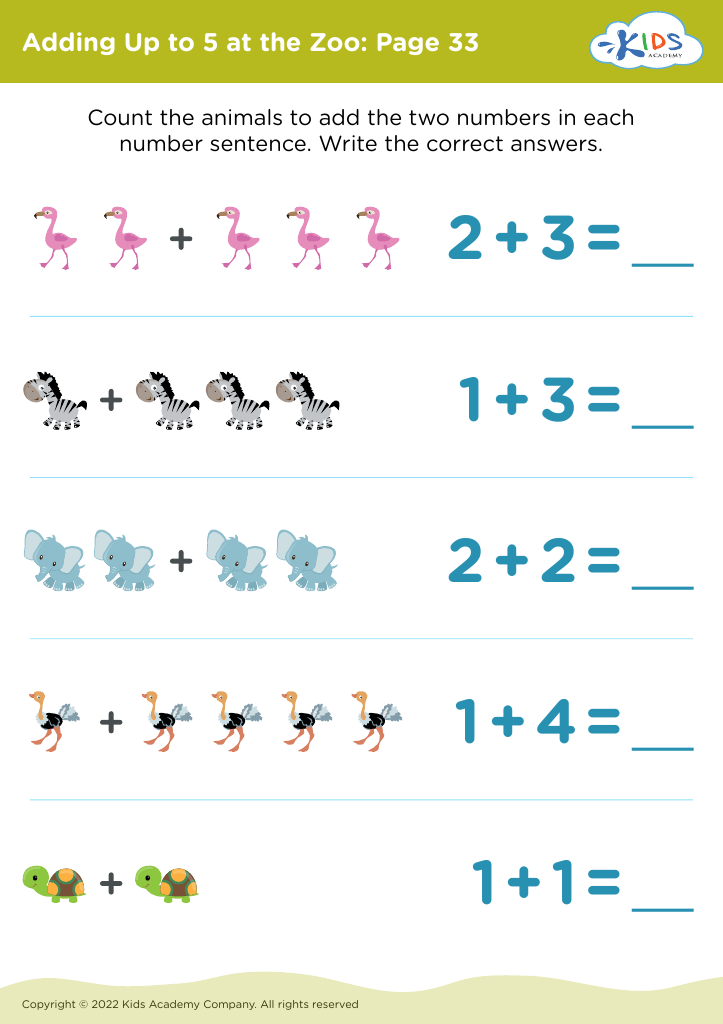
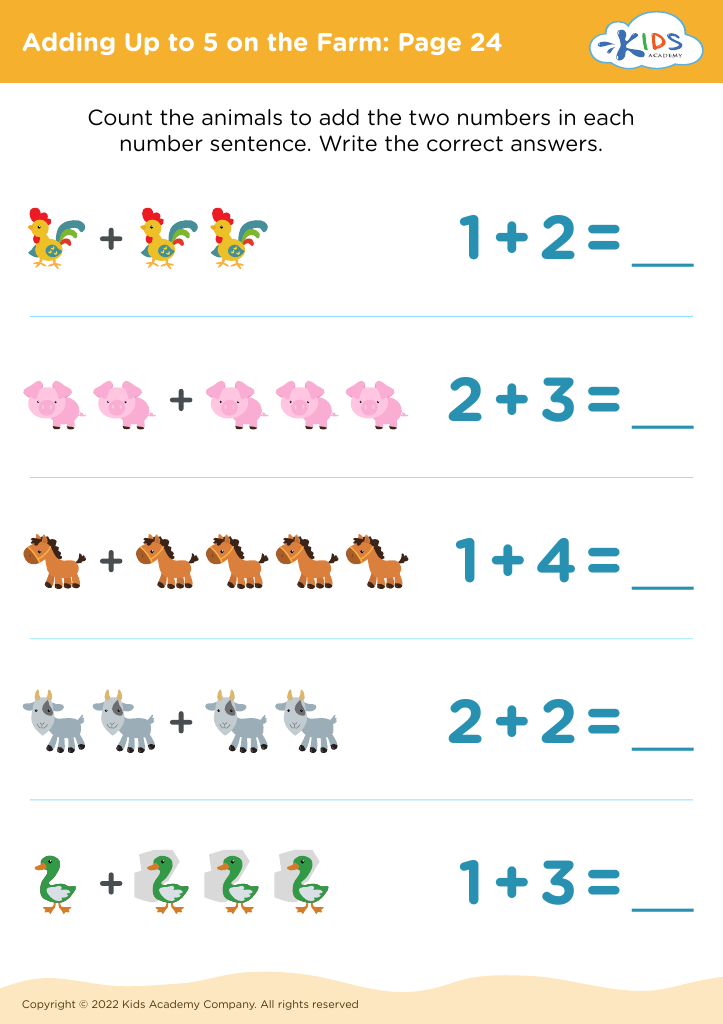
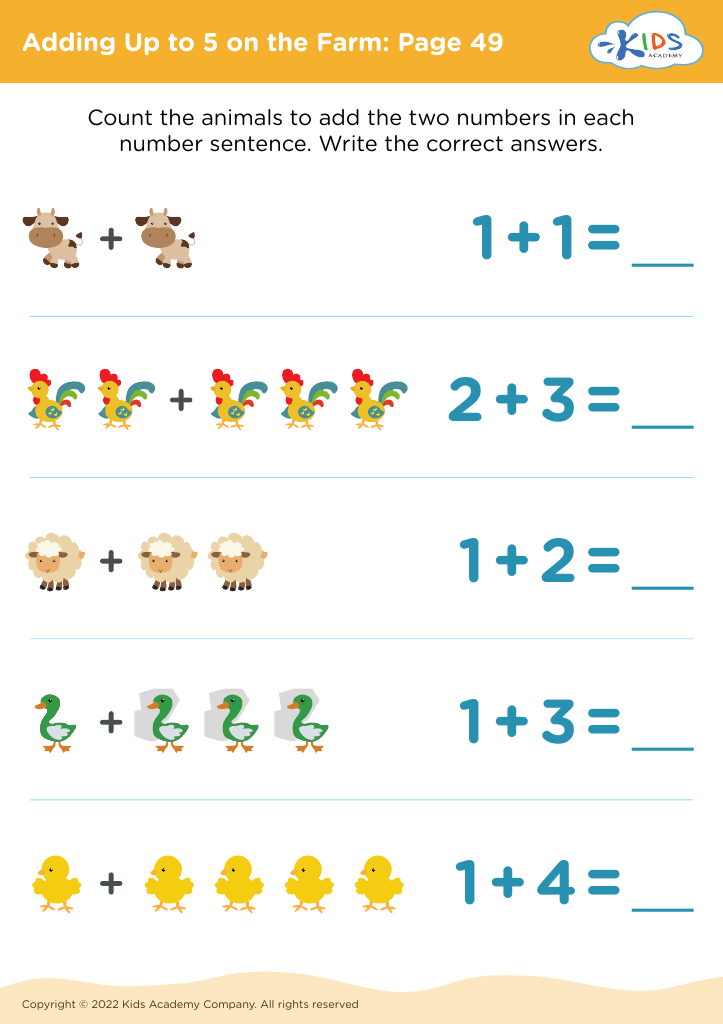
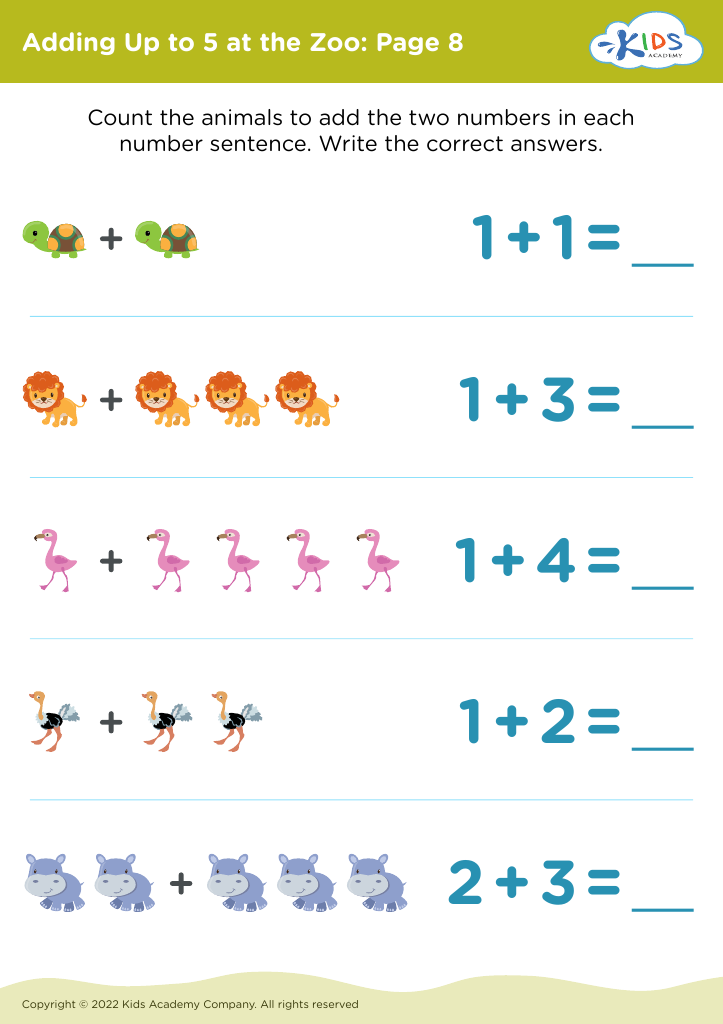
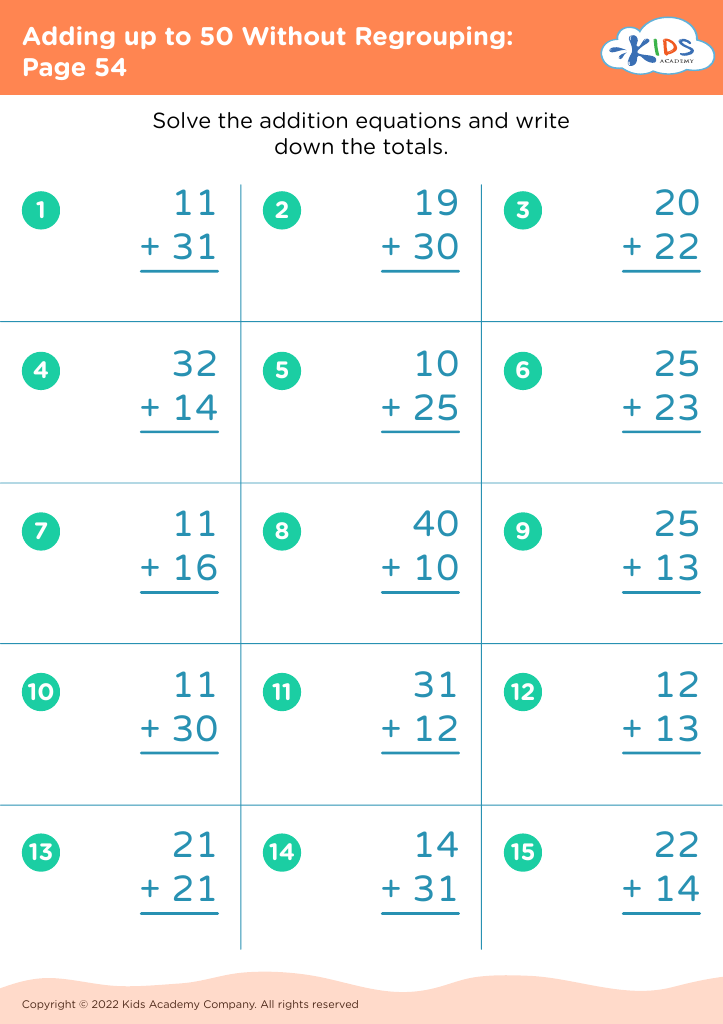
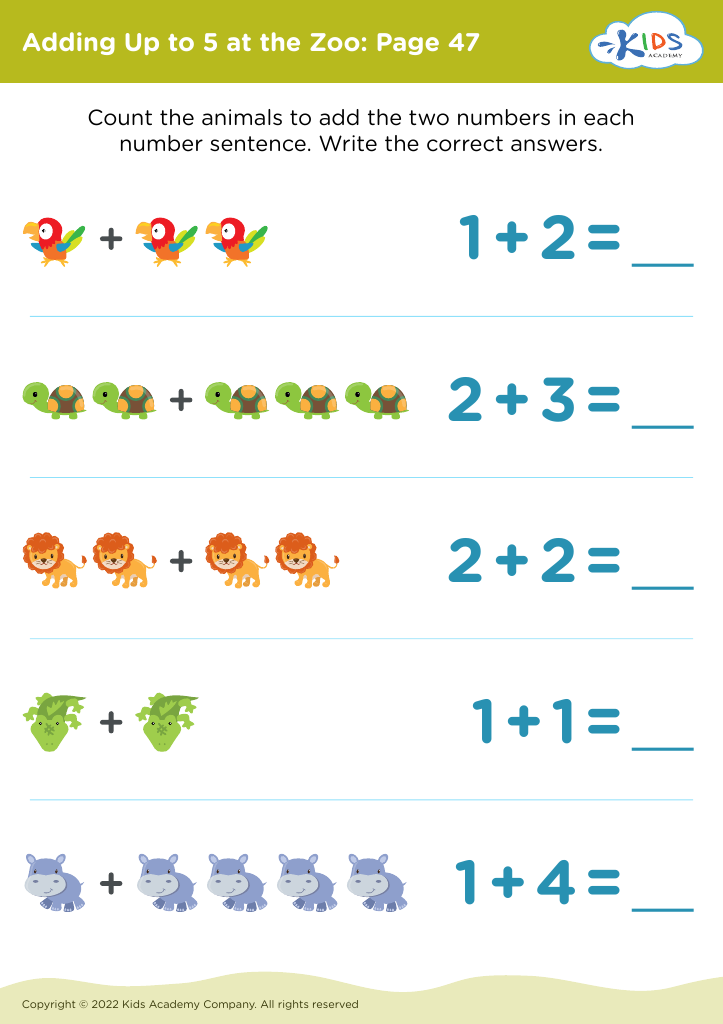
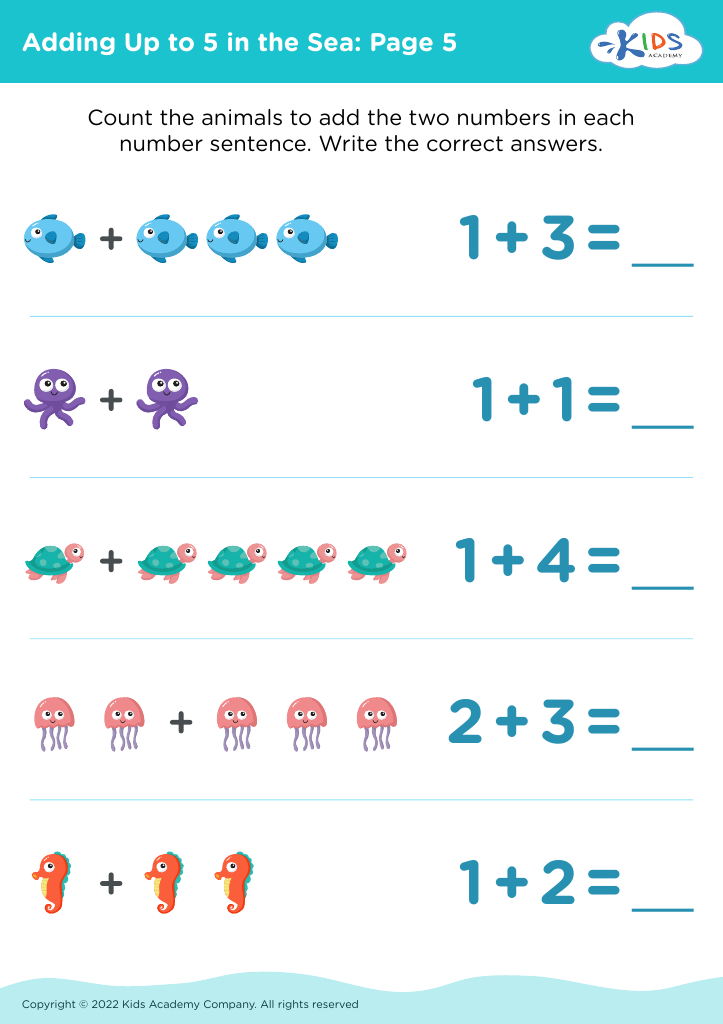
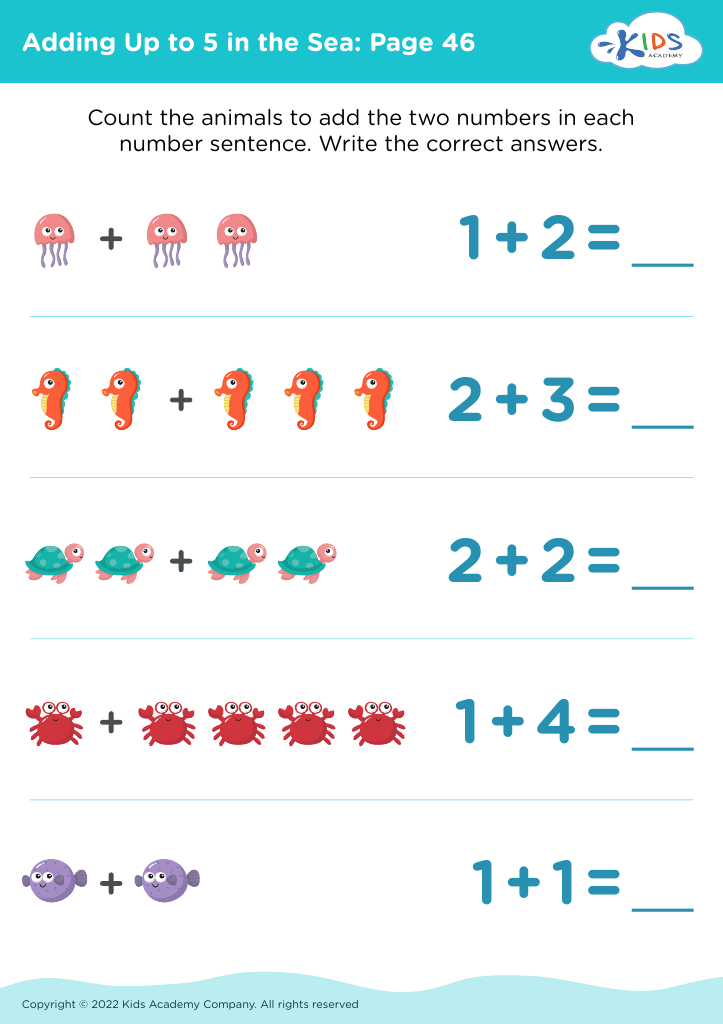
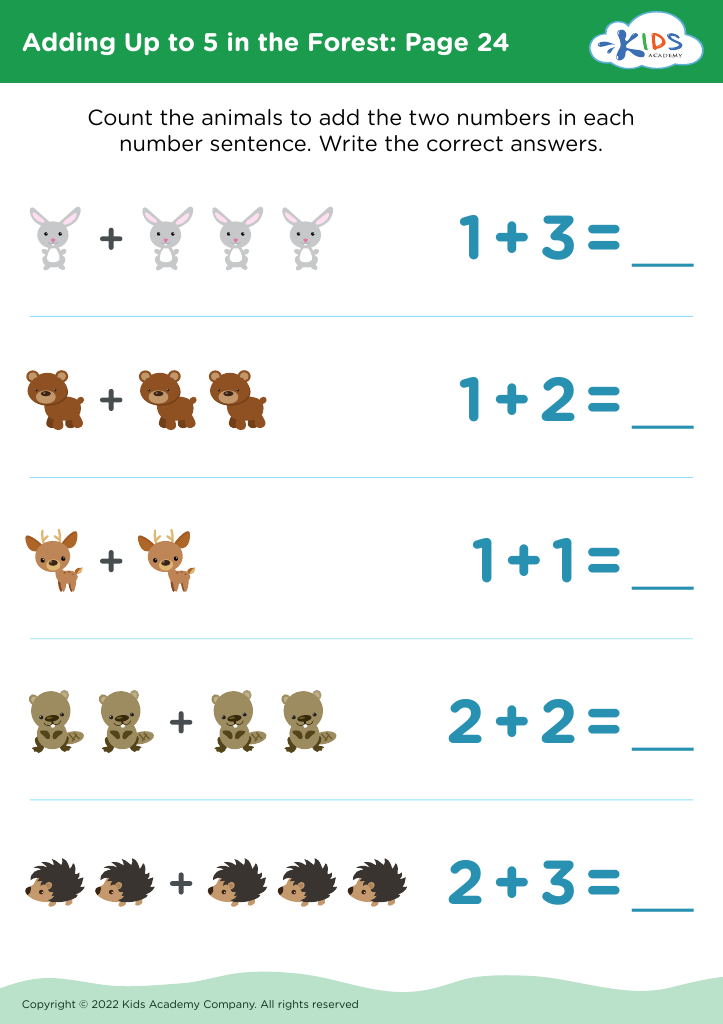
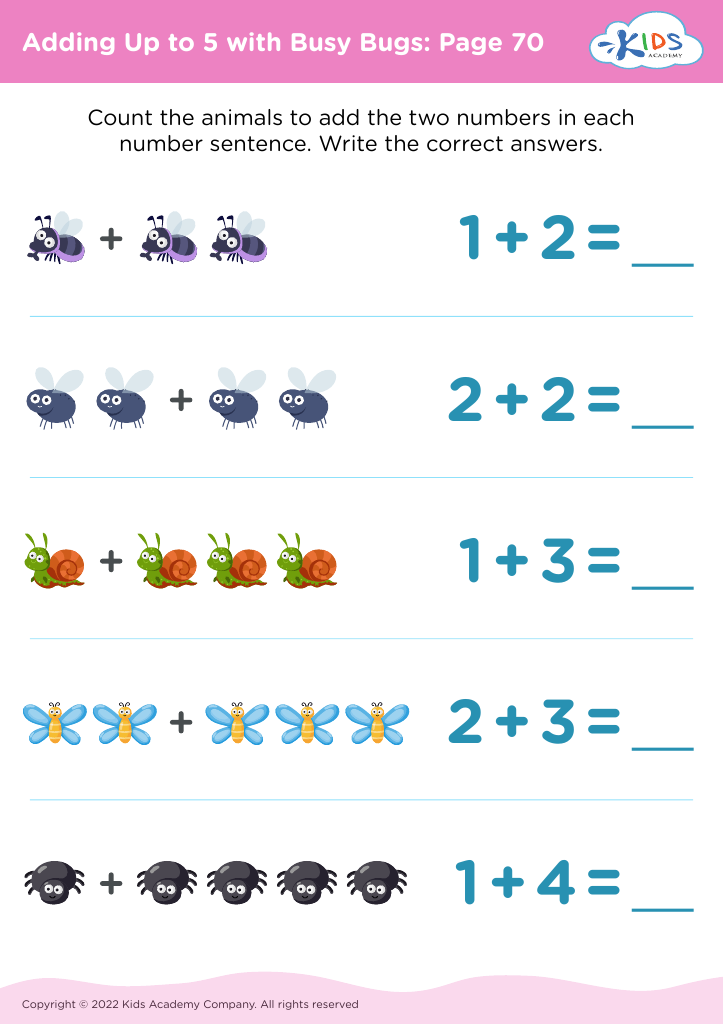
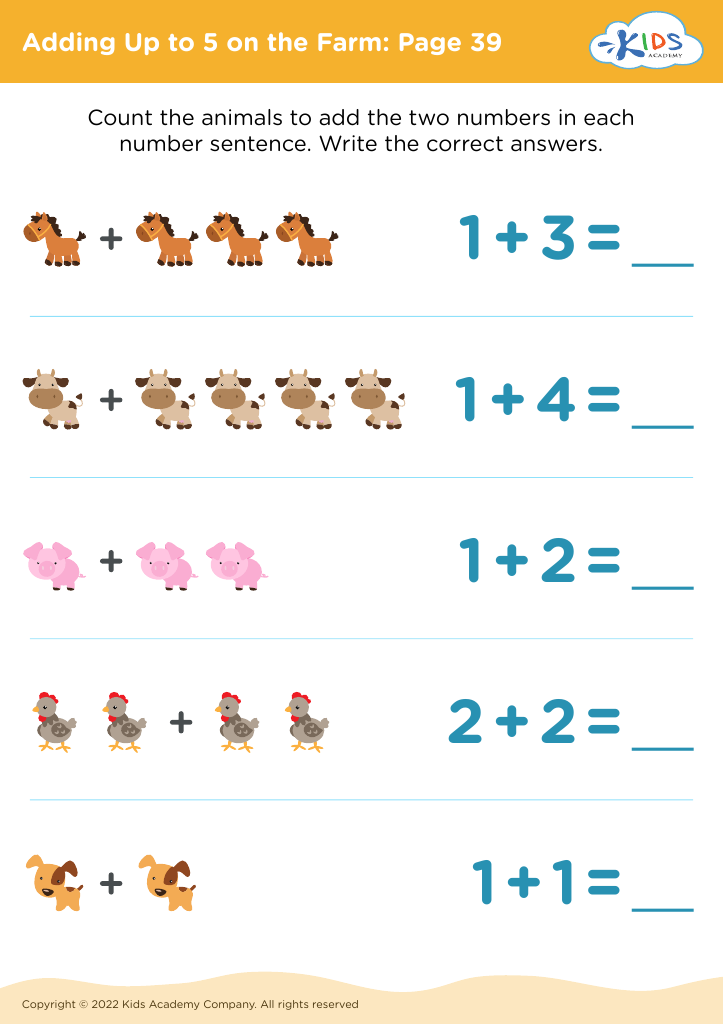
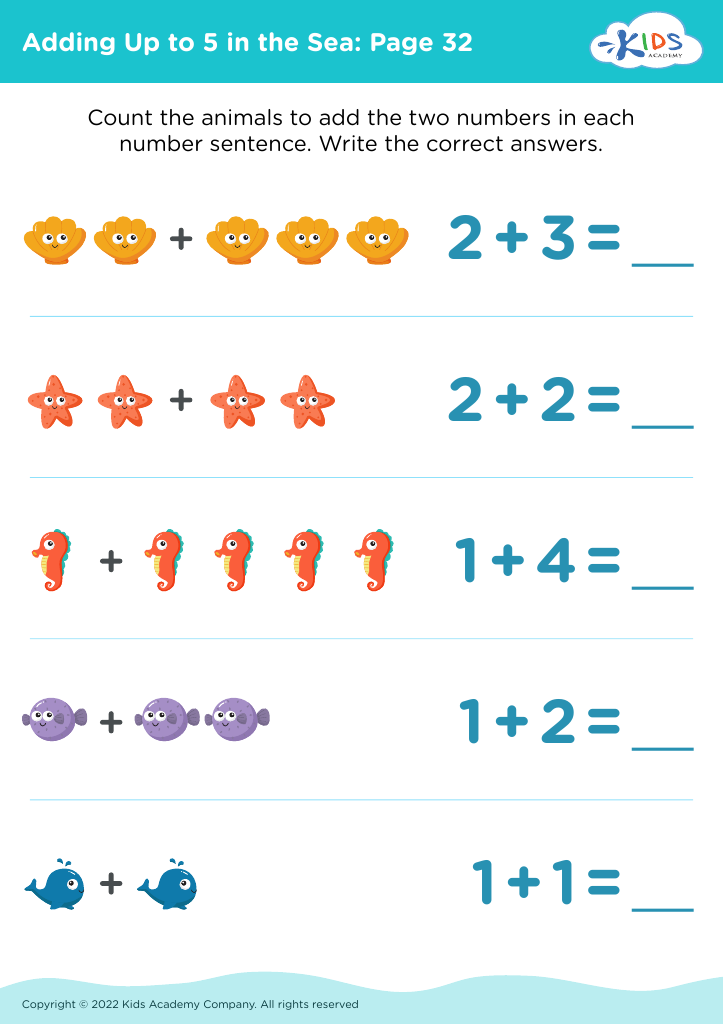
Enhance your child’s fine motor skills with our engaging writing numbers addition worksheets designed for ages 4-9. These carefully crafted resources help young learners practice writing numerals while reinforcing foundational addition concepts. Our worksheets combine fun and educational activities, ensuring children develop the dexterity needed for writing with precision. As they trace and replicate numbers, kids boost their confidence and understanding of basic math operations. Perfect for homeschooling or classroom use, these worksheets make learning enjoyable and effective. Explore our collection today to provide your child with valuable skills that build a strong foundation for academic success in math and beyond!
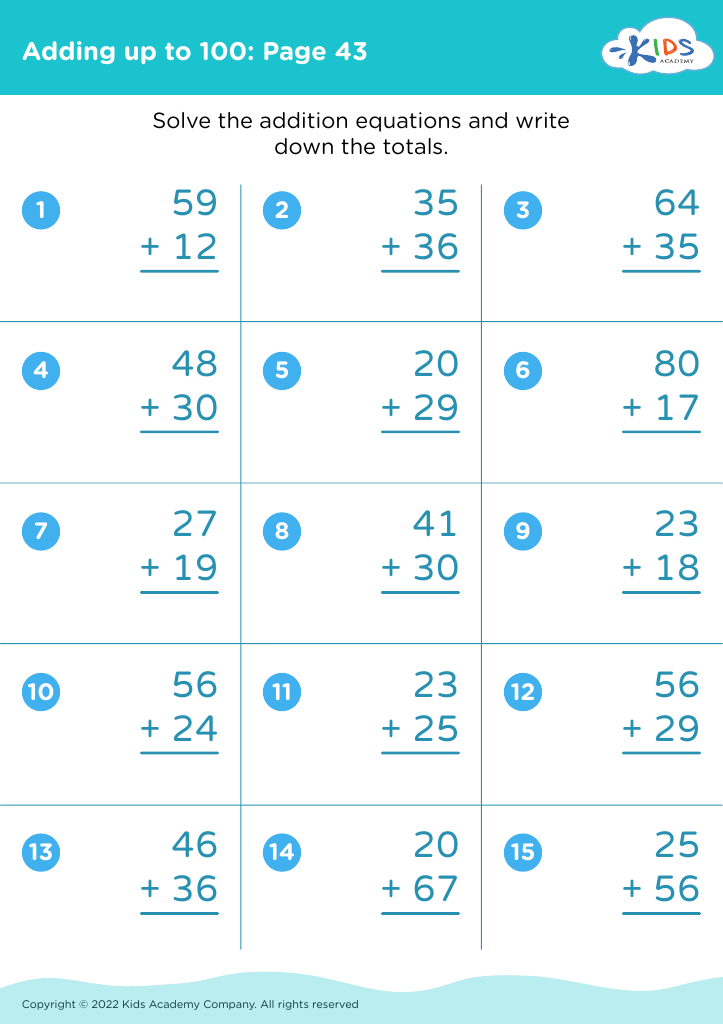
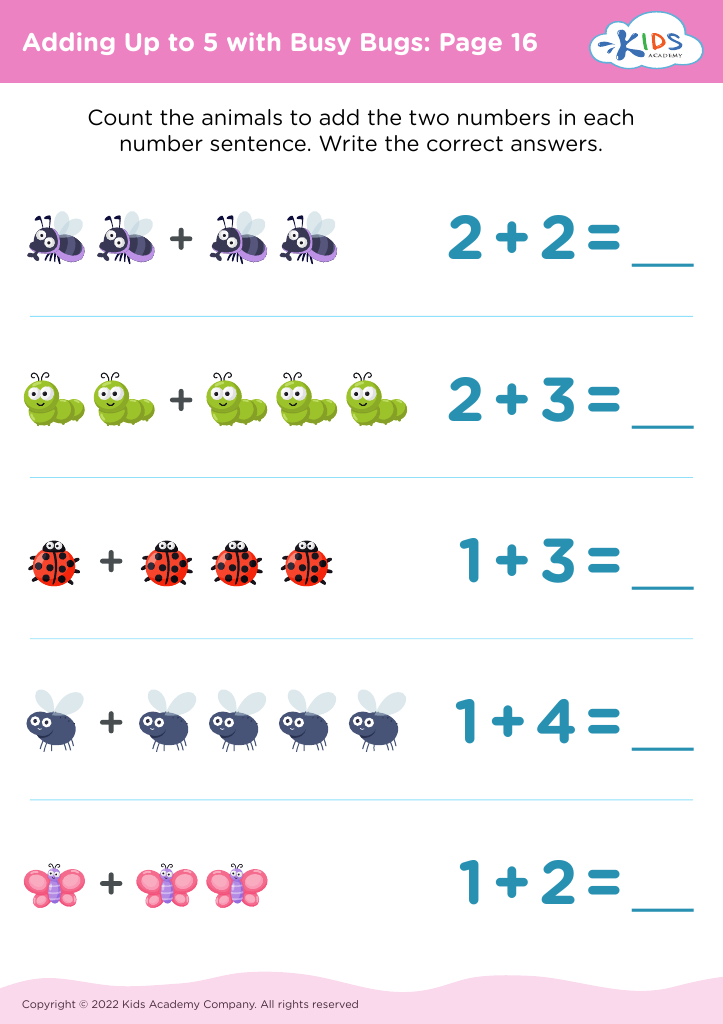
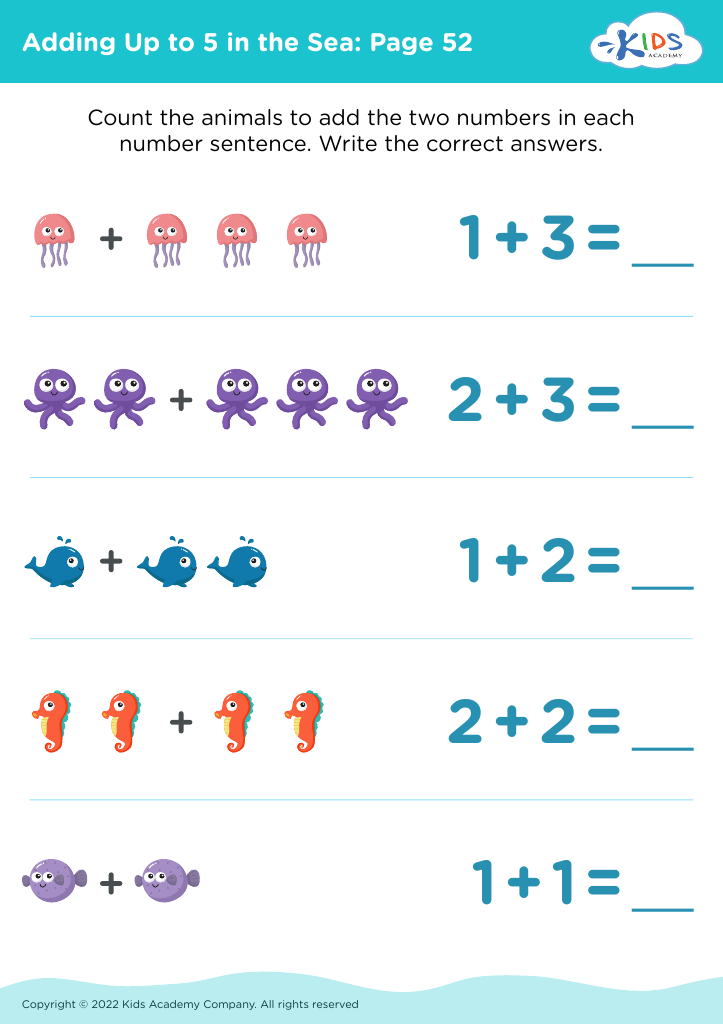







.jpg)
Fine motor skills are crucial for children aged 4-9 as they significantly impact their writing, including the formation of numbers and letters. These skills involve the coordination of small muscles in the hands and fingers, which are essential for many daily tasks, from tying shoelaces to using scissors. When children develop strong fine motor skills, they demonstrate improved control and precision, leading to more legible writing and better engagement with math activities, such as addition.
Teachers and parents should care about the development of these skills because they form the foundation for overall academic success. Children who struggle with fine motor tasks may find writing challenging, which can lead to frustration and disengagement from learning. Additionally, establishing a strong grasp of numbers through effective writing techniques enhances their confidence in mathematics, allowing them to approach addition with a positive mindset.
Moreover, fostering fine motor skills can promote cognitive development as children practice problem-solving and critical thinking in math. Engaging in activities like drawing, modeling with clay, or playing with building blocks can help improve these abilities. Ultimately, supporting the development of fine motor skills in writing numbers is a critical step in setting children up for lifelong learning and success.








