Logical thinking Addition Worksheets for Ages 4-9
9 filtered results
-
From - To
Enhance your child's addition skills with our engaging Logical Thinking Addition Worksheets, designed specifically for ages 4 to 9. These fun and interactive worksheets focus on developing critical thinking alongside foundational math concepts. Children will solve problems that require logical reasoning, helping them to not only excel in arithmetic but also improve their cognitive skills. Our carefully crafted activities cater to various learning styles, ensuring that each child can grasp addition in a meaningful way. Perfect for home or classroom use, these worksheets provide an enjoyable way for young learners to practice and master their addition skills while nurturing their logical thinking abilities.

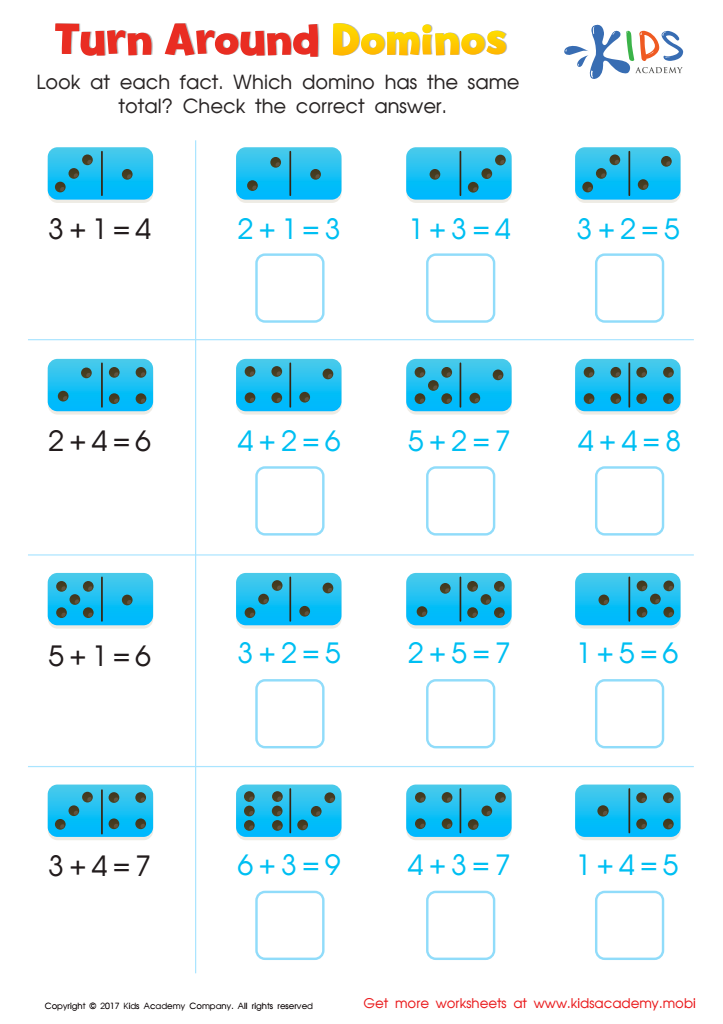
Turn Around Dominos Worksheet
 Assign to My Students


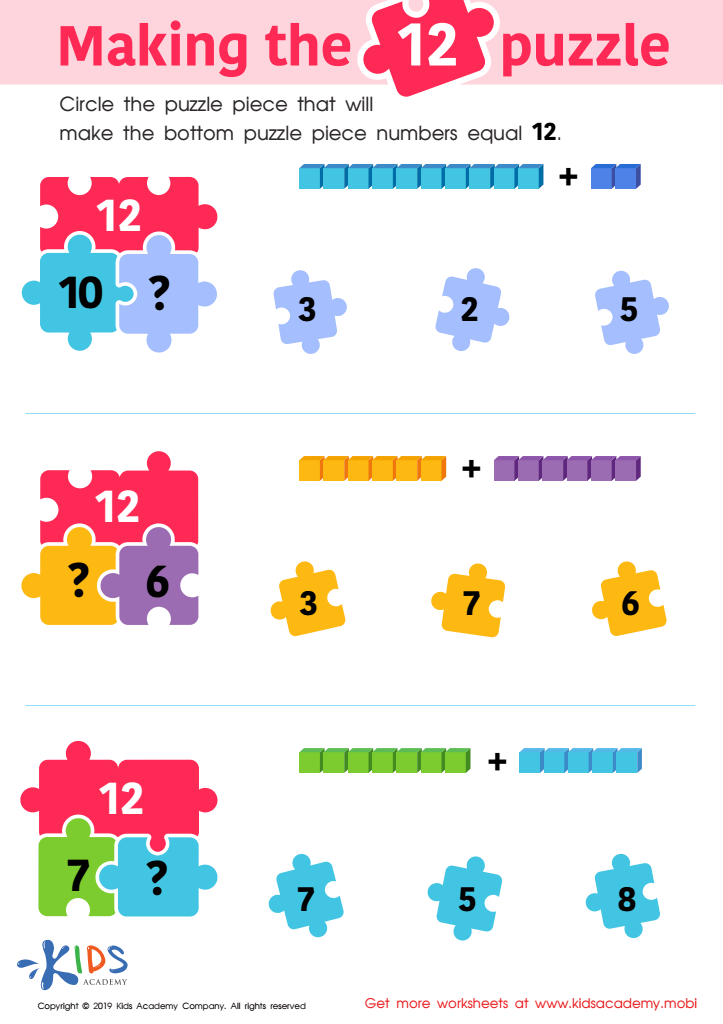
Making the 12 Puzzle Worksheet
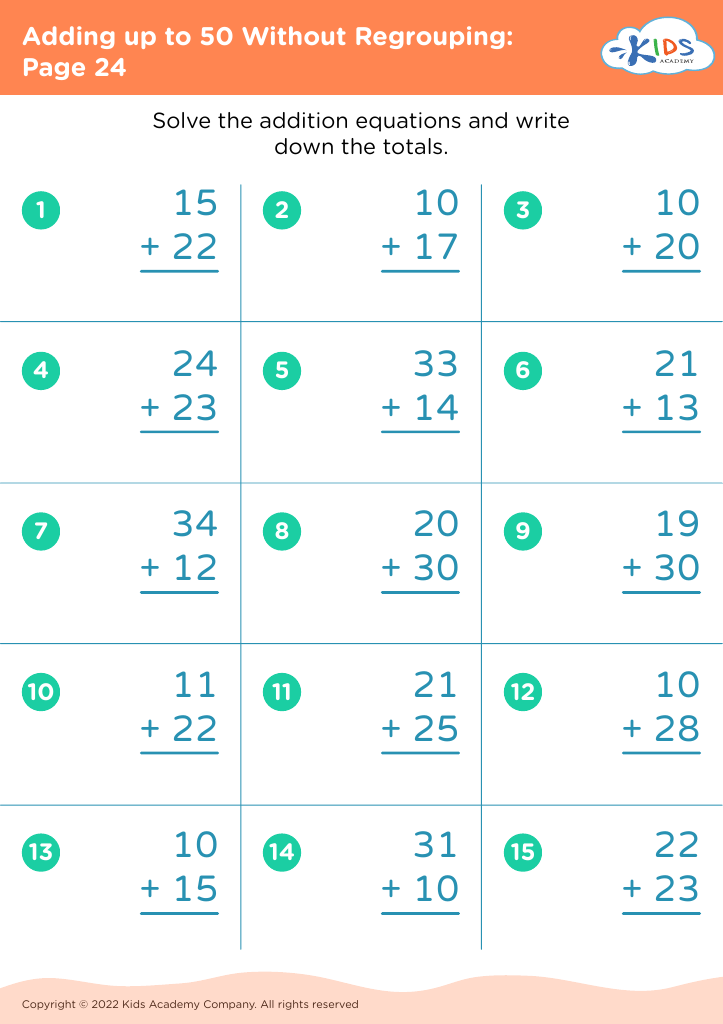
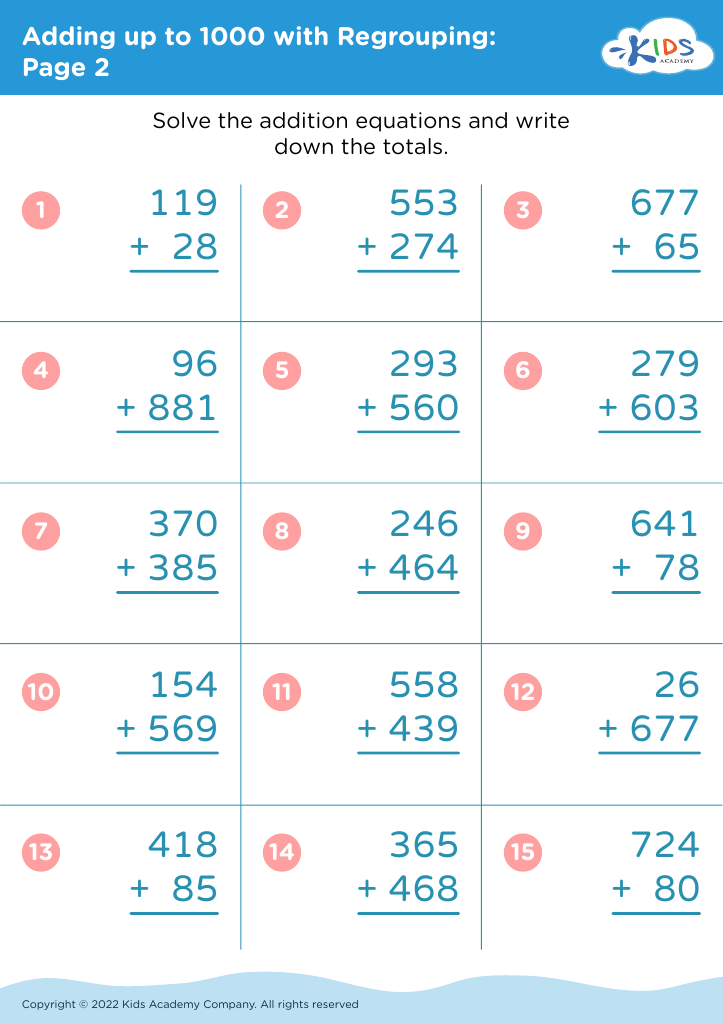








Logical thinking and addition skills are crucial for children aged 4 to 9 as they lay the foundation for critical reasoning, problem-solving, and numeracy. During these formative years, children are naturally curious, eager to explore, and develop cognitive skills at a rapid pace. Fostering logical thinking through addition encourages them to recognize patterns, understand relationships between numbers, and predict outcomes, which is essential for more complex mathematics in later years.
Parents and teachers should care about this developmental stage because strong logical thinking and addition skills promote mathematical fluency, boosting confidence and engagement in learning. Children who grasp these concepts early on are more likely to enjoy math and approach it with a positive mindset, paving the way for academic success. Additionally, logical thinking helps in everyday decision-making and enhances overall cognitive abilities, impacting various life aspects beyond academics.
Moreover, early intervention and support in logical thinking and addition can aid struggling learners, bridging gaps and equipping them with necessary tools for future challenges. Cultivating these skills not only enriches a child’s educational experience but also prepares them for thoughtful decision-making, enabling them to navigate an increasingly complex world. Thus, investment in these skills is invaluable for parents and educators alike.








