Visual comprehension Addition Worksheets for Ages 4-9
7 filtered results
-
From - To
Discover our engaging Visual Comprehension Addition Worksheets designed specifically for children ages 4-9. These worksheets encourage young learners to enhance their math skills by combining visual cues with addition problems, promoting deeper understanding and retention. With colorful illustrations and varied formats, children can easily grasp key math concepts while enjoying their learning experience. Our carefully crafted activities improve not only addition skills but also strengthen visual comprehension, fostering mathematical fluency in a fun way. Perfect for classrooms or at-home learning, these worksheets empower children to solve problems confidently and develop a love for math. Start your journey toward math mastery today!
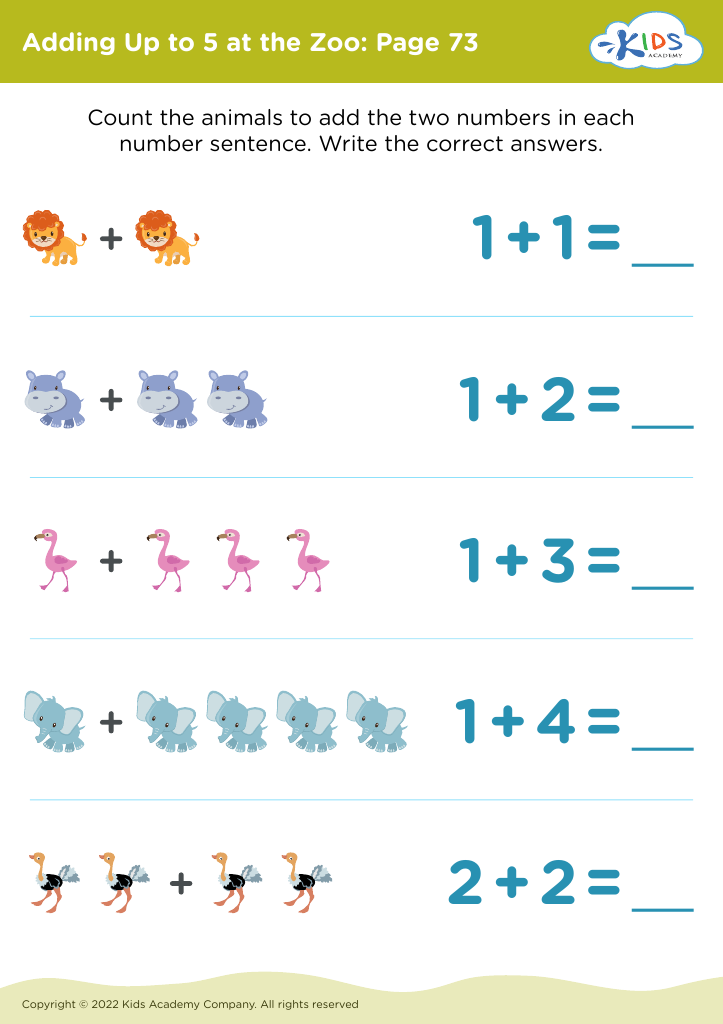
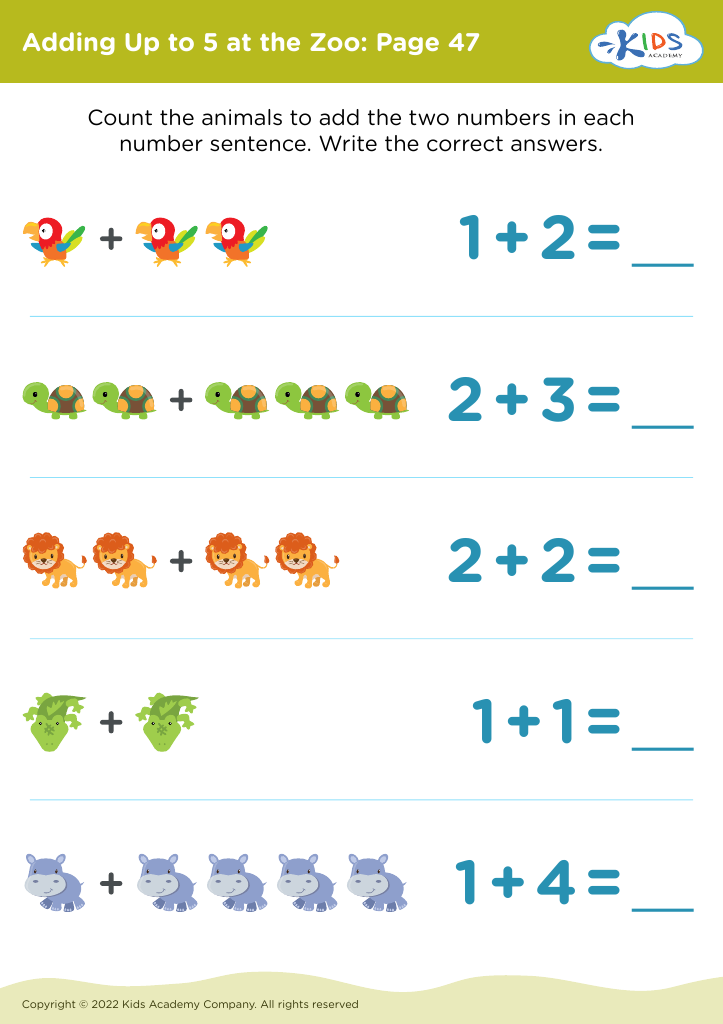
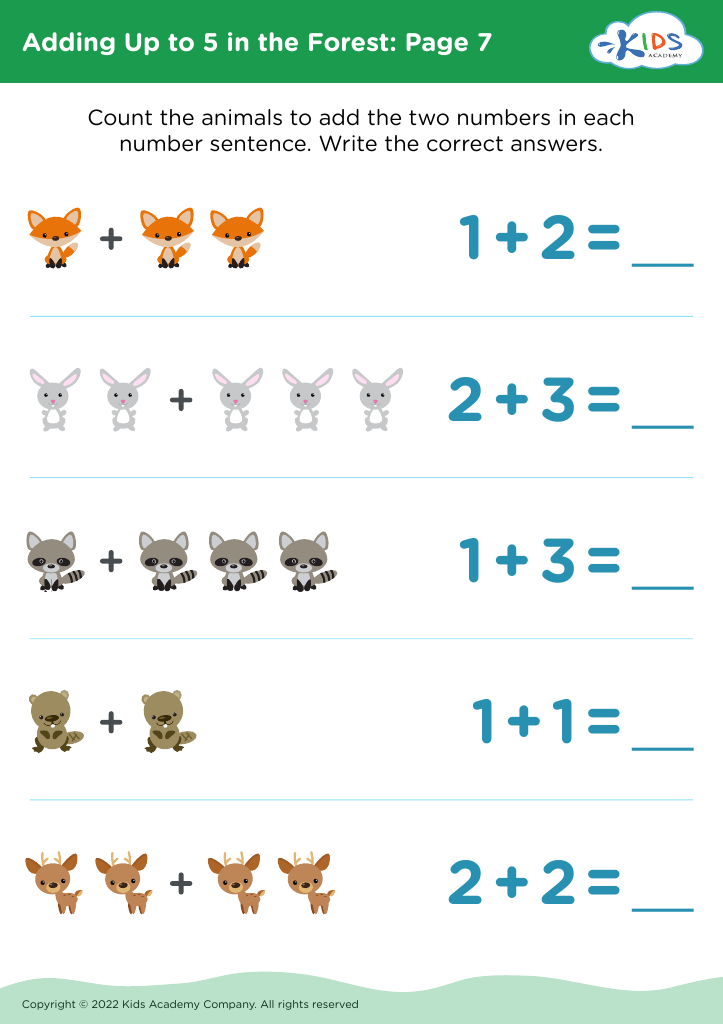
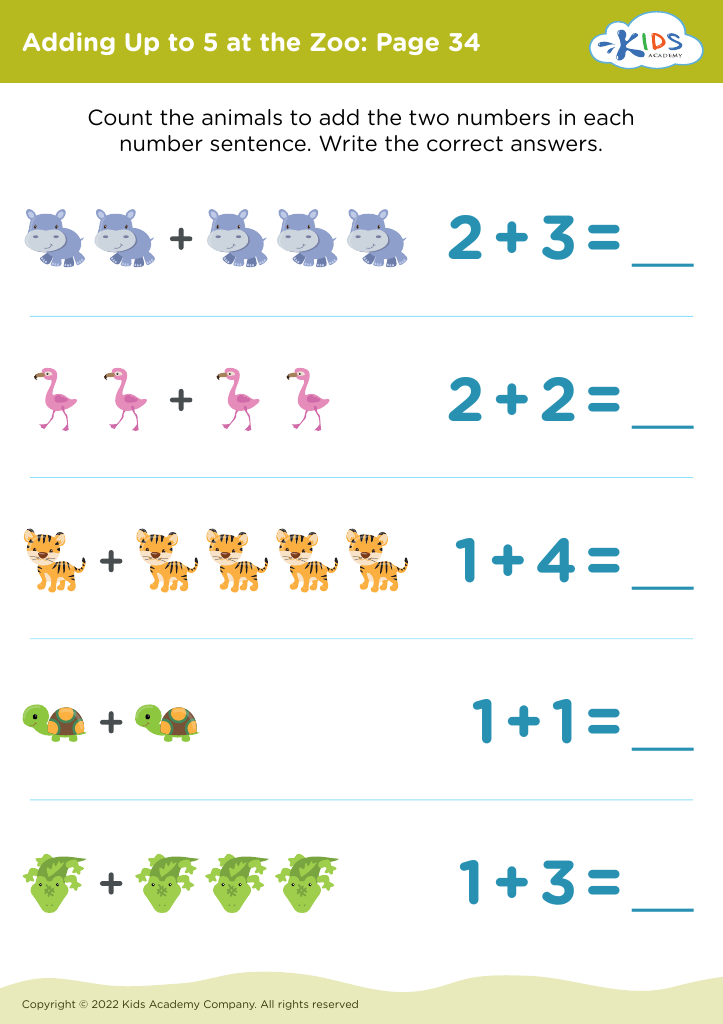
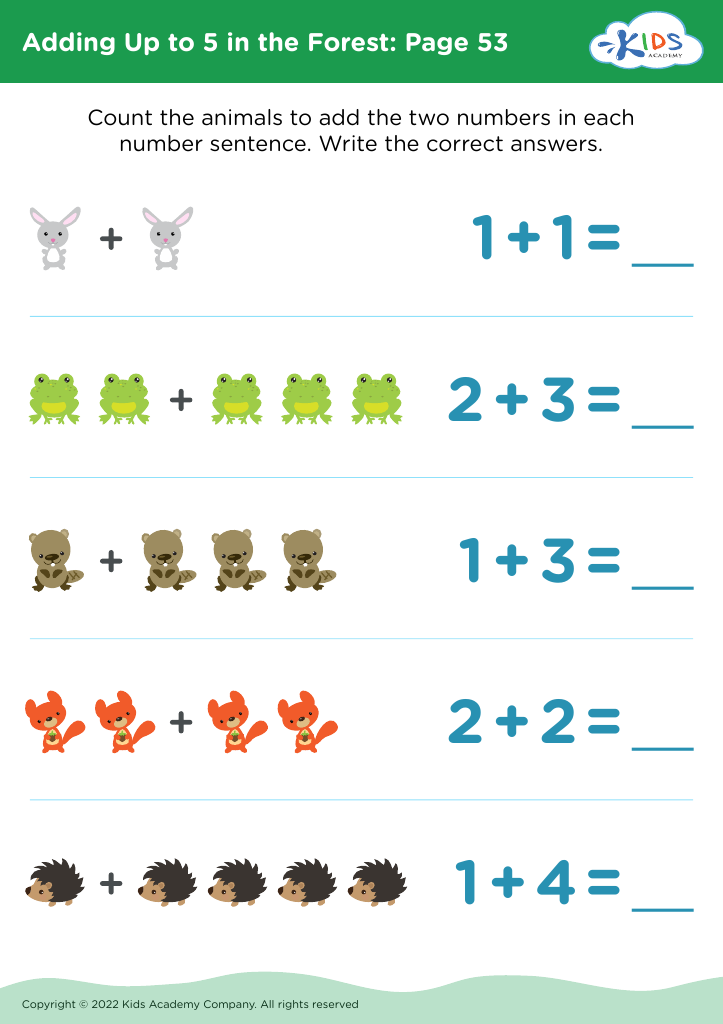
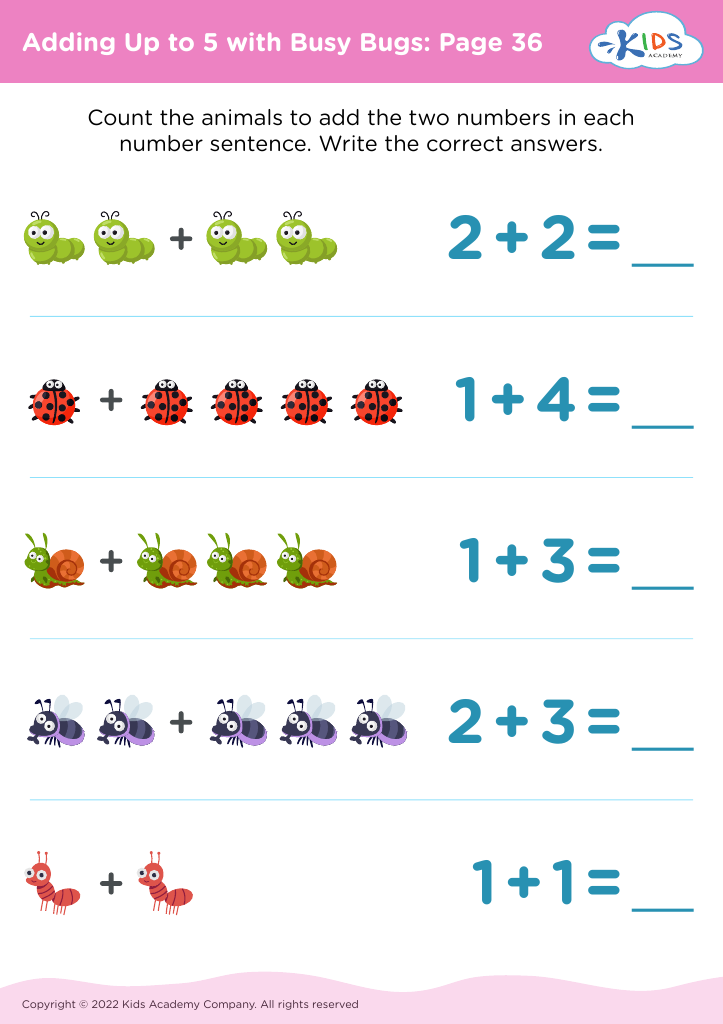
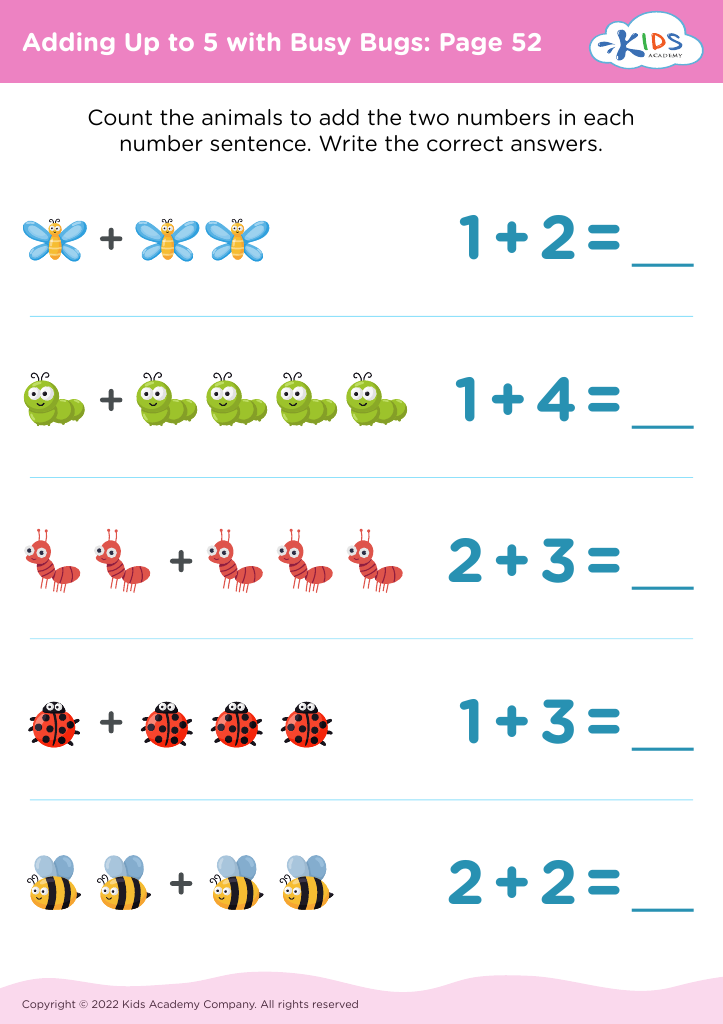








Visual comprehension in addition for children aged 4-9 is paramount for several reasons. At this developmental stage, children are not only learning basic mathematical operations, but they are also developing critical cognitive skills. Visual comprehension allows children to understand mathematical concepts through representations, such as pictures, diagrams, or physical objects. This, in turn, helps children visualize the addition process, making abstract concepts more tangible and accessible.
By fostering visual comprehension, parents and teachers can help children build a strong foundation in mathematical understanding that will serve them well in future learning. Visual aids can enhance engagement and motivation, making activities more enjoyable for young learners. Additionally, these skills can promote problem-solving abilities, encouraging children to look for patterns and relationships in numbers.
Furthermore, strong visual comprehension supports the development of other important skills, such as spatial awareness and logical reasoning, which extend beyond mathematics into various areas of learning. Parents and teachers play a vital role in providing opportunities for practice and reinforcement in visual strategies, which can ultimately build confidence and independence in children as they approach new challenges in their educational journey. Overall, prioritizing visual comprehension in addition contributes significantly to holistic development and academic success.








