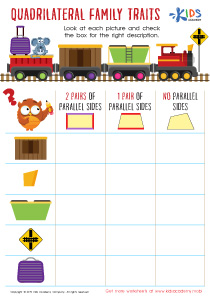
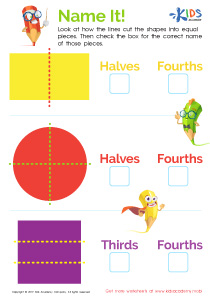
Understanding area Area and Perimeter Worksheets for Ages 4-9
3 filtered results
-
From - To
Help your child grasp essential math concepts with our "Understanding Area and Perimeter Worksheets for Ages 4-9." These engaging worksheets are designed to introduce young learners to the fundamental principles of area and perimeter in a fun and accessible way. Featuring colorful illustrations and relatable scenarios, your child will learn to calculate and differentiate between area and perimeter through hands-on activities. Ideal for developing critical thinking and problem-solving skills, our worksheets are perfect for both classroom and home use. Nurture your child’s mathematical abilities and build a strong foundation for future success in math!
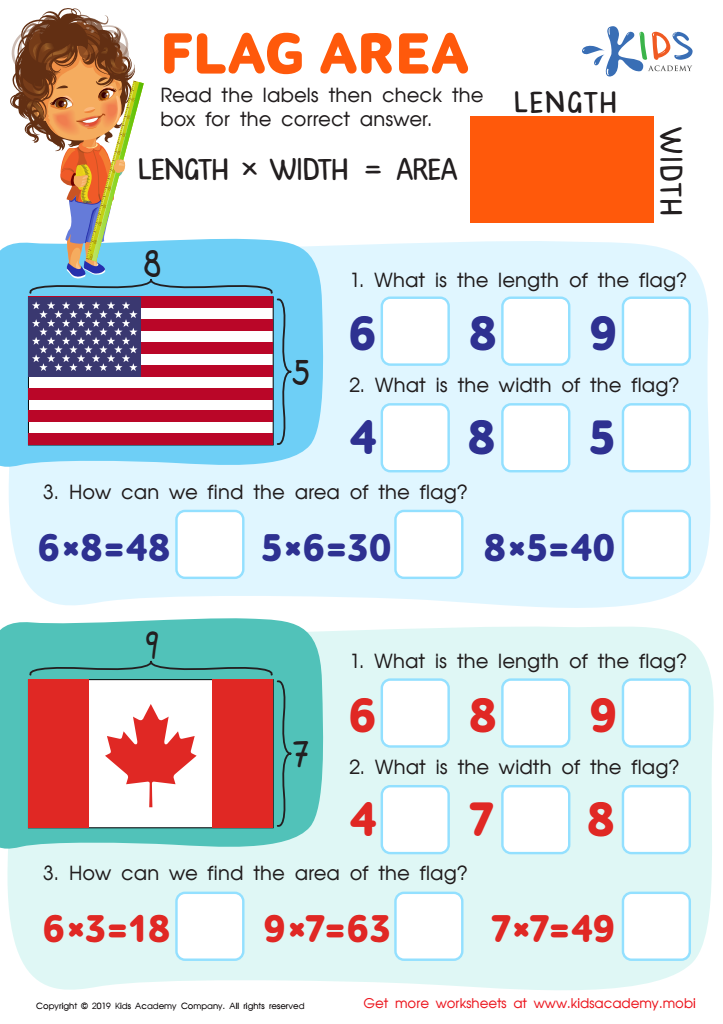
Flag Area Worksheet
 Assign to My Students
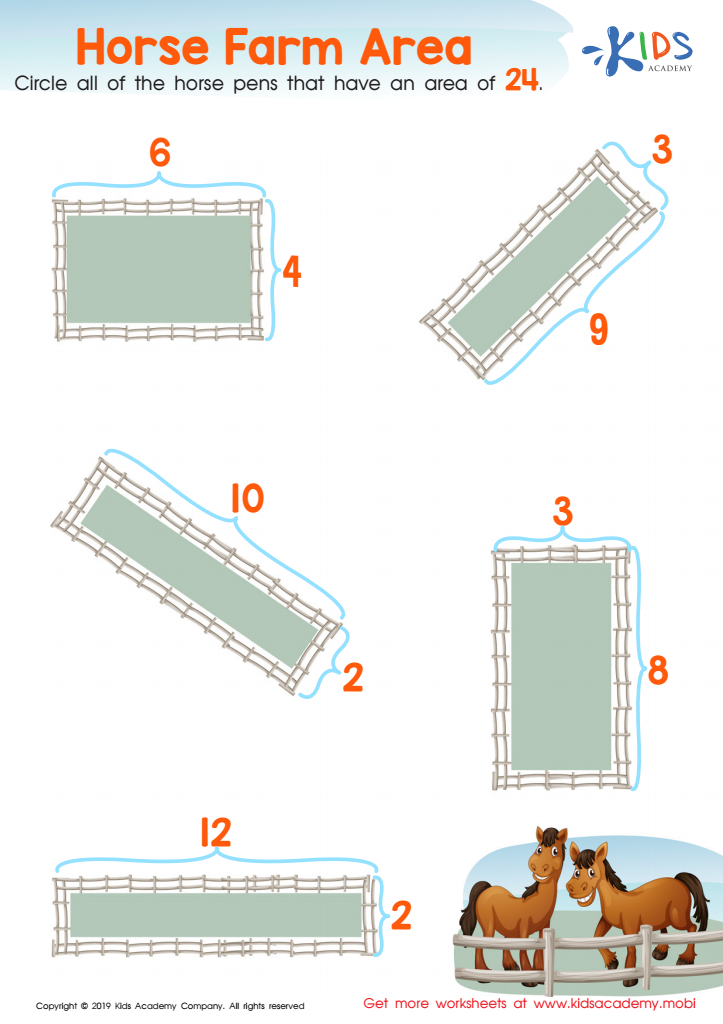
Horse Farm Area Worksheet
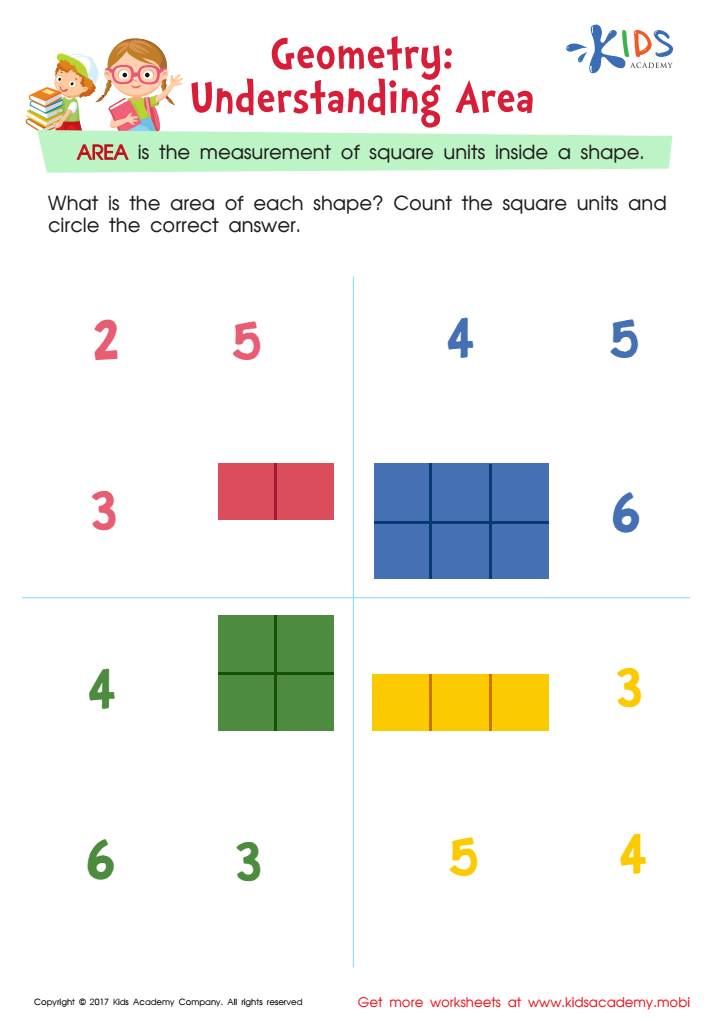
Understanding Area Worksheet








Understanding area and perimeter for children ages 4-9 is foundational for their mathematical development and practical life skills. For parents and teachers, fostering this understanding early on is crucial to a child's growth in several key areas.
Firstly, it develops critical thinking and problem-solving abilities. When young children learn to calculate the perimeter and area, they are engaging in activities that require measuring, comparing, and reasoning, all essential skills for overall cognitive development. For instance, understanding perimeter helps children figure out how much fence is needed for a yard, while understanding area aids in determining how much space a garden or a room occupies.
Secondly, it establishes a base for future mathematical concepts. Mastery of these basics ensures that children are well-prepared for more complicated topics they will encounter in higher grades, such as geometry and algebra.
Additionally, real-world applications enhance practical learning. Kids often encounter perimeter and area in daily life, whether arranging furniture, drawing, or playing in the schoolyard. Understanding these concepts makes these activities more meaningful and engaging.
By investing in the foundational knowledge of area and perimeter, parents and teachers not only advance children's academic skills but also their ability to apply math in everyday situations—a vital capability throughout life.