Counting skills Comparing Numbers Worksheets for Ages 4-9
6 filtered results
-
From - To
Introducing our Counting Skills Comparing Numbers Worksheets, designed for children ages 4-9. These engaging, printable worksheets from Kids Academy help young learners master foundational math skills through fun activities focused on counting and comparing numbers. Perfect for early grade classrooms or at-home practice, our resources encourage critical thinking and numeric fluency by challenging kids to identify greater and lesser values and understand number sequences. Ideal for fostering a love for math, these worksheets effectively build confidence in young learners, laying a strong foundation for future math success. Download and watch your child's counting skills blossom!
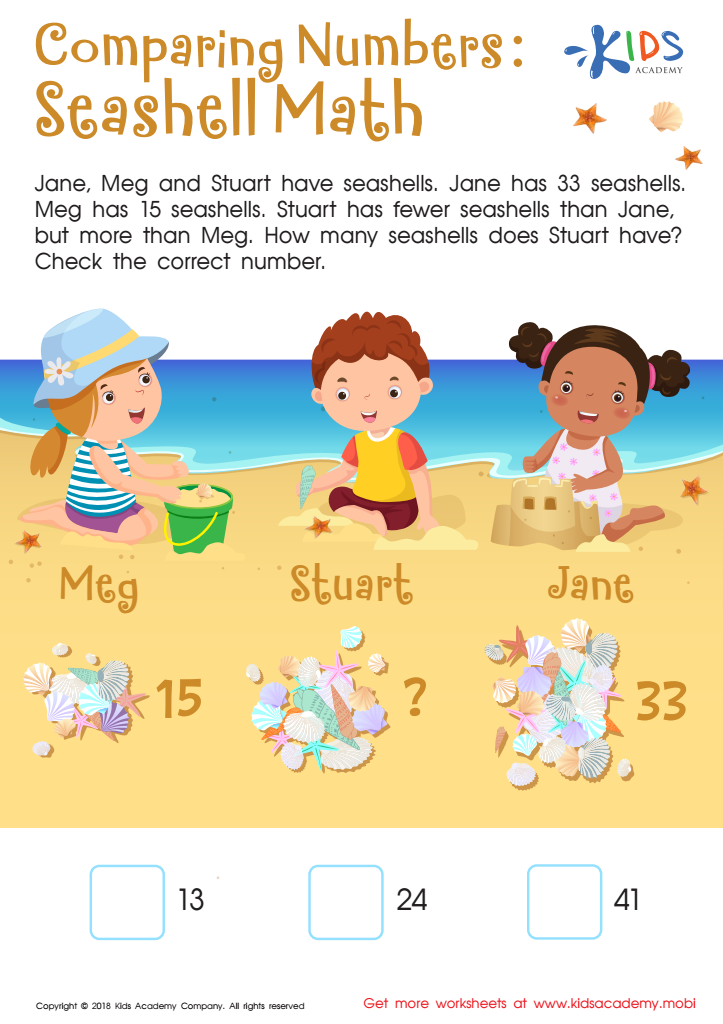
Seashell Collectors Worksheet
 Assign to My Students
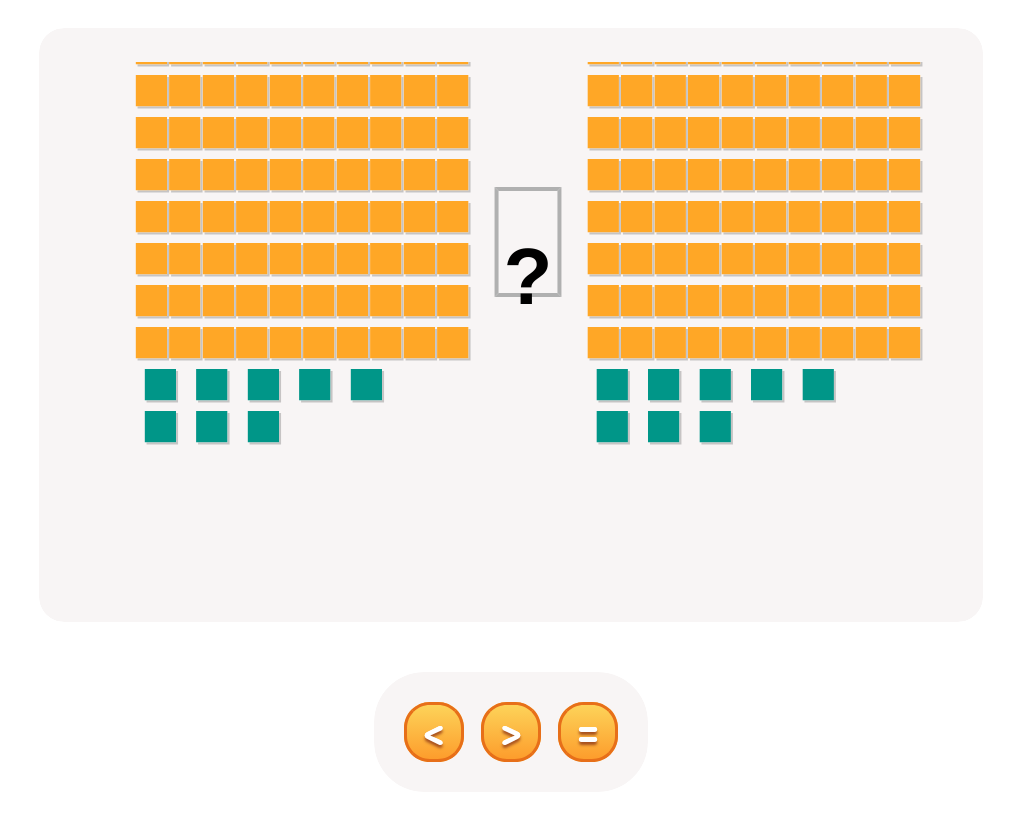

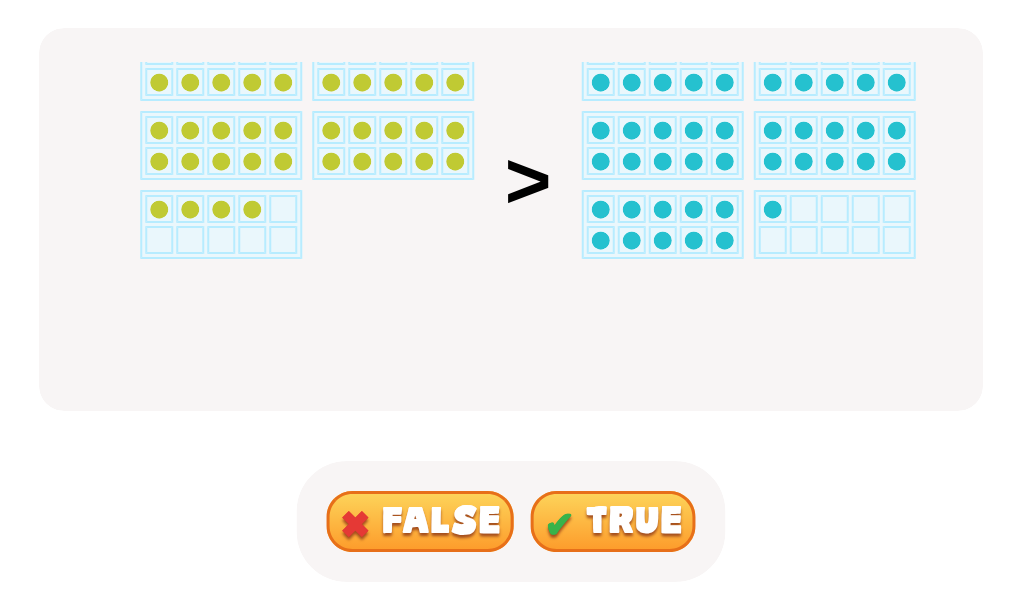
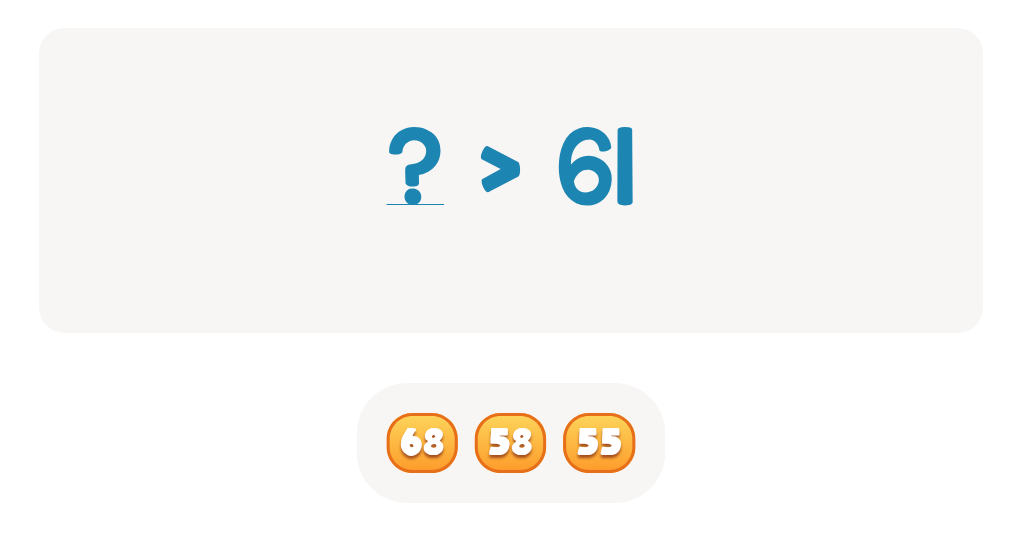
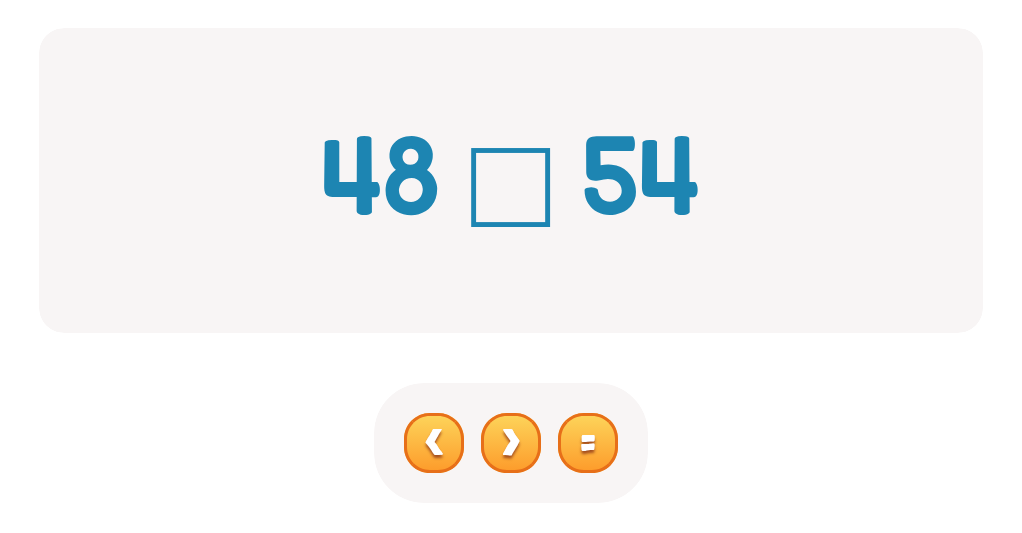
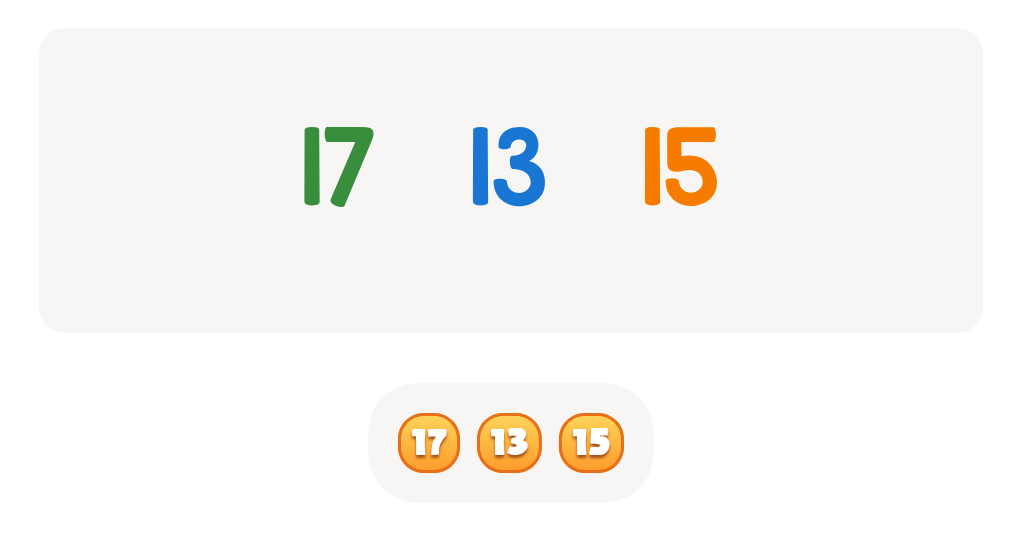
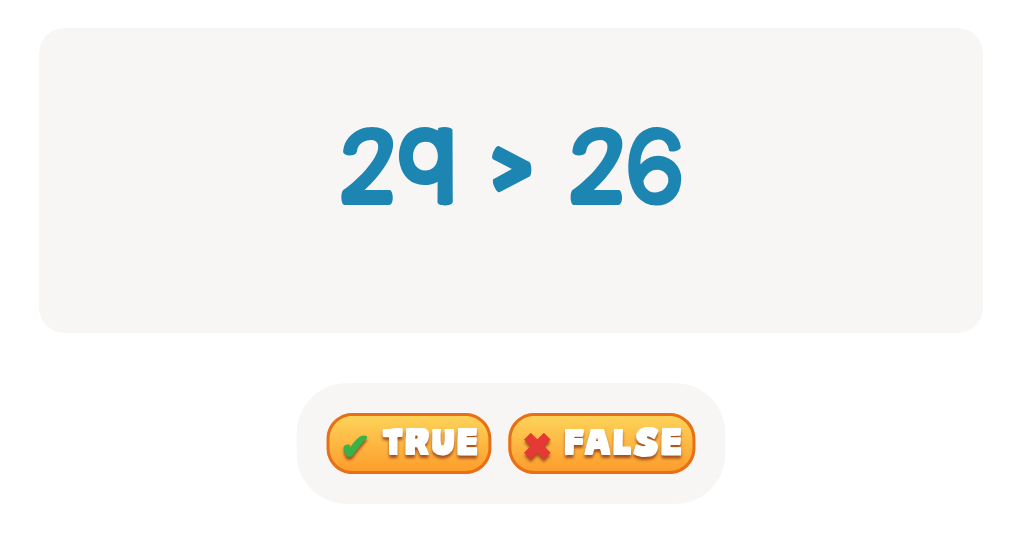
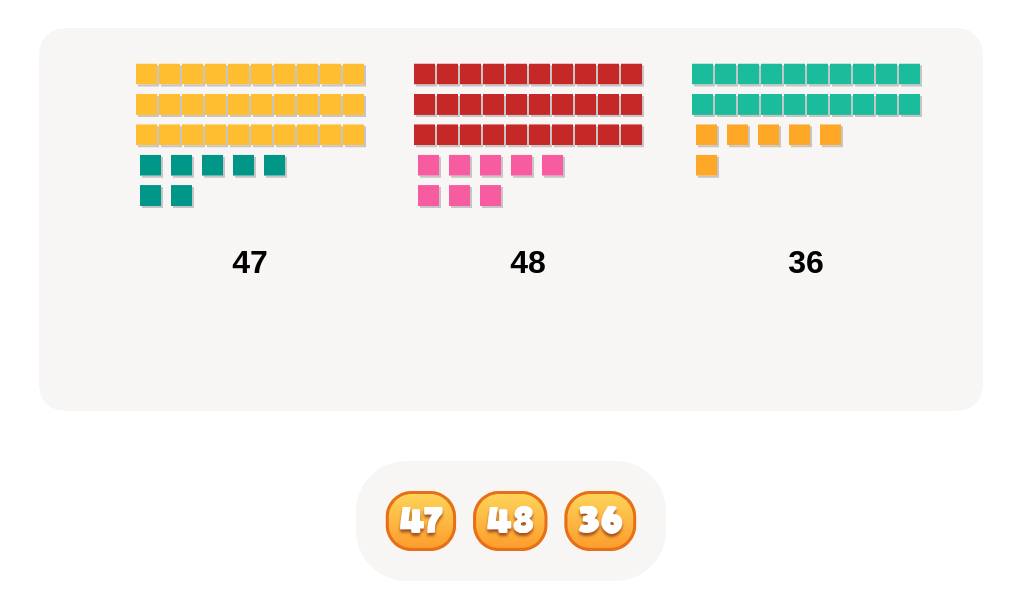
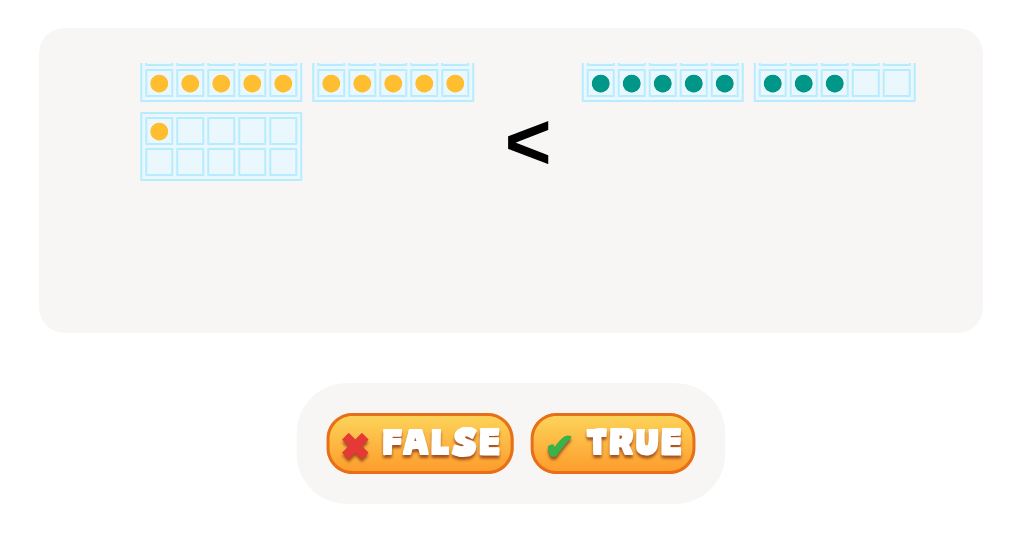
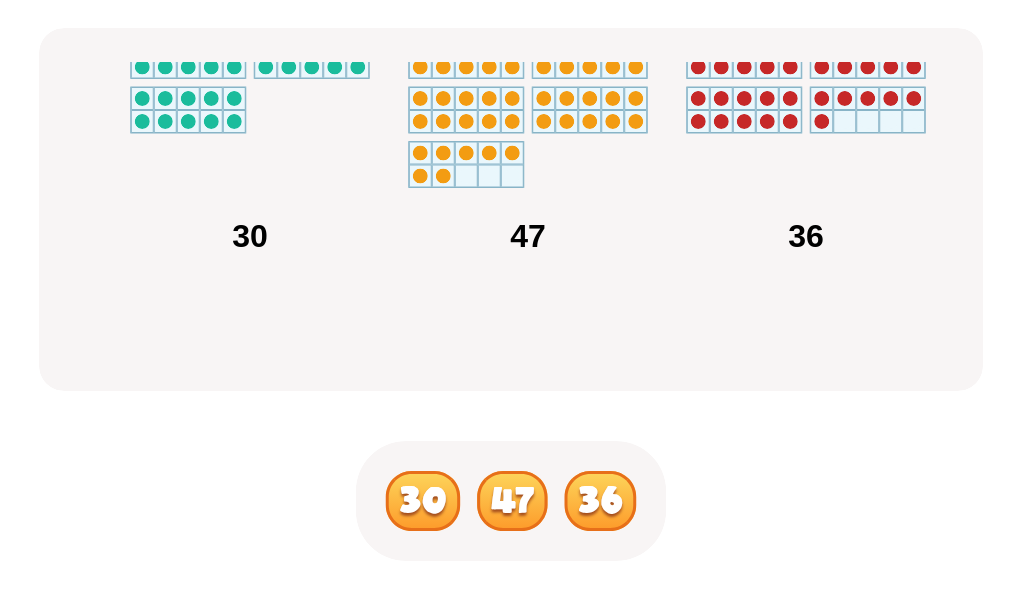
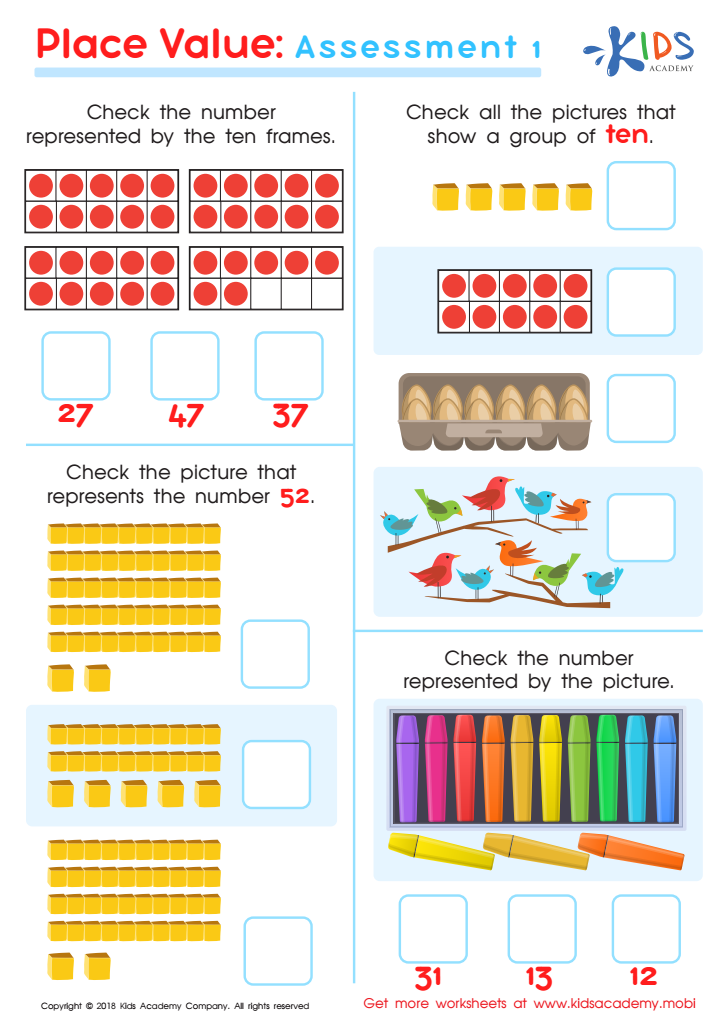
Place Value: Assessment 1 Worksheet
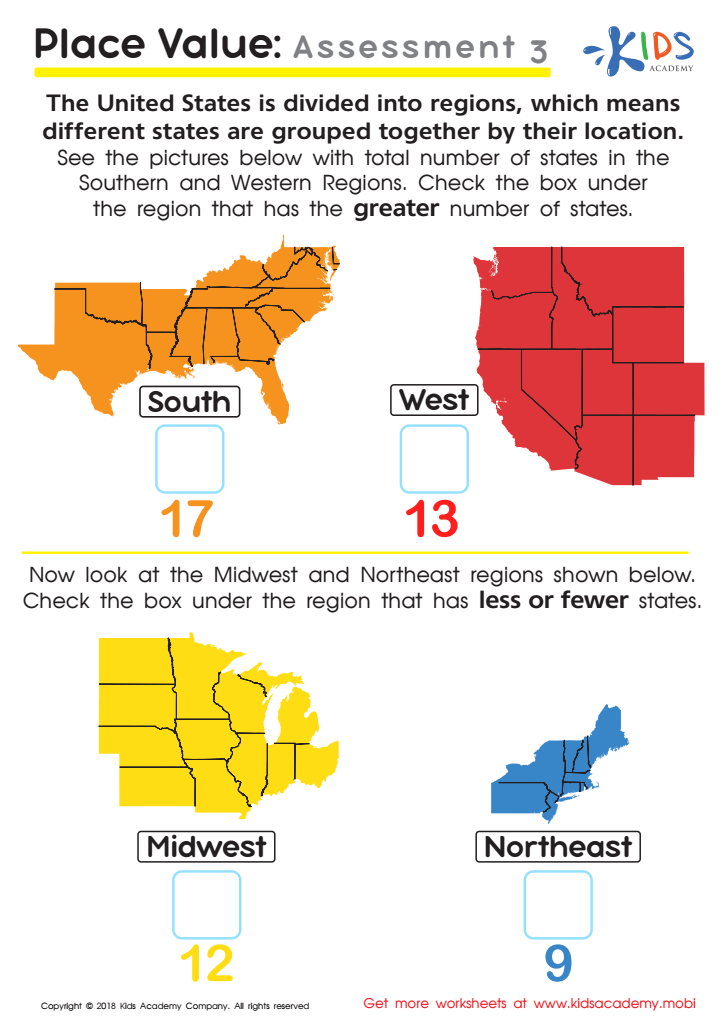
Place Value: Assessment 3 Worksheet
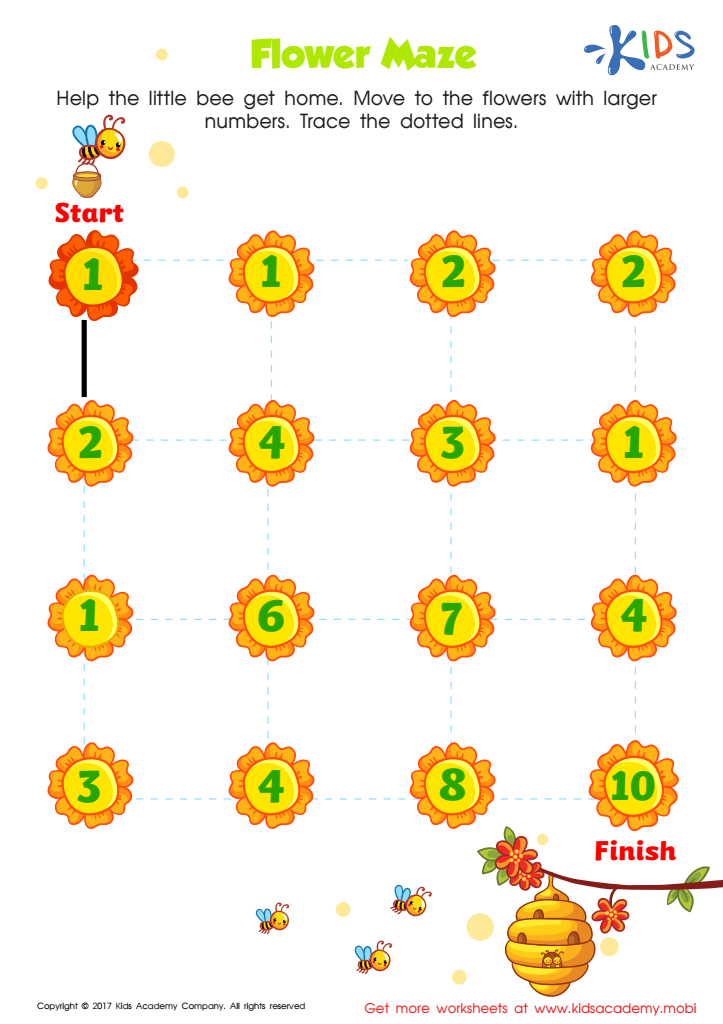
Number Maze For Kindergarten Printable
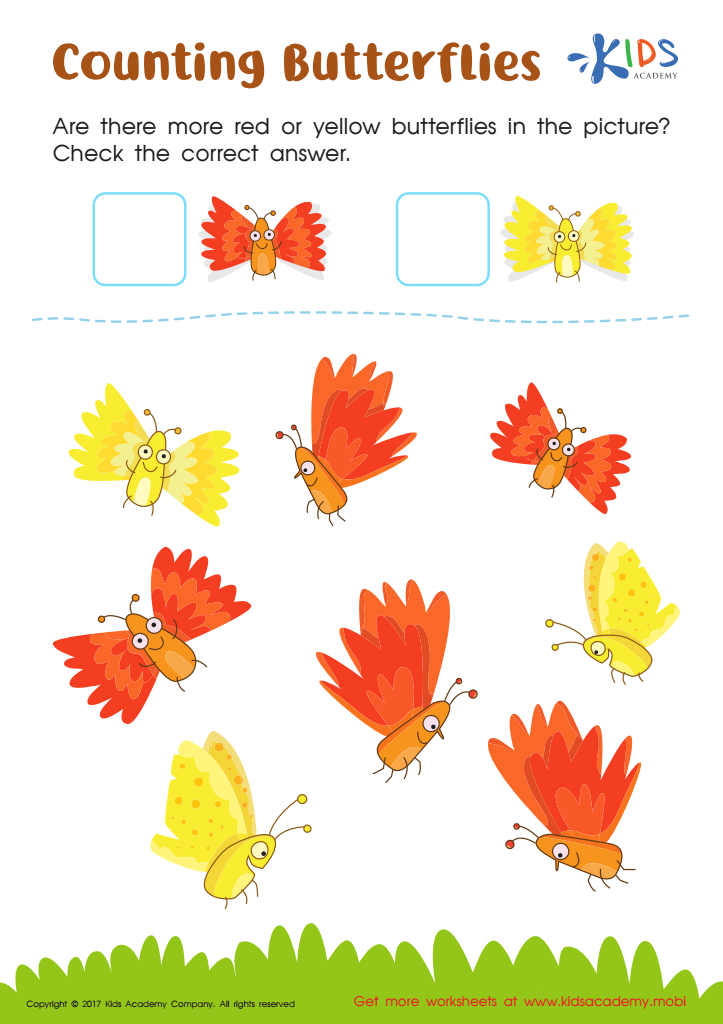
Counting Butterflies Worksheet
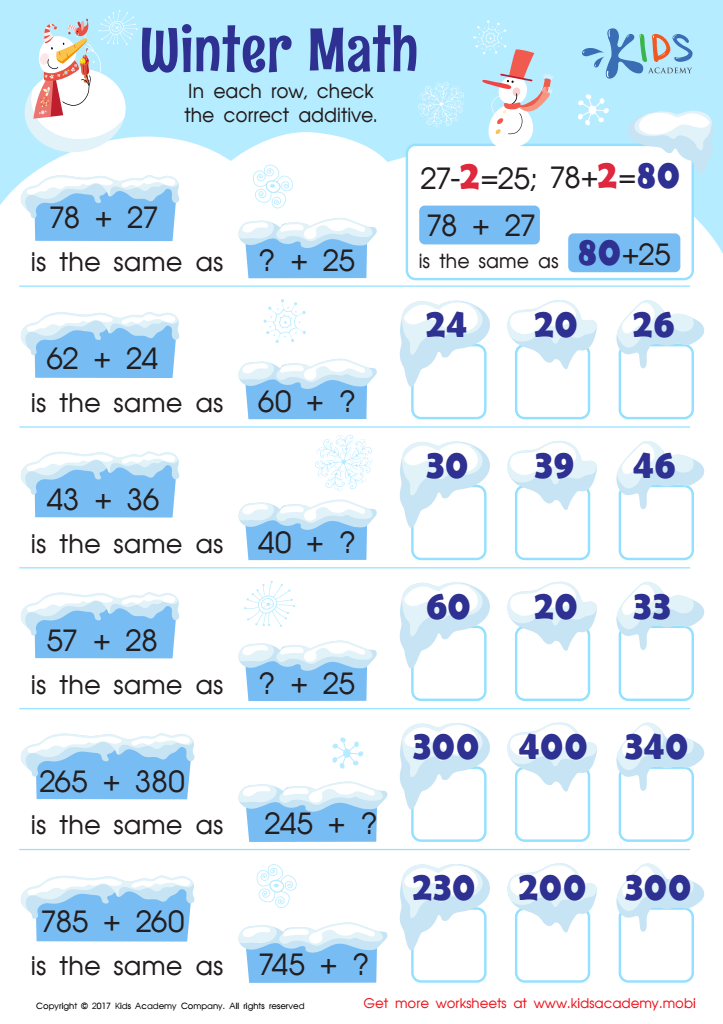
Free Addition Worksheet







Counting skills and the ability to compare numbers are fundamental elements in the development of early mathematical understanding for children aged 4-9. These skills not only lay the foundation for more advanced math concepts but also play a crucial role in everyday problem-solving and critical thinking.
Counting helps children understand the sequence of numbers, the concept of quantity, and the base-10 numbering system. Mastery of counting enables kids to perform basic arithmetic, such as addition and subtraction, which are essential for more complex mathematical tasks they will encounter in later grades. Furthermore, accurate counting fosters number sense, allowing children to make judicious estimates and understand proportions.
Comparing numbers, on the other hand, involves skills such as recognizing which of two numbers is larger or smaller, understanding "more" and "less," and grasping the concept of numerical order. This critical thinking skill aids in making everyday decisions, such as determining who has more toys or when to stop or go in board games. It also enhances logical thinking, a necessary competency in both academic and real-world situations.
For both parents and teachers, supporting the development of counting and comparison skills equips children with a robust mathematical foundation. Early math proficiency correlates with better performance in various subjects, encourages a growth mindset toward learning challenges, and ultimately paves the way for lifelong numerical literacy and confidence.