Basic Math Skills Comparison Worksheets for Ages 4-9
3 filtered results
-
From - To
Introduce your child to the world of early mathematical concepts with our engaging Basic Math Skills Comparison Worksheets for ages 4-9. Designed to foster essential counting, comparison, and number sense abilities, these worksheets provide a fun and interactive way for young learners to practice essential math skills. With colorful visuals and diverse activities, children will develop their understanding of concepts like greater than, less than, and equal to. Perfect for home or classroom use, these worksheets cater to a range of learning styles, ensuring that every child can build confidence in their math abilities while having fun along the way!
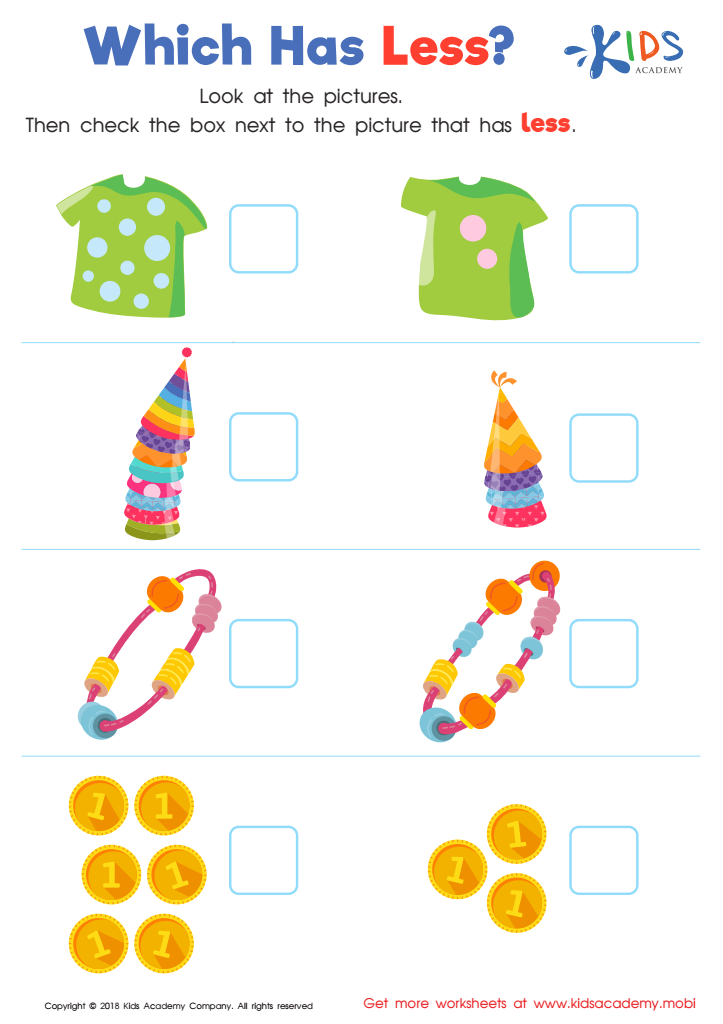
Which Has Less? Worksheet
 Assign to My Students
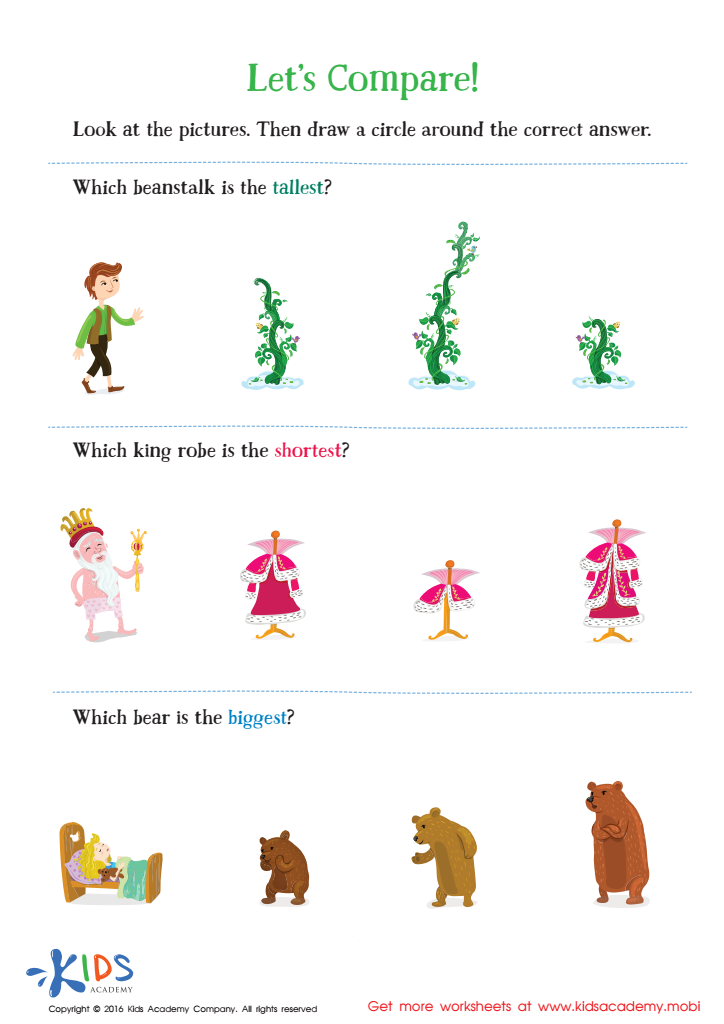
Fairy Tale Worksheet: Let's Compare
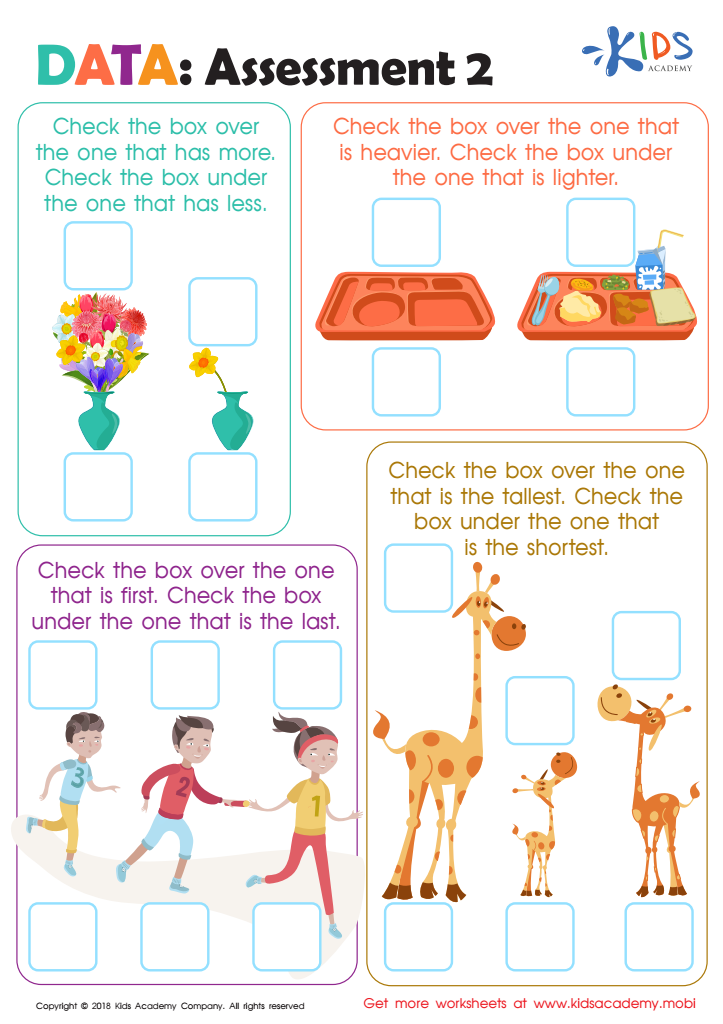
Data: Assessment 2 Worksheet







Understanding basic math skills for children aged 4-9 is crucial for parents and teachers for several reasons. First and foremost, this developmental stage lays the foundation for all future learning. Early math skills such as counting, recognizing shapes, and understanding simple addition and subtraction equip children with problem-solving abilities and logical reasoning that will be applicable across subjects.
Secondly, monitoring math skills at this age allows educators and parents to identify learning gaps, providing opportunities for timely intervention. Early detection of difficulties can prevent long-term academic challenges. If children are empowered with adequate skills early on, they are more likely to build a positive attitude toward math, reducing anxiety and reluctance as they progress to higher levels.
Moreover, understanding where a child stands in their math development compared to age-appropriate benchmarks fosters healthy competition and motivation. It enables parents to provide tailored support at home, enhancing their child's learning experience.
Finally, in today's increasingly complex world, numeracy is vital for success in various careers and everyday tasks. By caring about early math skills, parents and teachers ensure that children develop essential competencies to thrive in future academic, social, and professional environments.








