Addition skills Money Worksheets for Ages 4-9
3 filtered results
-
From - To
Boost your child's math confidence with our Addition Skills Money Worksheets for Ages 4-9. These engaging activities blend addition practice with real-life scenarios, helping kids learn the value of money while enhancing their arithmetic skills. Perfect for young learners, the worksheets feature fun and interactive exercises tailored to various age levels, from simple coin addition to more complex calculations. Ideal for both classroom and home use, these printable resources ensure a fantastic start in financial literacy and mathematical proficiency. Spark your child's love for learning and set the foundation for future success with our expertly designed money addition worksheets.
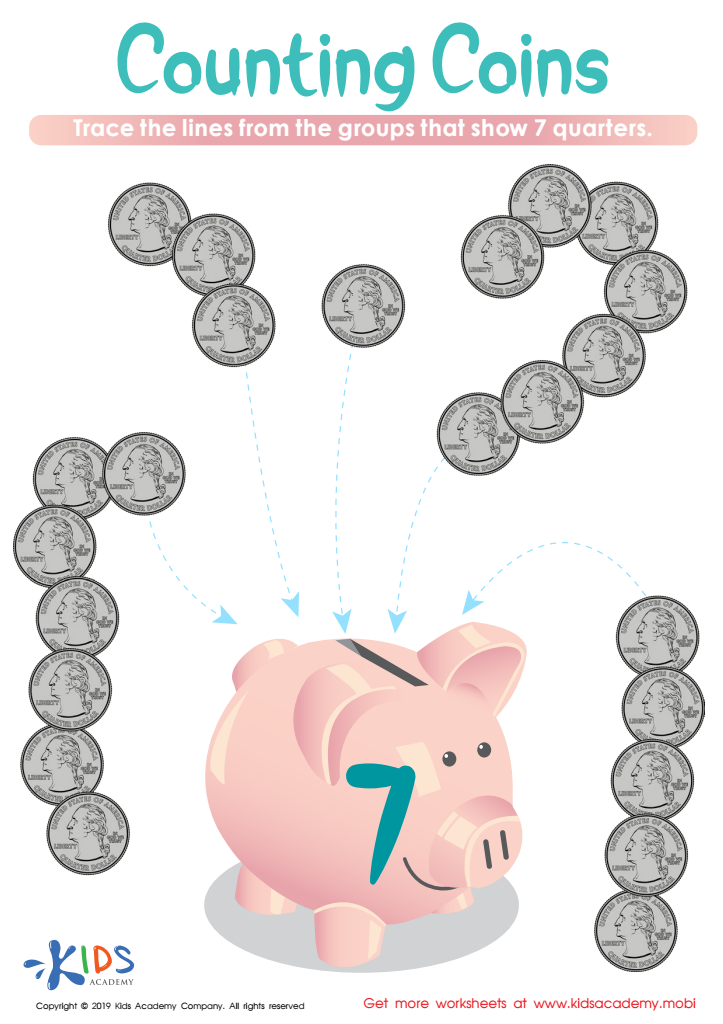
Counting Coins Worksheet
 Assign to My Students
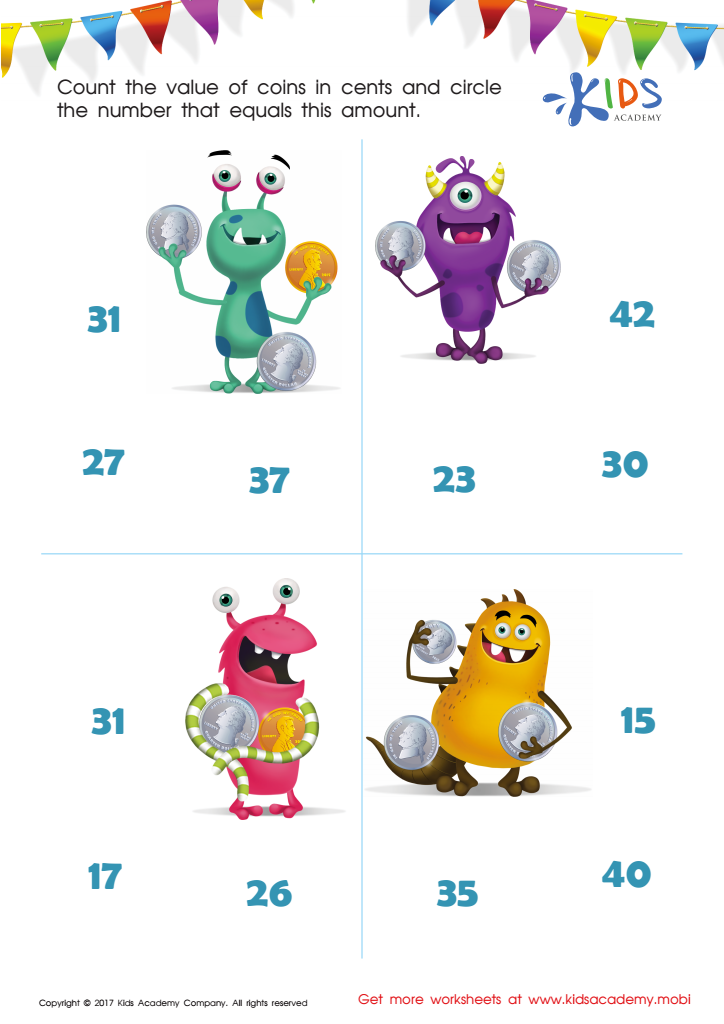
How Many Coins Money Worksheet
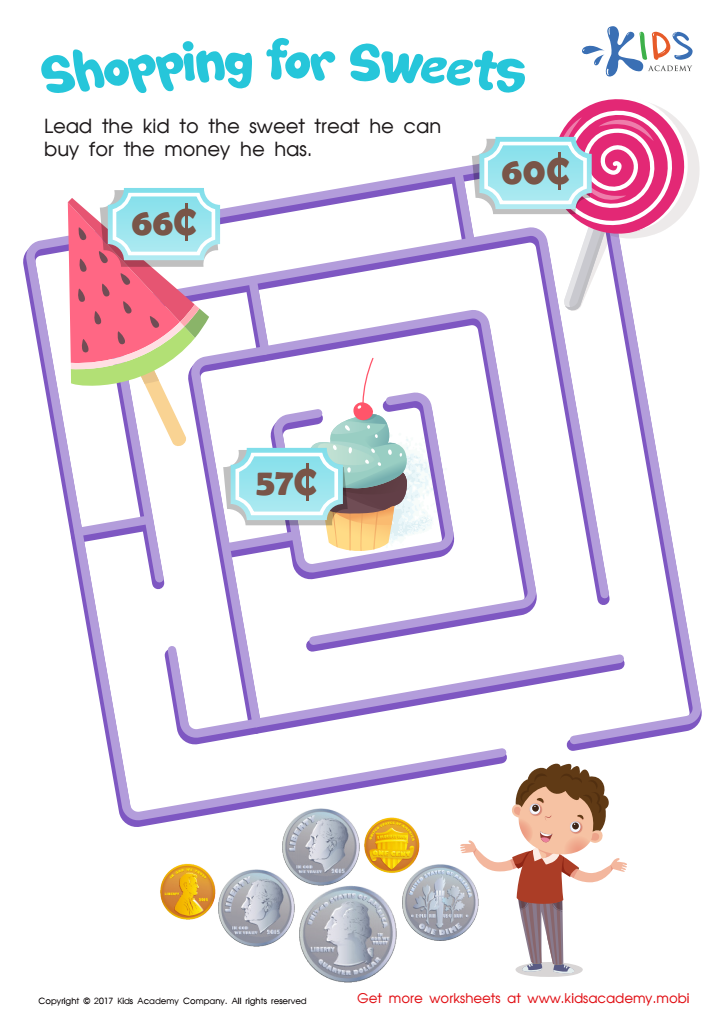
Shopping for Sweets Worksheet






.jpg)

Parents and teachers should prioritize teaching addition skills with money to children aged 4-9 because it lays a crucial foundation for both academic success and practical life skills. At this young age, children's brains are exceptionally receptive to learning basic math concepts that will support further mathematical understanding. Learning to add with money not only reinforces number recognition and simple arithmetic but also introduces essential financial literacy concepts early on.
Incorporating money into addition lessons makes math tangible and relatable. When children grasp the concept of handling money—something they see and use every day—they're more engaged and motivated to practice. This real-world application helps in solidifying abstract concepts, making it easier for children to understand and retain information.
Moreover, teaching addition through money management fosters important life skills. Children learn the value of different coins and bills, understand that money is finite, and begin to comprehend basic principles of saving and spending. These lessons encourage responsible financial behavior from a young age.
By instilling these skills early, parents and teachers help build a confident mathematical foundation and a practical understanding of money. This not only aids in academic success but also equips children with the tools they need to navigate everyday life adeptly.








