Basic geometry Geometry Worksheets for Ages 4-9
3 filtered results
-
From - To
Discover our engaging Basic Geometry Worksheets, designed for children ages 4-9. These educational resources foster early math skills, emphasizing fundamental geometric concepts. Kids will explore shapes, patterns, and symmetry through interactive activities and vibrant illustrations. Our worksheets are perfect for at-home learning, homeschooling, or classroom use, and cater to various learning styles. With our easy-to-follow instructions, young learners will develop essential geometry skills while having fun. Empower your child’s mathematical foundation by incorporating these dynamic worksheets into their daily routine. Visit Kids Academy to access our complete collection and begin your child’s geometric journey today!
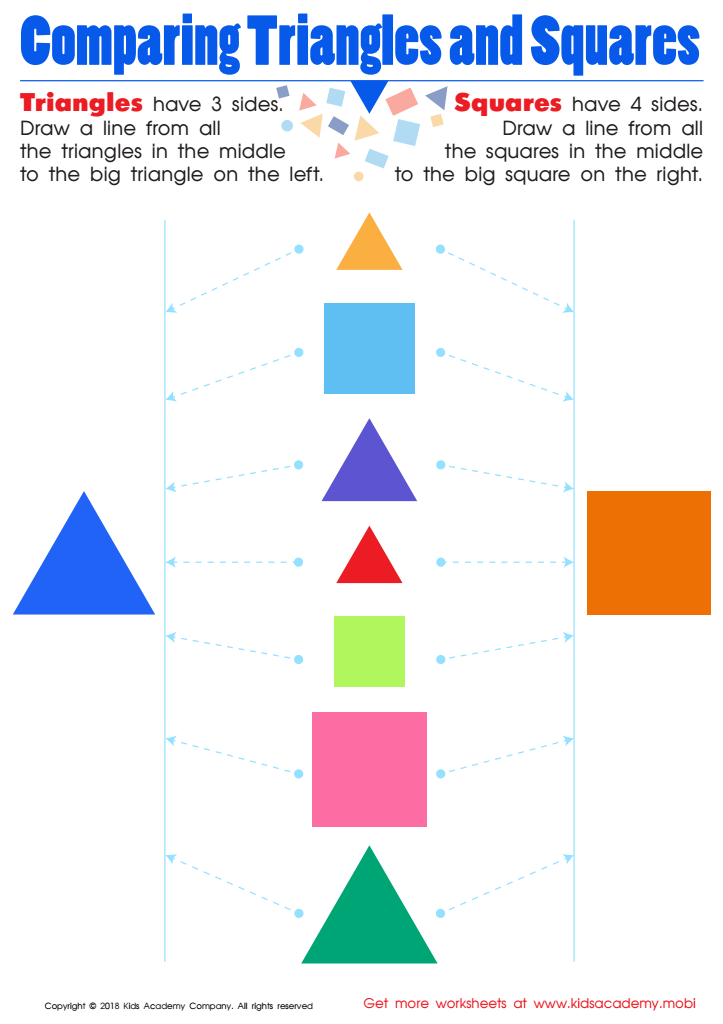
Comparing Triangles Squares Worksheet
 Assign to My Students











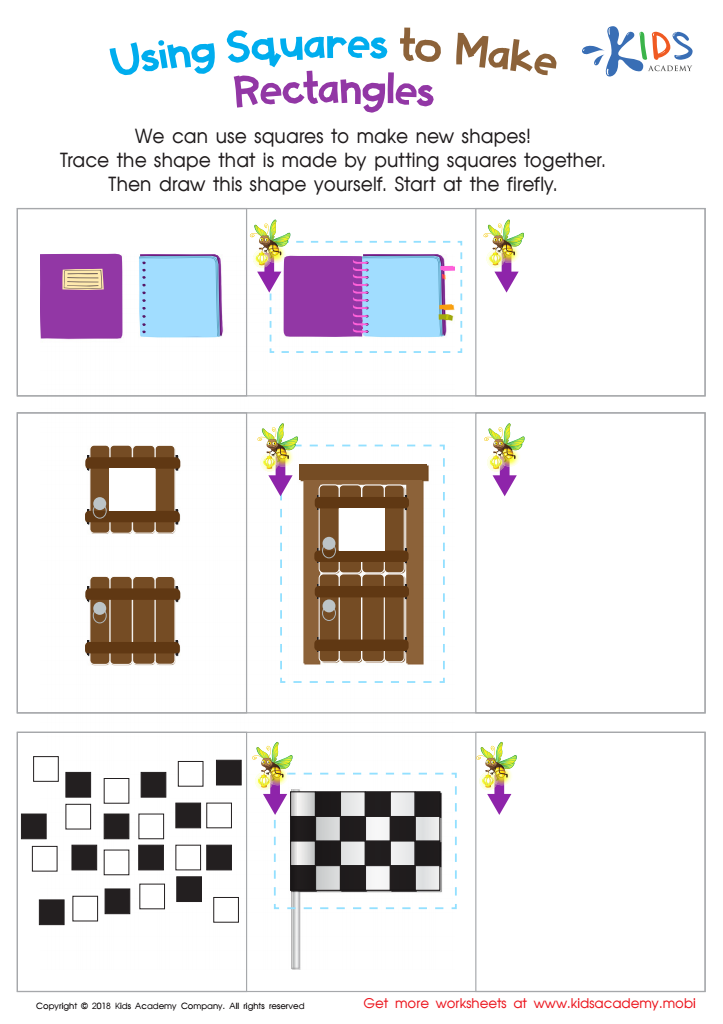
Using Squares to Make Rectangles Worksheet
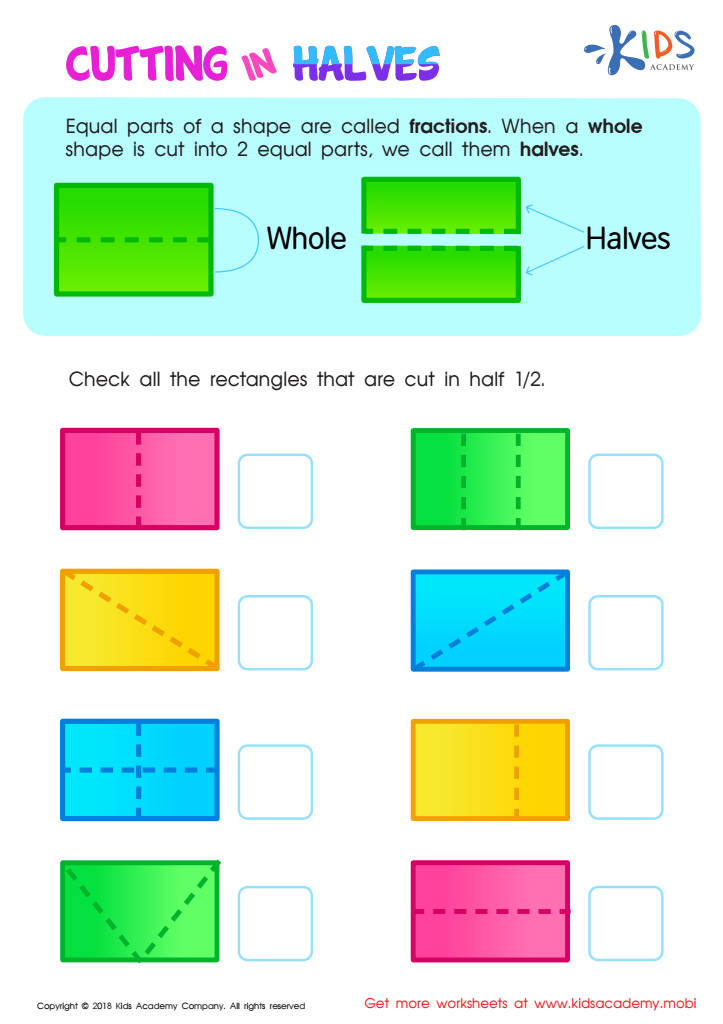
Cutting in Halves Worksheet








Parents and teachers should prioritize basic geometry for children aged 4-9, as it is foundational for various cognitive and academic skills. Geometry teaches spatial awareness, which is crucial for understanding the relationships between objects and navigating the world. Recognizing shapes, sizes, and patterns aids in the development of critical thinking and problem-solving abilities. These skills translate well beyond math, influencing other subjects such as science, art, and physical education.
Early exposure to geometry also strengthens visual-spatial skills, benefitting reading and writing. For instance, understanding shapes improves handwriting as children discern different letters and numbers based on their geometric properties. Moreover, exploring symmetry and patterns lays groundwork for algebraic thinking, thus providing a smooth transition to more complex mathematical concepts.
Engaging with geometric ideas through playful, hands-on activities like building blocks, drawing, or puzzle-solving captures children's natural curiosity and makes learning enjoyable. This positive experience builds confidence and fosters a lifelong interest in mathematics and learning in general.
Ultimately, a strong foundation in basic geometry equips children with essential skills that support academic performance and everyday life tasks, contributing to well-rounded intellectual development. Therefore, integrating basic geometry into early education is both beneficial and essential.








