Fraction comparison Geometry Worksheets for Ages 4-9
4 filtered results
-
From - To
Discover our engaging Fraction Comparison Geometry Worksheets designed for children ages 4 to 9! These worksheets provide a fun and interactive way for young learners to grasp fundamental concepts of fractions and geometry. Our carefully crafted activities encourage children to compare different fractions through visuals and hands-on exercises, making learning enjoyable. Ideal for home or classroom use, each worksheet promotes critical thinking and problem-solving skills while reinforcing essential math foundations. With colorful illustrations and age-appropriate challenges, kids will develop confidence in their mathematical abilities. Explore the world of fractions and geometry today with our enriching educational resources!
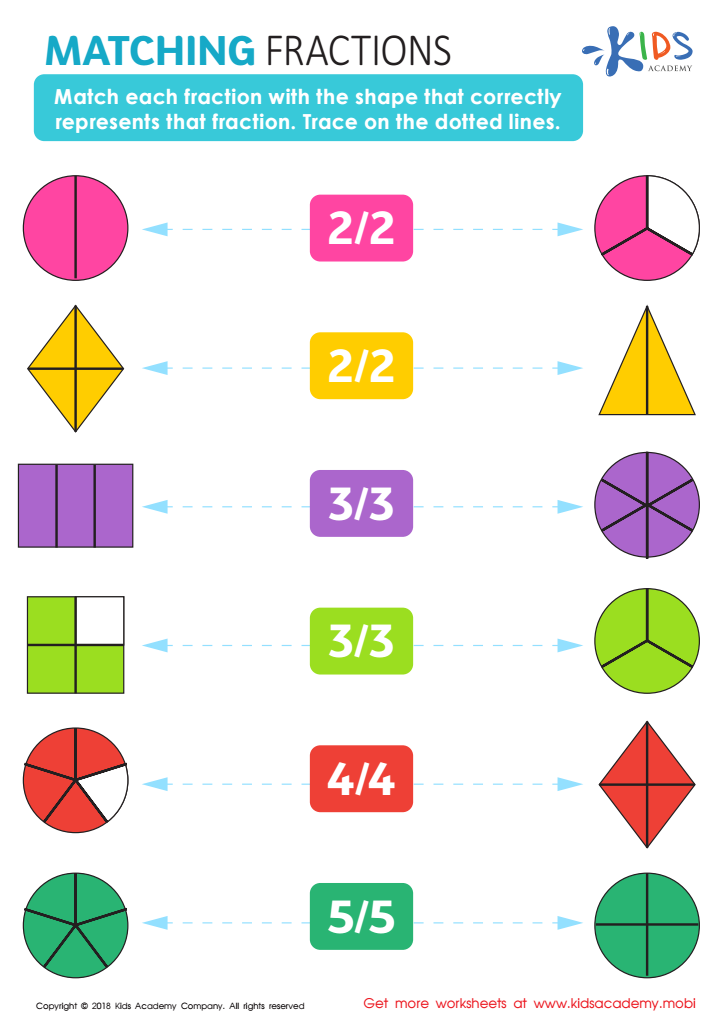
Matching Fractions Worksheet
 Assign to My Students











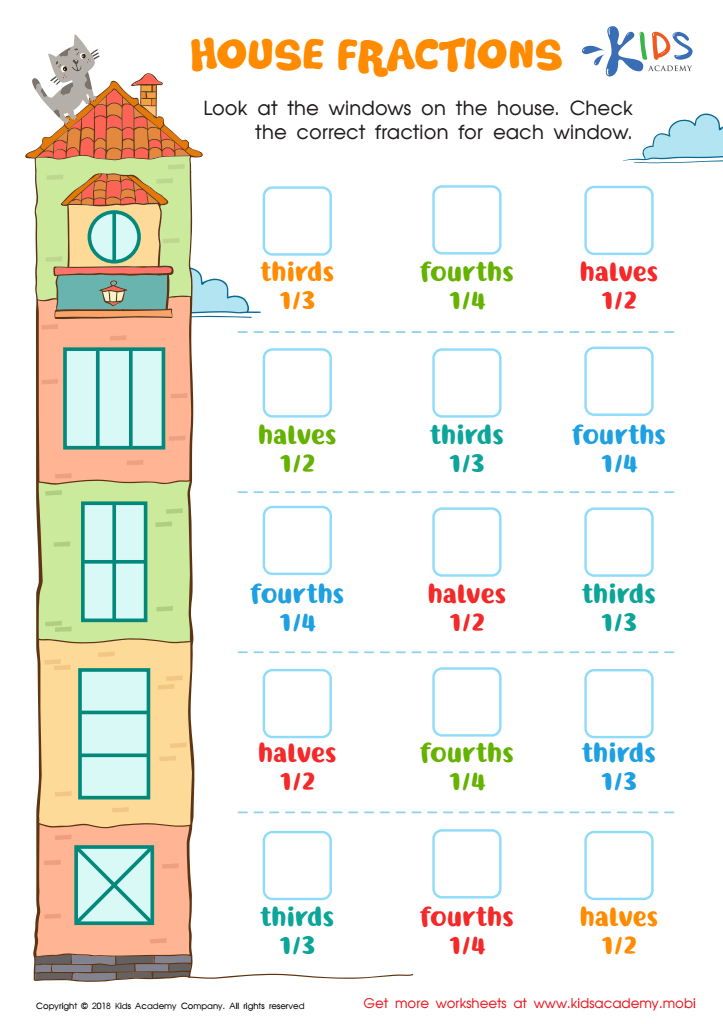
House Fractions Worksheet
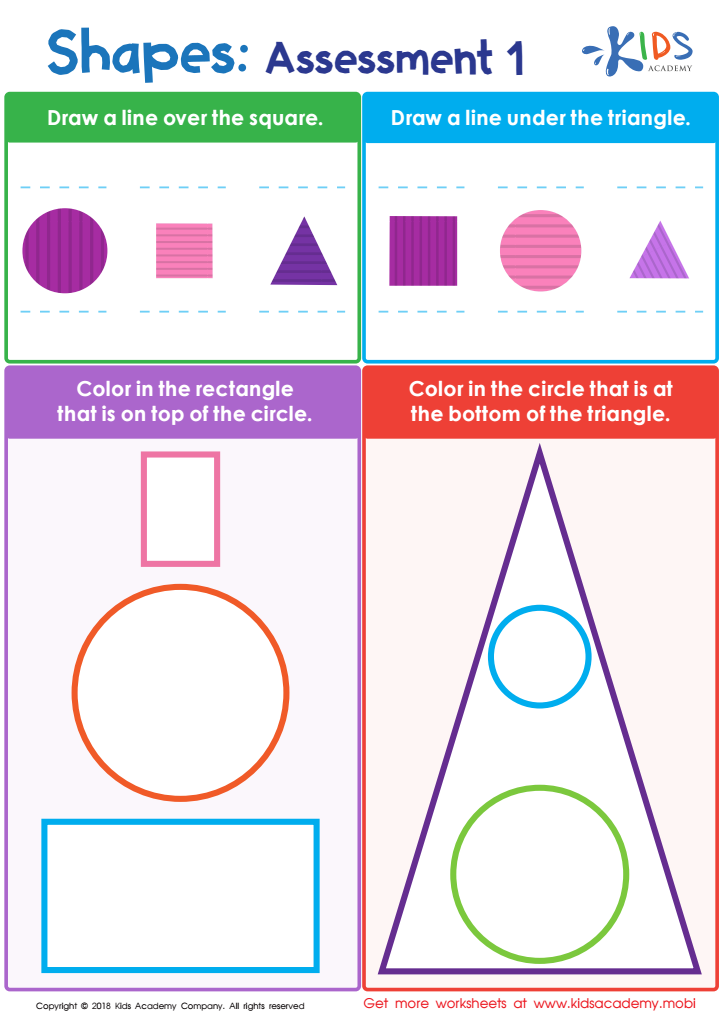
Shapes: Assessment 1 Worksheet
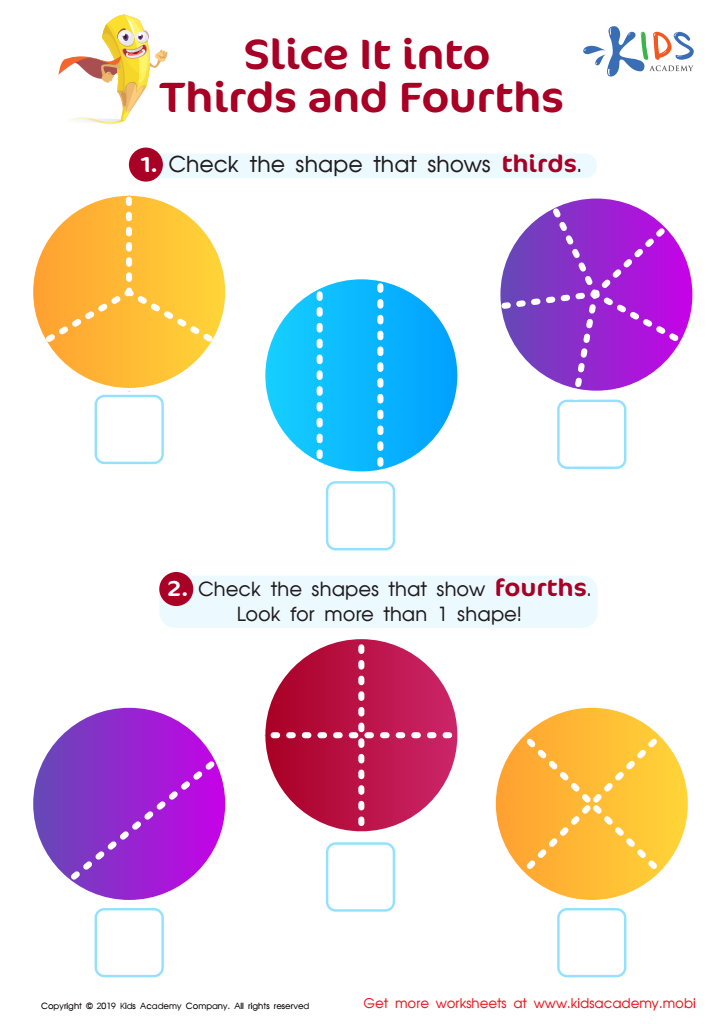
Slice in Thirds Fourths Worksheet








Understanding fraction comparison and geometry in early childhood education, specifically for children aged 4-9, is crucial for several reasons. Firstly, grasping these foundational concepts enhances mathematical literacy, enabling children to build a solid groundwork for more advanced topics later. Fraction comparison teaches children about parts of a whole, promoting critical thinking as they learn to compare, contrast, and understand relative sizes. This skill transcends math; it encourages analytical thinking that is valuable in everyday decision-making.
Furthermore, geometry fosters spatial awareness and cognitive skills, which are essential for problem-solving across various disciplines. It helps children understand shapes, sizes, and the relationships between objects, nurturing creativity and imagination. Engaging children in hands-on activities, such as using blocks to explore geometric shapes or pizza slices for fractions, makes learning interactive and enjoyable.
Moreover, these concepts support the development of reasoning skills, essential for fostering resilience and persistence in learning. Educators and parents who emphasize the importance of these areas equip children with the tools to tackle complex problems confidently. Building a strong foundation in fraction comparison and geometry not only promotes academic success but also instills a lifelong love of learning in young learners.








