Spatial reasoning Geometry Worksheets for Ages 4-9
5 filtered results
-
From - To
Enhance your child’s cognitive development with our engaging Spatial Reasoning Geometry Worksheets designed for kids ages 4-9. These worksheets from Kids Academy improve crucial skills like problem-solving, critical thinking, and spatial awareness through fun, interactive activities. Tailored to capture children's interest, our worksheets simplify complex concepts, allowing youngsters to understand shapes, patterns, and spatial relationships with ease. Perfect for both classroom and home use, these worksheets help set a strong foundation for future STEM learning. Ignite your child's passion for math by exploring our collection of worksheets that make learning geometry an exciting adventure!
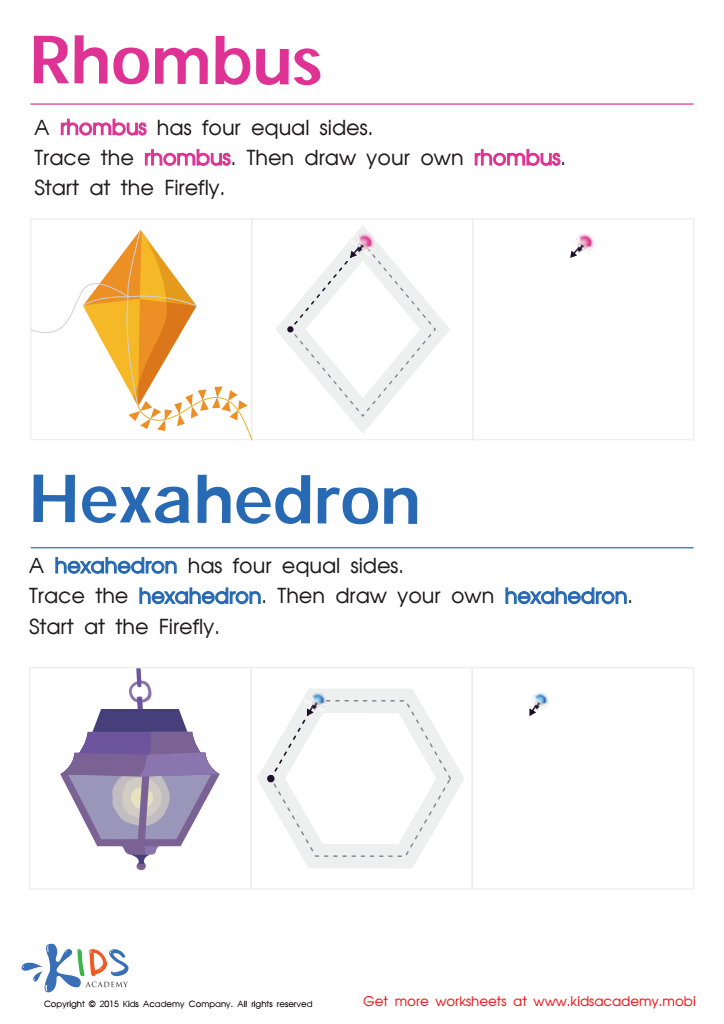
Draw a Rhombus And a Hexahedron Printable
 Assign to My Students











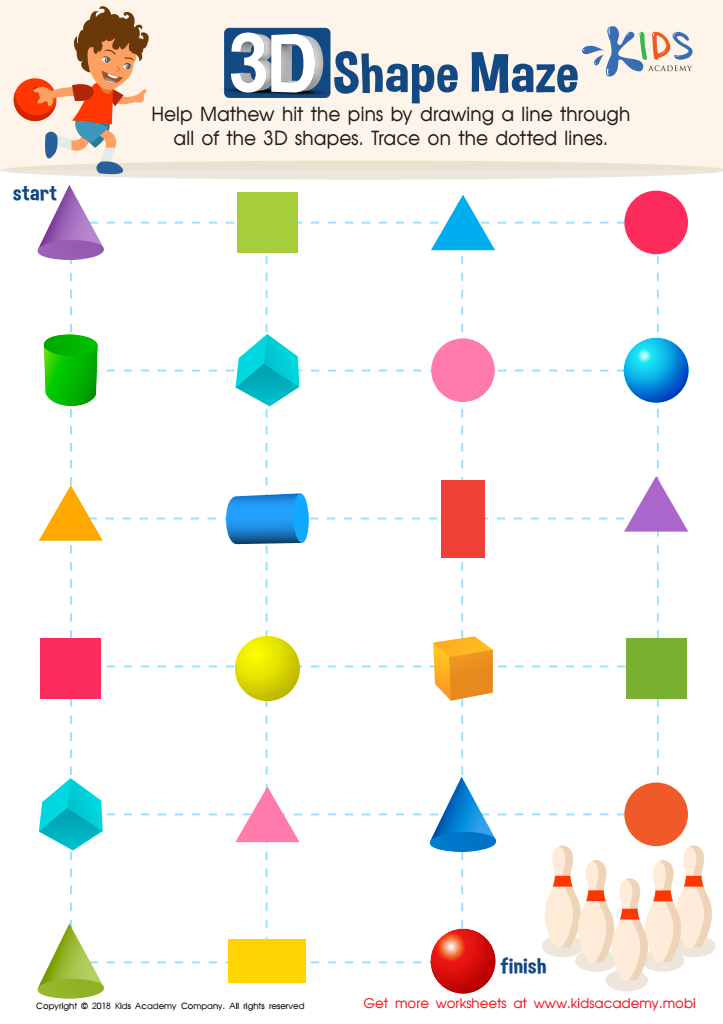
Shapes Maze Geometry Worksheet
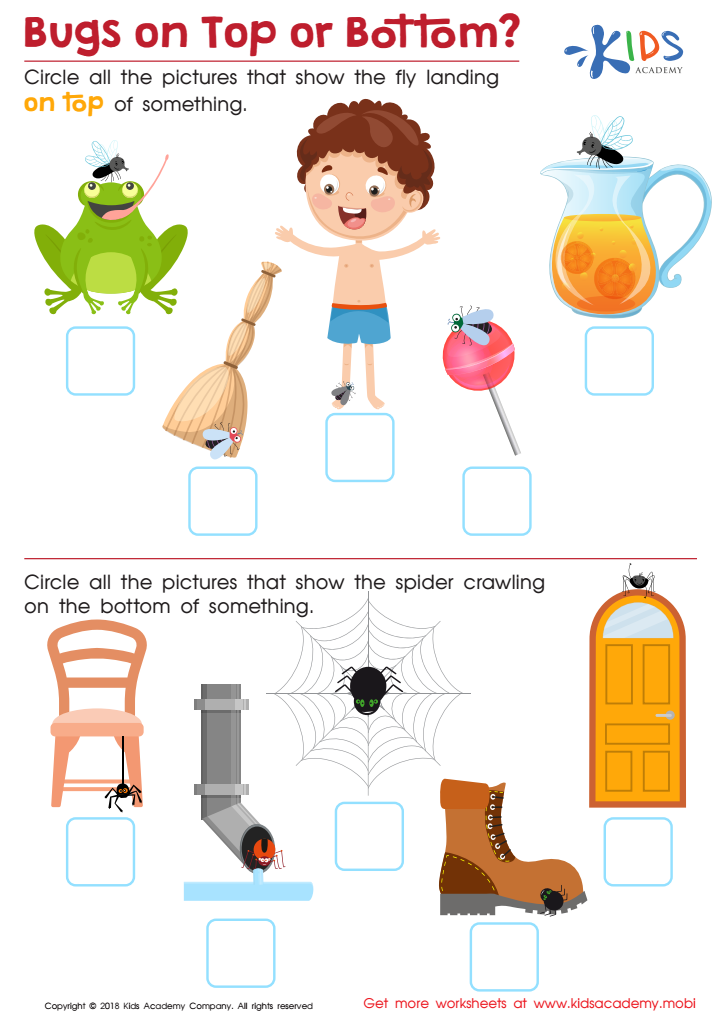
Bugs on Top or Bottom? Worksheet
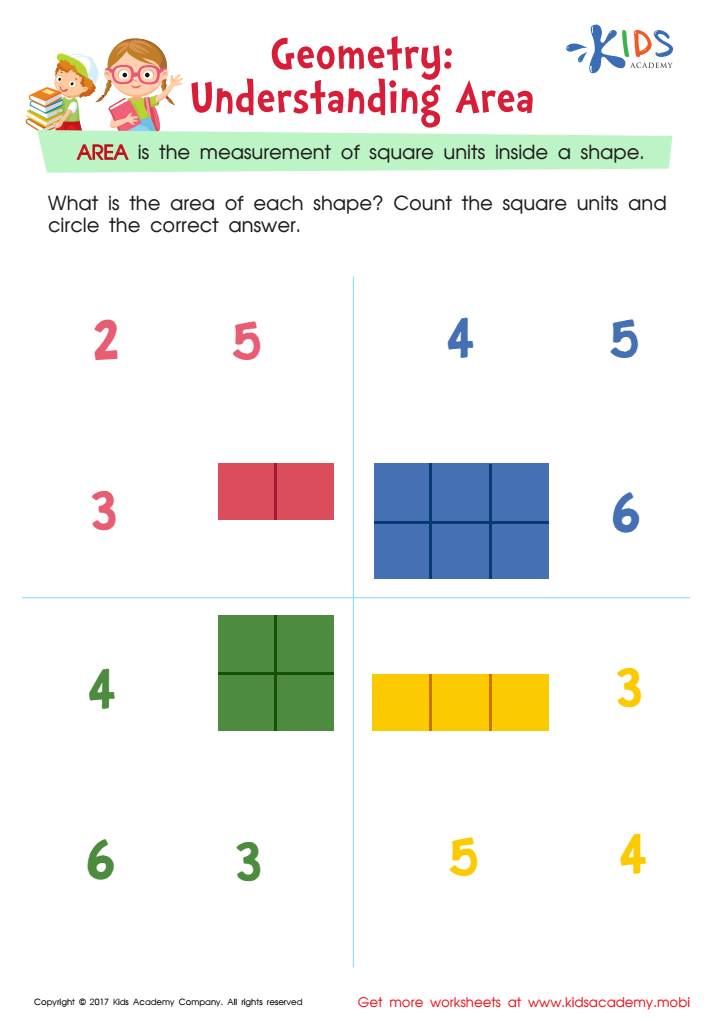
Understanding Area Worksheet
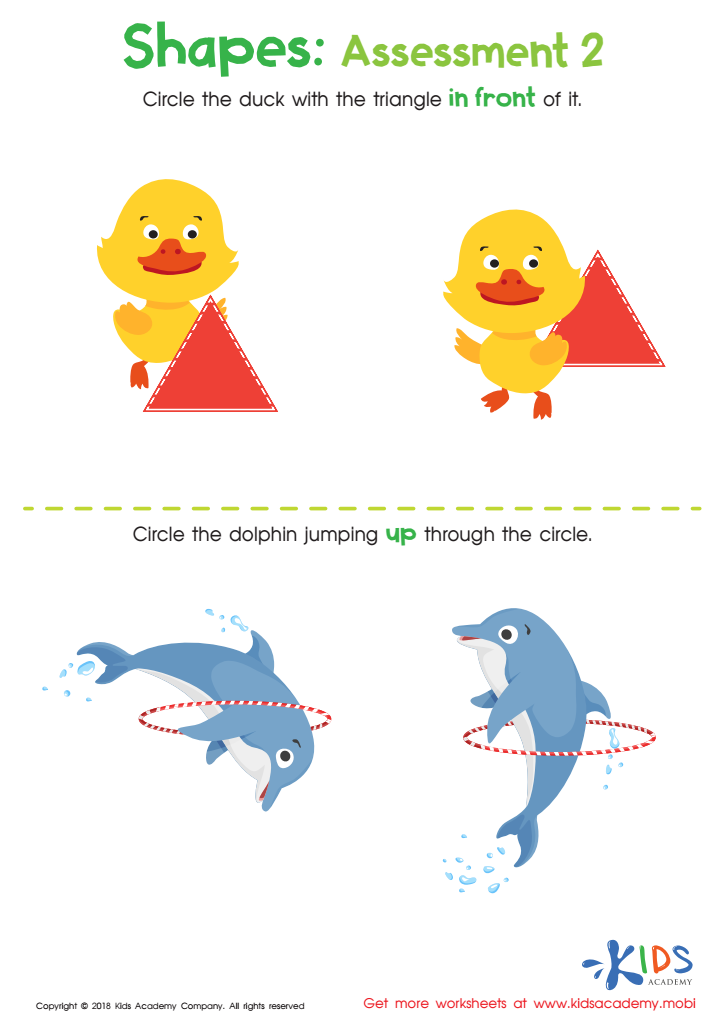
Geometry – Assessment 2 Worksheet








Spatial reasoning and geometry are foundational skills that significantly impact a child's cognitive development, problem-solving abilities, and success in STEM (Science, Technology, Engineering, and Mathematics) fields. For children aged 4-9, engaging in spatial reasoning activities helps them understand and manipulate shapes and spaces, which is essential for later mathematical learning.
Parents and teachers should care about fostering these skills early because research shows that strong spatial reasoning ability is linked to higher achievement in mathematics and science. Engaging young children in activities like puzzle-solving, building with blocks, and drawing shapes hones their ability to visualize and mentally rotate objects, skills crucial for subjects such as geometry, physics, and engineering.
Moreover, spatial reasoning supports everyday tasks and enhances critical thinking. Children learn to navigate their environment more effectively, understand directions, and improve their understanding of the relationship between objects. When spatial skills are nurtured together with other skills like literacy and numeracy, children develop a well-rounded intellectual foundation.
Incorporating spatial reasoning into early childhood education can also make learning more engaging. Activities that develop spatial skills are often hands-on and play-based, capturing children's interest and fostering a love of learning. Thus, parents and teachers who prioritize spatial reasoning contribute to holistic, impactful early education.








