Analyzing data Numbers Worksheets for Ages 4-9
3 filtered results
-
From - To
Welcome to our "Analyzing Data Numbers Worksheets for Ages 4-9!" Designed to spark curiosity and enhance critical thinking, these engaging worksheets introduce young learners to the basics of data analysis through fun, age-appropriate activities. Children will explore concepts like sorting, counting, and interpreting simple graphs, allowing them to understand how to organize information in a meaningful way. Our carefully crafted worksheets promote essential math skills while encouraging creativity and exploration. Perfect for at-home learning or classroom use, these resources provide a solid foundation for future mathematical abilities. Start your child's journey to becoming a data detective today!
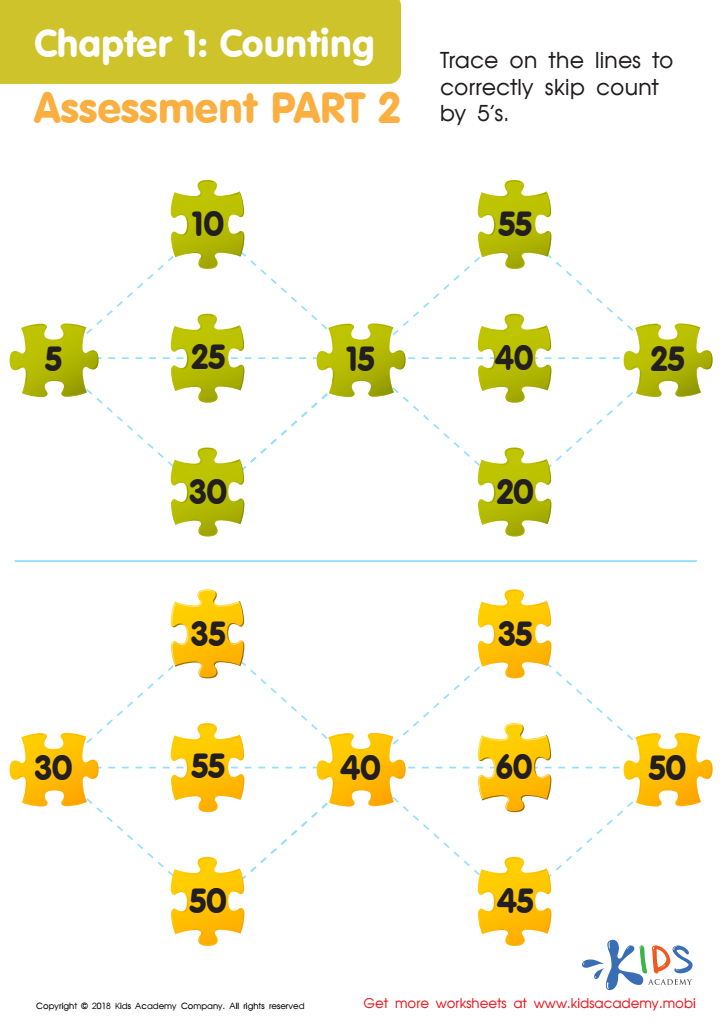
Counting: Assessment 2 Worksheet
 Assign to My Students
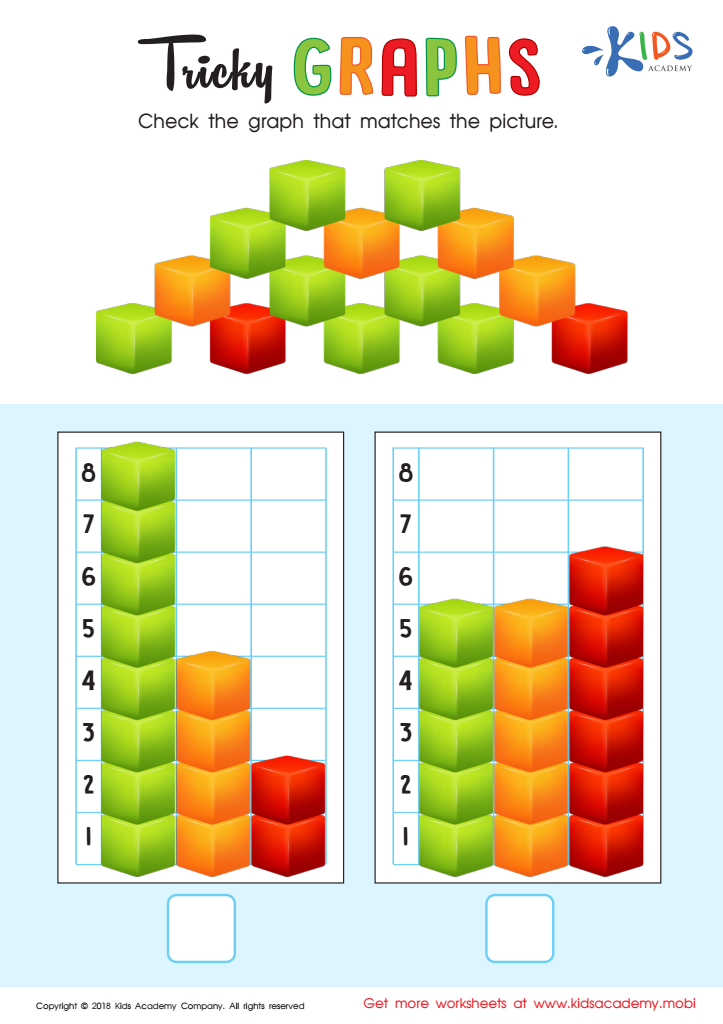
Tricky Graphs Worksheet
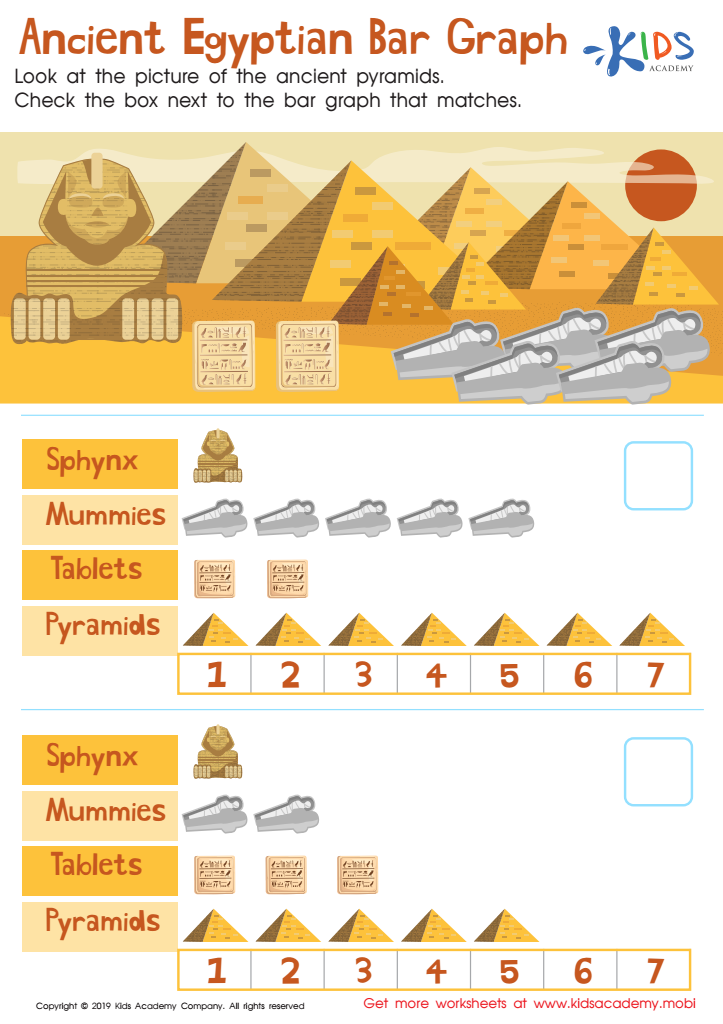
Egyptian Bar Graph Worksheet








Analyzing data numbers is essential for parents and teachers of children aged 4-9, as it fosters a deeper understanding of students' learning processes and development. First, data analysis helps identify individual learning strengths and challenges, enabling tailored support that meets each child's unique needs. For instance, teachers can recognize when a child excels in mathematics but struggles with reading, allowing for targeted intervention and more effective instruction.
Additionally, analyzing data helps track progress over time. By systematically reviewing assessments and observational data, educators and parents can celebrate growth, encourage persistence, and adjust educational approaches as necessary. This ongoing evaluation also fosters a growth mindset in children, as they learn to value effort and improvement based on real numbers.
Furthermore, collaborative data analysis promotes a partnership between home and school. When parents and teachers work together to evaluate a child's performance, it nurtures an environment of shared responsibility for that child's education.
In an increasingly data-driven world, equipping young learners with foundational numeracy skills not only supports their academic journey but also prepares them for future analytical challenges. Ultimately, prioritizing data analysis cultivates informed decision-making, leading to more enriching educational experiences for children.








