
Number representation Numbers Worksheets for Ages 4-9
3 filtered results
Difficulty Level
Grade
Age
-
From - To
Subject
Activity
Standards
Explore our engaging Number Representation Worksheets designed for children aged 4-9! These interactive worksheets help young learners grasp the concept of numbers through fun and educational activities. Kids will tackle various exercises that promote number recognition, comparison, and understanding of quantities. With colorful visuals and simple explanations, these worksheets make learning enjoyable and effective. Teachers and parents can easily access and print these resources to support their children’s math skills at home or in the classroom. Boost your child's confidence and foundation in mathematics with our comprehensive number representation worksheets today!
Favorites
With answer key
Interactive
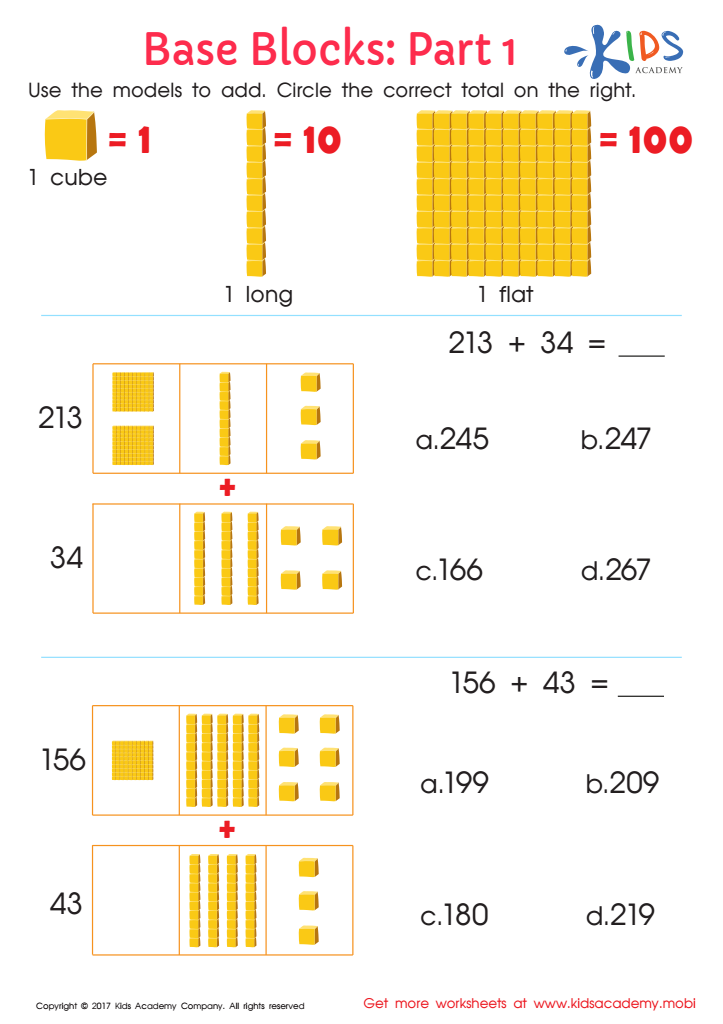
Base Ten Blocks Worksheet: Part 1
They promote numeracy and are a great substitute when kids don't have access to physical blocks.
 Assign to My Students
Base Ten Blocks Worksheet: Part 1
Worksheet
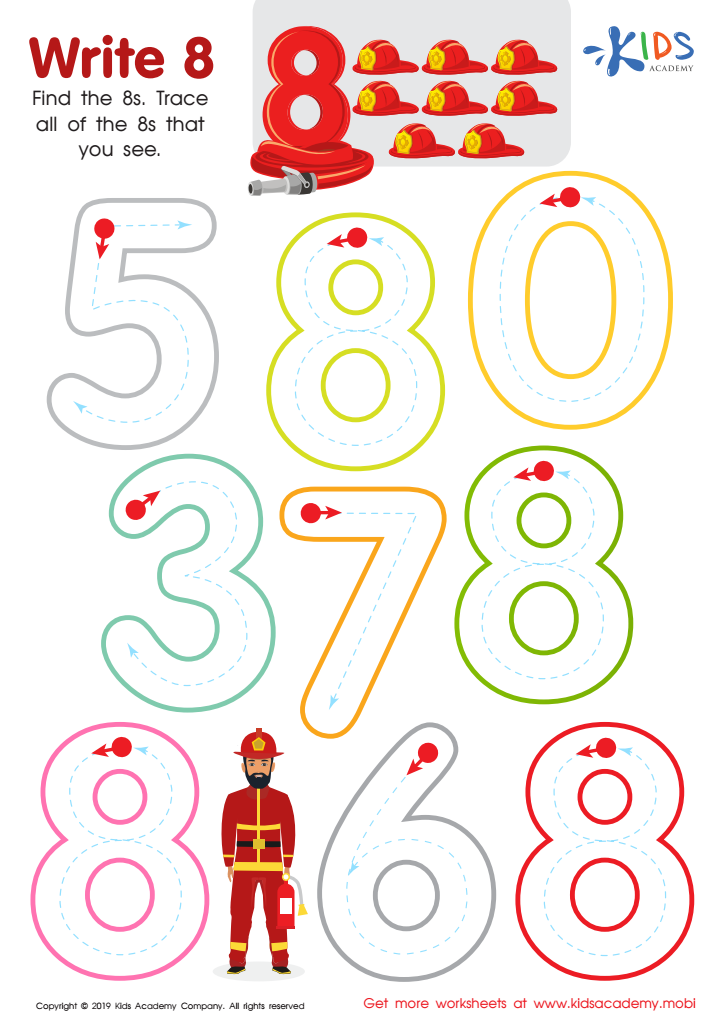
Write 8 Worksheet
Once your kids can count small numbers, it's time to learn how to write them. With your help and patience, they will soon be pros! This worksheet will make learning easier. Help them spot the 8s in the picture, then help them trace them.
Write 8 Worksheet
Worksheet
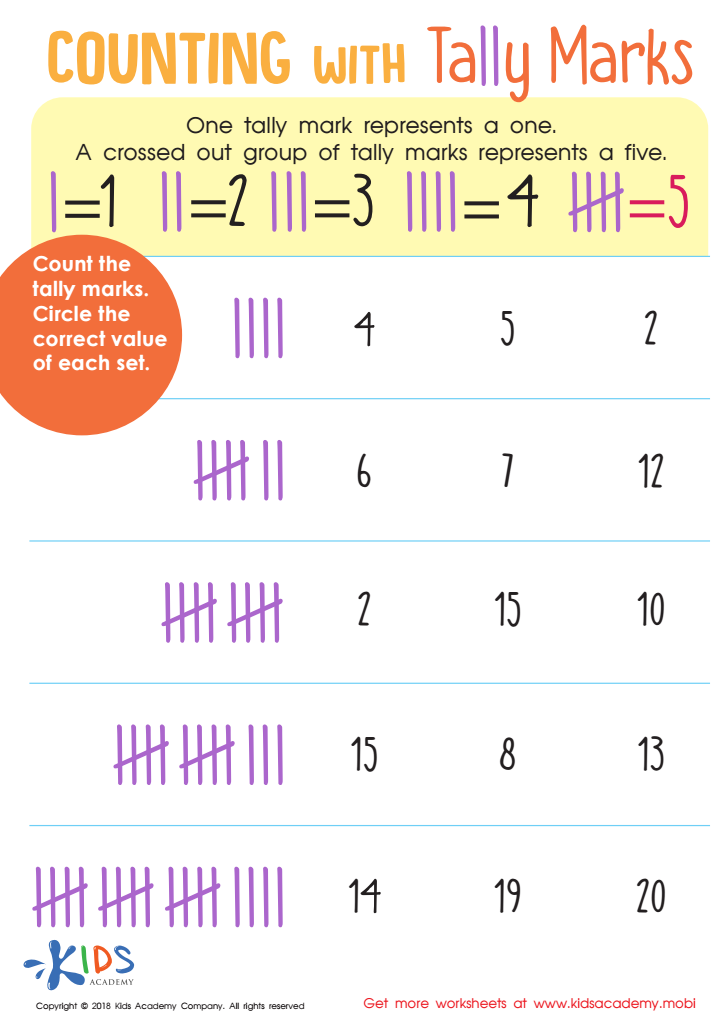
Counting with Tally Marks Worksheet
Young mathematicians can use tally marks to count on or back, and learn to give larger numbers value with efficiency. This PDF teaches them that each tally equals one and five can be grouped together to add/subtract quickly and accurately. They can then use tallies for math problems and scorekeeping during games with friends.
Counting with Tally Marks Worksheet
Worksheet
Join Kids Academy for Free
Who is primarily going to use this learning content?








Number representation is a fundamental concept for children aged 4-9 that significantly impacts their mathematical understanding and overall cognitive development. Parents and teachers should prioritize this skill because it lays the groundwork for future learning in mathematics. By helping children visualize numbers through various representations, such as counting objects, using fingers, or exploring number lines, we cultivate their ability to understand quantity and relationships.
This stage of learning encourages children to think critically and develop problem-solving skills, as they learn to see numbers not just as symbols but as representations of real-world quantities. It fosters number sense, which is crucial for all future mathematical concepts, including addition, subtraction, and even more complex operations in later grades.
Additionally, strong number representation skills boost a child's confidence in mathematics. When children feel secure in their understanding of numbers, they are more likely to engage actively in mathematical discussions and show enthusiasm for learning new concepts.
Finally, integrating engaging activities, such as games and hands-on activities, not only makes number representation fun but also enhances retention and understanding. For all these reasons, it is essential for parents and teachers to prioritize teaching effective number representation methods to young learners.








