Sorting skills Numbers Worksheets for Ages 4-9
5 filtered results
-
From - To
Enhance your child’s numerical abilities with our engaging "Sorting Skills Numbers Worksheets" designed for ages 4-9. Our expertly crafted worksheets help children develop fundamental math skills through fun and interactive activities. From identifying and comparing numbers to arranging them in the correct order, these worksheets cater to different learning stages, making them perfect for young learners. Boost your child’s confidence and proficiency in sorting numbers, preparing them for future mathematical success. Available for easy download, our worksheets are a valuable resource for both teachers and parents aiming to support their little ones in mastering essential number sorting skills.
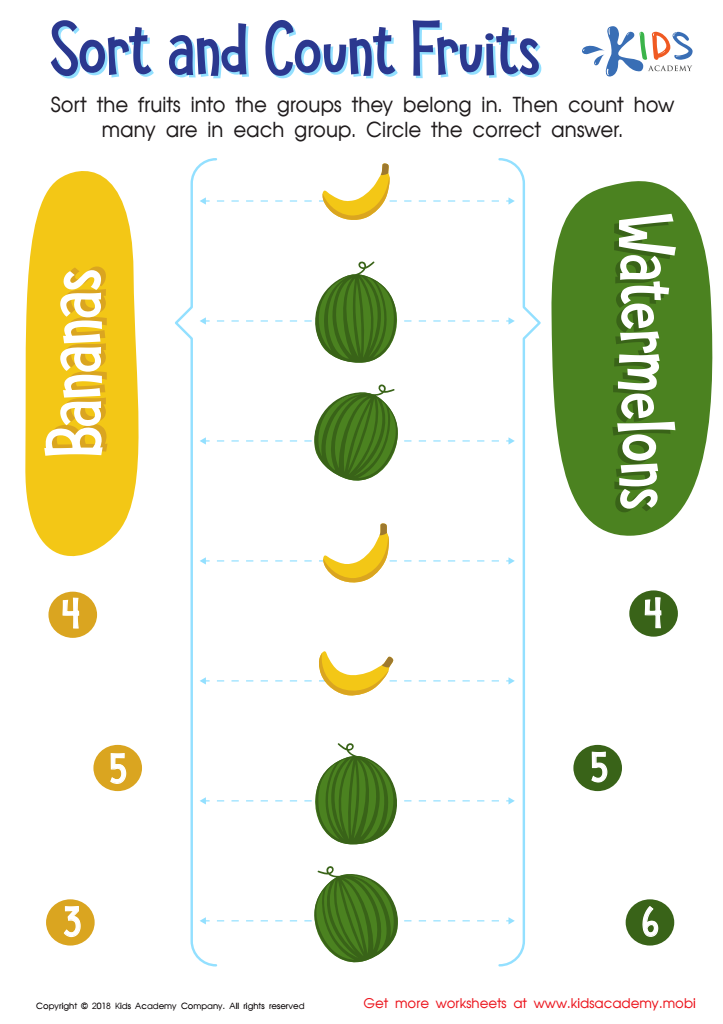
Sort and Count Fruits Worksheet
 Assign to My Students
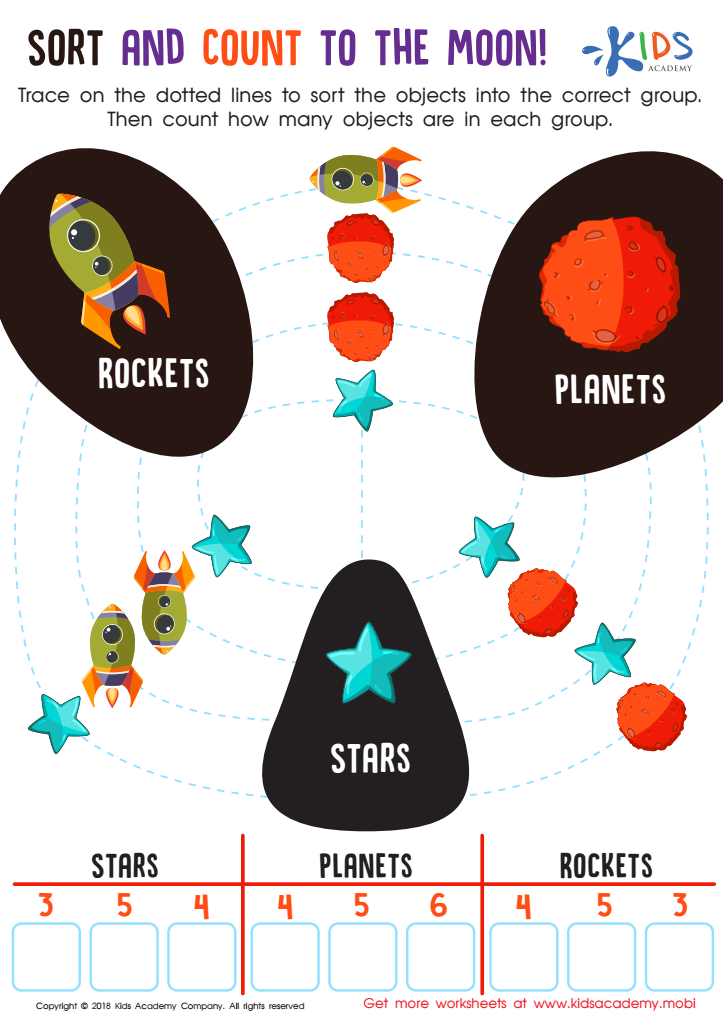
Sort and Count to the Moon Worksheet
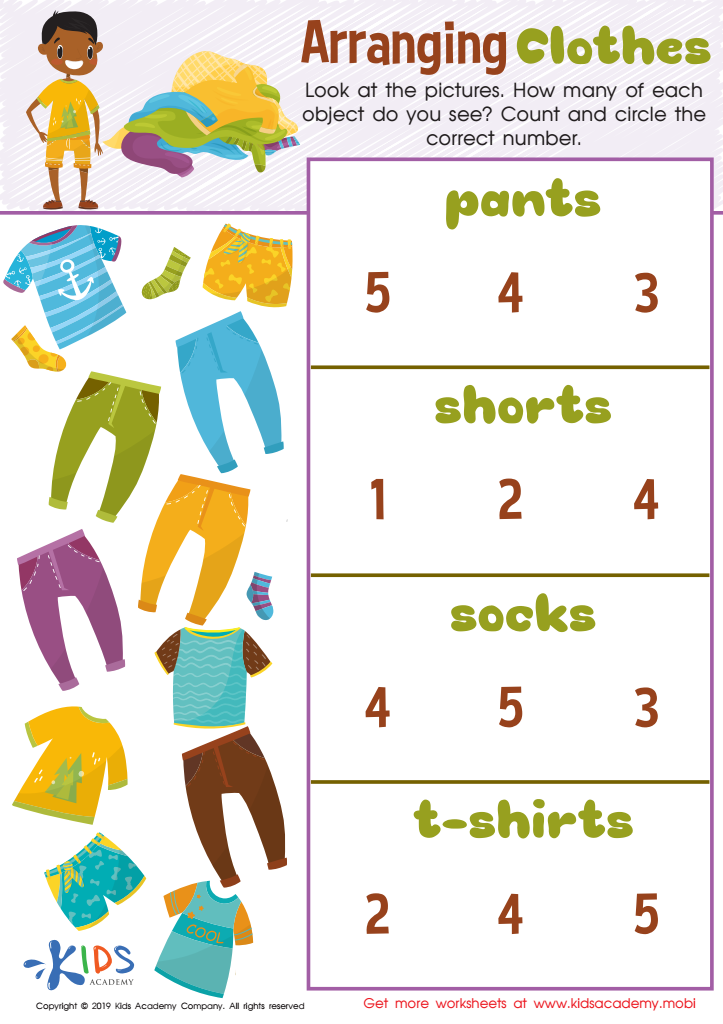
Arranging Clothes Worksheet
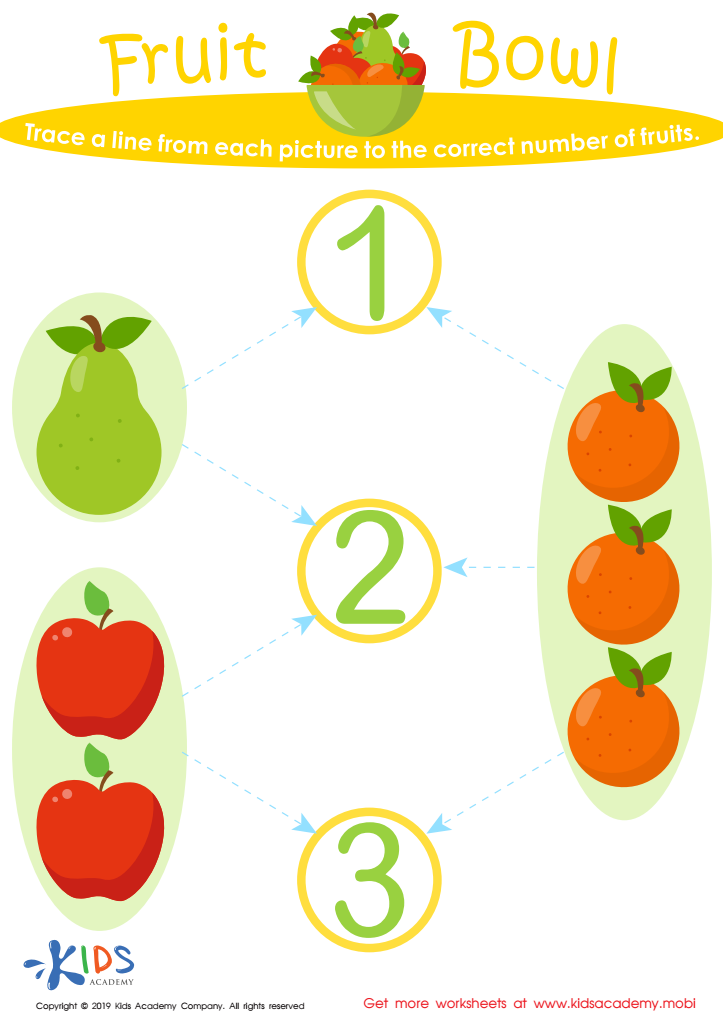
Fruit Bowl Worksheet
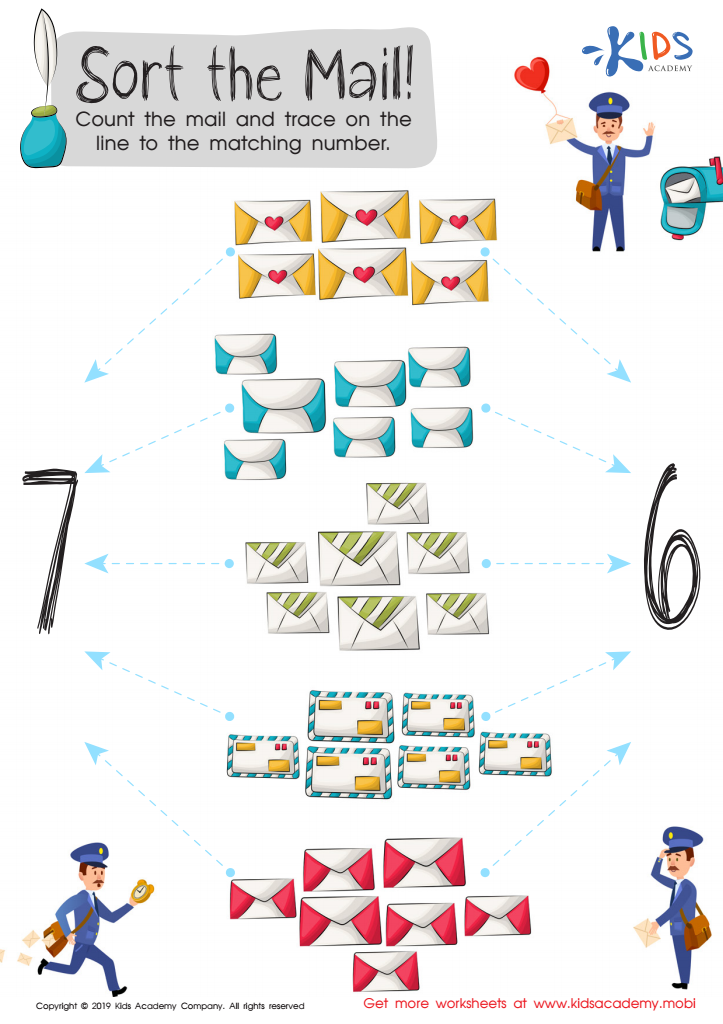
Sort the Mail Worksheet








Parents and teachers should care about sorting skills in numbers for children ages 4-9 because these foundational skills support cognitive, mathematical, and organizational development. At this age, sorting helps young learners recognize patterns, categorize objects, and understand the concept of order, which are essential building blocks for more advanced math concepts.
When children sort numbers, they begin to grasp the ideas of sequence (understanding what comes before or after a given number) and magnitude (understanding which numbers are larger or smaller). These activities also hone their ability to differentiate based on specific attributes, such as odd versus even numbers. Such cognitive exercises enhance critical thinking and problem-solving abilities, which are beneficial not only in math but across various subjects.
Involving kids in sorting activities stimulates their curiosity and engagement with the material. This makes learning about numbers and mathematics more enjoyable, setting a positive tone for future learning experiences. For teachers, sorting exercises can be a diagnostic tool to identify students who may need additional support or those who are ready to tackle more complex tasks.
Overall, nurturing sorting skills in early grades fosters a strong mathematical foundation, encourages logic and reasoning, and builds essential skills that contribute significantly to academic success and everyday decision-making.








