Analog Clock Understanding Math Worksheets for Ages 4-9
3 filtered results
-
From - To
Help your young learners master the concept of time with our engaging "Analog Clock Understanding Math Worksheets" designed for ages 4-9. Our carefully crafted worksheets provide a fun and interactive way for children to develop essential skills, including reading analog clocks, telling time, and understanding time intervals. Each activity is age-appropriate and designed to build confidence while enhancing critical thinking. These resources not only reinforce math skills but also help children grasp real-life applications of time management. Promote hands-on learning and spark a love for math with these delightful worksheets that make telling time an enjoyable experience for kids!
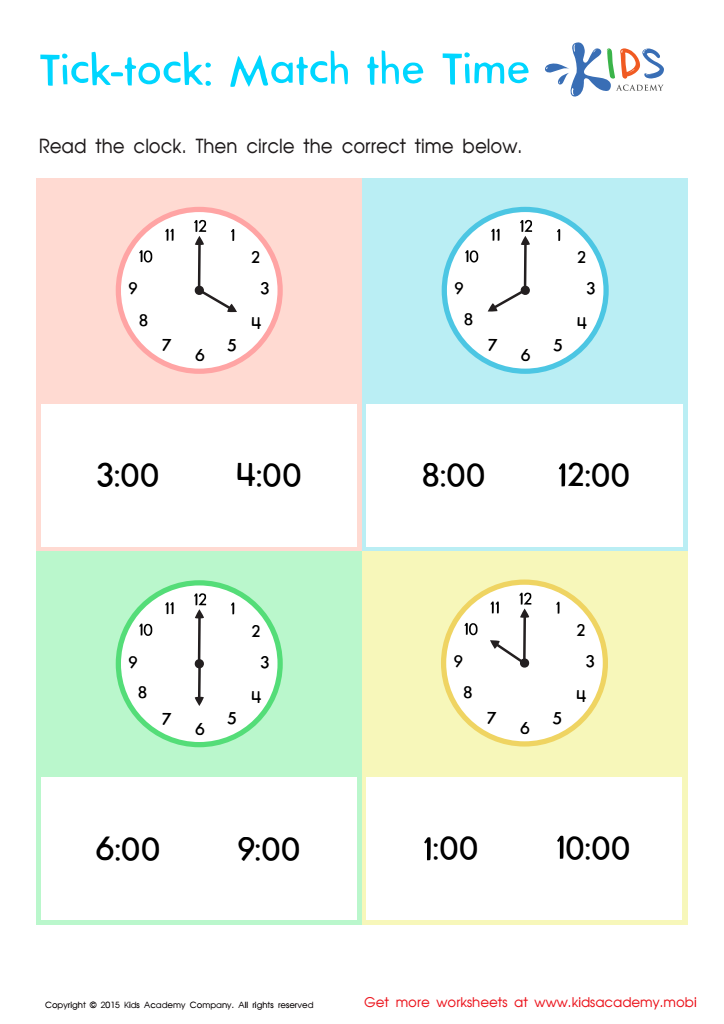
Telling The Time Worksheet: Part 4
 Assign to My Students
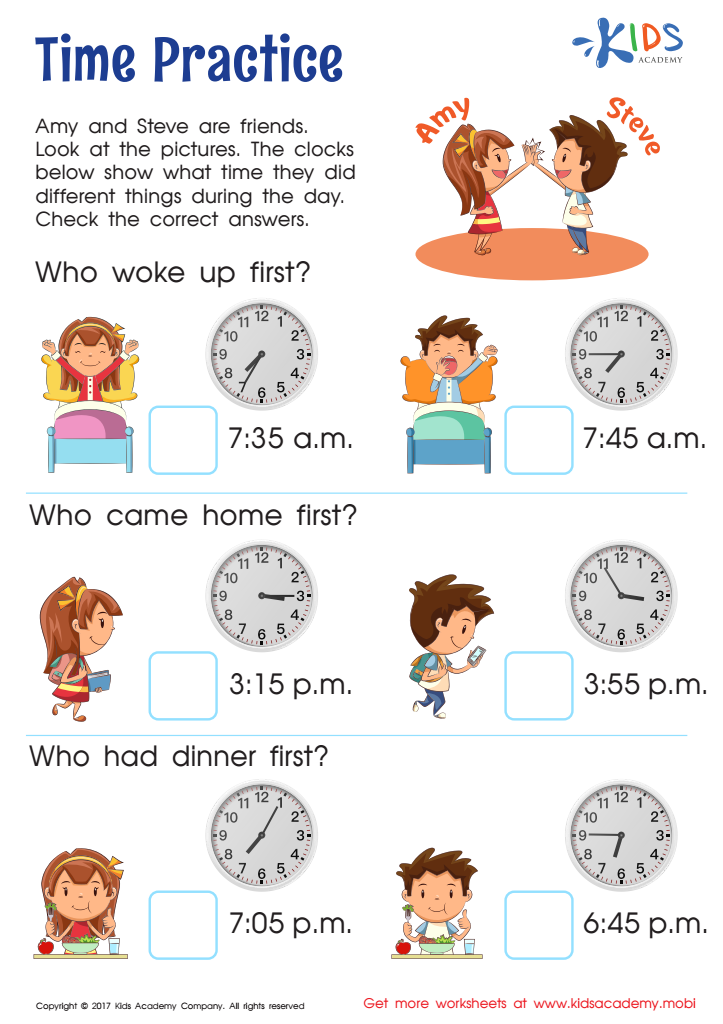
Time Practice Worksheet
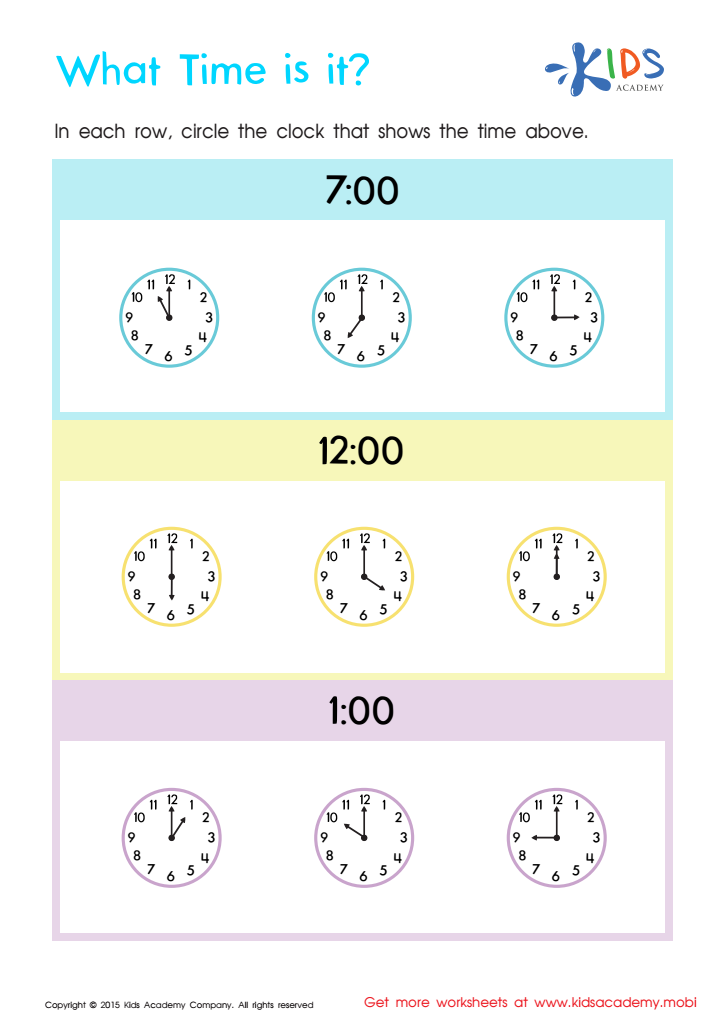
Telling The Time Worksheet: Part 3






Understanding how to read an analog clock is a vital skill that young children need for several reasons. First, grasping the concept of time goes beyond just knowing the hours and minutes; it enhances a child's ability to comprehend sequences and daily routines. By learning to read an analog clock, children develop spatial awareness and a fundamental sense of time that supports various math concepts, such as fractions and the division of time into parts, critical for higher-grade learning.
Moreover, analog clocks can foster independence in children, empowering them to manage their time effectively, a crucial skill for academic success and daily life. This understanding helps them plot their activities, such as dividing study time and playtime, fostering a sense of responsibility.
For teachers and parents, encouraging analog clock proficiency cultivates a richer educational environment. It promotes hands-on learning experiences, which can lead to deeper engagement in mathematics. Ultimately, focusing on analog clock understanding lays a strong foundation in time management and mathematical reasoning, setting children up for success in their educational journey and everyday life beyond the classroom.








