Applying math skills Math Worksheets for Ages 4-9
3 filtered results
-
From - To
Enhance your child's math skills with our engaging math worksheets designed specifically for children aged 4-9. At Kids Academy, we provide a variety of fun and educational activities to develop essential math competencies such as counting, addition, subtraction, and word problems. Our printable worksheets are crafted to reinforce students' confidence and proficiency in applying math skills in real-life scenarios. With colorful illustrations and step-by-step guidance, each exercise helps build a strong mathematical foundation while making learning enjoyable and interactive. Ignite your child's love for math today with Kids Academy's expertly designed resources.
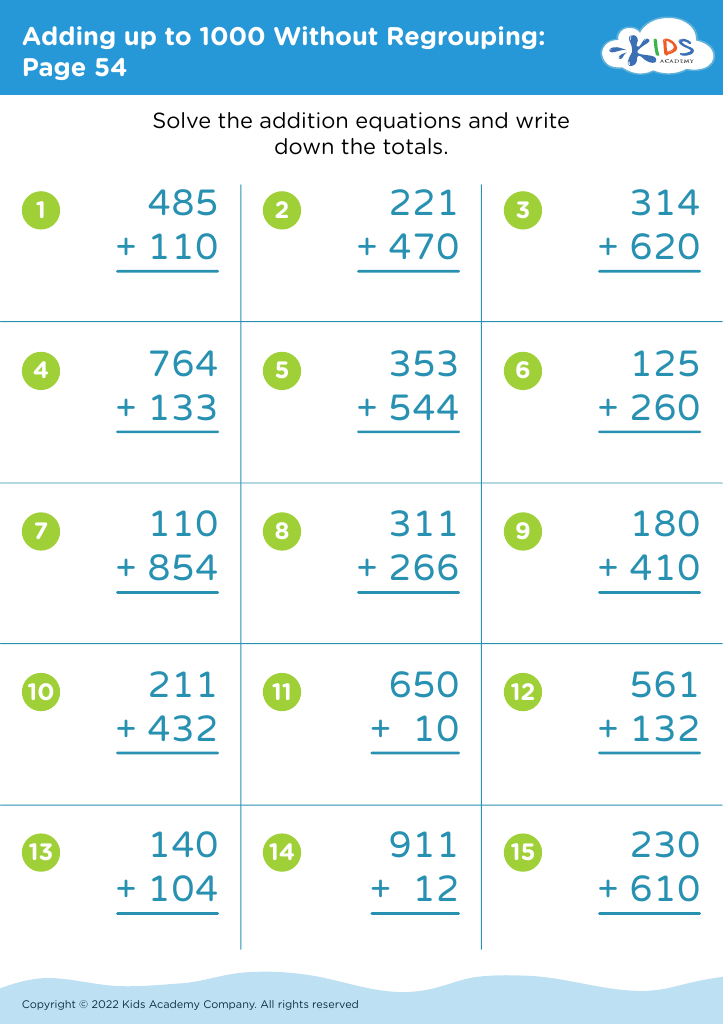
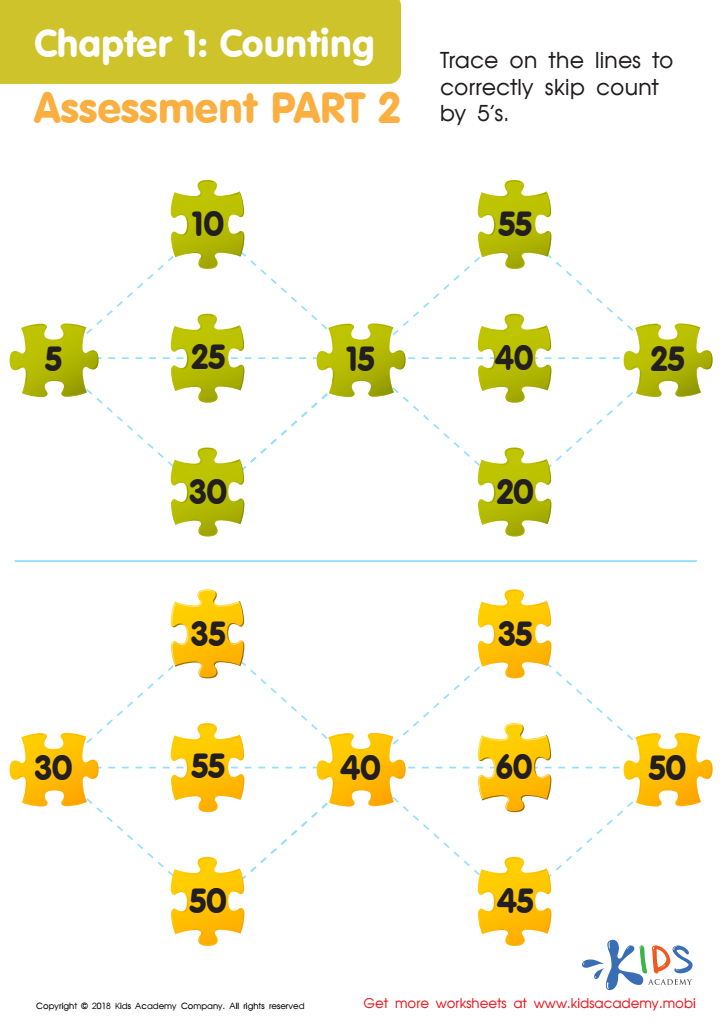
Counting: Assessment 2 Worksheet
 Assign to My Students
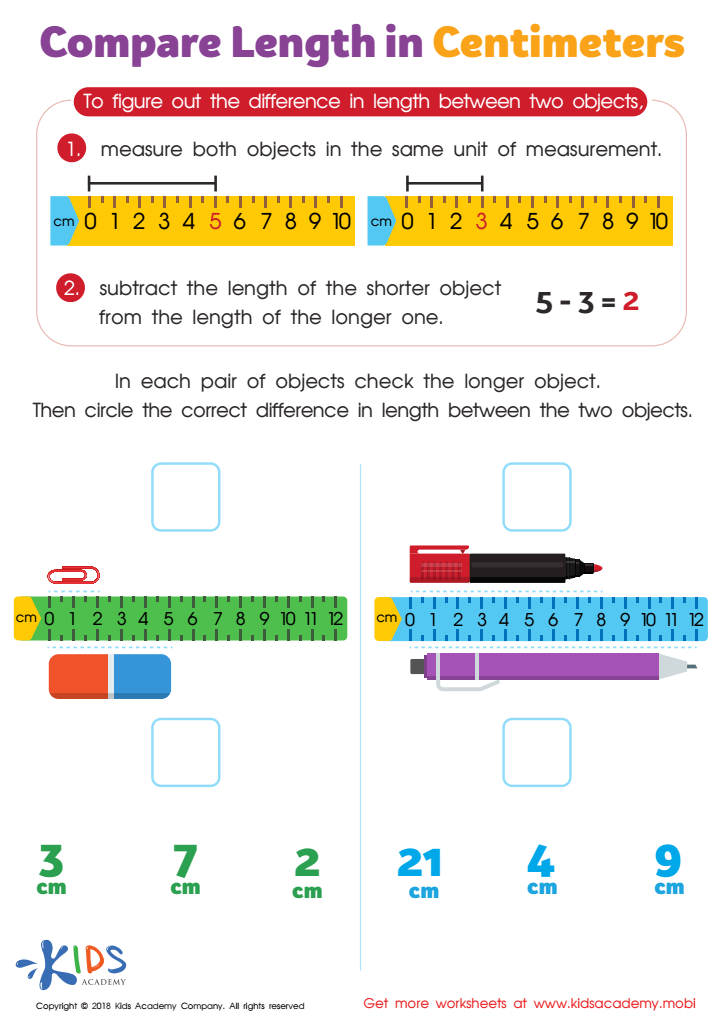
Compare Length in Centimeters Worksheet








Parents and teachers should prioritize the application of math skills for children ages 4-9 because this foundational period is crucial for cognitive development and future academic success. During these formative years, children are naturally curious and absorb information quickly. Introducing math concepts early on capitalizes on this development stage and establishes a solid mathematical foundation.
Math skills are not isolated to the subject itself; they enhance critical thinking, problem-solving abilities, and logical reasoning, which are applicable across various aspects of life and other academic disciplines. Understanding basic math promotes early numeracy, making complex concepts easier as the child progresses in school. Engaging young minds in counting, patterns, shapes, and basic arithmetic fosters analytical thinking and the ability to make connections between different pieces of information.
Moreover, early math skills build confidence. Children who grasp math concepts early feel more competent in the subject, reducing anxiety around math as they grow older. Mathematically competent children are better equipped for technological and scientific learning, crucial for thriving in a modern world increasingly driven by STEM fields.
Ultimately, empowering children with strong math skills at a young age cultivates a lifelong appreciation and understanding of math, opening up pathways to a broad range of career opportunities and enhancing overall life skills.








