
Color differentiation Math Worksheets for Ages 4-9
6 filtered results
Difficulty Level
Grade
Age
-
From - To
Subject
Activity
Standards
Enhance your child's learning experience with our engaging Color Differentiation Math Worksheets, designed for ages 4-9! These worksheets combine vibrant colors with fun math challenges, making math practice enjoyable and interactive. As children identify and differentiate colors, they will also develop essential math skills like counting, addition, and pattern recognition. Our thoughtfully crafted worksheets cater to various learning styles, encouraging creativity while reinforcing foundational concepts. Ideal for home or classroom use, these printables aim to boost confidence in young learners and create a solid math base. Explore our colorful collection today and watch your child's skills blossom!
Favorites
With answer key
Interactive
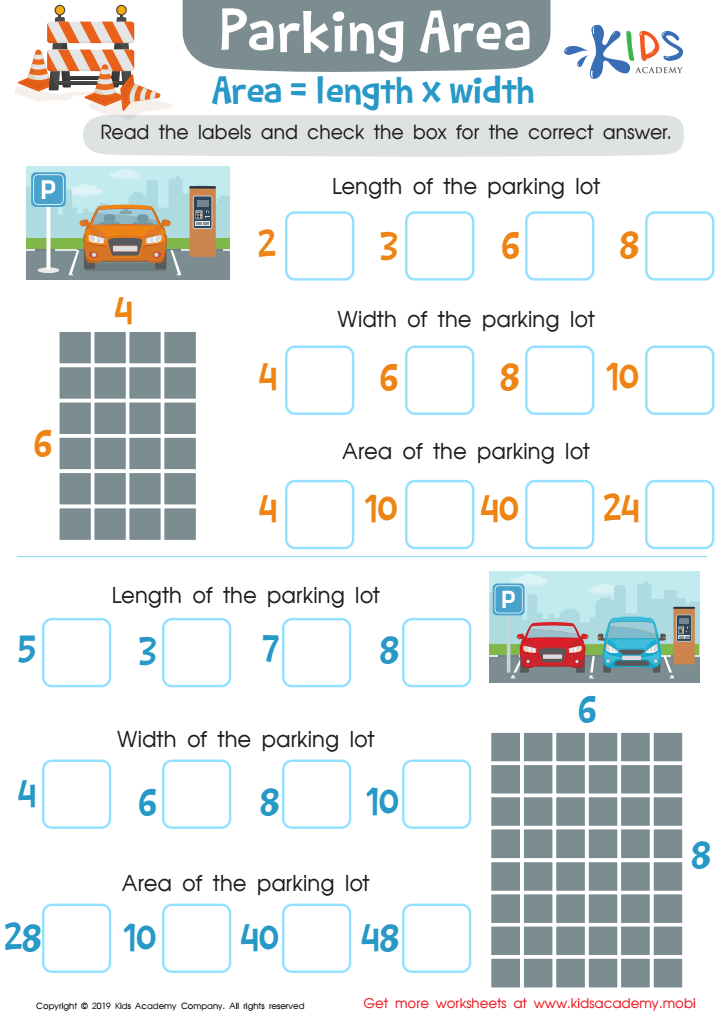
Parking Area Worksheet
Math may not be your child's favorite, but that doesn't mean they can't excel. Math can seem intimidating, but with practice, they can learn it's not so hard. In this worksheet, your kids will calculate the area of a parking lot, by adding length and width. Help them read the labels and select the correct answer.
 Assign to My Students
Parking Area Worksheet
Worksheet
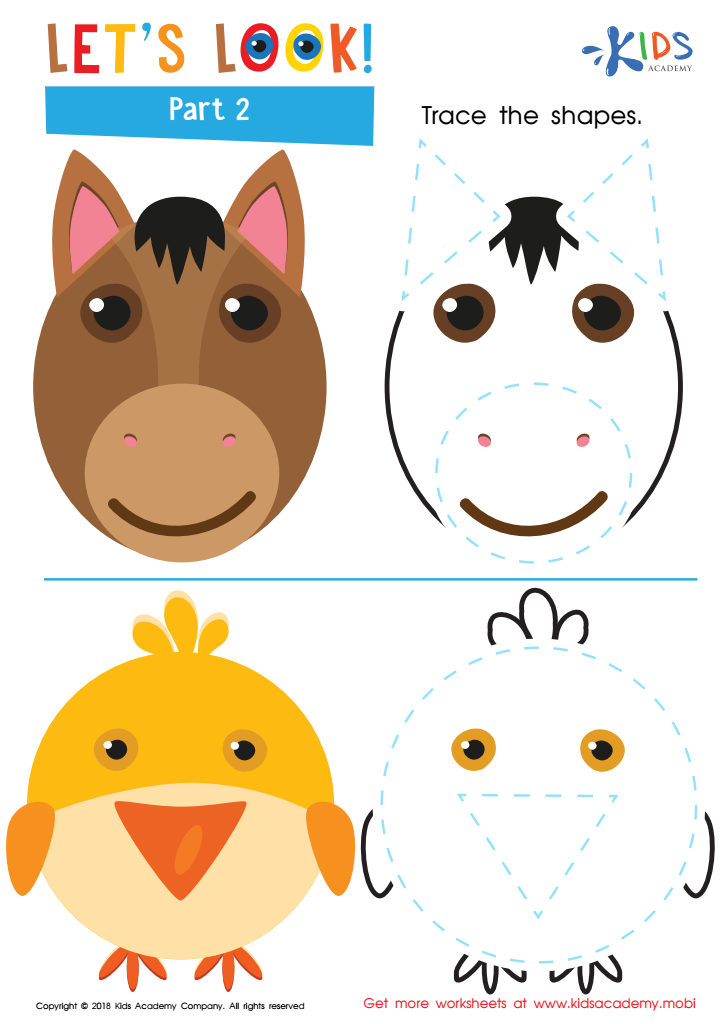
Let's Look! Part 2 Worksheet
This tracing sheet helps your little ones develop their skills. Ask them to identify the animals, then trace the shapes in the space provided, following the dotted lines. It's a simple task that can help them grow and have fun!
Let's Look! Part 2 Worksheet
Worksheet
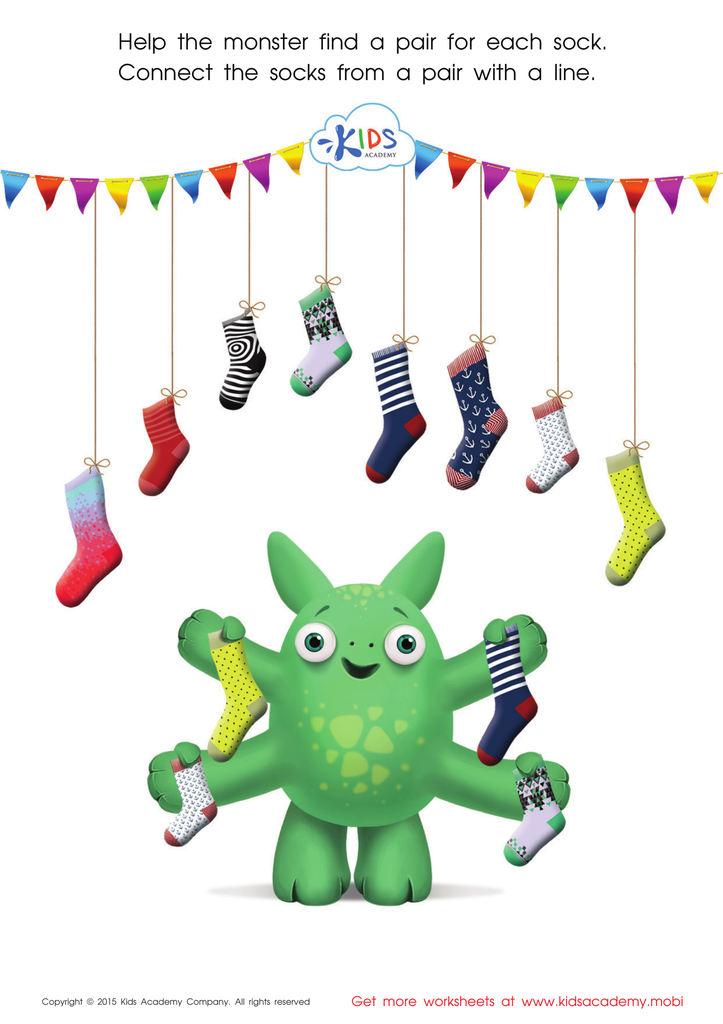
Math Matching Pairs Game: Monsterв's Socks Worksheet
Let your child learn, concentrate and practice sorting skills with this fun kindergarten worksheet. Matching polka dots, anchors, geo shapes and stripes on Monster's socks will help improve fine motor skills. Download and print this free worksheet and several others on different topics.
Math Matching Pairs Game: Monsterв's Socks Worksheet
Worksheet
Join Kids Academy for Free
Who is primarily going to use this learning content?






.jpg)

Color differentiation in math is crucial for children aged 4-9 as it enhances both cognitive and emotional development. During these formative years, children learn best through engaging, multisensory experiences. Implementing color-coded tools such as counters, blocks, or worksheets aids in visual learning, helping kids grasp mathematical concepts more efficiently.
Using different colors can help kids categorize numbers and patterns, making abstract ideas more tangible. For instance, differentiating shapes by colors teaches identification and spatial awareness, which are critical skills in mathematics. Color can also assist in problem-solving; when a student uses distinct colors to solve equations or organize data, it can enhance their ability to analyze and draw conclusions.
Moreover, color plays a vital role in promoting concentration and reducing frustration. A vibrant learning environment can foster enthusiasm for math, making lessons enjoyable. Engaging dismisses the anxiety that often accompanies math, especially for struggling learners.
Encouraging parents and teachers to use color differentiation acknowledges that every child learns differently. By making math more visually stimulating, they not only support comprehension but also inspire a love for learning, helping to build a strong mathematical foundation for future studies. Ultimately, vibrant learning environments can nurture confident, curious learners.








