Comparative skills Math Worksheets for Ages 4-9
3 filtered results
-
From - To
Discover an engaging collection of Comparative Skills Math Worksheets tailored for children ages 4-9. Designed to enhance early numeracy and critical thinking, these worksheets help young learners master concepts of more, less, and the same while comparing quantities, numbers, and objects. Each worksheet is visually appealing and features fun activities that encourage children to explore mathematical relationships. Perfect for home or classroom use, these resources promote independent learning and build a strong foundation in math. Visit our site to download and print these enriching worksheets, and boost your child's confidence as they develop essential comparative skills in a playful and enjoyable way!
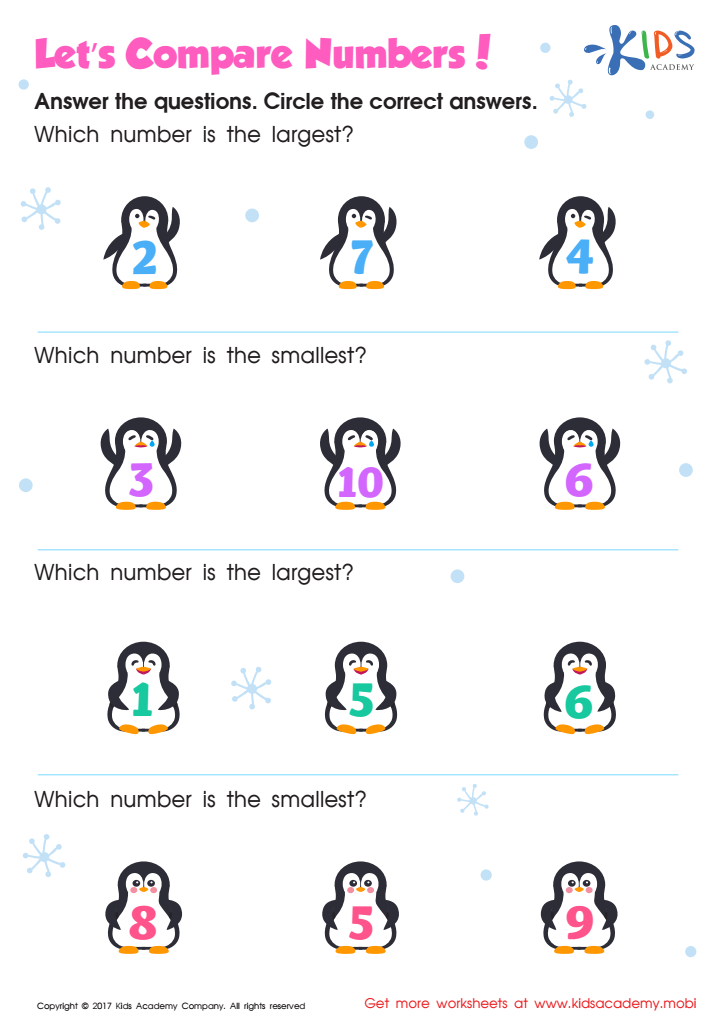
Comparing Numbers 1–10 Worksheet Kindergarten
 Assign to My Students
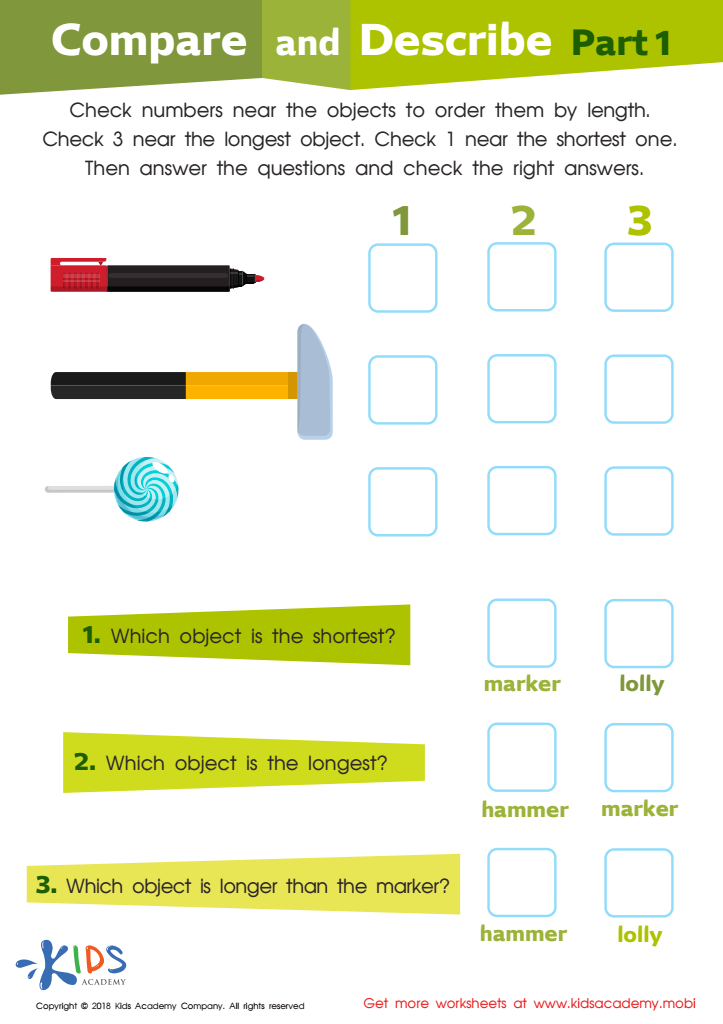
Compare and Describe: Part 1 Worksheet
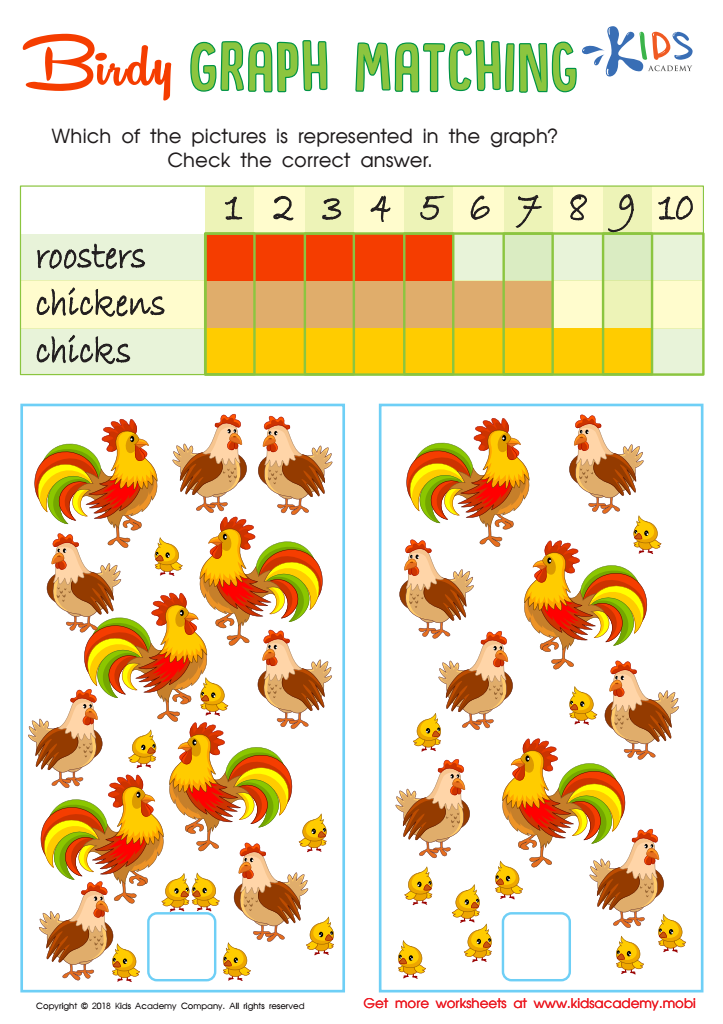
Birdy Graph Matching Worksheet







Parents and teachers should prioritize comparative skills in math for children aged 4-9 because these foundational abilities significantly enhance cognitive development and problem-solving skills. At this age, children are naturally curious and eager to explore differences in size, quantity, weight, and other attributes, making it an ideal time to nurture these skills.
Comparative skills help children develop critical thinking abilities by encouraging them to analyze and interpret data, leading to informed decision-making. For example, when children learn to compare quantities using language like "greater than," "less than," or "equal to," they build a foundational understanding of fundamental math concepts, such as addition, subtraction, and measurement.
Moreover, utilizing comparative skills fosters collaboration and communication among peers, as children often engage in discussions or games that require them to articulate their comparisons. This not only reinforces math learning but also supports social development.
Together, early engagement in comparative skills lays the groundwork for future academic success, as children become more adept at handling complex mathematical concepts in later grades. Ultimately, when parents and educators focus on these skills, they effectively empower children with tools essential for lifelong learning and analytical reasoning.








