
Comparing weights Math Worksheets for Ages 4-9
4 filtered results
Difficulty Level
Grade
Age
-
From - To
Subject
Activity
Standards
Discover engaging and educational Comparing Weights Math Worksheets designed for ages 4-9. Our worksheets help young learners understand the concept of weight through fun and interactive activities. Perfect for preschoolers and early elementary students, these printables make comparing items easy and interesting. Kids will develop critical thinking and problem-solving skills as they weigh different objects and determine which is heavier or lighter. These resources support both classroom learning and at-home practice, making math enjoyable and accessible. Boost your child's confidence and curiosity in mathematics with our expertly crafted comparing weights worksheets!
Favorites
With answer key
Interactive
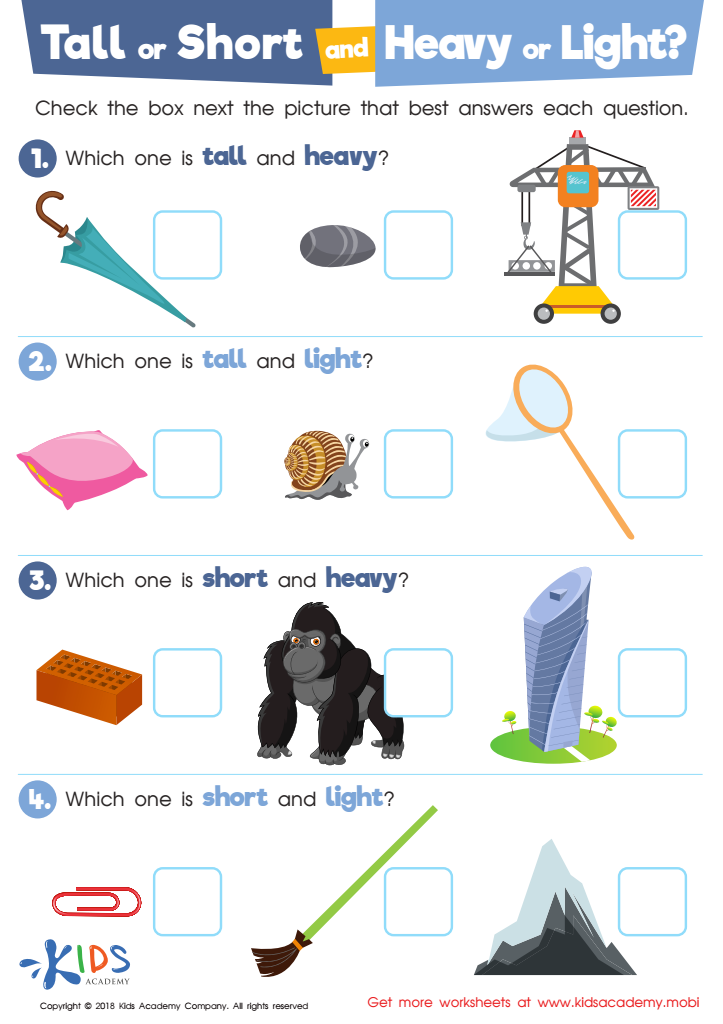
Tall or Short and Heavy or Light? Worksheet
Young children can find basic measurement concepts tricky. This PDF introduces them to the appropriate vocabulary for describing heavy, light, tall and short items, by using familiar pictures. It helps them accurately select which items fit each category.
 Assign to My Students
Tall or Short and Heavy or Light? Worksheet
Worksheet
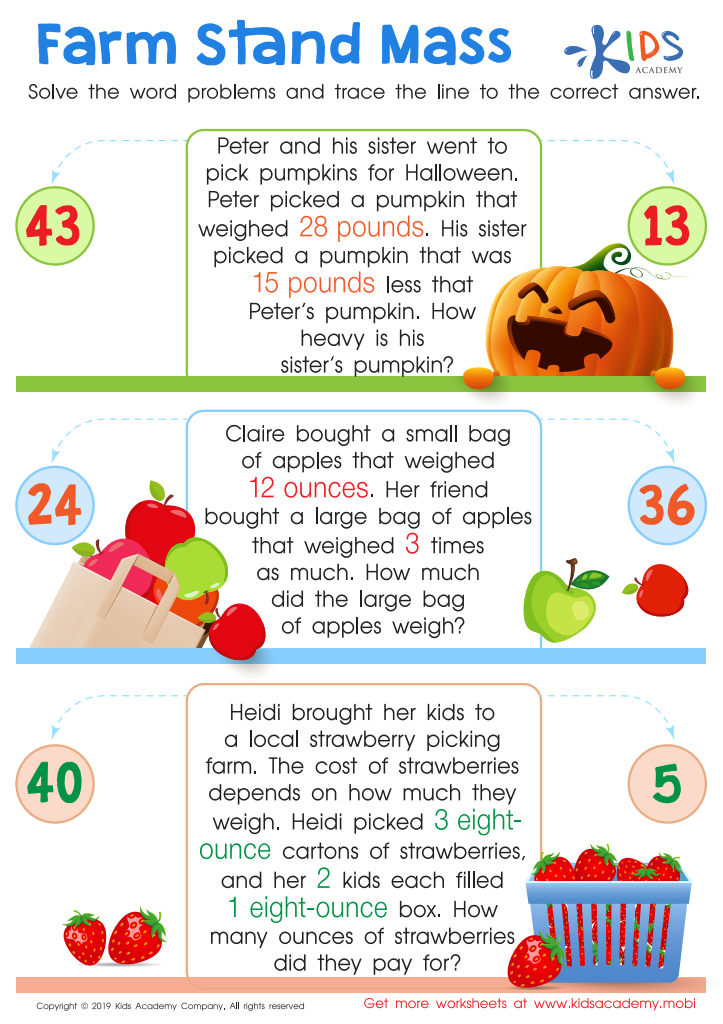
Farm Stand Mass Worksheet
Engage your kids in a fun learning adventure! Encourage them to practice what they learn in school using this worksheet. Look at the picture and read the problem together. Help them solve it and trace the line to the answer. Make learning enjoyable and your kids will be more motivated!
Farm Stand Mass Worksheet
Worksheet
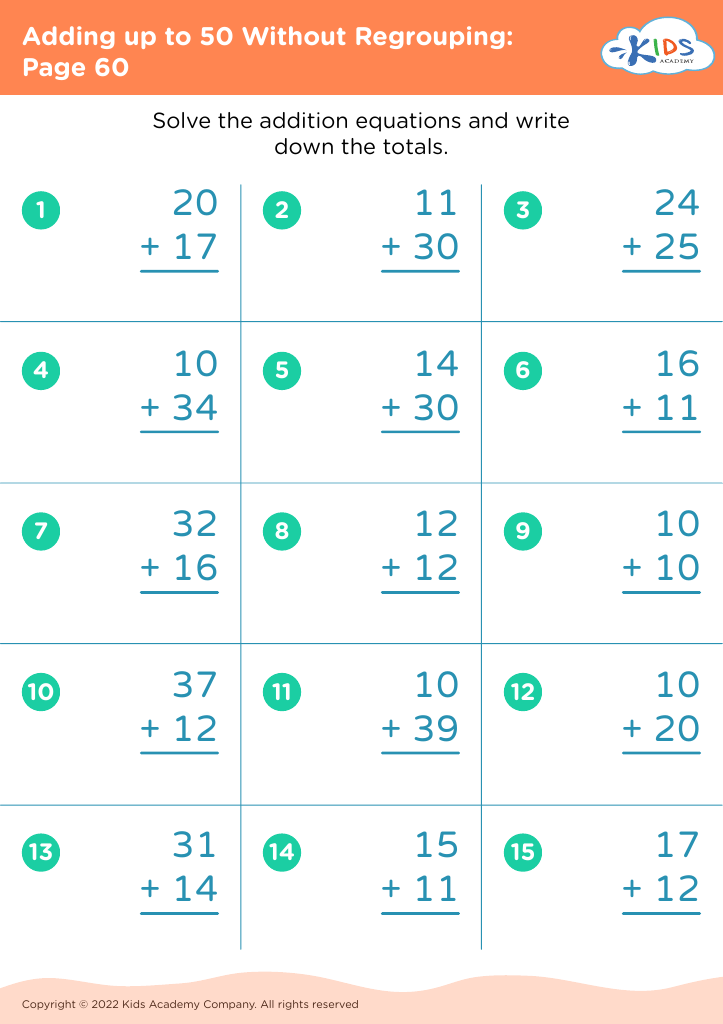
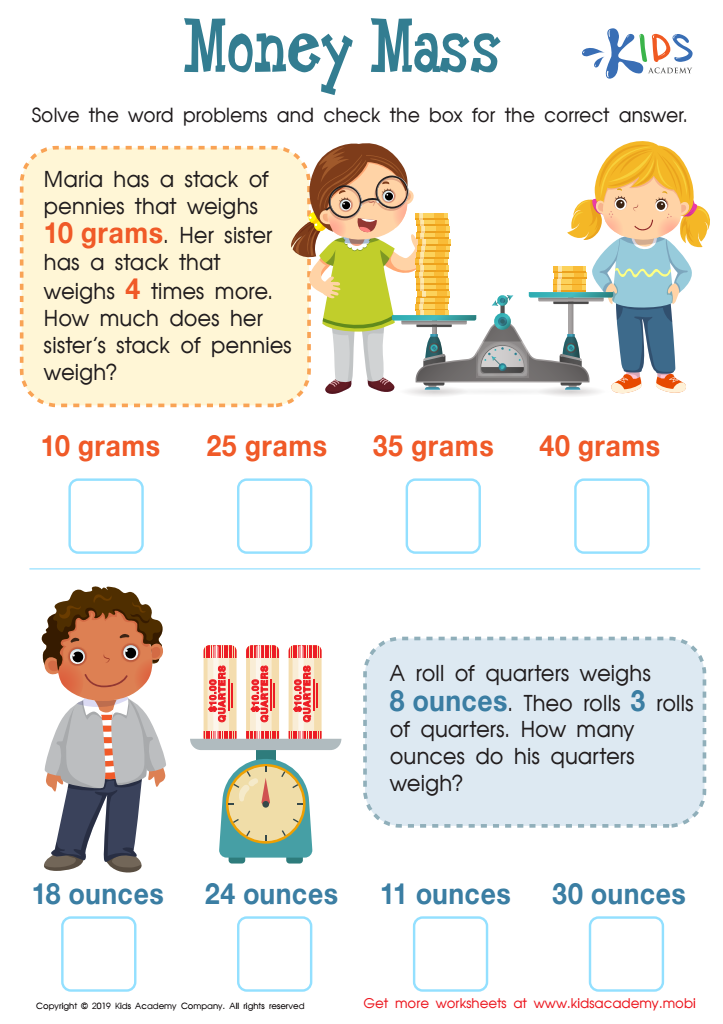
Money Mass Worksheet
By regularly working on math with your kids, they will become more confident. Ensure they understand the word problems in this printout, and help them solve it. Check the box for the correct answer of each to verify their work. With this practice, they will gradually get used to math and make progress.
Money Mass Worksheet
Worksheet
Join Kids Academy for Free
Who is primarily going to use this learning content?








Understanding how to compare weights is an essential cognitive and mathematical skill for young children, generally ages 4 to 9. Early exposure to comparing weights fosters critical thinking and problem-solving abilities. It helps children develop a keen sense of spatial awareness and supports their understanding of measurement and balance, foundational concepts in both math and science.
Comparing weights also enhances fine motor skills and eye-hand coordination, crucial for their overall physical development. For example, when children play with balance scales or heft various objects, they practice making judgments and decisions based on sensory input.
This activity is intricately tied to real-world applications. Whether determining how many books their backpack can hold, estimating quantities in cooking, or selecting appropriate materials for building projects, weight comparison is a frequent, everyday task.
Furthermore, engaging in these activities promotes language skills as children learn new terms like heavy, light, more, less, and equal. Paired with collaborative play scenarios, these activities build their confidence in teamwork and communication.
Investing time in teaching weight comparison equips children with important life skills early on, providing a strong foundation that supports their academic success and practical, everyday competencies. Parents and teachers who prioritize these learning experiences contribute significantly to holistic child development.








