Developing critical thinking Math Worksheets for Ages 4-9
4 filtered results
-
From - To
Unlock your child's potential with our "Developing Critical Thinking Math Worksheets" designed specifically for ages 4-9. These engaging printable resources encourage young learners to think critically and solve problems creatively while mastering essential math concepts. Each worksheet offers a variety of fun activities that promote analytical thinking, from puzzles to interactive games, making math both enjoyable and educational. Perfect for classroom use or at-home practice, our worksheets help children grasp key skills through hands-on learning. Inspire a love for math and empower your child’s critical thinking abilities with our delightful and age-appropriate math worksheets. Explore the joy of learning today!
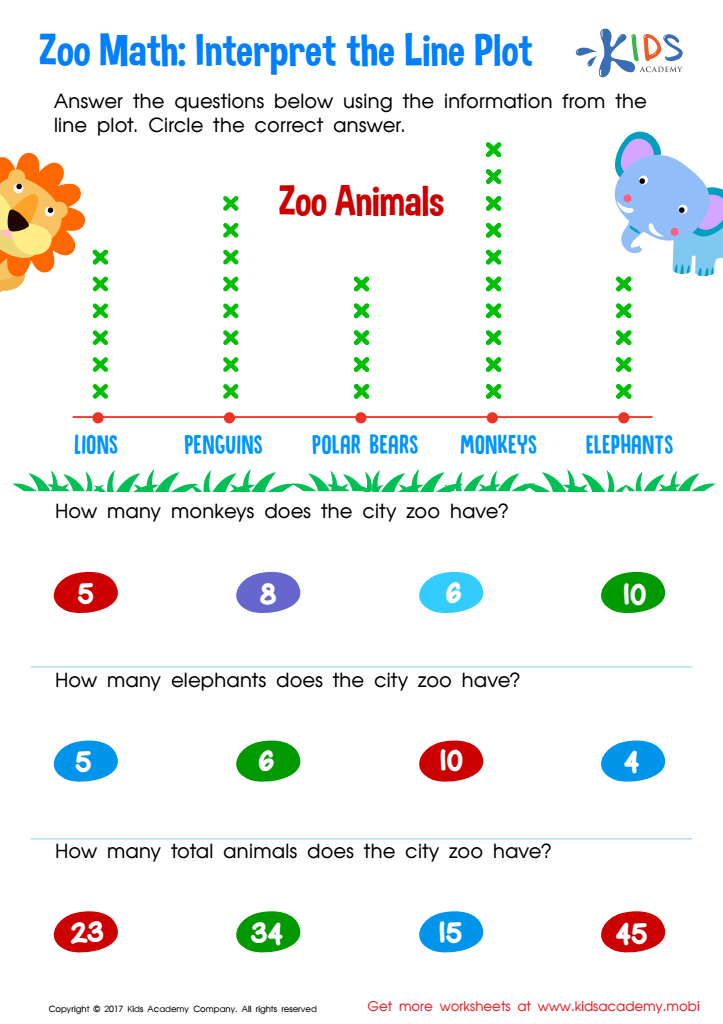
Interpret Line Plot Worksheet
 Assign to My Students
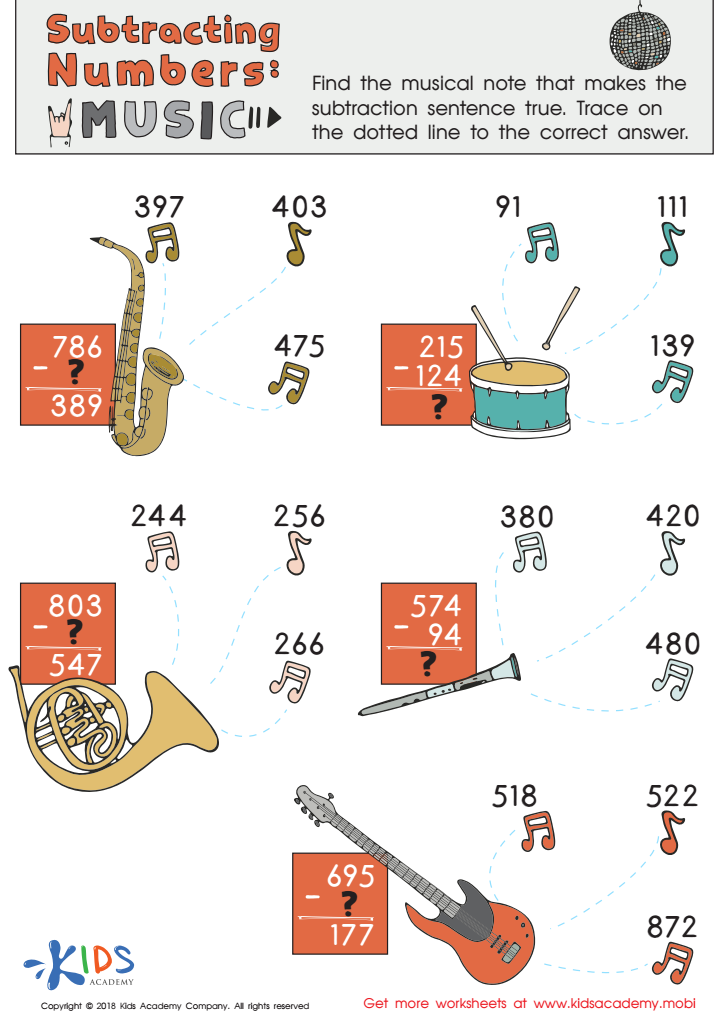
Subtracting Numbers: Music Worksheet








Developing critical thinking in mathematics for children aged 4-9 is essential for several reasons. At this early stage of cognitive development, children are forming foundational skills that will not only influence their mathematical abilities but also enhance their overall problem-solving capabilities. By focusing on critical thinking, parents and teachers can nurture inquisitive minds that learn to analyze, reason, and make connections across different concepts.
Critical thinking in math encourages children to explore multiple approaches to problems, fostering creativity and resilience. It shifts the focus from rote memorization of facts to a deeper understanding of mathematical principles, enabling students to apply their knowledge in real-world situations. This skill also builds a strong sense of confidence, empowering children to tackle challenges with a positive mindset.
Moreover, developing critical thinking skills aligns with current educational goals that emphasize holistic learning and the importance of preparing children for a rapidly changing world. As children learn to ask questions, judge validity, and draw logical conclusions, they prepare themselves not only for advanced mathematics but also for informed decision-making throughout life. Therefore, prioritizing critical thinking in early math education helps lay the groundwork for lifelong learners who can navigate complex problems effectively in various contexts.








