
Grouping skills Math Worksheets for Ages 4-9
3 filtered results
Difficulty Level
Grade
Age
-
From - To
Subject
Activity
Standards
Unlock the joy of learning with our Grouping Skills Math Worksheets, designed for children aged 4-9! These engaging resources help young learners master essential math concepts through fun and interactive activities. Our worksheets encourage kids to practice grouping objects, recognizing patterns, and developing critical thinking skills. Tailored to align with early math standards, these printables provide diverse exercises that reinforce comprehension and build confidence. Whether at home or in the classroom, our Grouping Skills Worksheets create an enjoyable environment for children to explore math concepts while fostering teamwork and cooperative learning. Start your child's math journey today!
Favorites
With answer key
Interactive
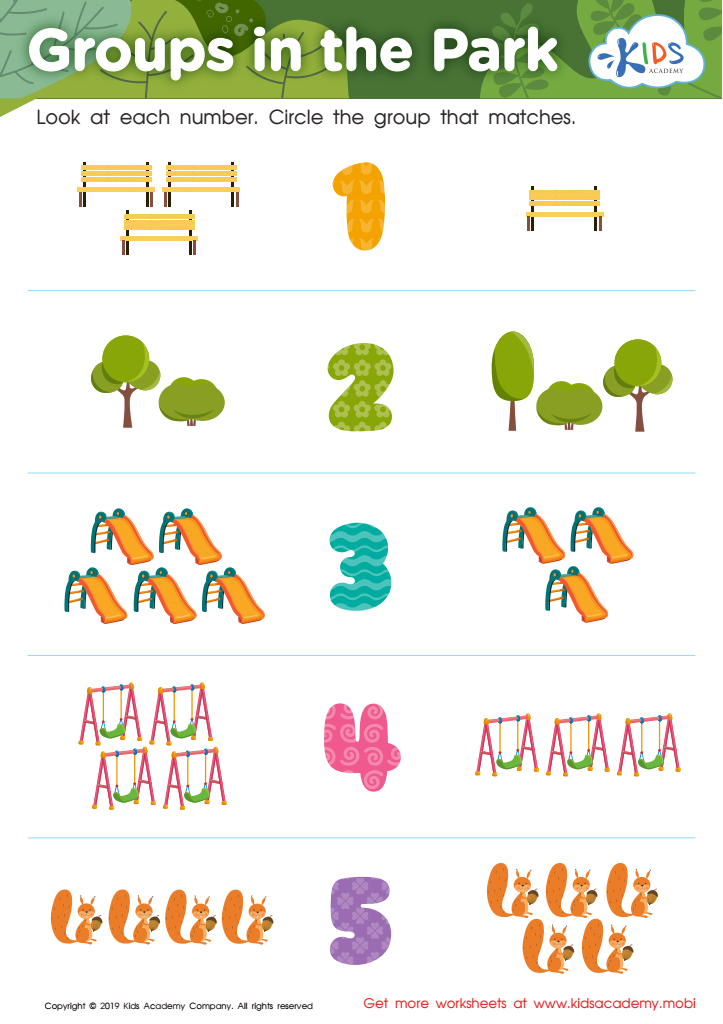
Groups in the Park Worksheet
Take your kids to the park and let them enjoy the freedom to play! Ask them what they love doing most and study a picture together - name items and count objects in the sets, then circle the correct one. It's a fun way for your kids to learn.
 Assign to My Students
Groups in the Park Worksheet
Worksheet
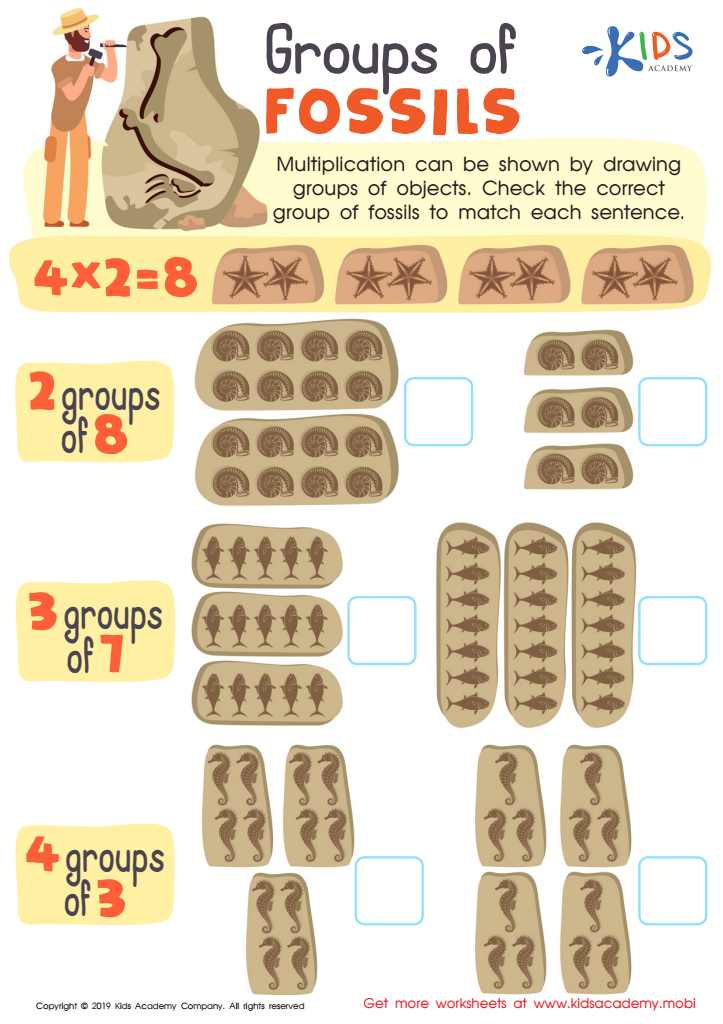
Groups of Fossils Worksheet
Kids need to learn multiplication after mastering addition and subtraction. To make it fun, use worksheets like this one. Have kids draw objects to match each sentence - this helps them understand multiplication better. With this approach, they'll be sure to learn the concepts.
Groups of Fossils Worksheet
Worksheet
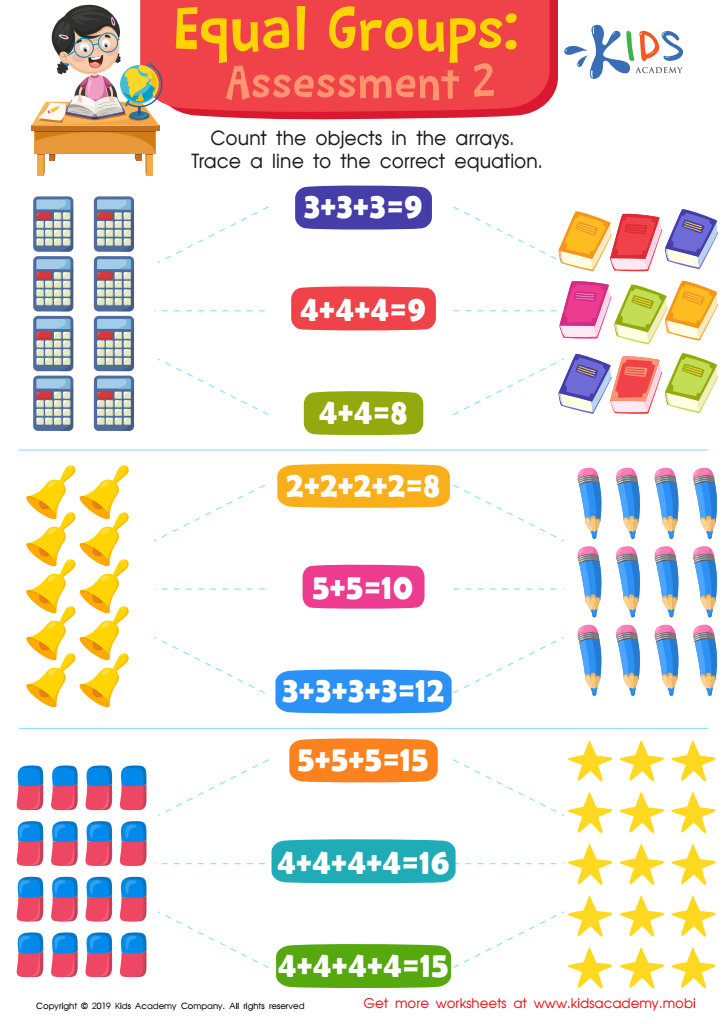
Equal Groups: Assessment 2 Worksheet
Get your kids to pay attention to learning with familiar objects, bright colors, and this worksheet. It has six arrays - ask kids to identify them and count the objects. Then, help them trace a line to the correct equation.
Equal Groups: Assessment 2 Worksheet
Worksheet
Join Kids Academy for Free
Who is primarily going to use this learning content?







Grouping skills in math for children aged 4-9 are essential because they lay the foundation for more advanced mathematical concepts and problem-solving abilities. At this age, children are naturally curious and eager to learn, making it an ideal time to introduce the idea of categorizing and grouping items. These skills not only improve number sense but also enhance critical thinking and organizational capabilities.
For parents and teachers, fostering grouping skills encourages a child’s ability to recognize patterns, understand relationships, and make connections between various mathematical concepts. By engaging in activities that promote grouping—such as sorting toys, categorizing objects, and understanding sets—children develop essential cognitive skills and a deeper understanding of mathematics. These foundational skills aid in social development, as children learn collaboration and communication while working together in groups.
Additionally, strong grouping skills correlate with better performance in school tasks and assessments that require classification and comparison, supporting a child’s academic success. Thus, investing time and effort into developing grouping skills during these crucial years not only bolsters mathematical abilities but also sets the stage for lifelong learning and confidence in handling numbers. Both parents and teachers have a vital role in nurturing these competencies to ensure children thrive as learners.








