Practice division Math Worksheets for Ages 4-9
3 filtered results
-
From - To
Discover our engaging division math worksheets designed for children ages 4-9! These creative resources help young learners grasp fundamental division concepts while enjoying fun activities tailored to their skill level. Featuring colorful illustrations and interactive problems, our worksheets promote critical thinking and enhance numeracy skills. Whether your child is just starting to explore division or looking to strengthen their understanding, our appealing exercises offer ample practice opportunities. Perfect for home or classroom use, these worksheets support a positive learning experience. Help your child build confidence in math with our carefully crafted division practice materials! Visit us today to kickstart their learning journey!
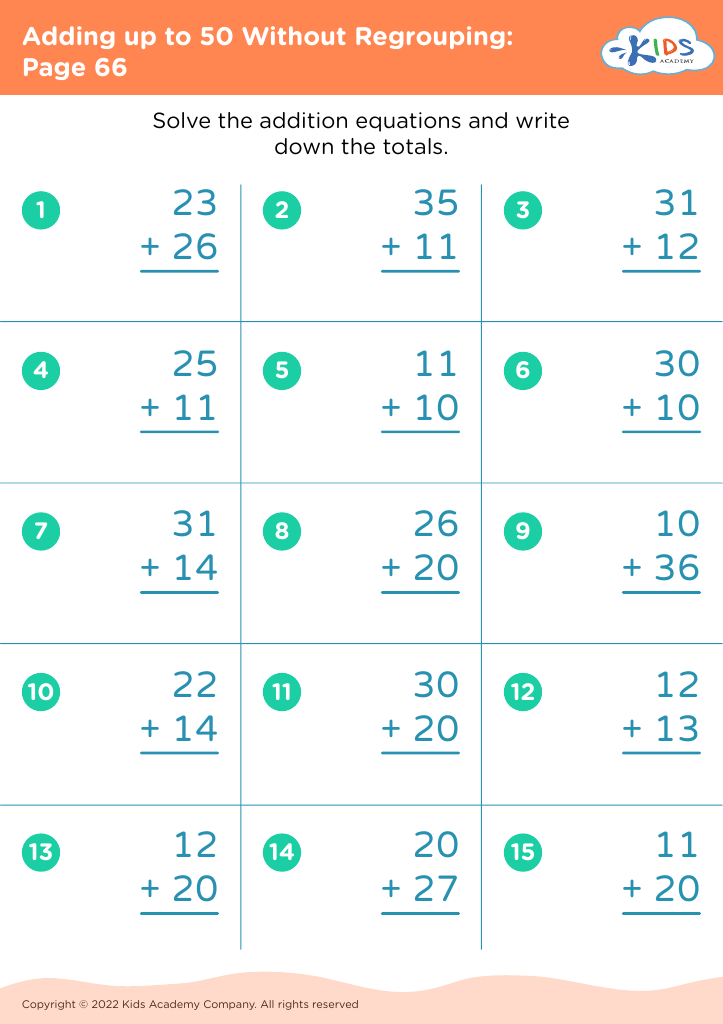
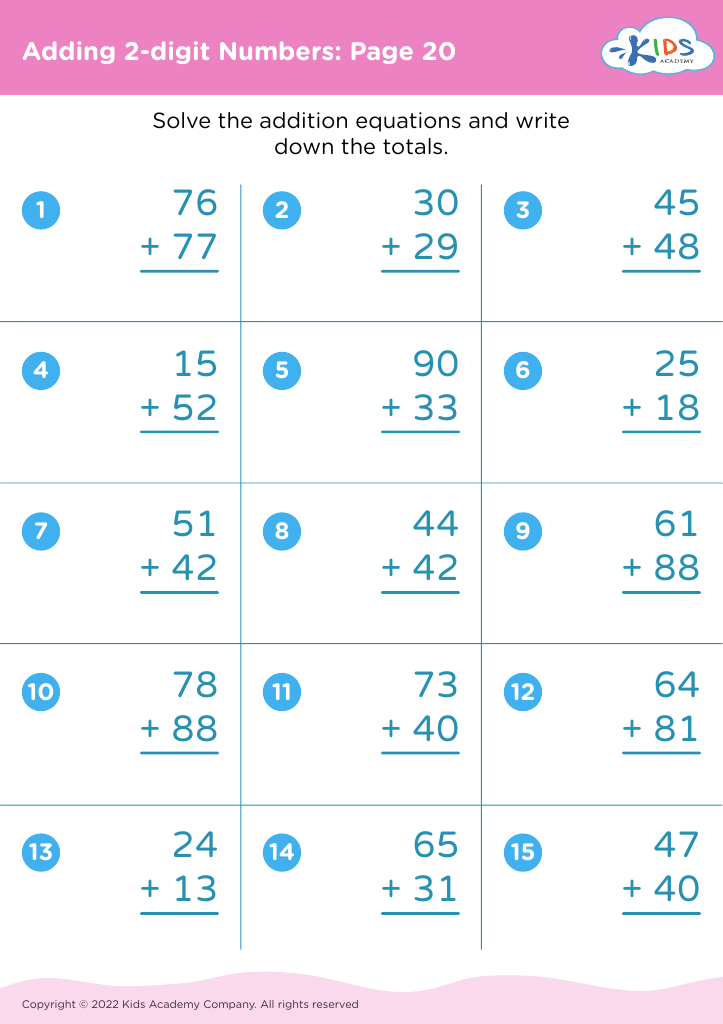
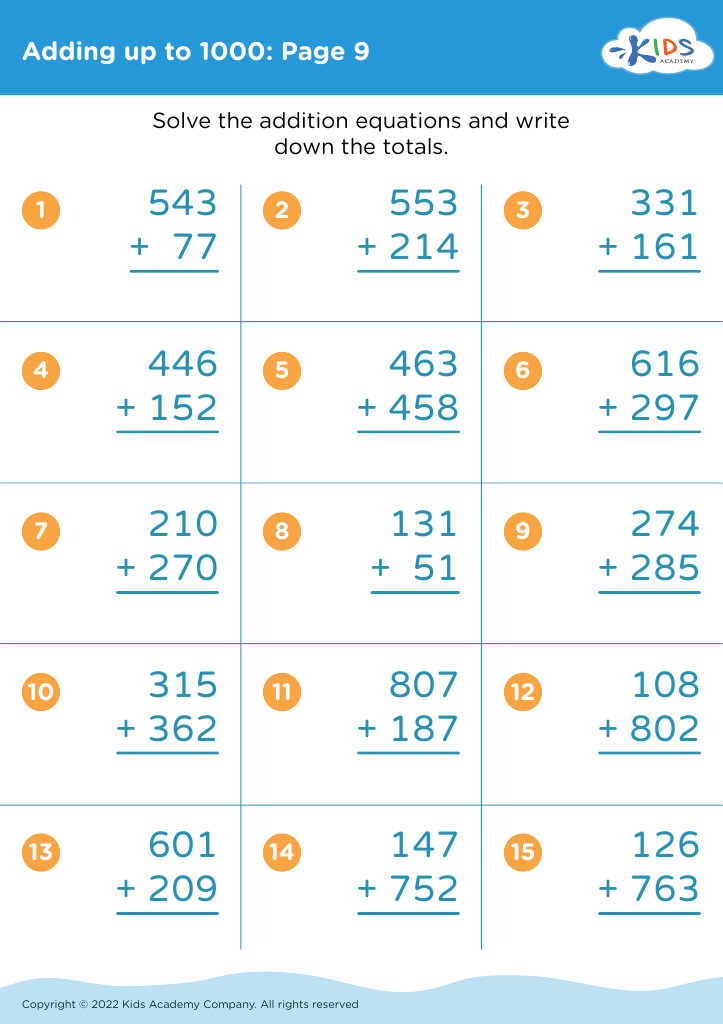








Practicing division math for children ages 4-9 is crucial for several reasons. First and foremost, developing a strong foundation in division helps children understand the concept of sharing and fairness, which are vital social skills. At this age, children are beginning to explore number relationships, and division introduces them to grouping, fractions, and the idea of partitioning quantities.
Moreover, division is a fundamental mathematical operation that lays the groundwork for more complex concepts in future learning. Mastery of basic division helps children make connections to multiplication, as both are interconnected operations. When children grasp these early division steps, they build the confidence needed to tackle more challenging math problems later on.
Engaging in fun and interactive division activities also promotes cognitive development, encouraging critical thinking and problem-solving skills that extend beyond mathematics. For parents and teachers, integrating division practice into everyday learning—through games, real-world scenarios, and hands-on exercises—makes the process enjoyable and meaningful. Ultimately, investing time in division practice not only enhances a child’s mathematical abilities but also instills a love for learning that can last a lifetime. Through early support, parents and teachers foster resilience, curiosity, and intellectual growth in young learners.








