
Spatial understanding Math Worksheets for Ages 4-9
4 filtered results
Difficulty Level
Grade
Age
-
From - To
Subject
Activity
Standards
Unlock your child's potential in math with our "Spatial Understanding Math Worksheets for Ages 4-9." Designed by educational experts, these engaging worksheets focus on enhancing spatial awareness—a crucial skill for problem-solving and logical thinking. The activities include puzzles, patterns, and shape recognition, perfectly tailored to young minds. By integrating fun and learning, children develop an intuitive grasp of space, geometry, and mathematical concepts. Ideal for classroom use or at-home practice, our worksheets foster a solid foundation in math readiness, ensuring a head start in academic success for kids. Boost your child's spatial abilities today!
Favorites
With answer key
Interactive
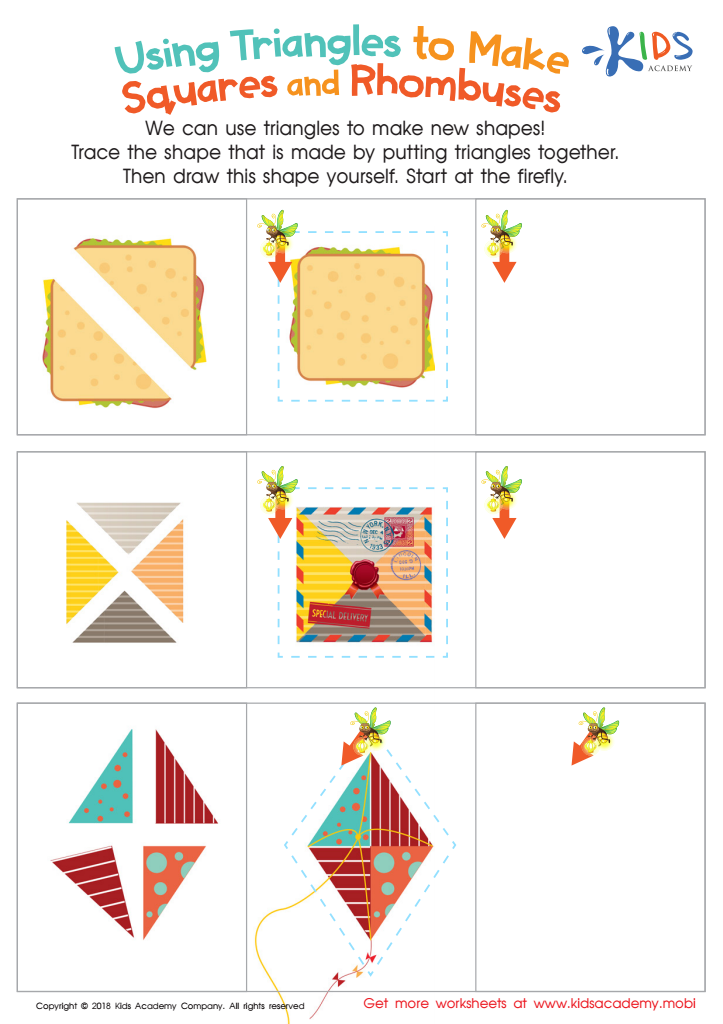
Using Triangles to Make Squares and Rhombuses Worksheet
Learning shapes is a fun way to boost spatial skills and critical thinking. This worksheet shows children how to use triangles to construct squares and rhombuses. Clear illustrations and a printout help children draw the new shape. A great activity for the math classroom! 80 words.
 Assign to My Students
Using Triangles to Make Squares and Rhombuses Worksheet
Worksheet
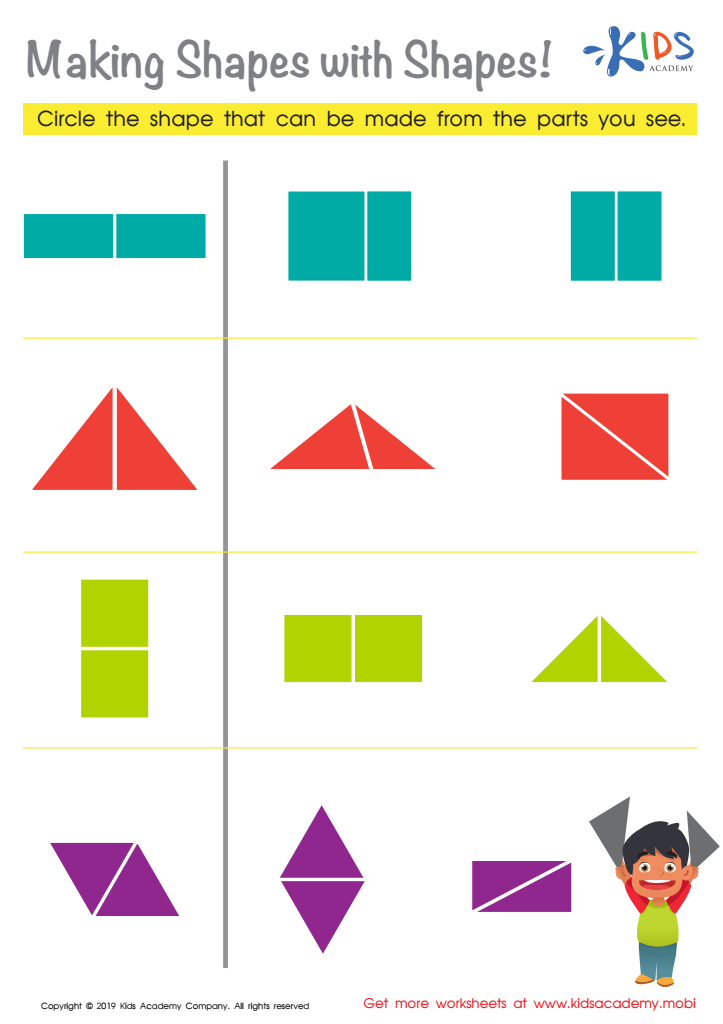
Making Shapes with Shapes Worksheet
Help your kindergartners identify shapes with this simple worksheet. Examine the shapes on the left and have them circle the one they can make from the parts in the picture. Shapes can be tricky, but this exercise will help clear up any confusion.
Making Shapes with Shapes Worksheet
Worksheet
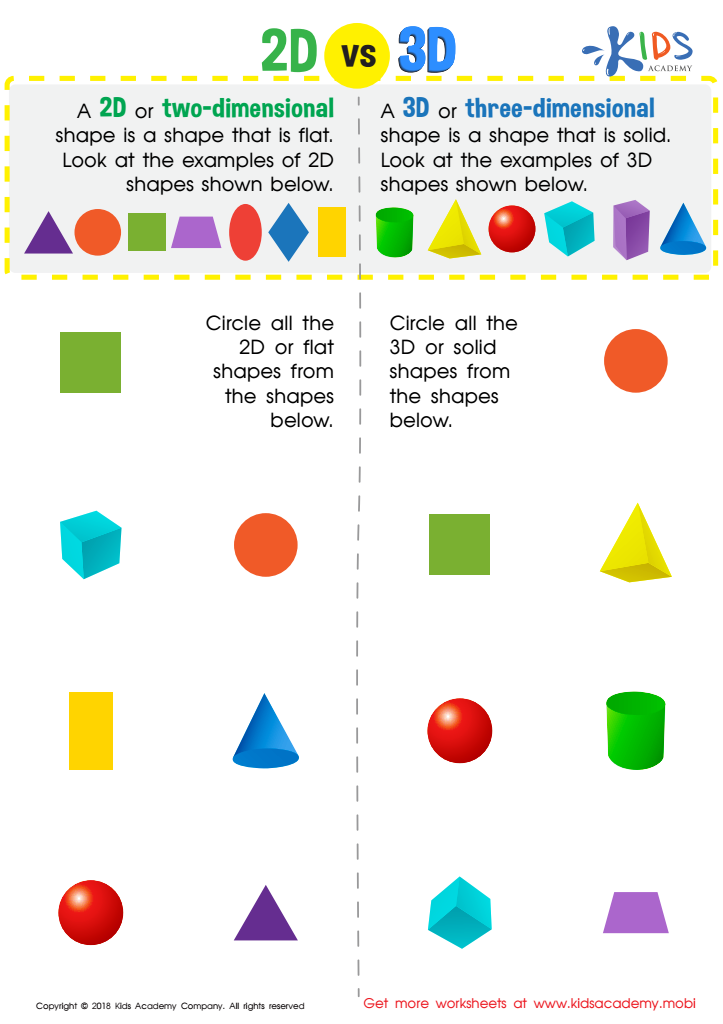
2D vs 3D Shapes Worksheet
Help your child understand 3D shapes using this engaging worksheet! Read the descriptions at the top and search for 2D and 3D shapes. An ideal activity for toddlers learning shapes. A fun way to understand the tricky concept of 3D shapes!
2D vs 3D Shapes Worksheet
Worksheet
Join Kids Academy for Free
Who is primarily going to use this learning content?








Spatial understanding forms a crucial foundation for young children not just in their daily lives, but also in their future academic success, particularly in mathematics and STEM fields. For children aged 4-9, grasping spatial concepts—such as size, shape, distance, direction, and the relationships between objects in space—enhances their problem-solving skills and logical thinking.
Parents and teachers should prioritize these skills because they are vital for a wide range of educational activities. For example, spatial skills are directly linked to a child’s ability to understand and solve geometry problems, perform mental rotations, and interpret graphs. These are all core components of the mathematics curriculum.
Additionally, strong spatial skills support other subject areas such as reading and science by helping children visualize and understand the relationships between letters, words, parts of physical systems, or regions in maps. Research indicates that early development of these skills can lead to higher achievement in math later on.
Beyond academics, spatial understanding helps children navigate their environments more effectively, whether it's packing a backpack, fitting toys back into a box, or creating something with building blocks. Encouraging activities like puzzles, drawing, building with blocks, or even active play like navigating obstacle courses can support this essential aspect of development. Therefore, fostering spatial understanding in early childhood lays a solid groundwork for comprehensive cognitive and academic growth.








