Time-telling skills Math Worksheets for Ages 4-9
5 filtered results
-
From - To
Enhance your child's time-telling abilities with our engaging math worksheets designed for ages 4-9! Our diverse collection of activities helps young learners master the essential skill of reading analog and digital clocks. Each worksheet is tailored to develop foundational math skills while also promoting critical thinking and problem-solving. By incorporating colorful visuals and interactive exercises, children will find joy in learning how to tell time. Perfect for home or classroom use, these worksheets cater to various learning styles. Explore our comprehensive resources today and watch your child's confidence in time-telling grow!
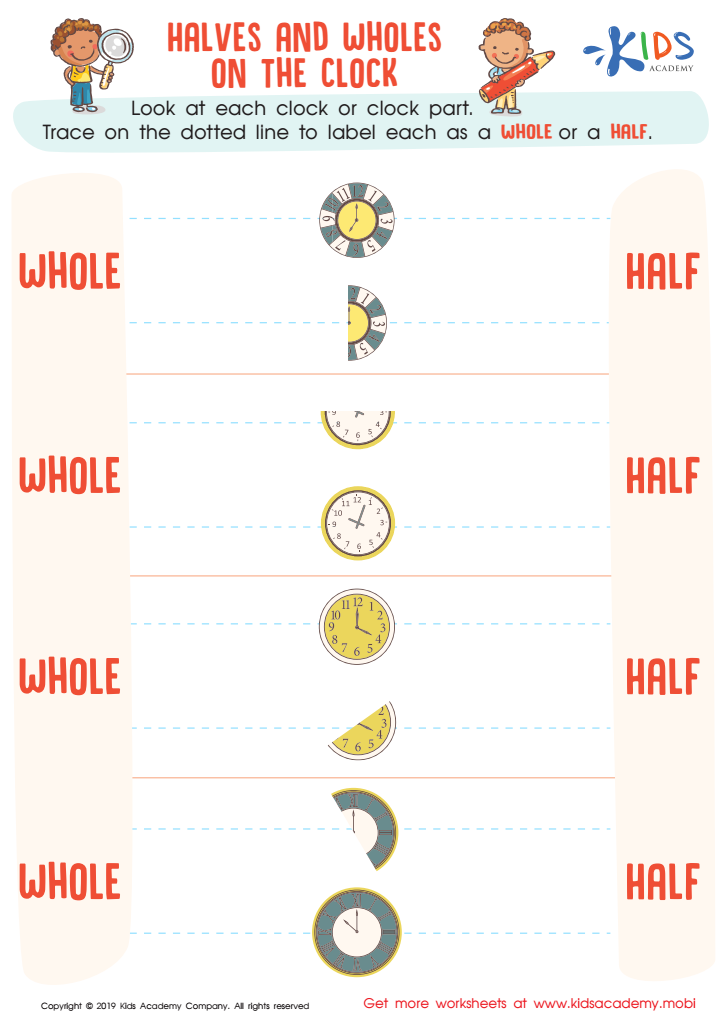
Halves and Wholes on the Clock Worksheet
 Assign to My Students
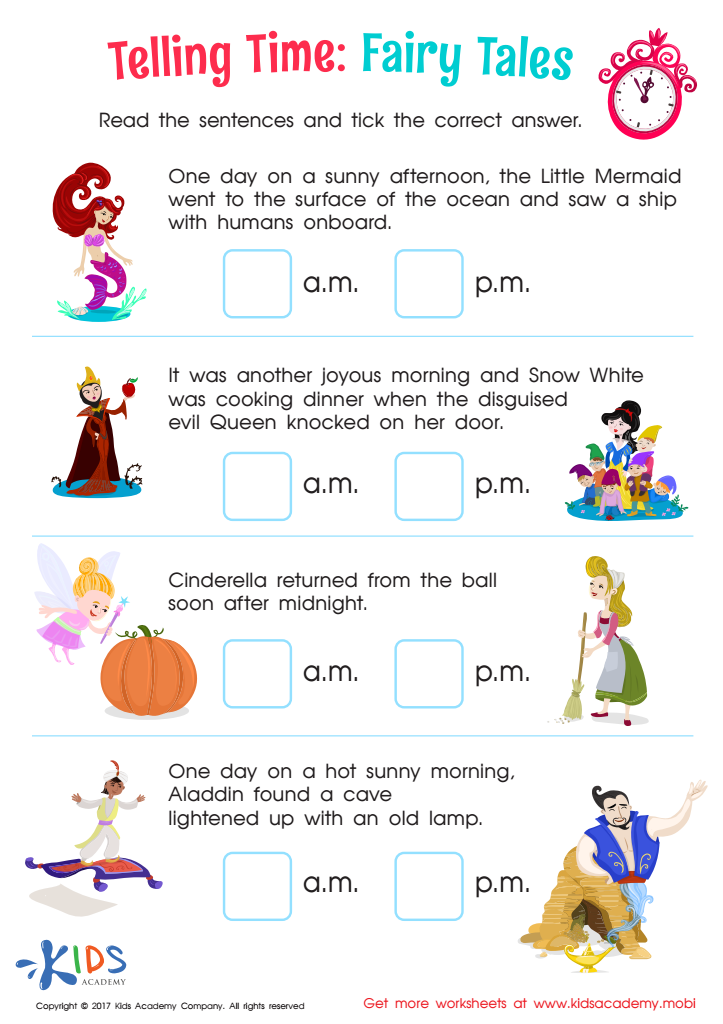
Telling Time: Fairy Tales Worksheet
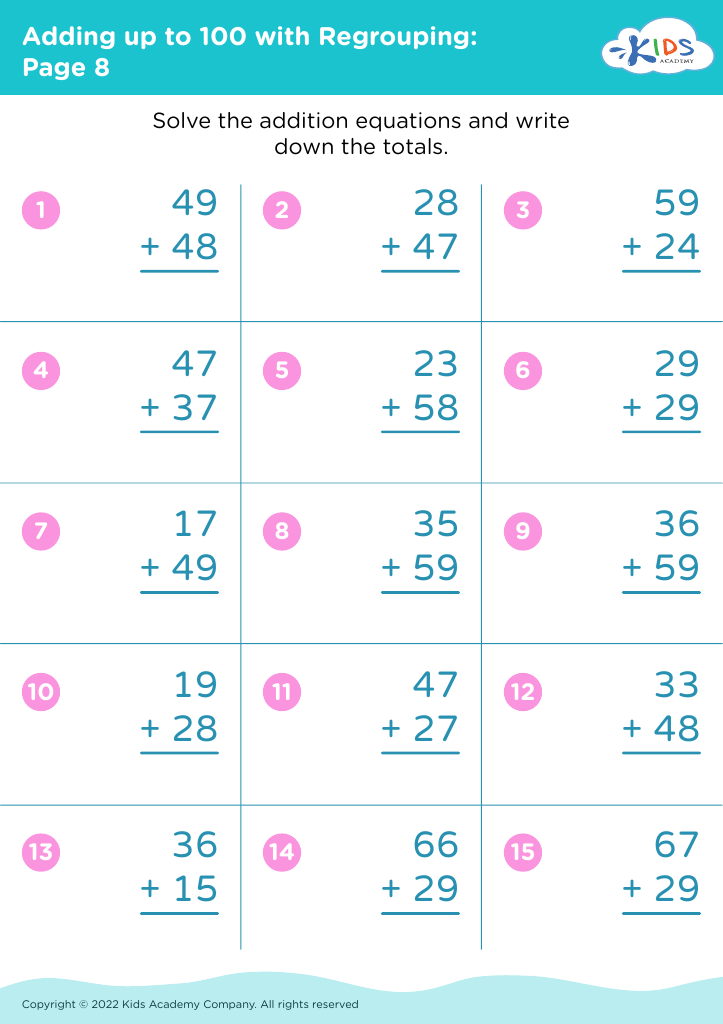
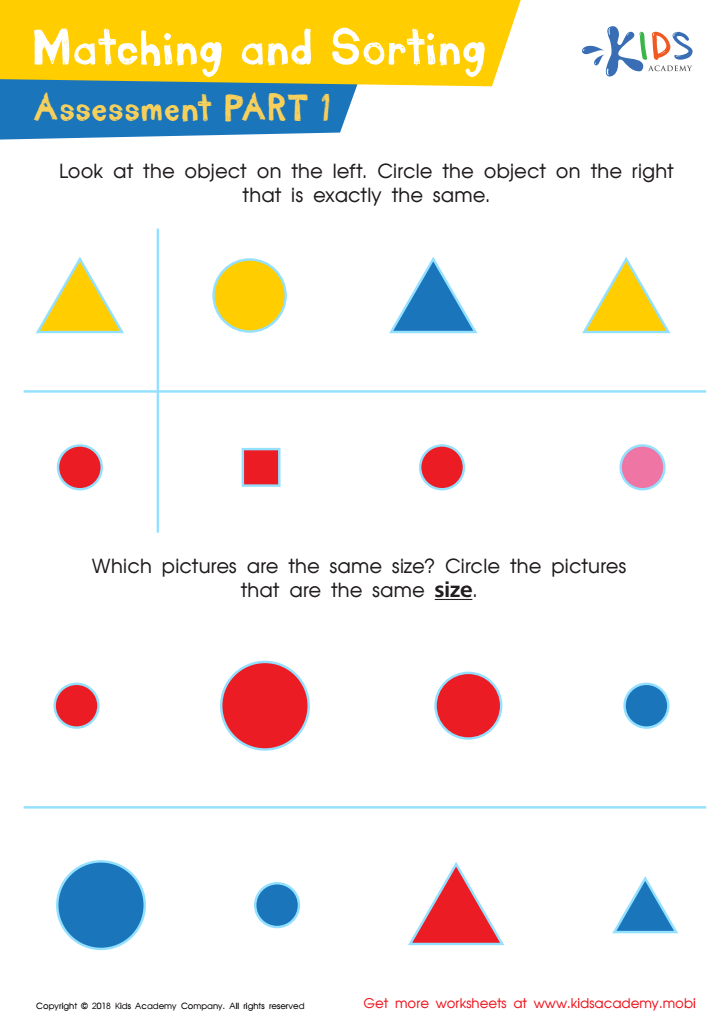
Matching and Sorting for Kindergarten: Assessment 1 Worksheet
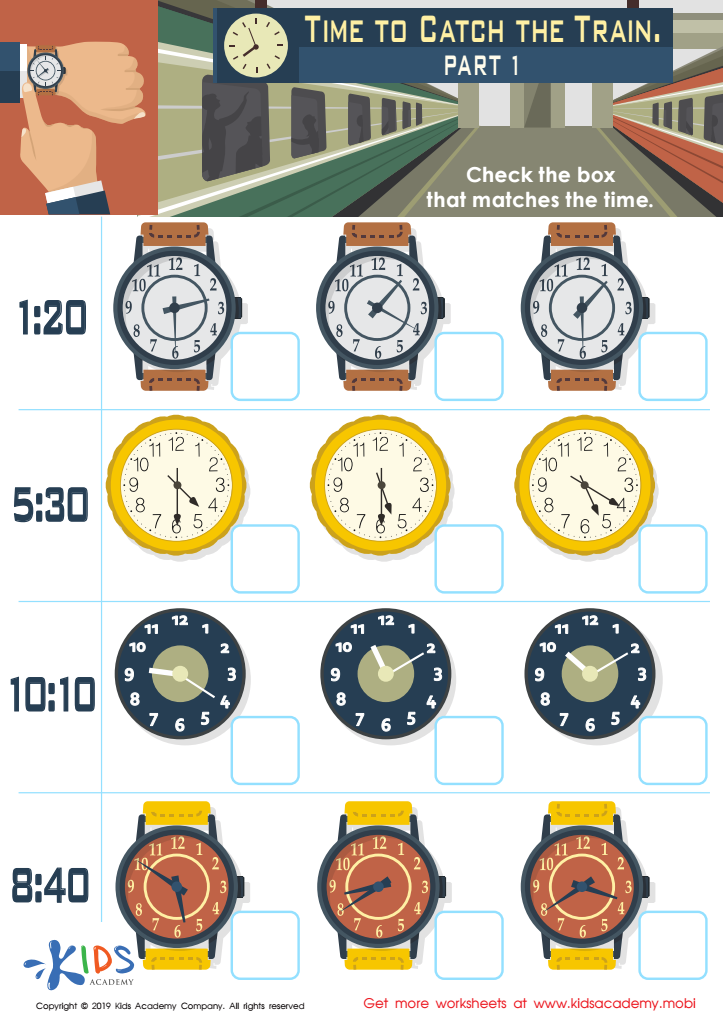
Time to Catch the Train Part 1 Worksheet







Time-telling skills are essential for children aged 4-9 as they form a foundational aspect of both mathematical understanding and daily life. Learning to tell time helps young learners develop critical cognitive skills, including counting, sequencing, and interpreting information. By understanding the concept of time, children gain a sense of routine, helping them manage their schedules and responsibilities effectively.
For parents and teachers, fostering time-telling skills at an early age equips children with independence and self-regulation. It encourages them to understand how to plan their day, transition between activities, and meet deadlines, skills crucial for academic success and personal development. Moreover, engaging with clocks and time-related activities reinforces mathematical concepts such as division, fractions, and measurement.
Additionally, grasping concepts of time can enhance children’s social awareness, as they become aware of timing in relation to others, such as being punctual for playdates or class times. Time-telling activities can also foster meaningful conversations between parents and children or teachers and students, promoting interactive learning experiences. Ultimately, by prioritizing time-telling skills, caregivers and educators provide children with tools that extend beyond the classroom, nurturing their overall capability as they navigate the world around them.








