Understanding number sequences Math Worksheets for Ages 4-9
7 filtered results
-
From - To
Explore our "Understanding Number Sequences" math worksheets designed specifically for children aged 4-9. These engaging resources help young learners develop essential skills in recognizing patterns and predicting number sequences, laying a strong foundation for advanced mathematical concepts. With a variety of fun activities, kids will enjoy filling in missing numbers, completing sequences, and honing their counting abilities. Our worksheets cater to different learning styles and playfully challenge learners while ensuring they build confidence in their math skills. Perfect for use at home or in the classroom, these worksheets make learning math enjoyable and effective. Start your child's journey to numerical fluency today!
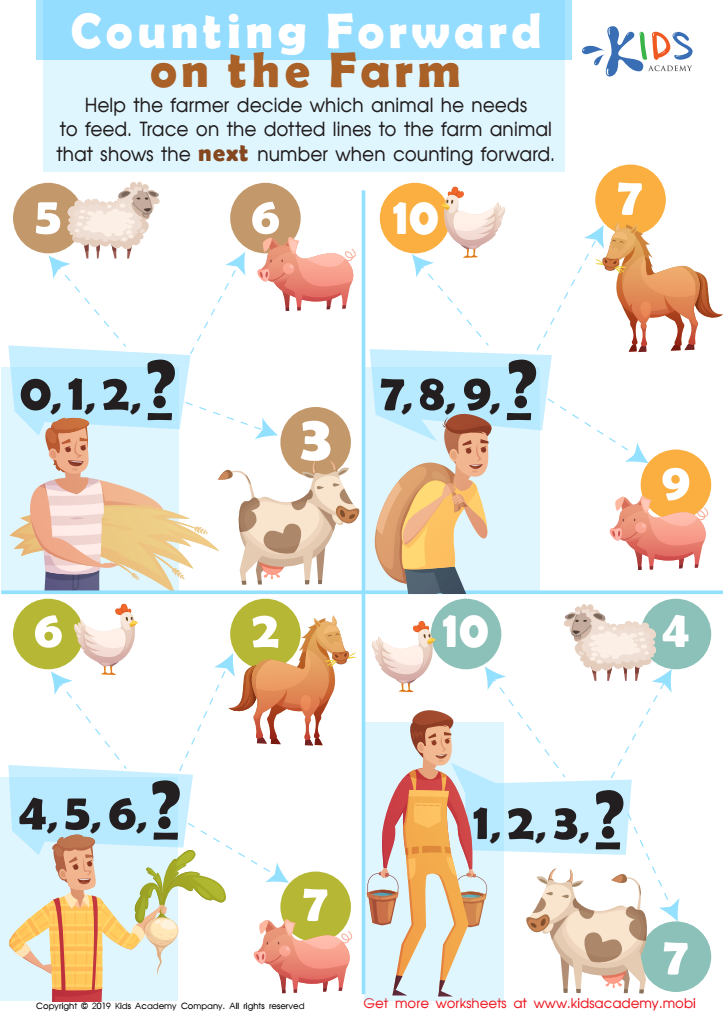
Counting Forward On the Farm Worksheet
 Assign to My Students
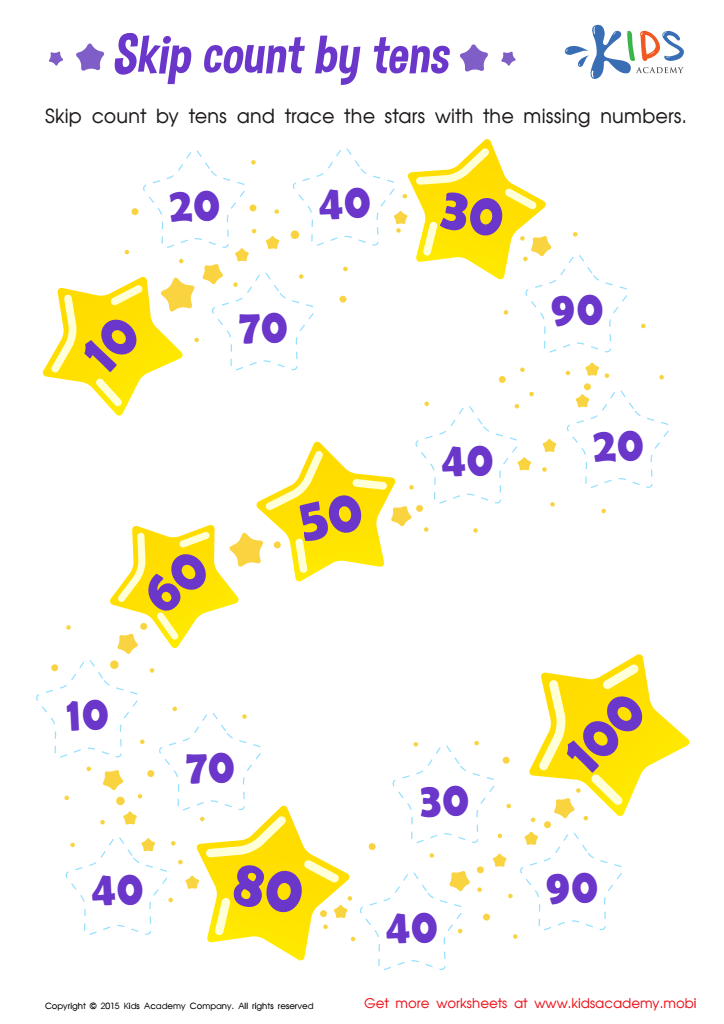
Learn dozens: Skip Count by Tens Printable
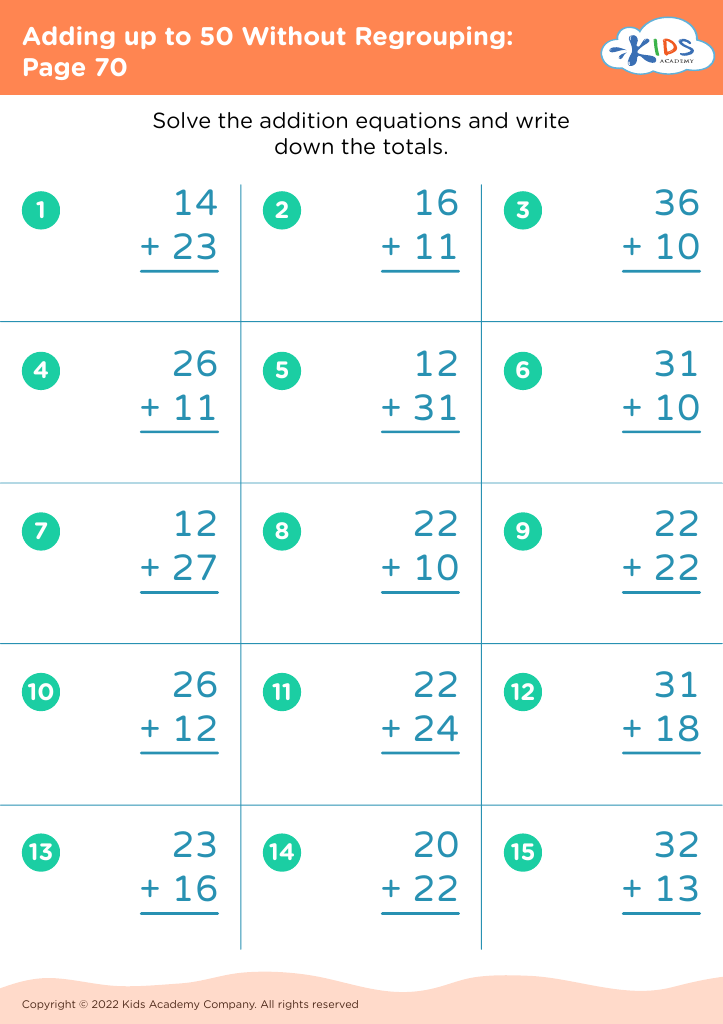
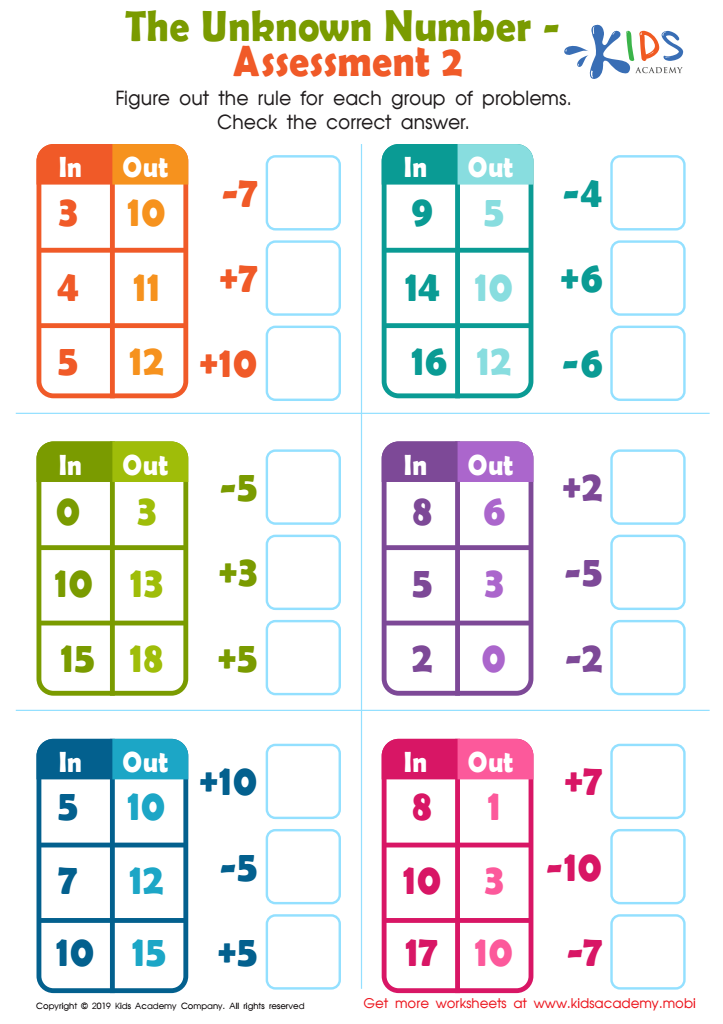
The Unknown Number - Assessment 2 Worksheet
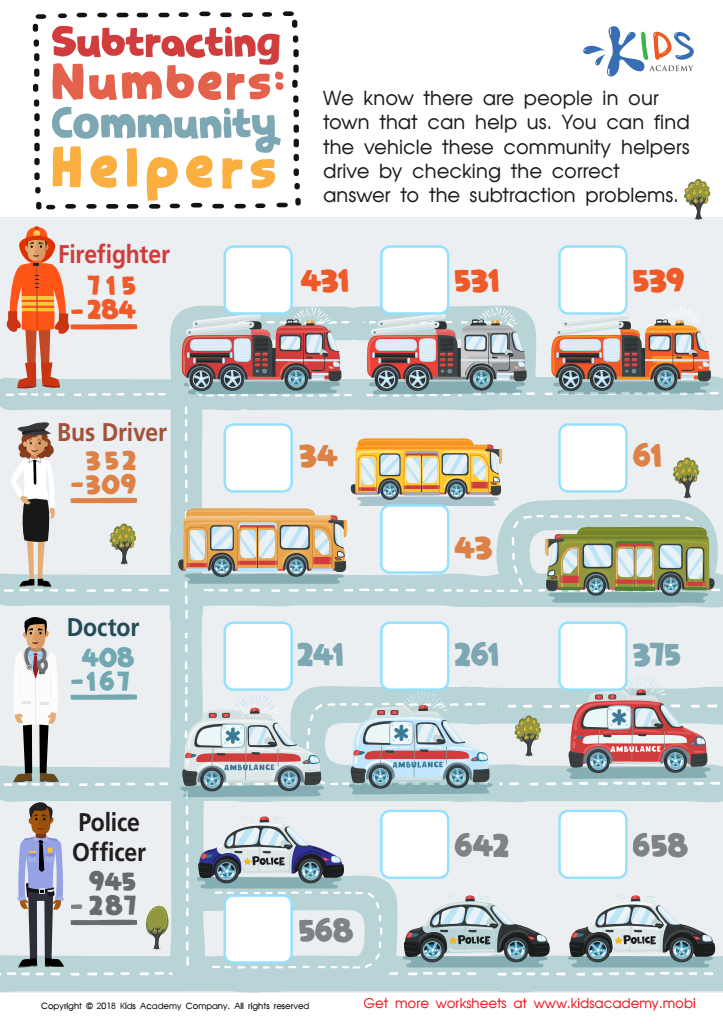
Subtracting Numbers: Community Helpers Worksheet



.jpg)



Understanding number sequences is a crucial foundational skill for children aged 4-9, as it lays the groundwork for more advanced mathematical concepts. For parents and teachers, investing in this learning area is essential for several reasons.
Firstly, number sequences enhance children’s ability to recognize patterns, which is vital in everyday life and future math skills. When children grasp the concept of sequences, they develop critical thinking skills that help in problem-solving and logical reasoning.
Secondly, early mastery of sequences supports skills such as counting, addition, and subtraction, which are tasks children encounter daily. Understanding sequences aids children in engaging with concepts such as place value and relationships between numbers, which are crucial for their mathematical fluency.
Moreover, a solid foundation in number sequences fosters confidence in children. When they are comfortable with numbers and can predict what comes next, it nurtures a positive attitude towards learning math, reducing anxiety often associated with the subject.
Finally, understanding number sequences connects to real-world situations, helping children make sense of the world around them. Parents and teachers who encourage this early learning ultimately equip children with essential skills that will benefit them throughout their academic journeys and beyond.








