Understanding Perimeter Math Worksheets for Ages 4-9
3 filtered results
-
From - To
Discover the joy of learning with our "Understanding Perimeter Math Worksheets" designed for ages 4-9! These engaging worksheets introduce young learners to the concept of perimeter in a fun and interactive way. With colorful illustrations and age-appropriate exercises, children will explore how to measure and calculate the perimeter of various shapes. Each worksheet encourages hands-on learning, boosting not only math skills but also critical thinking and problem-solving abilities. Perfect for home or classroom use, these resources support foundational geometry concepts while making learning enjoyable. Start your child's journey to mathematical confidence today with our exciting perimeter worksheets!
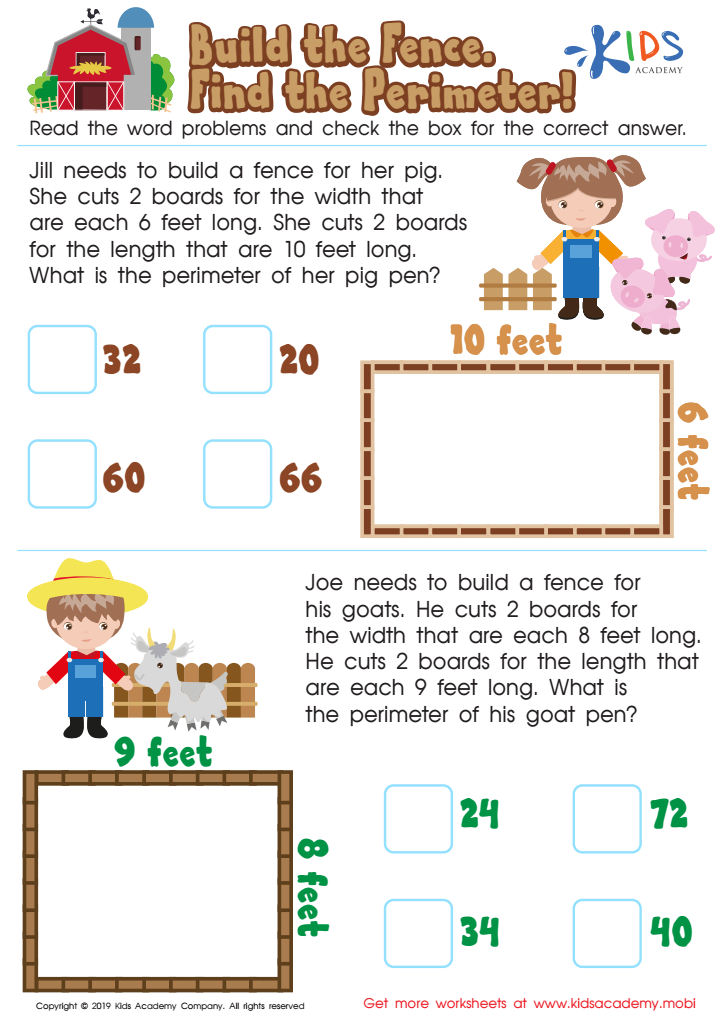
Build the Fence, Find the Perimeter Worksheet
 Assign to My Students
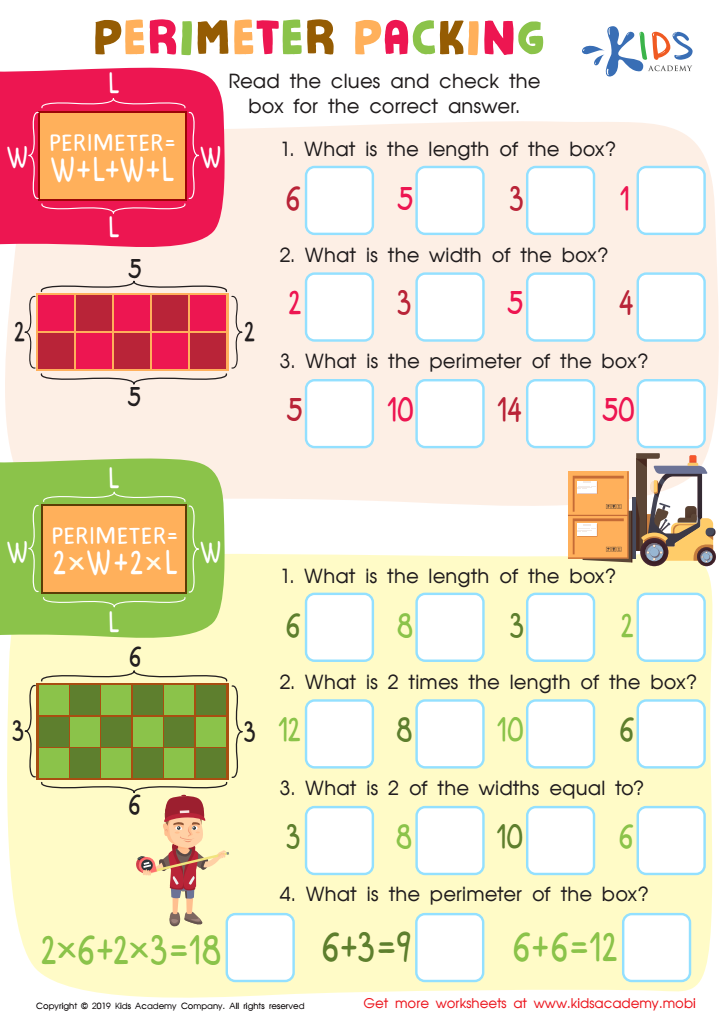
Perimeter Parking Worksheet
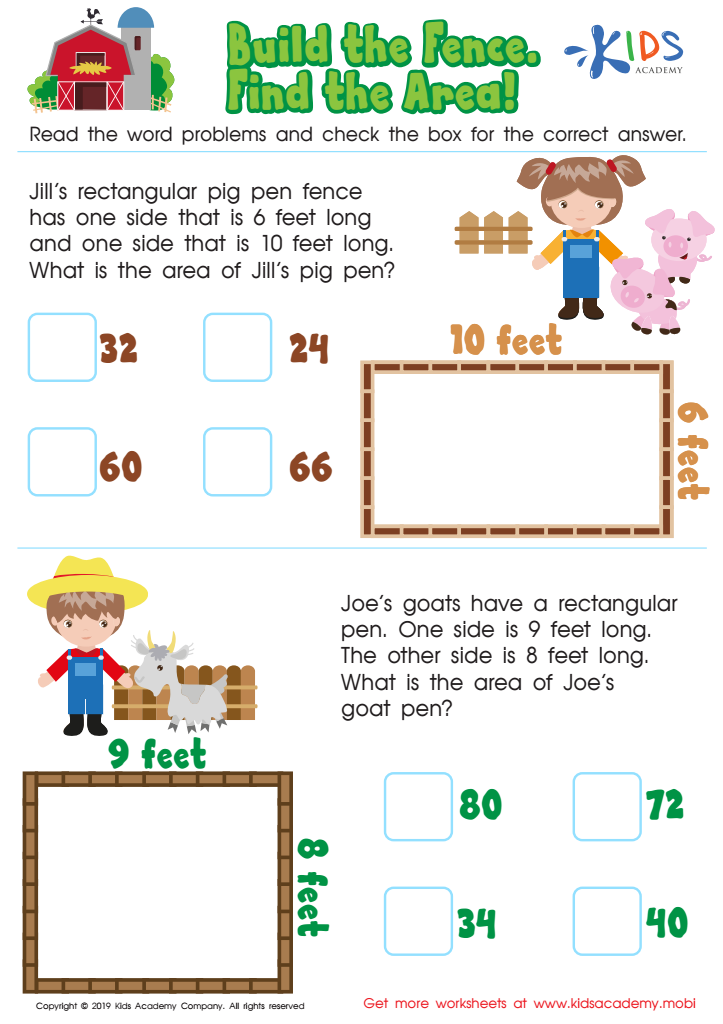
Build the Fence, Find the Area Worksheet


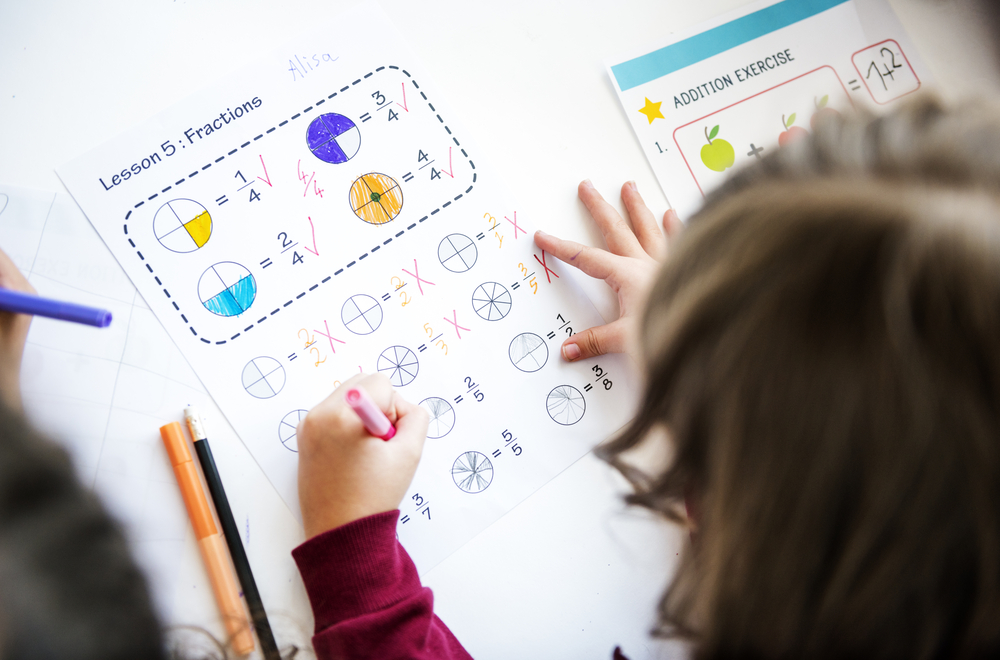



.jpg)
Understanding perimeter math is essential for children aged 4-9 as it lays the groundwork for critical thinking and problem-solving skills. At this early stage, children are naturally curious and eager to engage with the world around them. By introducing them to the concept of perimeter— the distance around a shape—parents and teachers can make math both relevant and fun.
First, learning about perimeter fosters spatial awareness. Children begin to understand the relationship between shapes and their measurements, enhancing their ability to visualize and analyze their environment. This skills can be further applied to everyday activities, like planning a garden or measuring a room for furniture placement.
Moreover, understanding perimeter promotes foundational math skills. It introduces concepts of addition and multiplication, as children learn to add side lengths to find the total distance. Such foundational knowledge is crucial for their future in mathematics.
Additionally, implementing perimeter lessons creates interactive, hands-on learning experiences that capture children's interest, making them more likely to express enthusiasm and engagement in math. Ultimately, by emphasizing perimeter math at a young age, parents and teachers help cultivate a strong mathematical foundation, preparing students for more complex concepts in the future while making learning enjoyable and accessible.








