
Visual representation of fractions Math Worksheets for Ages 4-9
6 filtered results
Difficulty Level
Grade
Age
-
From - To
Subject
Activity
Standards
Welcome to our engaging "Visual Representation of Fractions" math worksheets designed for children ages 4-9! These worksheets use vibrant visuals and interactive formats to help young learners grasp the concept of fractions in an enjoyable and effective way. Kids will explore simple fraction concepts through adorable illustrations, coloring activities, and hands-on exercises that promote understanding and retention. Whether you're teaching at home or in the classroom, our resources cater to different learning styles and accelerate mathematical skills. Encourage your child's confidence in math while fostering their creativity with our delightful fraction visualizations today! Perfect for both beginners and those needing extra practice!
Favorites
With answer key
Interactive
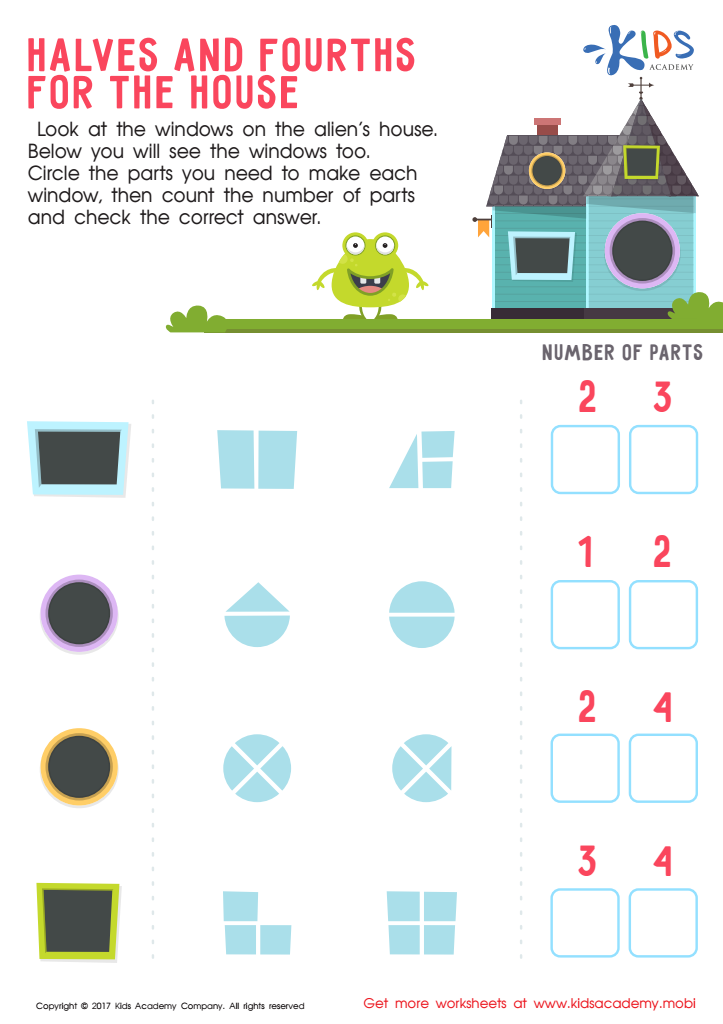
Halves and Fourths for the House Worksheet
Help your child become friends with the alien in this worksheet! If they're fans of alien books and movies, they'll love it. Ask them to circle the parts at the bottom that make each window, then count the number of parts and check the correct answer.
 Assign to My Students
Halves and Fourths for the House Worksheet
Worksheet
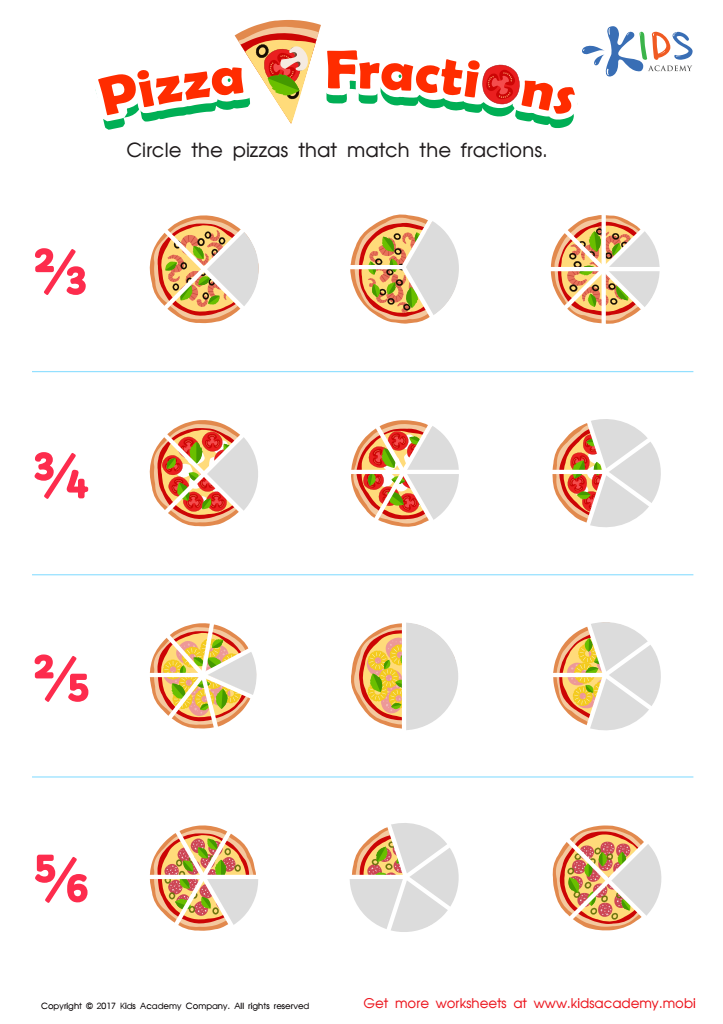
Fractions: Pizza Printable
Fractions can be tricky for kids, but this pizza fractions printable can help! Kids can understand fractions by seeing them, as they use one of their favorite foods. It helps them grasp the concept and gain a deeper understanding of what fractions represent. Extend their learning by quizzing them when you order pizza next time.
Fractions: Pizza Printable
Worksheet
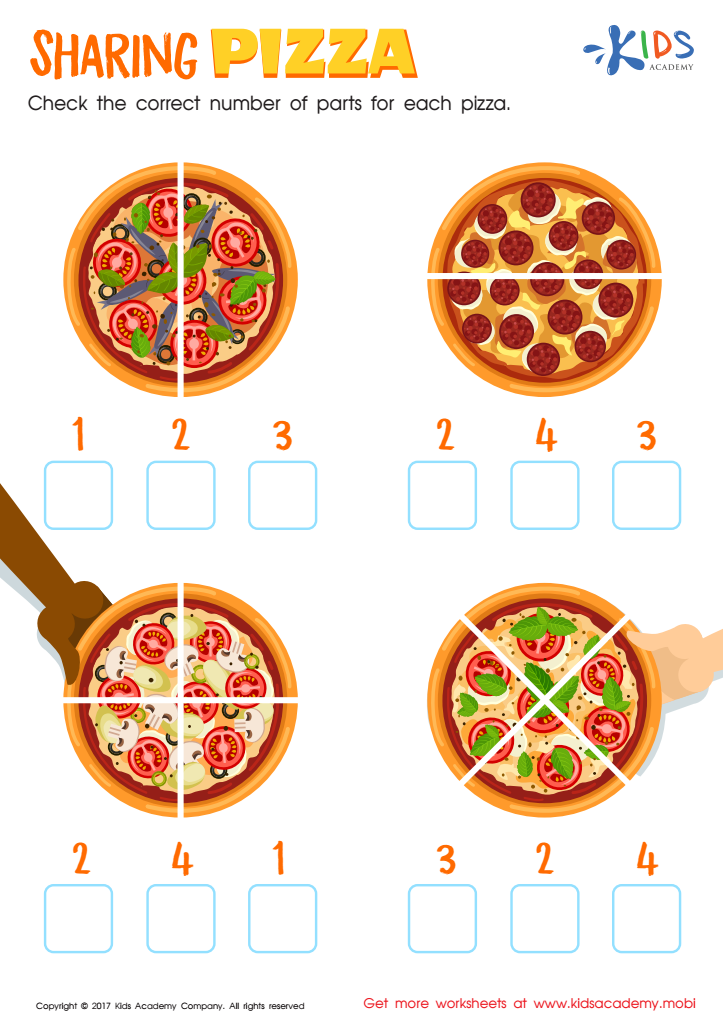
Sharing Pizza Worksheet
Show your child the four pizzas in this worksheet. Ask them to count the number of slices each one has. Help them count and check the answer for the first pizza, then do the same for the rest. Have fun counting the slices and see if they can spot the pizza!
Sharing Pizza Worksheet
Worksheet
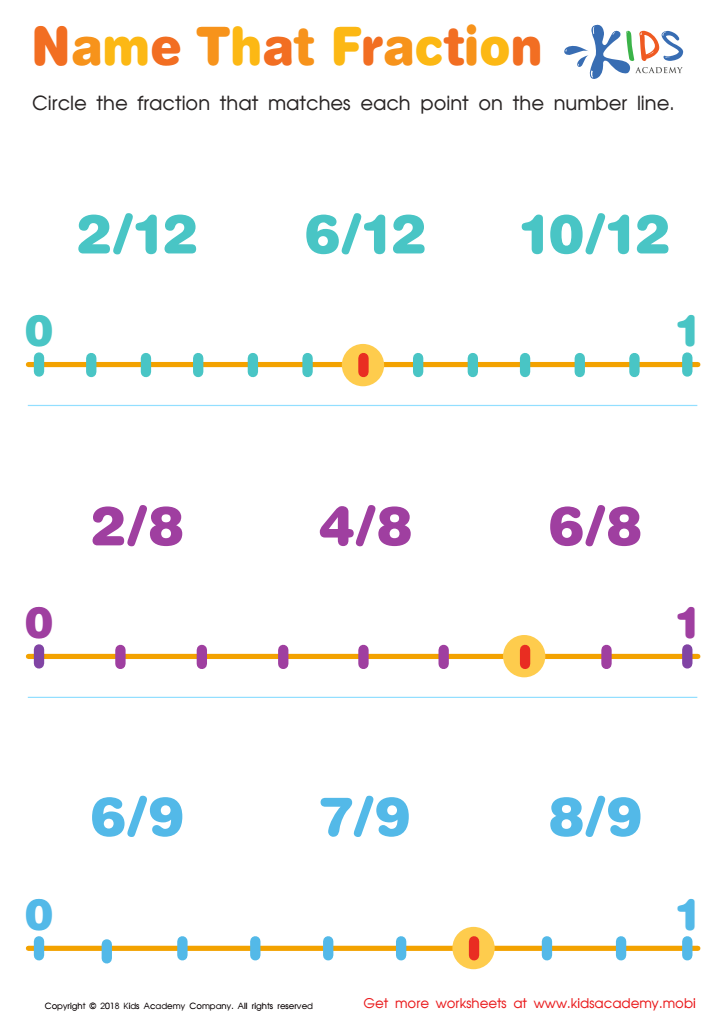
Name That Fraction Worksheet
Kids must learn to identify and name fractions to solve equations. Included in this worksheet are three equations that need solving. Have your child match each point on the number line with the correct fraction and circle it. This exercise helps build their fraction skills.
Name That Fraction Worksheet
Worksheet
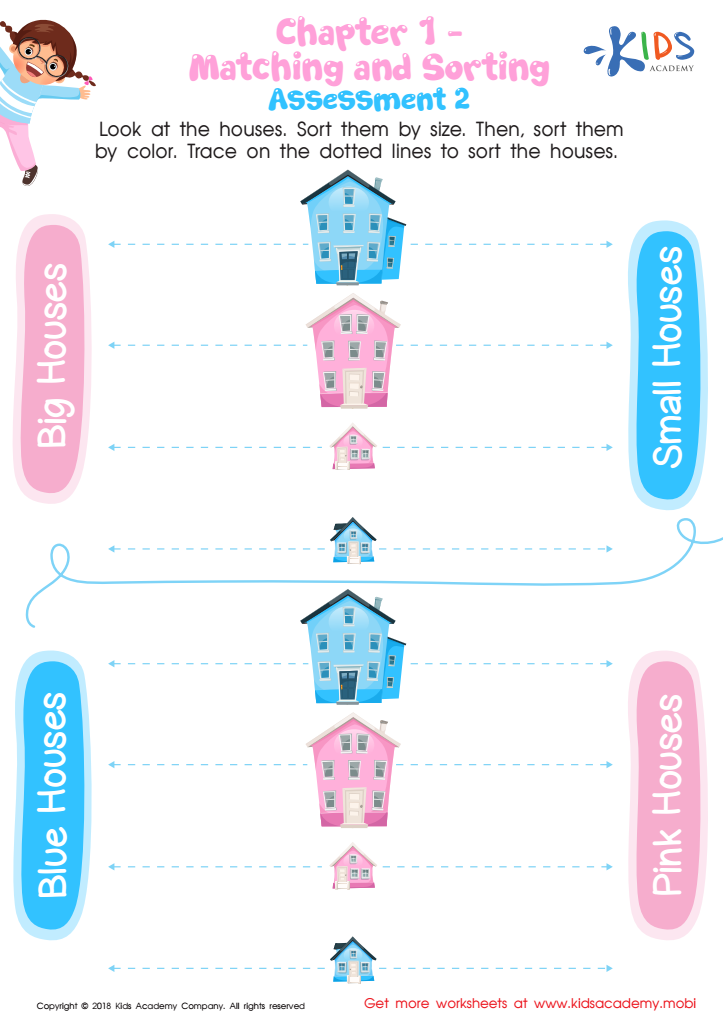
Matching and Sorting for Preschool: Assessment 2 Worksheet
Encourage your kids to take a look at the colorful pictures. Ask them to name the objects. Next, point out any differences between the houses and let them sort them according to color and size. Finally, help them trace the houses on the dotted lines.
Matching and Sorting for Preschool: Assessment 2 Worksheet
Worksheet
Join Kids Academy for Free
Who is primarily going to use this learning content?







Visual representation of fractions is crucial for children ages 4-9 as it lays the foundation for a strong understanding of mathematical concepts. At this developmental stage, children are often concrete learners, meaning they respond better to visual and tangible representations rather than abstract symbols. Utilizing visuals, such as pie charts, fraction bars, or drawings, helps demystify fractions, making them more accessible and relatable.
Visual aids enable children to grasp the idea of parts of a whole, fostering a deeper comprehension of how fractions represent quantities. This intuitive grasp not only enhances their ability to perform calculations but also develops critical skills such as reasoning and problem-solving. As children learn to identify and manipulate these visual forms, they also enhance their ability to compare fractions, identify equivalent fractions, and ultimately approach more complex mathematical concepts with confidence.
Furthermore, a strong early understanding of fractions translates into improved performance in later math topics, such as ratios, decimals, and percentages. Parents and teachers should prioritize visual fractions instruction as it supports cognitive development, encourages engagement, and builds a positive attitude towards mathematics, fostering lifelong learning and success in math.








