
Word problem solving Math Worksheets for Ages 4-9
3 filtered results
Difficulty Level
Grade
Age
-
From - To
Subject
Activity
Standards
Unlock your child's potential with our engaging Word Problem Solving Math Worksheets designed specifically for ages 4-9! These worksheets provide fun and interactive ways for young learners to develop critical thinking and problem-solving skills. Each activity aims to enhance their understanding of basic math concepts through real-world scenarios. Children will practice addition, subtraction, and more while honing their ability to analyze and think critically. Our resources are perfect for both classroom use and home practice. Empower your child’s mathematical journey with these thoughtfully created worksheets that make learning enjoyable and effective! Explore our collection today and watch them thrive!
Favorites
With answer key
Interactive
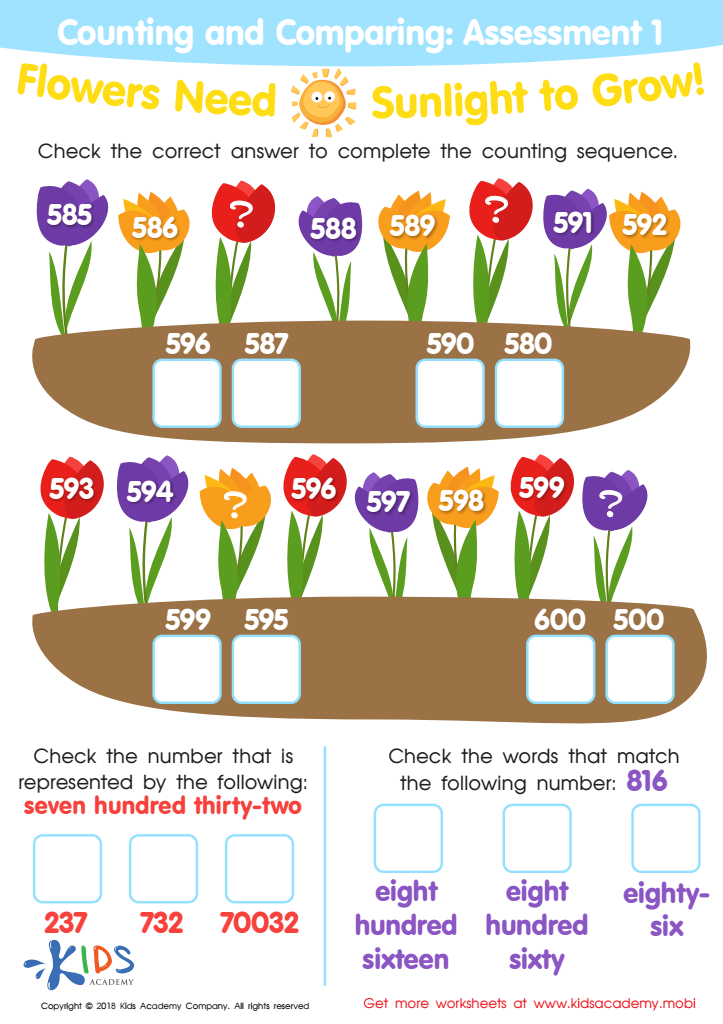
Counting and Comparing: Assessment 1 Worksheet
Download this worksheet and let your students show their progress in identifying, sequencing, and matching numbers and written forms. They'll practice number line skills and matching numeric expressions with numbers. Quickly see how well they understand computation concepts.
 Assign to My Students
Counting and Comparing: Assessment 1 Worksheet
Worksheet
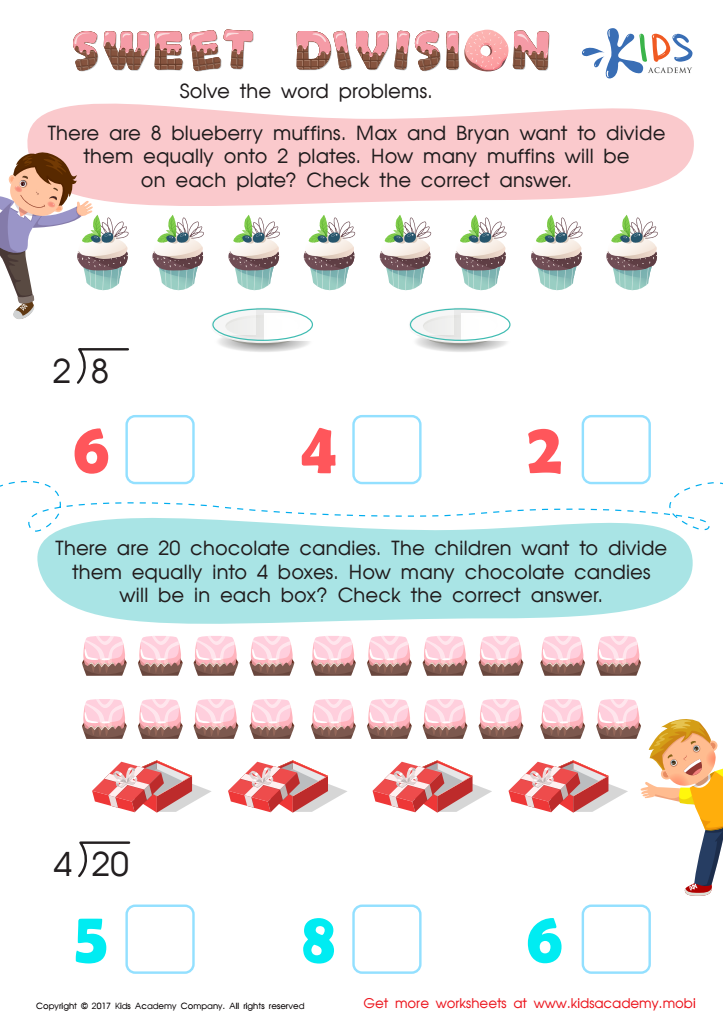
Division Word Problems Worksheet
This division worksheet helps kids understand how long division problems appear as word problems. Perfect for 3rd graders, it'll boost their confidence in solving division problems.
Division Word Problems Worksheet
Worksheet
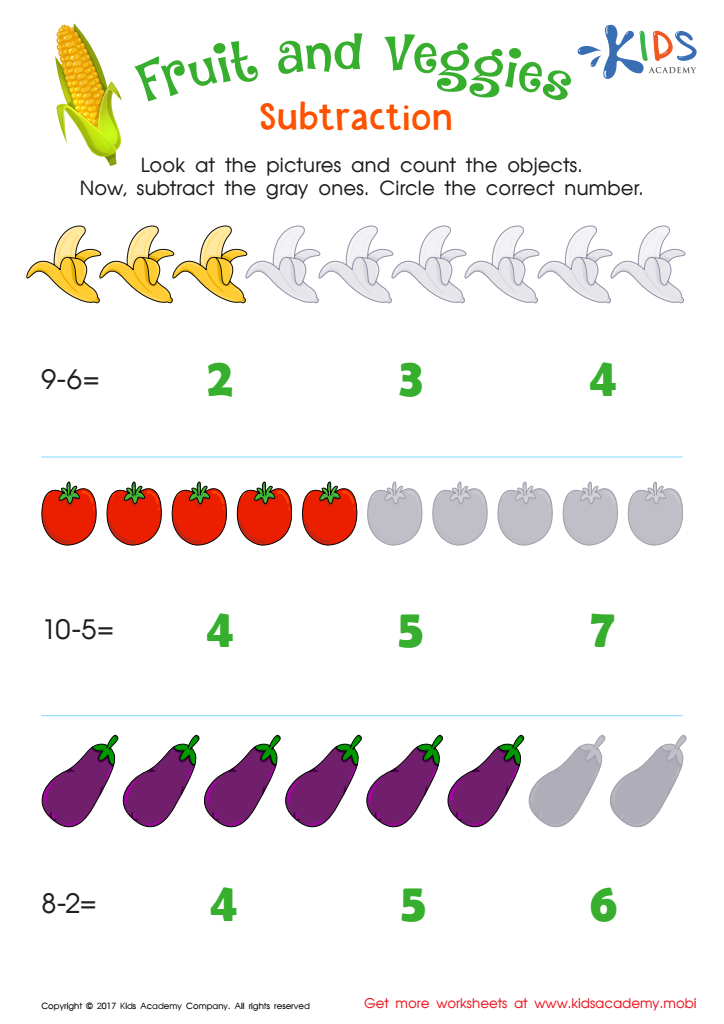
Fruit and Veggies Subtraction Worksheet
Kids learn subtraction with this fun worksheet: fruits and veggies! Kids use pictures to count or take away to get the right answer, aiding in understanding subtraction better.
Fruit and Veggies Subtraction Worksheet
Worksheet
Join Kids Academy for Free
Who is primarily going to use this learning content?








Word problem solving in math is crucial for children aged 4-9 as it fosters critical thinking and real-world application of mathematical concepts. At this developmental stage, children learn to understand and articulate their thought processes, encouraging cognitive growth. Word problems challenge students to analyze a scenario, identify relevant information, and apply their math skills, promoting a deeper understanding of arithmetic operations beyond rote learning.
Parents and teachers play a pivotal role in emphasizing the importance of these skills. Encouraging children to engage with word problems helps develop their language skills as they learn to interpret the wording, enhancing their comprehension abilities. It also nurtures perseverance and problem-solving strategies, useful life skills that extend beyond the classroom.
Moreover, mastering word problems boosts children’s confidence in their math abilities. When they succeed in solving these challenges, they are more likely to develop a positive attitude towards math, reducing anxiety associated with the subject. By investing time in word problem solving, parents and teachers not only equip children with essential academic skills but also encourage resilience, creativity, and the ability to address challenges in innovative ways, preparing them for future educational endeavors and real-life situations.








