
Fine Motor Skills Matching Worksheets for Ages 4-9
10 filtered results
Difficulty Level
Grade
Age
-
From - To
Subject
Activity
Standards
Boost your child's fine motor skills with our engaging Matching Worksheets designed for ages 4-9! At Kids Academy, our printable worksheets promote dexterity, hand-eye coordination, and observational skills while keeping learning fun and interactive. Children will enjoy unique and colorful exercises that challenge their fine motor abilities through matching shapes, objects, and patterns. Ideal for both classroom and at-home use, our resources provide a foundation to enhance their academic success and everyday function. Start your child’s journey to improved fine motor skills with Kids Academy's expertly crafted worksheets today!
Favorites
With answer key
Interactive
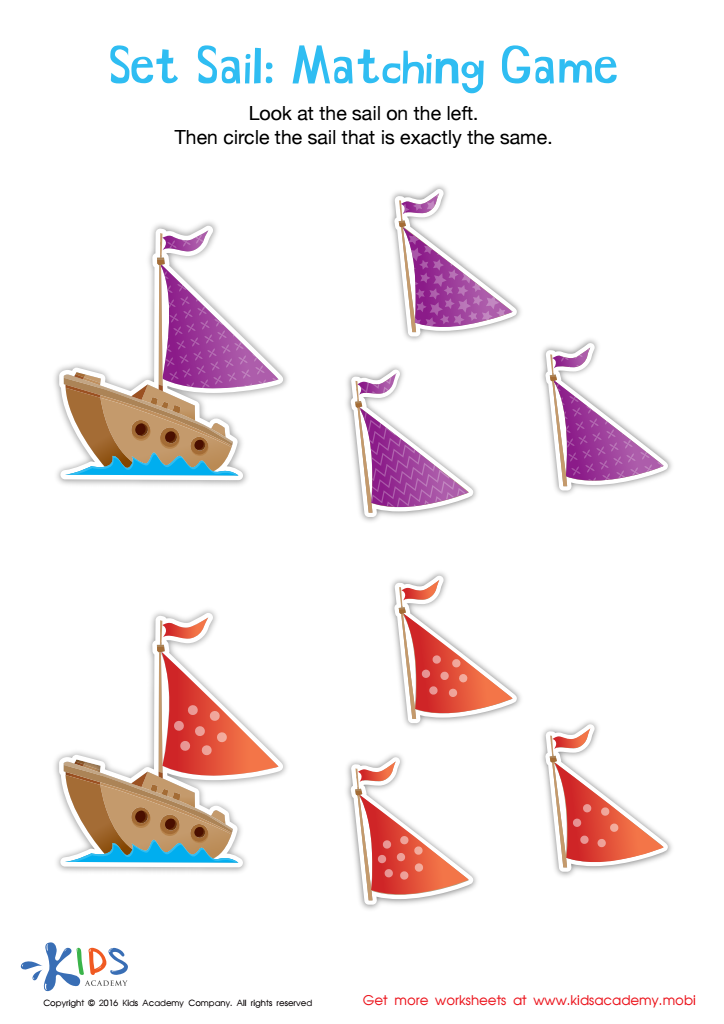
Set Sail Worksheet
Set sail with this fun matching game for toddlers! Kids will love finding the same pattern on the sails, improving their problem-solving and counting skills. Enjoy this bright and engaging worksheet!
 Assign to My Students
Set Sail Worksheet
Worksheet
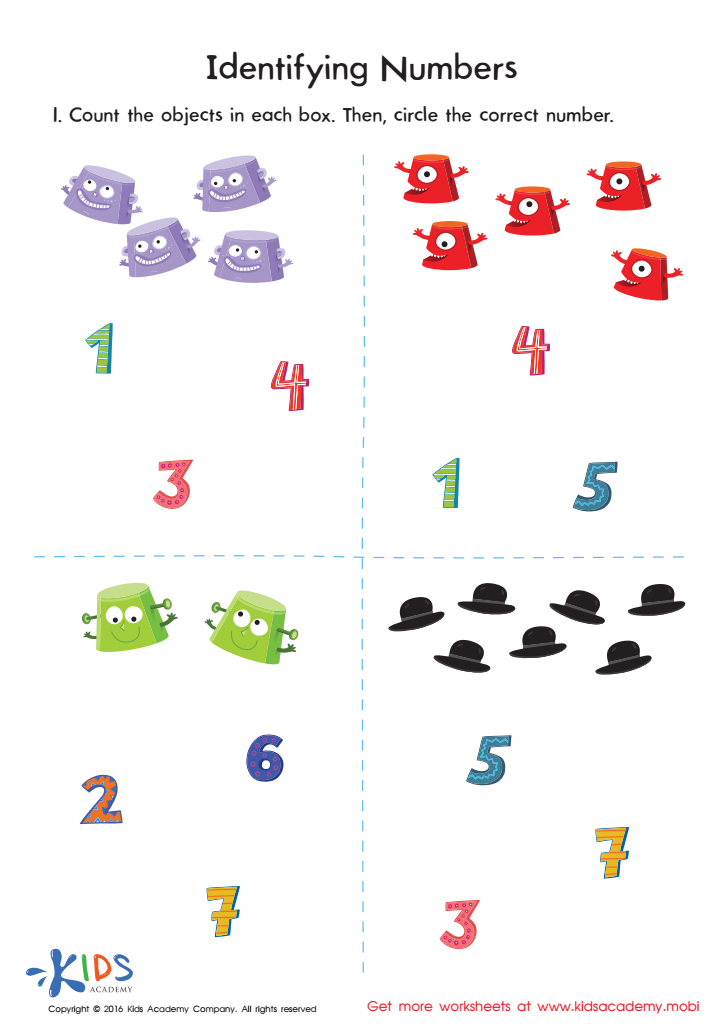
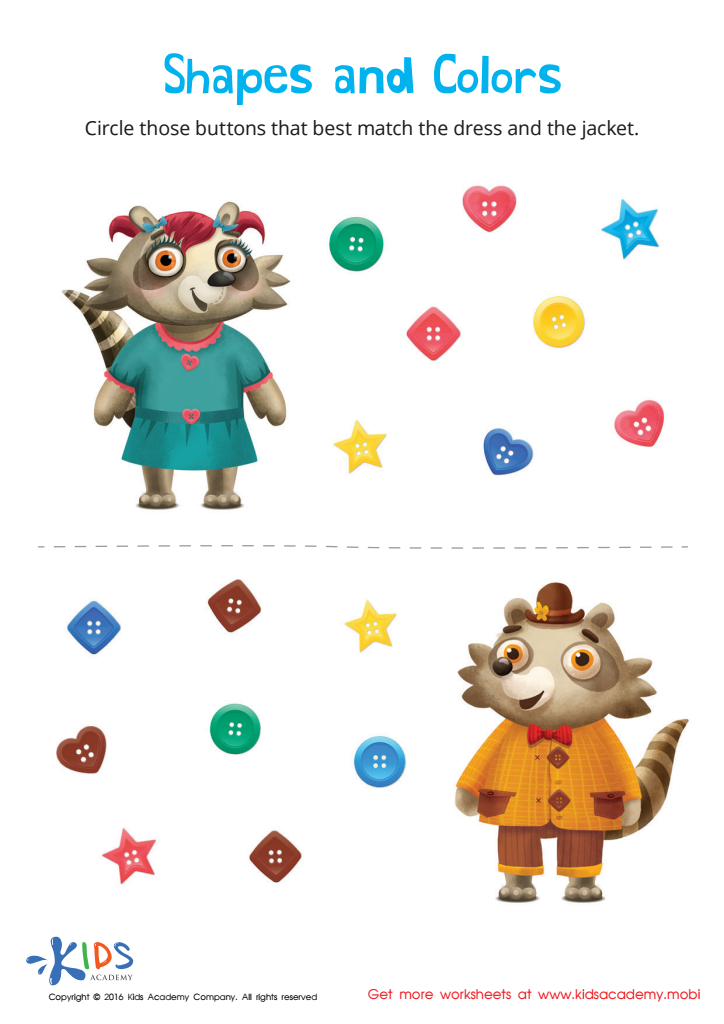
Matching: Shapes and Colors Worksheet
Help Mr. and Mrs. Raccoon find the right buttons to match their shirts! Kids will identify shapes and colors and learn to match them correctly.
Matching: Shapes and Colors Worksheet
Worksheet
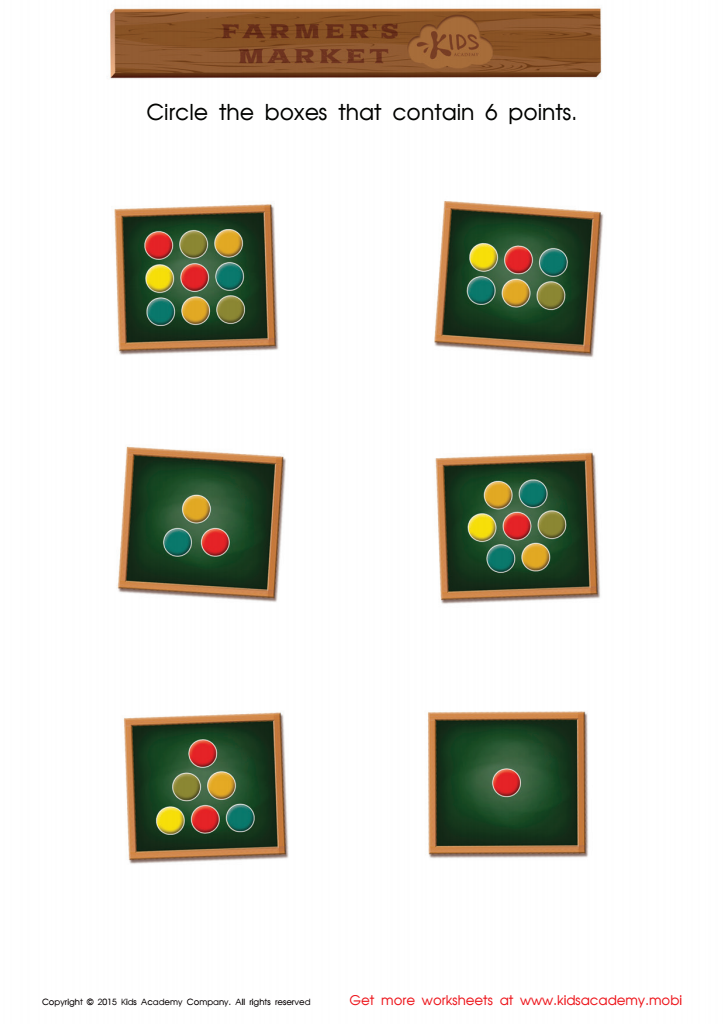
Count and Match Points 6 Math Worksheet
Help your child with mathematics by guiding them with this fun printable worksheet. They will practice counting numbers by looking at all the boxes and circling the ones containing 6 dots. Together you will gain a better understanding of mathematics.
Count and Match Points 6 Math Worksheet
Worksheet
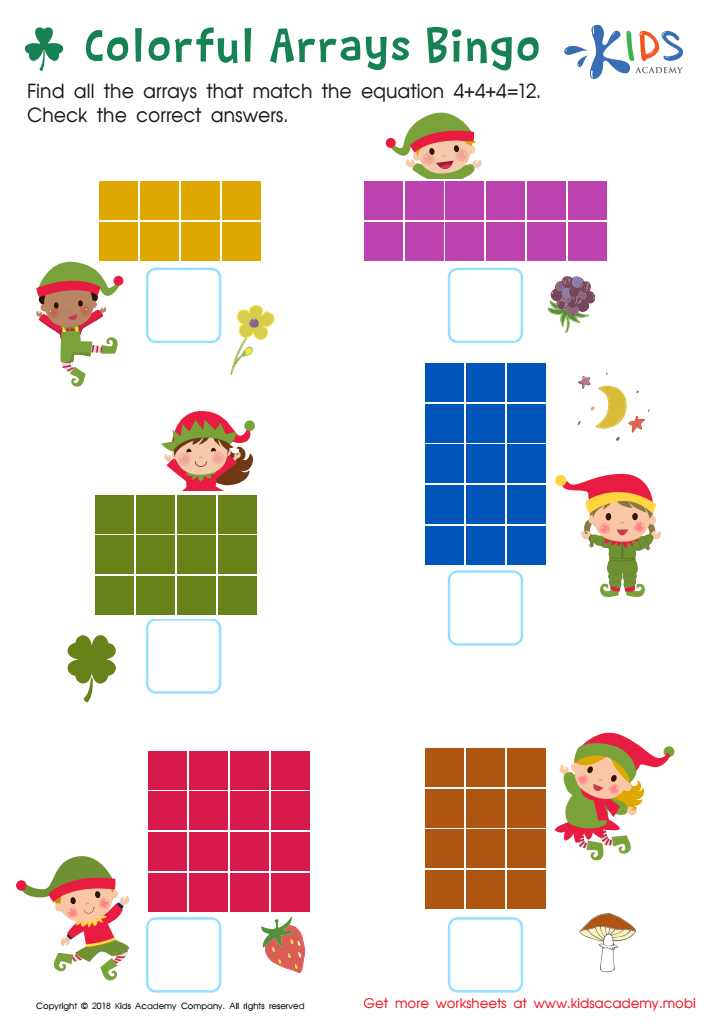
Colorful Arrays Bingo Worksheet
This worksheet stimulates thinking about arrays and how to represent them. Instruct students to count the 6 arrays and find which ones sum up to 12. Ask them to check the answers for accuracy.
Colorful Arrays Bingo Worksheet
Worksheet
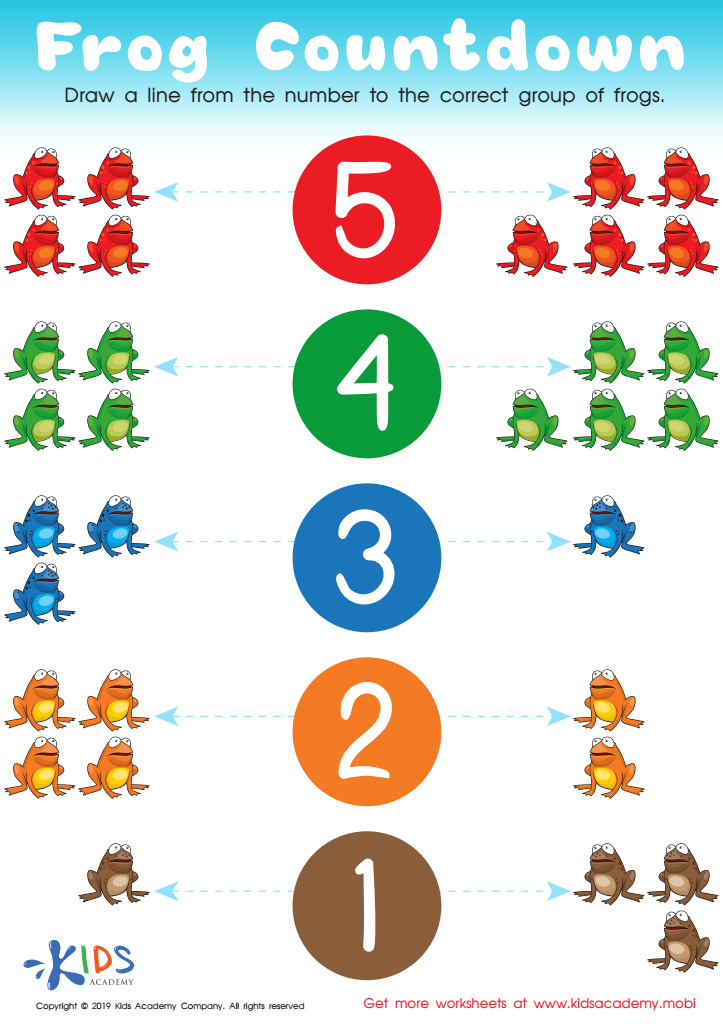
Frog Countdown Worksheet
Make learning fun for kids with traceable printouts! This exercise has kids counting frogs and drawing a line to match the number. Expand their knowledge with activities like this, beyond the basics they learn in school. Help them explore new ways of learning and make it enjoyable.
Frog Countdown Worksheet
Worksheet
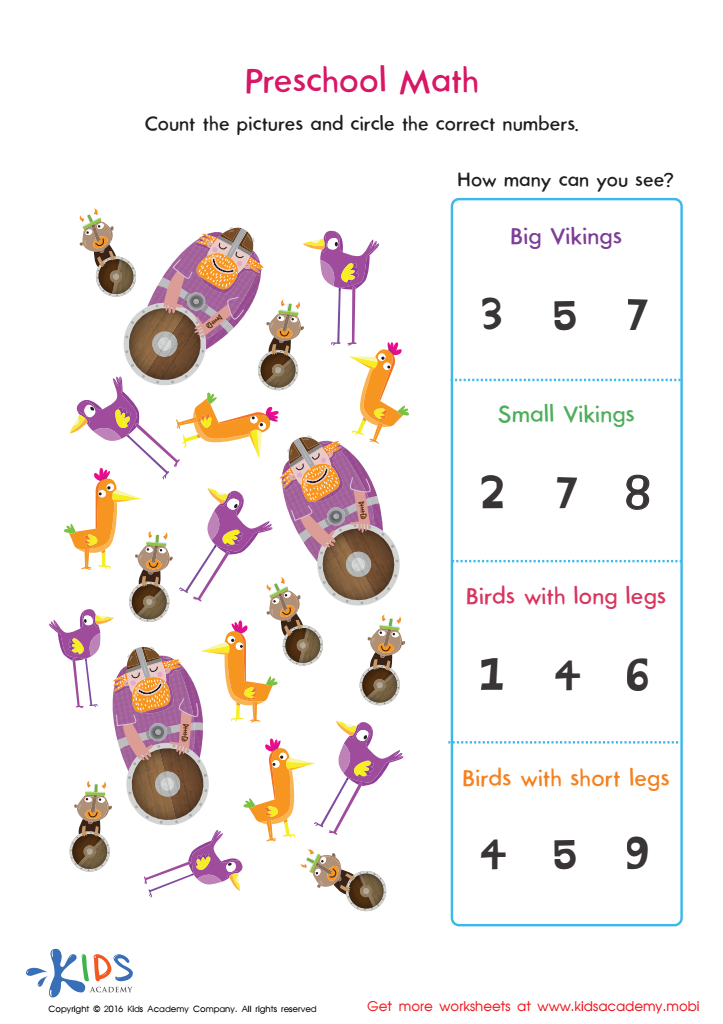
Counting Worksheet: Preschool Math
Worksheet
Join Kids Academy for Free
Who is primarily going to use this learning content?








Fine motor skills involve the coordinated use of small muscles in the hands and fingers, crucial for daily tasks and academic success. For children aged 4-9, developing fine motor skills is vital as it directly impacts their ability to perform essential activities such as writing, cutting with scissors, and buttoning clothes. Parents and teachers should emphasize fine motor skills matching because these skills are foundational for school readiness and success.
Matching games and activities hone hand-eye coordination, dexterity, and concentration. These skills are indispensable for writing legibly, an essential academic skill. Without refined motor control, children may struggle with penmanship, causing frustration and potentially affecting their academic confidence and achievement.
Additionally, fine motor skills are linked to independence. As children master tasks like tying shoelaces or opening lunch boxes, their sense of autonomy and self-esteem flourish. Early proficiency in these skills fosters a positive attitude towards learning and problem-solving.
Furthermore, matching tasks can improve cognitive abilities, including pattern recognition, memory, and logical thinking. Through these activities, children learn to identify similarities and differences, boosting their cognitive development and preparing them for complex subjects.
Overall, nurturing fine motor skills in young children sets a foundation for academic, social, and emotional growth, making it a crucial focus for parents and teachers alike.








