Pattern recognition Patterns Worksheets for Ages 4-9
5 filtered results
-
From - To
Introducing our "Pattern Recognition Patterns Worksheets for Ages 4-9" – a fun and engaging way to enhance your child’s cognitive development! Our worksheets are designed to help kids recognize and predict patterns through visually stimulating activities that captivate young minds. Perfect for early learners, these printable resources strengthen critical thinking, problem-solving skills, and foundational math concepts. From simple shapes to more complex sequences, each worksheet encourages kids to notice, analyze, and complete patterns, ensuring a solid grounding in essential math skills. Download now to support your child on their educational journey with innovative, expert-crafted exercises!
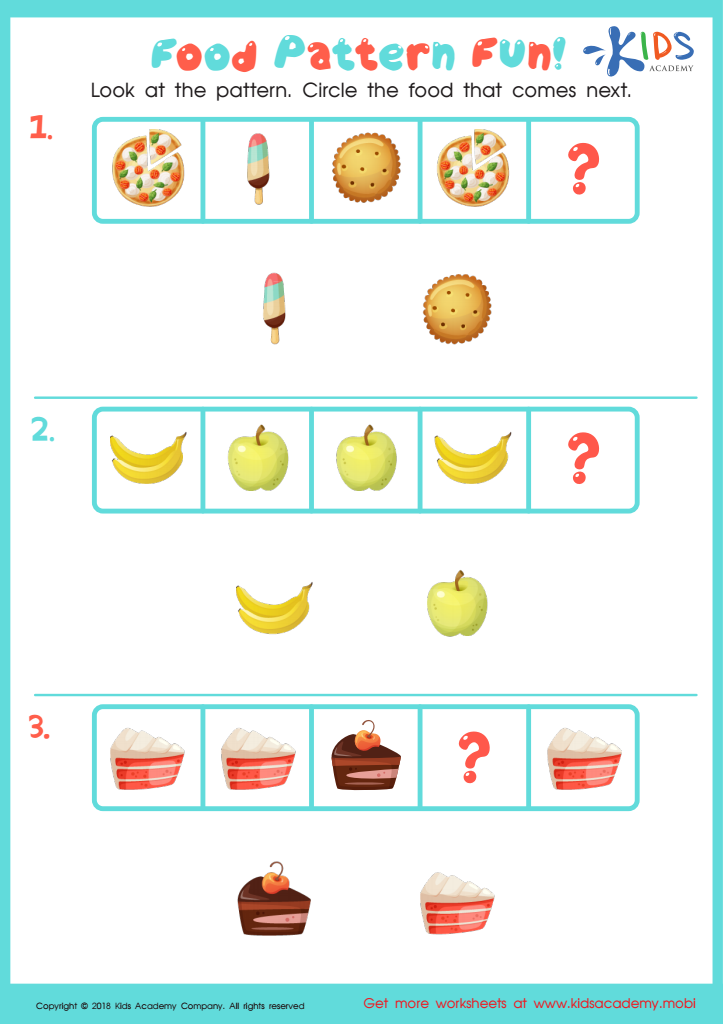
Food Pattern Fun Worksheet
 Assign to My Students
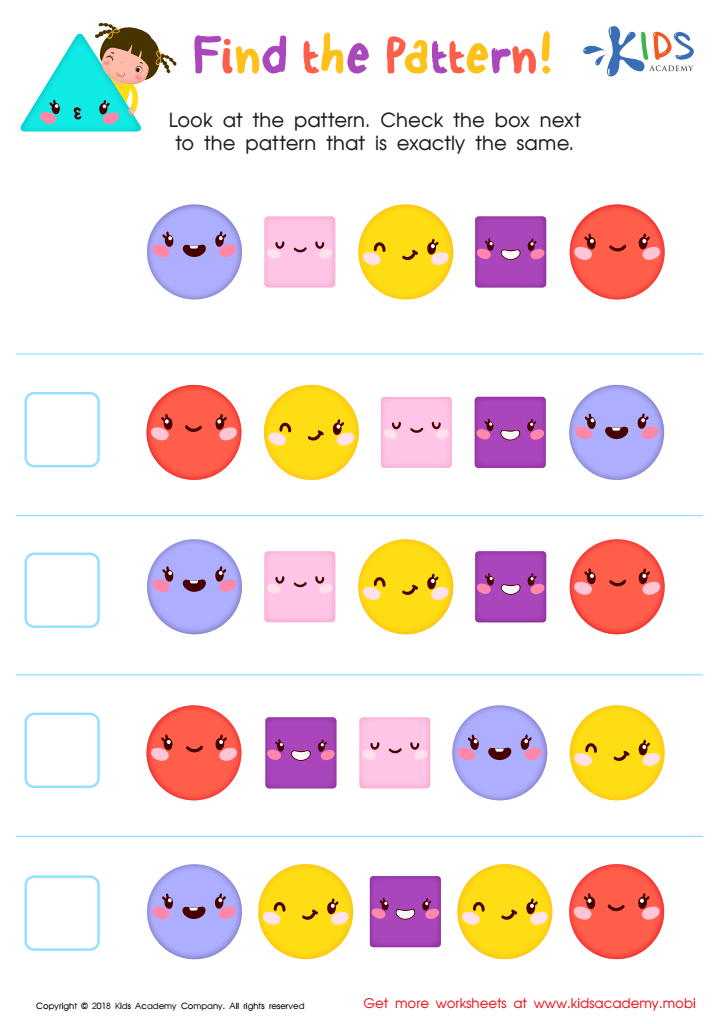
Find the Pattern Worksheet
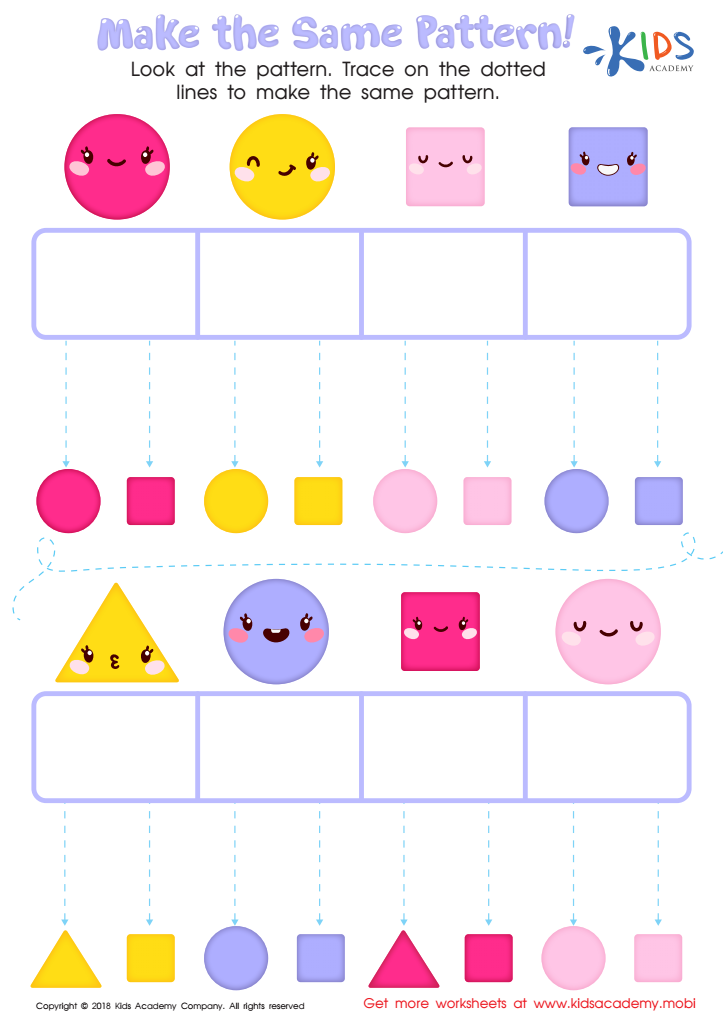
Make the Same Pattern Worksheet
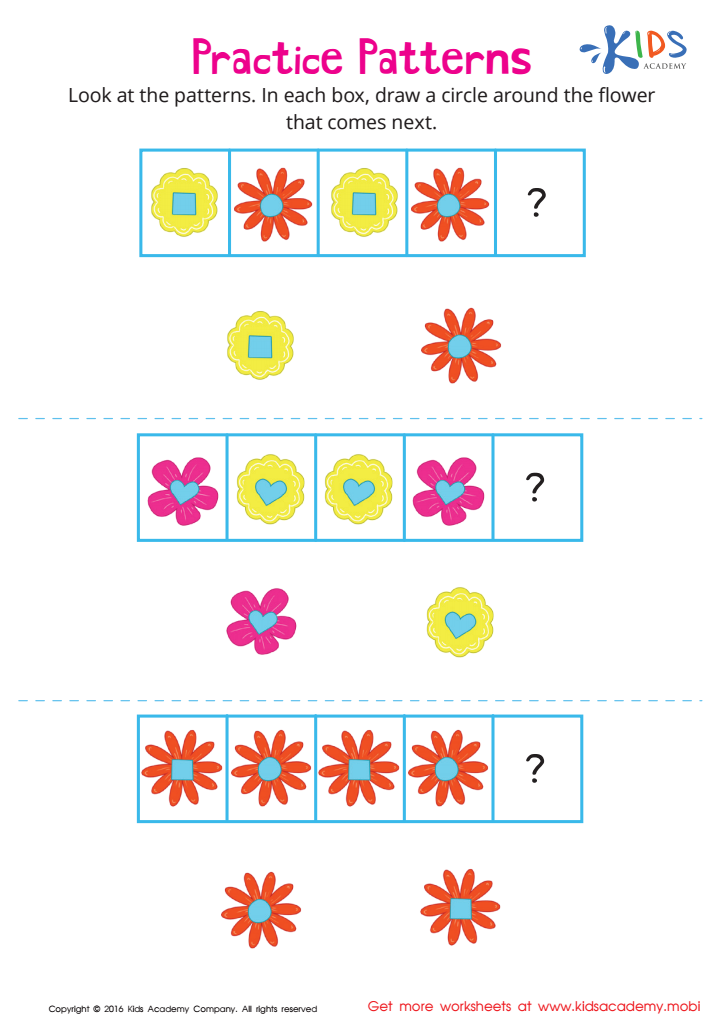
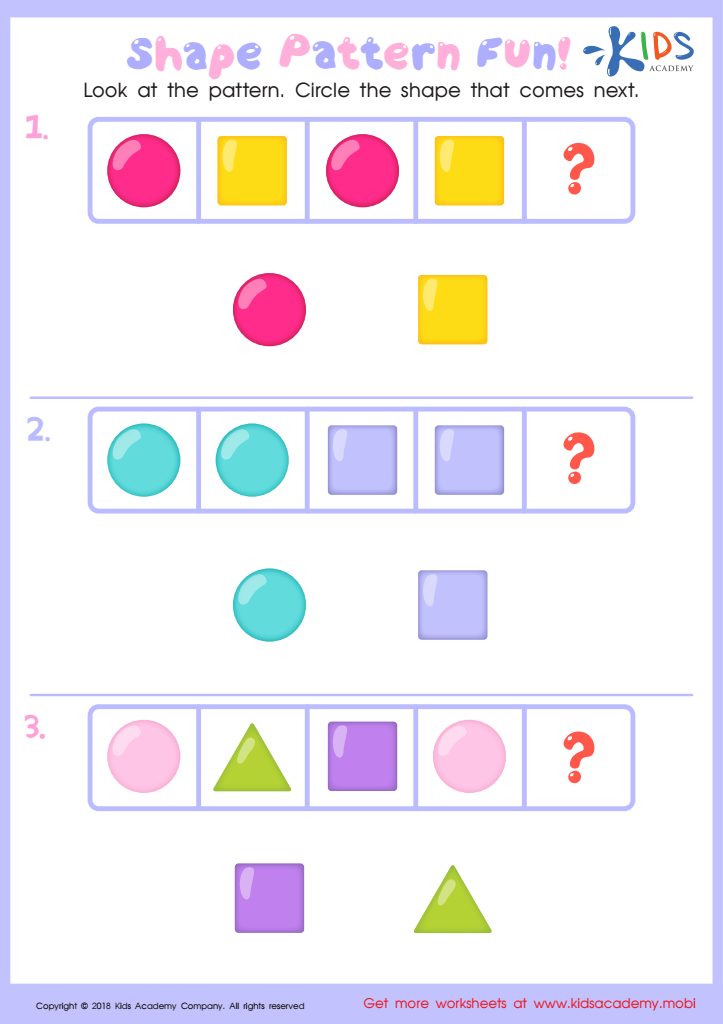
Shape Pattern Fun Worksheet








Pattern recognition is a crucial skill for children aged 4-9 and deserves attention from parents and teachers. This ability forms the foundation for many cognitive processes and academic success. Firstly, recognizing patterns helps children understand and predict the world around them, fostering critical thinking and problem-solving skills. For example, when children identify patterns in numbers or shapes, they develop early math skills essential for more complex arithmetic.
Furthermore, pattern recognition extends to reading and language development. Children who can discern patterns in letter combinations, word families, and sentence structures often become proficient readers more quickly. The ability to see patterns helps them decode words and understand grammar and syntax, laying the groundwork for effective communication.
In addition, fostering pattern recognition can enhance memory and attention. When children learn to expect sequences or recognize recurring themes, their capacity to remember and focus on tasks improves. This can lead to better performance in school and other activities.
Moreover, recognizing patterns is enjoyable and engages children creatively. Activities like sorting objects, creating art, or playing music stimulate their interest and motivation to learn.
By nurturing pattern recognition skills, parents and teachers equip children with essential tools for academic success and everyday problem-solving, enhancing their overall cognitive development and future learning abilities.








