Noun identification Building Vocabulary Worksheets for Ages 4-9
3 filtered results
-
From - To
Unlock the power of language with our Noun Identification Building Vocabulary Worksheets for ages 4-9! Designed to engage young learners, these fun, creative worksheets promote essential vocabulary skills through interactive exercises. Children will explore various types of nouns, including people, places, and things, while developing their reading and writing abilities. Each worksheet encourages critical thinking and boosts confidence in language proficiency. Perfect for classroom use or at-home learning, our resource helps foster a love for words in children. Give your child the tools to succeed in language arts and enrichment activities with these exciting noun identification worksheets today!
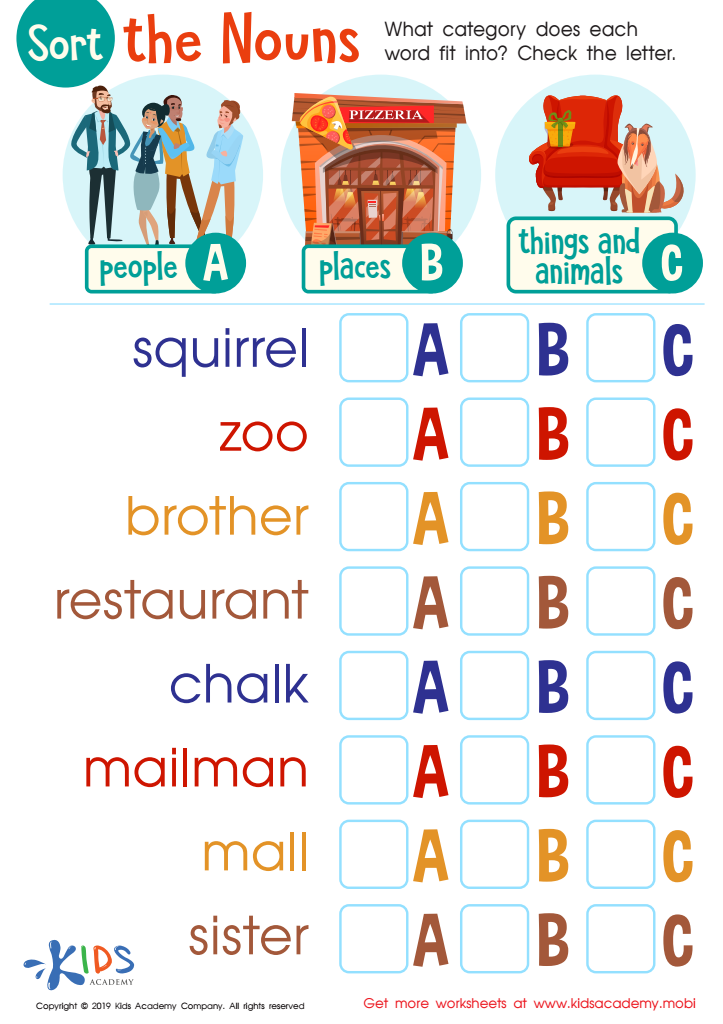
Sort the Nouns Worksheet
 Assign to My Students











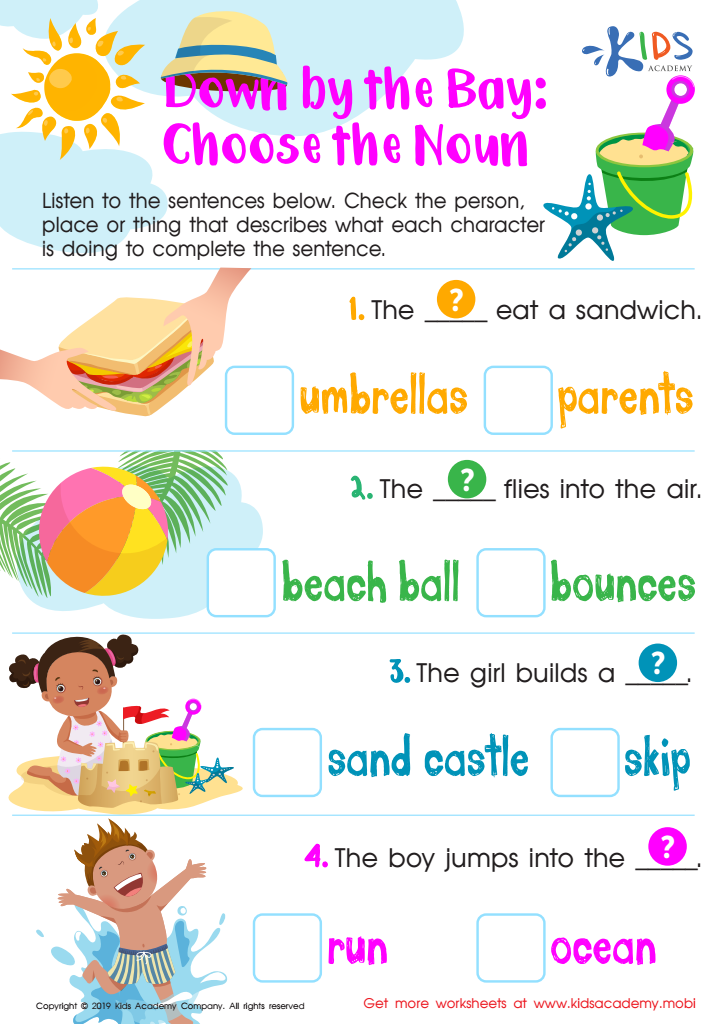
Down by the Bay: Choose the Noun Worksheet
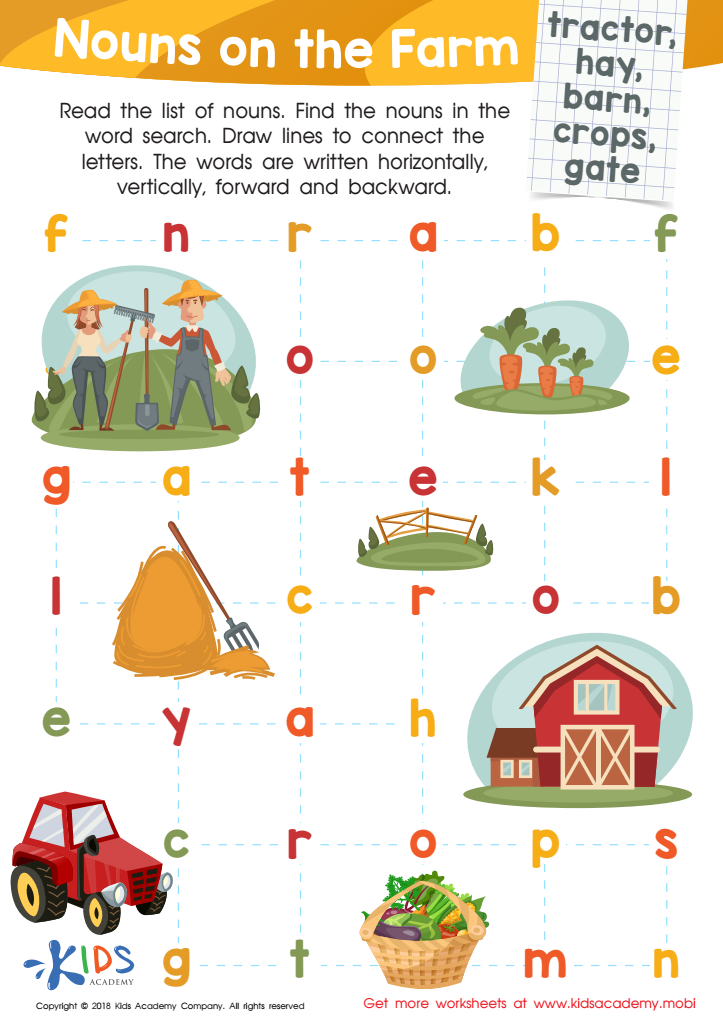
Nouns on the Farm Worksheet







.jpg)
Noun identification is a fundamental building block of vocabulary development, particularly for children aged 4-9, and both parents and teachers should prioritize this aspect of language learning. Recognizing nouns helps young learners name things in their world, fostering critical cognitive and communication skills. By emphasizing noun identification, parents and educators facilitate children’s ability to articulate their needs, express thoughts, and engage in conversations, which is vital for social interactions and emotional expression.
A strong vocabulary empowers young children, enhancing their comprehension during reading activities. It encourages a love for stories and promotes fluency as children can quickly identify objects, people, and places described in texts. With a rich vocabulary, children are more likely to participate in discussions, enabling them to convey their ideas effectively and cultivate their self-confidence.
Additionally, understanding nouns lays the groundwork for grasping more complex grammatical structures and learning other parts of speech. As children identify and categorize nouns, they expand their understanding of language and develop critical thinking skills. Ultimately, fostering noun identification is not simply an academic exercise; it's essential for nurturing articulate, socially adept, and intellectually curious individuals who are prepared for future educational challenges.








